
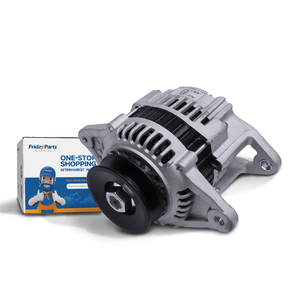
Alternator
12V 50A Alternator 8972283181 for Isuzu 4JB1 & Doosan SOLAR 55 – Service Part
<p><strong>12V 50A Alternator 8972283181</strong> for Isuzu 4JB1 and Doosan SOLAR 55 charging systems — replacement for machines in scheduled maintenance programs.</p> <ul> <li>Typical wear signs include voltage sag under load and battery sulfation; planning alternator renewal before full failure avoids ECM phantom codes and cascading downtime across your fleet.</li> <li>Replace alongside drive belts, tensioners, and corroded terminals for a complete charging circuit overhaul.</li> </ul> <p>Older platform supply continuity ensured for long-term fleet planning.</p>
Lead Time
2-5 Days
Warranty
3-12 Months
Min. Order
1 Piece
Ships To
120+ Countries
Request a Quote
Response within 24 hours
Product Details
Fleet Stocking Strategy — keeping one or two 12V 50A alternators on hand for aging Isuzu 4JB1 and 4JG1 engines prevents emergency procurement when charging systems reach end-of-life.
Technical Specifications
| Parameter | Value |
|---|---|
| Part Number | 8972283181 |
| Product Type | Alternator |
| Cross-Reference | 8972283181, LR150714, LR150715, 8972012810, 897228-3180, 8972283180, 897201-2810 (reference only) |
| Machine Fitment | Doosan SOLAR 55, Daewoo DH55 |
| Engine Compatibility | Isuzu 4JB1, Isuzu 4JG1 |
| Voltage | 12 V |
| Amperage | 50 A |
| Insulation Class | Class H (rated to 180°C) |
| Housing Material | Aluminum |
| Diode Bridge Peak Surge Current | 60 A |
| Shaft Runout | 0.03 mm |
| IP Rating | IP54 |
| Condition | New Aftermarket |
| Warranty | 3–12 months against manufacturing defects |
| MOQ | 1 piece |
| Standards | ISO 9001, SAE J1171 |
Application Suitability
| Service Interval | What to Check |
|---|---|
| 2,000–3,000 operating hours | Drive belt condition and tensioner wear, pulley alignment, battery terminal corrosion |
| 4,000–5,000 operating hours | Voltage output under load, diode bridge integrity, bearing noise during rotation |
| Machine life extension phase | Complete charging system overhaul including alternator, battery, and wiring harness inspection |
| Rental turnaround between contracts | Full electrical system diagnostic to prevent field failures during next rental period |
When Reactive Purchasing Costs More Than Planned Maintenance
Scheduled replacement of the charging system component before complete failure prevents cascading electrical damage and fleet-wide downtime.
Waiting until the alternator stops charging means the battery is already sulfated, the ECM may have logged phantom fault codes from voltage spikes, and the machine is sitting idle while procurement scrambles for emergency supply. In Latin American fleet operations, I have seen Doosan SOLAR 55 units down for weeks because operators ignored early voltage sag warnings and continued running until the rectifier bridge failed completely. The pattern repeats across earthmoving fleets: a single 12V Alternator service part for Isuzu 4JB1 maintenance, if unplanned, disrupts entire project schedules [NEED_CITE: preventive maintenance scheduling standards for construction equipment fleets].
Recognizing Failure Progression Before Complete Breakdown
This alternator sits at the heart of the machine’s electrical charging system — a predictable wear item in every fleet’s service plan. Typical failure progression shows up as voltage sag under load, intermittent sensor errors, and battery sulfation long before the unit stops working entirely. Recognizing these signs enables scheduled replacement before full failure, when you can still plan the downtime around project milestones rather than emergency response. Replacing it on schedule alongside belts, batteries, and wiring checks prevents cascading electrical failures that compound downtime across a fleet. A 12V Alternator service part for Isuzu 4JB1 maintenance, when timed correctly, becomes routine rather than crisis.
Single Component Replacement Versus Full Charging System Overhaul
The decision to replace just the alternator or renew the entire charging circuit depends on machine age, duty cycle, and adjacent component condition. Drive belt condition, pulley alignment, and battery terminal corrosion all affect alternator service life and should be inspected at each replacement. If the belt shows cracking or the tensioner has excessive play, replacing only the alternator means the new unit inherits the same misalignment stress that killed the previous one [NEED_CITE: charging system component interaction and failure modes in diesel engines]. For machines approaching major overhaul intervals, renewing belts, tensioners, and battery together with the alternator makes sense — the labor is already mobilized, and you eliminate the next failure point in the same system.
Understanding the Specifications That Matter in the Field
The 50 A output rating matches the baseline electrical load of Isuzu 4JB1 and 4JG1 engines with standard instrumentation, lighting, and ECM requirements. Class H insulation rated to 180°C provides thermal headroom for continuous-duty cycles in quarrying and port operations where ambient temperatures and engine bay heat combine. The 60 A diode bridge peak surge current rating handles transient loads from solenoid engagement and starter motor draw without immediate rectifier failure. IP54 protection prevents dust ingress and water splash damage during wash-down, though it does not mean the unit is sealed against immersion. The 0.03 mm shaft runout specification ensures bearing longevity and prevents belt wear from wobble — a value that degrades over service life as bearings wear, eventually causing the pulley to chew through drive belts prematurely.
The Hidden Cost of Reactive Procurement Patterns
Fleet operators who purchase alternators only after failure accumulate unplanned downtime across multiple machines, each incident compounding project delays and rental penalties. The same 12V Alternator service part for Isuzu 4JB1 maintenance, if stocked in advance, costs the same but arrives on schedule rather than through emergency air freight at premium rates. Worse, reactive purchasing often means accepting whatever is available rather than verifying fitment against engine serial variants, leading to installation delays when the wrong connector or mounting pattern arrives. For rental companies turning machines between contracts, a failed alternator discovered during pre-rental inspection means the unit misses its booking window — revenue lost that planned maintenance would have preserved [NEED_CITE: total cost of ownership models for construction equipment electrical components].
Why Procurement Planning Works Here
Own production on selected lines plus qualified sourced supply under one account means the alternator carries the same warranty terms whether from our facility or a partner plant. Eight product categories allow a complete charging system overhaul — alternator, belts, tensioners, battery, wiring connectors — to ship as one consignment rather than split orders from multiple suppliers with mismatched lead times. Minimum order from one piece supports fleet operators keeping strategic spares without committing to bulk quantities. Guangzhou warehouse stock enables fast dispatch on common items when a machine is already down. Part identification from number, machine model, photograph, or nameplate image eliminates guesswork when the original data plate is worn or painted over. Cross-reference verification covers superseded and alternate numbers, preventing procurement errors from outdated interchange tables.
Documentation & Verification
- Commercial invoice and packing list with alternator specifications and cross-reference numbers clearly marked
- Part compatibility sheet listing Isuzu 4JB1/4JG1 engine serial ranges and Doosan SOLAR 55 fitment notes
- Quality inspection record documenting voltage output, amperage capacity, and shaft runout before dispatch
- Warranty terms specifying coverage period and manufacturing defect claims process
- Packing photographs showing alternator packaging condition prior to shipment
- HS code and customs documentation support for international fleet operators managing cross-border equipment movement
Service Interval & Stocking Guidance
- Inspect voltage output under load at 2,000-hour service intervals; voltage sag below 13.5 V at rated RPM indicates diode bridge degradation
- Check drive belt condition and pulley alignment simultaneously with alternator inspection — misalignment accelerates bearing wear
- Stock one alternator per five machines in the fleet for platforms approaching 5,000 operating hours or older
- Store spare units in dry conditions with desiccant packaging to prevent internal corrosion during extended shelf life
- Plan replacement alongside scheduled engine overhaul when the machine is already disassembled, reducing separate downtime events
Planning Your Next Fleet Maintenance Cycle
Provide your fleet composition, machine models, and current operating hours to receive replacement interval recommendations and stocking level guidance. Include engine serial numbers where available to verify fitment against specific 4JB1 and 4JG1 variants. Specify your typical duty cycle — continuous quarry operation, intermittent construction use, or rental turnaround frequency — so stocking advice reflects actual wear patterns rather than generic schedules.
Frequently Asked Questions
Q: What is the typical service life of this alternator under normal duty?
A: Service life varies significantly based on duty cycle, ambient temperature, and adjacent component condition. Continuous-duty applications in quarrying or port operations typically see shorter intervals than intermittent construction use. Drive belt condition and pulley alignment directly affect bearing longevity. Most fleet operators schedule inspection at 2,000-hour intervals and plan replacement between 4,000 and 6,000 hours, though actual replacement timing depends on voltage output testing rather than hours alone.
Q: What other components should I inspect or replace when changing the alternator?
A: Inspect the drive belt for cracking and glazing, check the tensioner for excessive play, verify pulley alignment, and examine battery terminals for corrosion. If the belt or tensioner shows wear, replace them simultaneously — a new alternator installed with a worn belt inherits the same misalignment stress. Battery condition should also be verified, as a sulfated battery forces the alternator to work harder, accelerating diode bridge degradation.
Q: Should I replace the alternator alone or the entire charging circuit?
A: For machines under 3,000 hours with good belt and battery condition, alternator-only replacement is appropriate. For older machines or those approaching major overhaul intervals, renewing the complete charging circuit — alternator, belts, tensioner, and battery — makes economic sense since labor is already mobilized. This eliminates the next failure point and prevents cascading damage from adjacent worn components.
Q: How many spares should a fleet of this size keep in stock?
A: A general guideline is one spare alternator per five machines on platforms approaching typical replacement intervals. Rental companies turning equipment between contracts often stock higher levels to prevent missed booking windows. Fleet age profile and duty cycle intensity adjust this baseline — older machines in continuous-duty applications warrant higher stocking levels than newer units in intermittent service.
Q: Can I still get this part for older machines that are no longer in current production?
A: Yes. This alternator fits Isuzu 4JB1 and 4JG1 engines that remain in widespread service across multiple equipment brands, including Doosan SOLAR 55 and Daewoo DH55 platforms. Aftermarket support continues for these engine families even as OEM dealer parts availability thins for discontinued machine models. Cross-reference verification covers superseded part numbers to ensure correct fitment on specific engine serial variants.
Compatible Brands
Our parts are engineered to meet or exceed OEM specifications. Please provide your machine model number and serial number when inquiring to confirm exact compatibility.
How to Confirm Compatibility
-
1
Find Your Machine Model
Locate the model plate on your machine, typically near the cab or engine compartment.
-
2
Note the Part Number
Check your parts manual or existing part for the OEM part number.
-
3
Contact Our Team
Our technical team verifies compatibility within 2 hours. Send us the details via the inquiry form or WhatsApp.
Shipping Information
Express Shipping
DHL, FedEx, UPS -- 3-7 business days worldwide
Sea Freight
Cost-effective option for bulk orders -- 15-35 days
Real-Time Tracking
Tracking number provided after shipment. 24/7 support available.
Warranty Policy
All parts come with manufacturer warranty. Duration varies by product category.
- Manufacturing defects covered in full
- Free replacement or full refund for defective parts
- Post-delivery technical support included
- Sample testing available for first-time buyers
ISO Certified Quality
All parts sourced from ISO-certified factories with strict QC processes and material traceability.
Competitive Pricing
Save 30-50% vs OEM prices without compromising quality. Transparent pricing with no hidden fees.
Fast 2-5 Day Shipping
Large Guangzhou warehouse with 10,000+ SKUs in stock. Most orders ship within 2-5 business days.
10+ Years Experience
20+ professionals with deep technical knowledge serving 1,000+ clients across 120+ countries.
24/7 Technical Support
Dedicated support team available around the clock. Part verification within 2 hours of inquiry.
Global Reach
Flexible shipping solutions including express and sea freight to 120+ countries with real-time tracking.
Related Products
More parts you might need

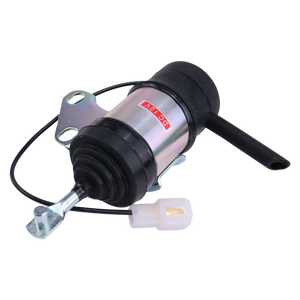
Engine Auxiliary Components
12V Fuel Stop Solenoid 16851-60014 for Kubota Tractors – Direct Replacement with OEM Fit
View Details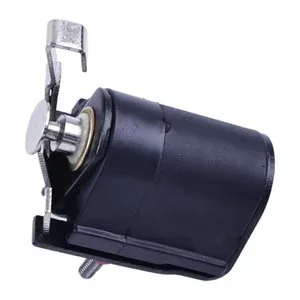
Engine Auxiliary Components
Stop Solenoid RE62240 RE37089 | Scheduled Maintenance for John Deere
View Details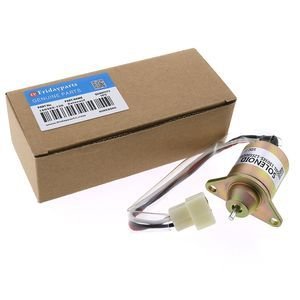
Engine Auxiliary Components
12V Woodward 1503ES-12S5SUC5S stop solenoid for reliable engine shutdown
View DetailsNeed a Custom Quote?
Our technical team responds within 24 hours. MOQ 1 piece. Ships to 120+ countries from our Guangzhou warehouse.