
Emission & Exhaust System
Emission & Exhaust System
ISO Certified
Ships 2-5 Days
MOQ 1 Piece
Emission & Exhaust System
BF3L914 BF4M1011F-Compatible Turbocharger – Fleet Supply
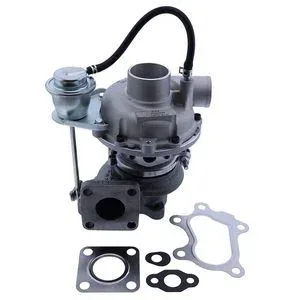
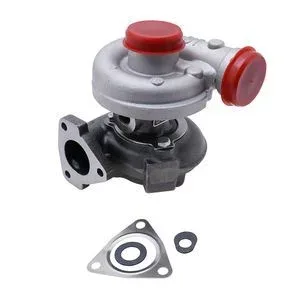
<p><strong>315666 Turbocharger S1B</strong> — compatible with Deutz BF3L914 and BF4M1011F engines, new aftermarket condition with 6-month warranty.</p> <ul> <li>Replace at scheduled service intervals when boost pressure drops, shaft play increases, or oil weeping appears at the compressor seal</li> <li>Pair turbocharger renewal with air filter elements, exhaust gaskets, and oil feed line inspection to address root-cause wear across the intake system</li> <li>Legacy Deutz platforms remain in active global service; aftermarket continuity supports fleets well past OEM thinning support windows</li> <li>Cross-reference OEM numbers 4234298KZ, 4272467KZ, 317904, and 315639 for interchange verification</li> </ul> <p>Replacement interval guidance and lifecycle planning notes ship with every order for fleet maintenance alignment.</p>
Lead Time
2-5 Days
Warranty
3-12 Months
Min. Order
1 Piece
Ships To
120+ Countries
315666
BF3L914
Deutz Compatible
Fleet Supply
S1B Model
turbocharger
Request a Quote
Response within 24 hours
Prefer instant chat?
WhatsApp
Product Details
Replacement cycle planning — S1B turbocharger intervals mapped to Deutz BF3L914 and BF4M1011F service schedules for fleet-level stock control.
Technical Specifications
| Parameter | Value |
|---|---|
| Part Number | 315666 |
| Product Type | Turbocharger |
| Turbo Model | S1B |
| Machine Fitment | BF3L914, BF4M1011F |
| Brand Compatibility | Designed to replace turbocharger units on Deutz engines |
| Cross-Reference | 315666, 4234298KZ, 4272467KZ, 4272466KZ, 4272465KZ, 317904, 317905, 317906, 315639, 315640, 315641 (reference only) |
| Condition | New Aftermarket |
| Warranty | 6 months against manufacturing defects |
| Minimum Order | 1 piece |
| Certification | ISO 9001 |
Application Suitability
| Service Interval | What to Check |
|---|---|
| Every 2,000 operating hours | Boost pressure baseline, shaft radial play, compressor seal condition |
| Every 4,000 operating hours | Oil feed line restriction, exhaust manifold gasket integrity, turbine wheel erosion |
| Air filter service interval | Intake duct sealing, filter element condition upstream of turbocharger |
| Annual fleet review | Reserve stock quantity versus projected consumption across active units |
| Pre-overhaul inspection | Exhaust backpressure readings, oil weeping at compressor housing, EGT deviation |
Why Fleet Operators Lose More Than a Turbocharger When They Wait
A failed S1B Turbocharger service part for Deutz BF3L914 BF4M1011F maintenance event rarely stops at the turbo itself — hot-side damage cascades into exhaust gaskets, oil feed lines, and sometimes the intercooler.
I spent time around Deutz BF4M1011F units at a copper mining operation in Chile, where the pattern was painfully consistent: a turbocharger would fail, the crew would swap it, and within weeks the replacement would fail again. The root cause was never the turbo. Exhaust backpressure from a collapsed gasket or a restricted oil drain line was cooking the new unit from the inside. Reactive procurement — ordering only after the machine goes down — means the diagnosis gets rushed and the surrounding system stays unexamined. [NEED_CITE: turbocharger failure root cause analysis in heavy-duty diesel applications]
Fleet-level thinking flips this sequence. When S1B Turbocharger service part for Deutz BF3L914 BF4M1011F maintenance is scheduled by operating hours rather than by failure, the adjacent components get evaluated at the same time. The cost of a gasket set and an oil feed line is marginal compared to a second teardown.
Where the Turbocharger Sits in the Engine Service Life
The S1B unit on a Deutz BF3L914 or BF4M1011F operates in a predictable wear band. Turbine wheel erosion and bearing wear accumulate steadily under load, accelerated by high-dust environments and sustained high-RPM duty. A turbocharger that serves a constant-speed backup generator may outlast one on a quarry loader operating under continuous variable load, even at identical hour counts. Recognizing where the S1B Turbocharger service part for Deutz BF3L914 BF4M1011F maintenance fits within the broader engine lifecycle allows operators to budget replacements alongside piston ring sets and valve train overhauls rather than treating each as an isolated emergency.
Wear Progression Signals That Precede Catastrophic Failure
Before a turbocharger seizes or sheds a turbine blade, it communicates through measurable symptoms. Boost pressure drops below baseline under load, shaft play increases beyond specification, and oil weeping appears at the compressor seal. Exhaust gas temperature climbs as compressor efficiency degrades. These indicators are detectable during routine service intervals if the maintenance team knows what to look for. Catching turbocharger wear at the oil-weeping stage — rather than at the seized-bearing stage — means the replacement is a planned swap instead of an engine-out event. [NEED_CITE: turbocharger condition monitoring practices for off-highway diesel engines]
Decoding the S1B Specification for Lifecycle Decisions
The S1B designation defines a turbine and compressor geometry matched to the displacement and airflow requirements of the Deutz BF3L914 and BF4M1011F engine family. The turbine housing must manage exhaust energy within the flow band these engines produce at rated RPM, while the compressor wheel delivers sufficient charge air density without overspeeding. New aftermarket condition means the unit arrives with fresh bearings and seals, eliminating the uncertainty inherent in reconditioned cores. The 6-month warranty against manufacturing defects provides a coverage window that aligns with the break-in and initial service period. ISO 9001 manufacturing standards ensure dimensional consistency across production batches, which matters when a fleet operator orders multiple units for staggered replacement across a mixed-equipment fleet.
The Cumulative Cost of Reactive Turbocharger Procurement
A fleet that purchases turbochargers only in response to failures accumulates hidden costs across multiple dimensions. Each unplanned event means the machine sits idle while the part is sourced, the failure is diagnosed, and the replacement is fitted — often under time pressure that leads to incomplete system checks. I have seen BF4M1011F units cycle through two or three turbochargers in a single season because the exhaust system was never properly evaluated. Over a five-year ownership horizon, the total spend on reactive turbocharger replacement — including labor, secondary damage, and lost machine availability — substantially exceeds what a planned procurement and inspection program would have cost. [NEED_CITE: total cost of ownership analysis for turbocharger maintenance in construction fleets]
Why Sourcing This Turbocharger Through XUNPO Works for Fleet Planning
XUNPO produces selected part lines in-house and sources the remainder from qualified ISO-certified partners, meaning both categories carry identical quality control and warranty terms — the S1B turbocharger arrives with the same 6-month coverage regardless of production origin. Eight product categories under a single account allow the turbocharger to ship alongside exhaust gaskets, oil feed lines, and air filter elements in one consignment, eliminating split freight. A minimum order of one piece means a single reserve unit can be added to a fleet stock without hitting volume thresholds. Part identification is supported from an OEM number, machine model, photograph, or nameplate image, which matters when legacy Deutz units have worn or painted-over plates. Cross-reference verification covers superseded and alternate numbers across the 315666 family, preventing the common error of ordering an obsolete variant. Sample supply is available for fitment confirmation before a fleet commits to a bulk order.
Documentation & Verification
- Commercial invoice and packing list itemized by turbocharger part number and engine application
- Cross-reference sheet mapping 315666 to superseded Deutz numbers (reference only)
- Dimensional and balance inspection record included with each unit
- Warranty terms specifying coverage scope and claim procedure
- Packing photographs documenting anti-vibration foam and reinforced carton condition
- HS code classification and customs documentation for international fleet supply
Service Interval & Stocking Guidance
- Schedule S1B turbocharger inspection at every major air filter service interval to correlate intake condition with turbo wear
- Monitor boost pressure trend logs to identify units approaching replacement threshold before failure
- Maintain at least one reserve turbocharger per ten active Deutz-powered machines in the fleet
- Store spare units in sealed original packaging to prevent bearing corrosion during shelf life
- Verify oil feed line flow rate and exhaust backpressure before installing the replacement turbocharger
- Record operating hours at installation to establish the baseline for the next planned replacement cycle
Planning Your Turbocharger Procurement
To receive a replacement interval recommendation and reserve stock proposal, provide your Deutz engine model variant, current operating hours per unit, and fleet size. Our technical team will cross-reference your engine serial range against the S1B applicability chart and advise on adjacent components that should be scheduled alongside the turbocharger exchange.
Frequently Asked Questions
Q: What operating-hour interval typically triggers turbocharger inspection on BF3L914 and BF4M1011F engines?
A: Inspection should align with the air filter service interval, typically every 2,000 hours under standard conditions. High-dust mining or quarry environments compress this window significantly. Boost pressure readings and shaft play measurements at each interval reveal whether the S1B unit is approaching its replacement threshold or can safely continue to the next scheduled check.
Q: What symptoms indicate turbocharger wear before catastrophic failure occurs?
A: Early indicators include measurable boost pressure drop under load, increased radial shaft play, oil weeping at the compressor seal, and gradual exhaust gas temperature elevation. These symptoms develop progressively over hundreds of operating hours. Detecting them during routine service allows a planned swap rather than an emergency repair after the turbine seizes or sheds material into the exhaust system.
Q: Should adjacent intake and exhaust components be replaced at the same time as the turbocharger?
A: Yes. Exhaust manifold gaskets, oil feed and drain lines, and intake duct seals degrade on a similar timeline. Replacing only the turbocharger while leaving a restricted oil drain or a leaking exhaust gasket in place is the most common cause of premature failure on the new unit. Budget the gasket set and hoses as part of the same maintenance event.
Q: How many reserve turbocharger units should a fleet operator keep in stock?
A: A practical baseline is one S1B unit per ten active Deutz BF3L914 or BF4M1011F engines. Fleets operating in remote or high-dust environments should increase this ratio. Reserve stock eliminates the sourcing delay that turns a simple turbocharger swap into a multi-day machine outage.
Q: Can turbochargers still be sourced for older Deutz engine variants as OEM support phases out?
A: The S1B turbocharger for BF3L914 and BF4M1011F platforms remains in active aftermarket production. Cross-reference verification covers superseded OEM numbers across the full production run of these engines. This ensures continued supply for legacy fleet units even as original manufacturer support windows narrow or close entirely.
Compatible Brands
CAT
KOMATSU
HITACHI
VOLVO
HYUNDAI
DOOSAN
KOBELCO
SANY
XCMG
Our parts are engineered to meet or exceed OEM specifications. Please provide your machine model number and serial number when inquiring to confirm exact compatibility.
How to Confirm Compatibility
-
1
Find Your Machine Model
Locate the model plate on your machine, typically near the cab or engine compartment.
-
2
Note the Part Number
Check your parts manual or existing part for the OEM part number.
-
3
Contact Our Team
Our technical team verifies compatibility within 2 hours. Send us the details via the inquiry form or WhatsApp.
Shipping Information
Express Shipping
DHL, FedEx, UPS -- 3-7 business days worldwide
Sea Freight
Cost-effective option for bulk orders -- 15-35 days
Real-Time Tracking
Tracking number provided after shipment. 24/7 support available.
Warranty Policy
3-12
Months Warranty
All parts come with manufacturer warranty. Duration varies by product category.
- Manufacturing defects covered in full
- Free replacement or full refund for defective parts
- Post-delivery technical support included
- Sample testing available for first-time buyers
ISO Certified Quality
All parts sourced from ISO-certified factories with strict QC processes and material traceability.
Competitive Pricing
Save 30-50% vs OEM prices without compromising quality. Transparent pricing with no hidden fees.
Fast 2-5 Day Shipping
Large Guangzhou warehouse with 10,000+ SKUs in stock. Most orders ship within 2-5 business days.
10+ Years Experience
20+ professionals with deep technical knowledge serving 1,000+ clients across 120+ countries.
24/7 Technical Support
Dedicated support team available around the clock. Part verification within 2 hours of inquiry.
Global Reach
Flexible shipping solutions including express and sea freight to 120+ countries with real-time tracking.
Related Products
More parts you might need

Need a Custom Quote?
Our technical team responds within 24 hours. MOQ 1 piece. Ships to 120+ countries from our Guangzhou warehouse.