
Block & Internal Parts
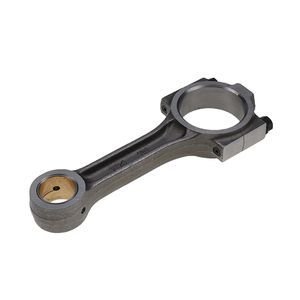
Connecting Rod 8980139624 for Isuzu 4JG1 4JG2 – Fleet Supply
<p><strong>Connecting Rod 8980139624 for Isuzu 4JG1 4JG2, SAE 1045 steel, 148.5 mm center-to-center</strong> — replacement for John Deere 75C and 80C excavators, shot-peened forging with ±0.005 mm big-end bore tolerance. Plan bottom-end rebuilds at scheduled intervals to prevent unplanned teardowns and cascading bearing damage; replacing rods as a matched set keeps balance and load distribution consistent across the cylinder bank. Recommended service intervals and component replacement guidance included with every shipment.</p>
Lead Time
2-5 Days
Warranty
3-12 Months
Min. Order
1 Piece
Ships To
120+ Countries
Request a Quote
Response within 24 hours
Product Details
Fleet Stocking Strategy — connecting rod 8980139624 (cross-reference only) supplied with replacement interval guidance for Isuzu 4JG1/4JG2 overhaul planning on John Deere 75C and 80C fleets.
Technical Specifications
| Parameter | Value |
|---|---|
| Part Number | 8980139624 |
| Product Type | Connecting Rod |
| Cross-Reference | 8-98013-962-4, IZ-8980139624, 8972892630, 8972892631, 8980139620, 8980139621, 8980139623 (reference only) |
| Machine Fitment | John Deere 75C, John Deere 80C |
| Brand Compatibility | Isuzu, John Deere |
| Material | SAE 1045 medium-carbon steel |
| Center-to-Center Length | 148.5 mm |
| Rod Weight | 582 g ±3 g |
| Cap Thickness | 22.3 mm |
| Big-End Bore Tolerance | ±0.005 mm |
| Bolt Torque Spec | 65 N·m |
| Surface Treatment | Shot-peened |
| Condition | New Aftermarket |
| Warranty | 3–12 months against manufacturing defects |
| MOQ | 1 piece |
| Standards | ISO 9001, ISO 6892-1 |
Application Suitability
| Service Interval | What to Check |
|---|---|
| High-hour bottom-end rebuild | Crankshaft journal condition, bearing shell wear pattern, piston pin bore diameter |
| Scheduled fleet overhaul cycle | Oil analysis copper/lead levels, bearing knock at operating temperature |
| Lease-return turnaround | Full matched-set rod weight consistency, cylinder bore scoring |
| Aging machine continuation program | Superseded part number verification, block decking history, prior oversize work |
Why Planned Rod Replacement Beats Reactive Teardowns on Isuzu 4JG1/4JG2 Engines
A Connecting Rod service part for Isuzu 4JG1 4JG2 maintenance ordered ahead of failure keeps the rebuild on your schedule, not the breakdown’s.
Fleet managers who wait for a rod to fail absorb cascading costs: the crankshaft journal scores, the block may need line-boring, and the machine sits idle while emergency parts ship. In my years sourcing bottom-end components for Isuzu 4JG1 and 4JG2 units in dusty construction environments, I watched contractors repeat the same cycle — a single rod failure triggers a full teardown that could have been scheduled during a planned service window [NEED_CITE: planned versus reactive maintenance cost impact on mid-size excavator fleets]. When a connecting rod lets go at operating RPM, the damage rarely stops at that one cylinder. Budgeting rod sets at predictable service intervals means the machine opens up on your terms, with every associated component already on the shelf.
Where the Rod Sits in the Machine’s Service Life
The connecting rod occupies a critical midpoint in the Isuzu 4JG1/4JG2 engine lifecycle. Early service life sees minimal rod stress beyond normal bearing wear, but as hours accumulate and oil contamination rises, the big-end bore gradually loses its honed finish and bearing shells begin to spin. A Connecting Rod service part for Isuzu 4JG1 4JG2 maintenance replacement timed to oil analysis trends — typically when copper and lead readings climb above historical baselines — intercepts this wear before it reaches the crankshaft.
Fleet operators running John Deere 75C and 80C machines through consecutive rebuild cycles find that rod replacement aligned with piston and bearing service yields a coherent bottom-end refresh rather than a patchwork repair. The goal is to reach the next overhaul interval without intermediate failures.
Reading the Wear Signals Before Catastrophic Failure
Bearing knock that emerges only at full operating temperature is the most recognizable late-stage indicator. Earlier signals include rising copper and lead counts in used oil analysis, slight drops in oil pressure at idle, and increased crankcase blow-by [NEED_CITE: oil analysis wear metals as predictive indicators for connecting rod bearing degradation]. These signs accumulate gradually across hundreds of operating hours, giving fleet managers a planning window if they track the data consistently.
Shot-peened SAE 1045 forgings resist the fatigue cracking that initiates at the rod’s I-beam section transitions, but even well-treated rods cannot compensate for neglected bearing clearance or contaminated oil. The shot-peening process introduces compressive surface stresses that delay crack propagation, extending the usable inspection window between service intervals. When paired with a disciplined oil sampling program, this connecting rod design gives maintenance planners a reliable component around which to build a predictable rebuild calendar.
Understanding the Specifications That Matter at Rebuild Time
The 148.5 mm center-to-center length directly governs piston-to-deck clearance and compression ratio. Even minor deviation here shifts the combustion chamber volume and alters injection timing characteristics on these direct-injection diesel engines. The ±0.005 mm big-end bore tolerance ensures that bearing oil film thickness remains within the design envelope — too tight and the shell starves at high load; too loose and impact loading accelerates journal wear.
At 582 g ±3 g per rod, weight matching across a full four-cylinder set keeps secondary vibration within acceptable limits. Unbalanced rods transmit harmonic loads into the main bearings, compounding wear that oil analysis alone may not isolate. The 22.3 mm cap thickness and 65 N·m bolt torque spec together maintain cap rigidity under peak firing pressure, preventing the cap walk that leads to fretting on the bearing shell back.
The Accumulated Cost of Waiting for Failure
Reacting to a connecting rod failure means absorbing damage that spreads well beyond the rod itself. A failed rod on an Isuzu 4JG2 in a John Deere 80C has been known to score the crankshaft journal beyond regrind limits, crack the piston skirt in adjacent cylinders, and gouge the cylinder bore wall — converting a planned rod-and-bearing swap into a block replacement or extensive machining project [NEED_CITE: typical cascading damage patterns from connecting rod failure in four-cylinder diesel engines]. The machine sits non-productive while assessors determine salvageability, and emergency freight costs for a full bottom-end kit erase any savings from deferring the original rod purchase.
Fleet managers who stock matched rod sets alongside scheduled bearing and piston orders eliminate this exposure entirely. The rods sit on the shelf until the service hour threshold arrives, and the rebuild proceeds as a planned event with known parts cost and known labor hours.
Supply That Supports Lifecycle Planning
Our own production lines and qualified sourcing partners operate under a single warranty account, so whether your fleet needs one replacement rod for an emergency or a full matched set for a scheduled overhaul, the quality terms remain consistent. Eight product categories under one order means the rod set, bearing shells, piston assemblies, and gasket kit ship together — no second-order delays holding up a machine already on the stand.
Minimum order from one piece lets you validate fitment on a single unit before committing to fleet-wide stock. Guangzhou warehouse inventory on common Isuzu 4JG1/4JG2 items supports fast dispatch when service windows approach. Our technical team verifies cross-reference numbers across superseded and alternate references, confirming that the rod you receive matches your specific engine build variant. Sample supply for fitment confirmation is available before bulk stocking decisions.
Documentation & Verification
- Commercial invoice and packing list referencing engine serial numbers for traceability
- Part compatibility and cross-reference sheet marking all OEM numbers as reference only
- Dimensional inspection records covering big-end bore, center distance, and rod weight
- Warranty terms aligned to fleet rebuild intervals, 3–12 months coverage
- Packing photographs documenting rod condition and protective wrapping before dispatch
- HS code and customs documentation support for international fleet supply chains
Service Interval & Stocking Guidance
- Schedule rod inspection at each bottom-end teardown and plan replacement when bearing knock or oil analysis trends indicate wear progression.
- Stock matched sets of four rods rather than singles to maintain bank balance and avoid weight mismatch across cylinders.
- Store rods in original protective packaging in a dry environment, keeping the shot-peened surfaces free from corrosion before installation.
- Verify big-end bore dimensions against crankshaft journal measurements before assembly to confirm bearing clearance falls within specification.
- Budget for connecting rod bolts as single-use torque-to-yield fasteners, ordering replacement bolts with every rod set.
Planning Your Fleet’s Next Bottom-End Cycle
Provide your machine model, engine serial number, and current operating hours to receive a replacement interval assessment and matched-set stocking recommendation. If your Isuzu 4JG1 or 4JG2 units have prior rebuild history, include that detail so we can account for any oversize bearings or block work already performed.
Frequently Asked Questions
Q: How do I know it is time to plan a connecting rod replacement on a 4JG1/4JG2 engine?
A: Watch for bearing knock that appears only at full operating temperature, rising copper and lead readings in routine oil analysis, and gradual oil pressure drops at idle. These indicators suggest the big-end bearing shells and possibly the rod bore itself are approaching service limits. Planning replacement at this stage avoids the cascading damage of an in-service failure.
Q: Should I replace all rods as a matched set or just the affected one?
A: Replacing the full set maintains weight consistency across the cylinder bank, which protects main bearing load distribution and reduces secondary vibration. A single rod swap on a high-hour engine risks imbalance and may accelerate wear on adjacent bearings. Matched sets are strongly recommended during any scheduled bottom-end rebuild.
Q: What other bottom-end components should I budget for in the same rebuild cycle?
A: Bearing shells, piston pins, connecting rod bolts, and cylinder bore condition all factor into the complete bottom-end picture. Rod bolts on these engines are typically torque-to-yield fasteners designed for single use. Budgeting the full component set avoids partial rebuilds that lead to early return-to-shop events.
Q: Can I still get reliable supply for Isuzu 4JG1/4JG2 parts as these machines age?
A: Yes. Aftermarket supply continuity for these engines remains strong because of their widespread installation across multiple machine brands. Cross-reference verification covers superseded and alternate part numbers, ensuring correct fitment even when original numbering has changed across production generations. Planned stocking further reduces any supply risk.
Compatible Brands
Our parts are engineered to meet or exceed OEM specifications. Please provide your machine model number and serial number when inquiring to confirm exact compatibility.
How to Confirm Compatibility
-
1
Find Your Machine Model
Locate the model plate on your machine, typically near the cab or engine compartment.
-
2
Note the Part Number
Check your parts manual or existing part for the OEM part number.
-
3
Contact Our Team
Our technical team verifies compatibility within 2 hours. Send us the details via the inquiry form or WhatsApp.
Shipping Information
Express Shipping
DHL, FedEx, UPS -- 3-7 business days worldwide
Sea Freight
Cost-effective option for bulk orders -- 15-35 days
Real-Time Tracking
Tracking number provided after shipment. 24/7 support available.
Warranty Policy
All parts come with manufacturer warranty. Duration varies by product category.
- Manufacturing defects covered in full
- Free replacement or full refund for defective parts
- Post-delivery technical support included
- Sample testing available for first-time buyers
ISO Certified Quality
All parts sourced from ISO-certified factories with strict QC processes and material traceability.
Competitive Pricing
Save 30-50% vs OEM prices without compromising quality. Transparent pricing with no hidden fees.
Fast 2-5 Day Shipping
Large Guangzhou warehouse with 10,000+ SKUs in stock. Most orders ship within 2-5 business days.
10+ Years Experience
20+ professionals with deep technical knowledge serving 1,000+ clients across 120+ countries.
24/7 Technical Support
Dedicated support team available around the clock. Part verification within 2 hours of inquiry.
Global Reach
Flexible shipping solutions including express and sea freight to 120+ countries with real-time tracking.
Related Products
More parts you might need


Block & Internal Parts
Rocker Lever 4059353 for Cummins X15 ISX – Scheduled Maintenance
View Details
Need a Custom Quote?
Our technical team responds within 24 hours. MOQ 1 piece. Ships to 120+ countries from our Guangzhou warehouse.