
Belt Drive Systems
Belt Drive Systems
ISO Certified
Ships 2-5 Days
MOQ 1 Piece
Belt Drive Systems
Cooling Fan Belt Tensioner 7302291 for Bobcat – Fleet Supply
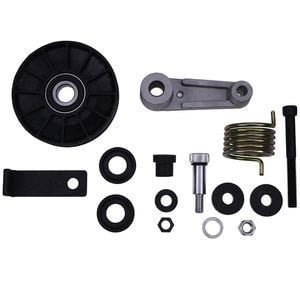
<p><strong>Cooling Fan Belt Tensioner Kit 7302291 for Bobcat Skid Steer Loader, High-Tensile Carbon Steel</strong> — replacement for Bobcat skid steer, track and all wheel loaders including S130 through S300, T140 through T300, and A220/A300 series.</p> <ul> <li>Watch for belt squeal, slippage or rising coolant temperature as early wear indicators</li> <li>Replace tensioner with belt during scheduled service intervals to avoid cascading cooling system failures</li> <li>Supports planned maintenance for fleets and rental operations running older Bobcat models</li> </ul> <p>Planned replacement intervals provided with shipment to support your fleet maintenance scheduling.</p>
Lead Time
2-5 Days
Warranty
3-12 Months
Min. Order
1 Piece
Ships To
120+ Countries
7302291
belt tensioner
bobcat skid steer parts
Cooling System
For Bobcat
Service Part
Request a Quote
Response within 24 hours
Prefer instant chat?
WhatsApp
Product Details
Fleet stock planning — Cooling fan belt tensioner kit 7302291 stays available for older Bobcat loaders even when manufacturer support slows down
Technical Specifications
| Parameter | Value |
|---|---|
| Part Number | 7302291 |
| Product Type | Belt Tensioner |
| Cross-Reference | 7302291 (reference only) |
| Machine Fitment | Bobcat Skid Steer Loader: 653, 751, 753, 763, 773, 853, 863, 864, 873, 883, 963, S130, S150, S160, S175, S185, S205, S220, S250, S300; Bobcat Track Loader: T140, T180, T190, T200, T250, T300; Bobcat All Wheel Loader: A220, A300 |
| Condition | New Aftermarket |
| Warranty | 6-month standard warranty against manufacturing defects |
| MOQ | 1 piece |
| Standards | ISO 9001, ISO 5211, SAE J1926 |
Application Suitability
| Service Interval | What to Check |
|---|---|
| Every 500 hours | Belt surface cracks, tensioner arm spring force loss, pulley bearing noise |
| Every 1,000 hours | Zinc-nickel plating corrosion on tensioner bracket, pivot bushing wear play |
| Coolant temperature spike event | Tensioner spring fatigue, belt glazing on drive side, pulley alignment drift |
| Machine entering seasonal layoff | Tensioner stored position, spring tension retention, corrosion on AISI 1045 body |
Planned Maintenance Stops the Cascade Failure Before It Costs You a Radiator
A worn belt tensioner does not just snap a belt — it overheats the engine and warps the cylinder head before the operator notices the temperature gauge.
Fleet managers running Bobcat skid steers in quarry or demolition work regularly see machines come in with shredded fan belts and scored radiator fins. The root cause is almost never the belt itself. The tensioner spring had already lost its holding force, allowing the belt to slip under thermal load until it shredded and wrapped around the pulley. By that point, the cooling system has been compromised for hours. [NEED_CITE: preventive maintenance scheduling for mobile equipment cooling systems]
Where the Tensioner Sits in Your Machine’s Service Life
The belt tensioner maintenance service part is the single component that determines whether your cooling fan belt tracks correctly across every operating hour. In a Bobcat S185 or T200 running six-hour shifts in dusty conditions, the tensioner pivot and spring degrade steadily from the moment of installation. Most fleet maintenance schedules treat the belt as the wear item and ignore the tensioner until the belt fails — which is exactly backwards. Replacing the tensioner at a planned interval keeps belt life predictable and prevents the sudden overheating events that strand machines on site.
Warning Signs That Signal a Tensioner Approaching End of Service
Listen for a rhythmic chirping at idle that disappears under load — that is the belt slipping on a tensioner that can no longer hold adequate force. Check for uneven belt wear across the width; a tensioner with a worn pivot bushing pulls the belt to one side. If the coolant temperature climbs noticeably during sustained high-load cycles but drops when the machine idles, the fan is not being driven at full speed. [NEED_CITE: belt drive system diagnostic indicators for skid steer loaders] These symptoms appear weeks before catastrophic belt failure, giving you a window to plan the replacement rather than react to a breakdown.
Reading the Specifications That Matter in the Field
The high-tensile carbon steel body rated to AISI 1045 specification gives the tensioner bracket the rigidity to resist flex under continuous spring load — a softer steel would allow the arm to drift under thermal cycling, changing belt tracking over time. The zinc-nickel plating at 15 μm thickness is selected for corrosion resistance in environments where machines are power-washed after every shift; standard zinc plating would pit and flake within months in quarry or agricultural conditions. The SAE J1926 compliance covers the port and connection interface standards, ensuring the tensioner mounts correctly to the engine front cover without modification. ISO 5211 addresses the drive torque interface between the tensioner and the belt drive system, which is critical when matching the unit to belts across the S-series and T-series loader range.
The Cost of Skipping the Tensioner on a Belt Change
Replacing only the belt while leaving a fatigued tensioner in place means the new belt inherits the same tracking error and uneven load distribution that destroyed the previous one. Operators report the new belt lasting a fraction of its expected service life before showing the same wear pattern. The machine then goes down again, and this time the radiator may have accumulated heat-stress damage from repeated near-overheating events. A fleet running twenty Bobcat machines through this cycle accumulates significant unplanned downtime across a single season. [NEED_CITE: total cost of unplanned equipment downtime in construction fleet operations]
Why Fleet Buyers Source This Part Through XUNPO
XUNPO produces selected part lines in-house and sources the remainder from ISO-certified manufacturing partners, with both carrying the same QC standards and six-month warranty — you get consistent quality whether the tensioner comes off our line or a partner facility. Our eight-category coverage means the belt, the tensioner, and any associated idler pulleys or fasteners ship in one consignment, so your maintenance team is not waiting on a second delivery. The one-piece MOQ lets you pull a single unit for fitment verification before committing to a fleet-wide order. We verify cross-references including superseded numbers, which matters when you are stocking tensioners for early-model 653 and 751 loaders alongside current S-series machines. Technical support is available to confirm grade and compatibility against your specific machine serial range.
Documentation & Verification
- Commercial invoice listing 7302291 with full Bobcat loader compatibility range
- Cross-reference sheet marking 7302291 as interchange reference only
- Dimensional QC record covering pivot bore diameter and arm length
- Warranty terms stating coverage period and defect conditions
- Packing photographs showing zinc-nickel plating condition pre-shipment
- HS code and customs classification for international belt tensioner shipment
Service Interval & Stocking Guidance
- Replace tensioner every second belt change or at visible spring fatigue signs
- Check pivot play by hand during each scheduled belt inspection cycle
- Stock one tensioner per five machines for fleet-level preventive maintenance buffer
- Store in dry conditions to preserve zinc-nickel plating integrity before installation
Send Us Your Fleet List for Interval Planning
Provide your Bobcat model mix and average annual operating hours, and we will return a tensioner stocking recommendation aligned with your existing maintenance calendar. For machines with worn or painted nameplates, send a photograph of the engine front cover and we will confirm the correct tensioner variant from our cross-reference files.
Frequently Asked Questions
Q: How often should the belt tensioner be inspected on a Bobcat skid steer?
A: Inspect the tensioner every time the cooling fan belt is checked, which for most fleet operations means every 500 operating hours. Look for loss of spring force, pivot bushing play, and surface corrosion on the bracket. Any visible degradation warrants scheduled replacement before the next high-load season begins.
Q: What symptoms indicate the tensioner is about to fail?
A: A chirping sound at idle that vanishes under load signals belt slip from weak spring tension. Uneven belt wear across its width points to a worn pivot bushing pulling the belt sideways. Rising coolant temperature during sustained operation suggests the fan is not reaching full drive speed due to tensioner fatigue.
Q: Should the belt be replaced at the same time as the tensioner?
A: Yes. A new tensioner restores correct tracking force, but if the old belt has already stretched or glazed from running on a worn tensioner, it will not seat properly on the new unit. Replacing both as a matched set prevents early belt failure and avoids a second service interruption within weeks.
Q: How many tensioners should a fleet keep in stock?
A: A practical baseline is one tensioner for every five machines in the fleet, adjusted upward if your equipment runs in high-dust or high-corrosion environments where pivot and spring degradation accelerates. This buffer covers unplanned replacements without requiring emergency orders that delay machine return to service.
Q: Are tensioners still available for early-model Bobcat loaders like the 653 or 751?
A: Yes. We maintain cross-reference coverage for legacy Bobcat models including the 653, 751, 753, and 763 series. When you provide the machine model, we verify the correct tensioner variant against our compatibility records, ensuring fitment even for machines that are decades past their original production run.
Compatible Brands
CAT
KOMATSU
HITACHI
VOLVO
HYUNDAI
DOOSAN
KOBELCO
SANY
XCMG
Our parts are engineered to meet or exceed OEM specifications. Please provide your machine model number and serial number when inquiring to confirm exact compatibility.
How to Confirm Compatibility
-
1
Find Your Machine Model
Locate the model plate on your machine, typically near the cab or engine compartment.
-
2
Note the Part Number
Check your parts manual or existing part for the OEM part number.
-
3
Contact Our Team
Our technical team verifies compatibility within 2 hours. Send us the details via the inquiry form or WhatsApp.
Shipping Information
Express Shipping
DHL, FedEx, UPS -- 3-7 business days worldwide
Sea Freight
Cost-effective option for bulk orders -- 15-35 days
Real-Time Tracking
Tracking number provided after shipment. 24/7 support available.
Warranty Policy
3-12
Months Warranty
All parts come with manufacturer warranty. Duration varies by product category.
- Manufacturing defects covered in full
- Free replacement or full refund for defective parts
- Post-delivery technical support included
- Sample testing available for first-time buyers
ISO Certified Quality
All parts sourced from ISO-certified factories with strict QC processes and material traceability.
Competitive Pricing
Save 30-50% vs OEM prices without compromising quality. Transparent pricing with no hidden fees.
Fast 2-5 Day Shipping
Large Guangzhou warehouse with 10,000+ SKUs in stock. Most orders ship within 2-5 business days.
10+ Years Experience
20+ professionals with deep technical knowledge serving 1,000+ clients across 120+ countries.
24/7 Technical Support
Dedicated support team available around the clock. Part verification within 2 hours of inquiry.
Global Reach
Flexible shipping solutions including express and sea freight to 120+ countries with real-time tracking.
Related Products
More parts you might need
Belt Drive Systems
113.21371 V-Belt for Sears Craftsman 15 1/2" Drill Press – Wear Item
View Details
Need a Custom Quote?
Our technical team responds within 24 hours. MOQ 1 piece. Ships to 120+ countries from our Guangzhou warehouse.