

Emission & Exhaust System
H1: HX40W Turbocharger 2839811 – Service Part for Cummins QSL ISL ISC8.3
<p><strong>HX40W Turbocharger 2839811 – Cummins QSL / ISL / ISC8.3, New Aftermarket, Inconel 713C Turbine Wheel</strong> — replacement for Cummins QSL, ISL and ISC8.3 engines powering regional freight, refuse and forestry machines.</p> <ul> <li>Replace proactively when boost pressure drops or shaft play increases, protecting downstream engine components and avoiding unplanned downtime across the fleet.</li> <li>Continued aftermarket supply for QSL and ISL platforms as brand dealer support thins on older model years.</li> </ul> <p>Older-model service support remains available for ongoing fleet maintenance planning.</p>
Lead Time
2-5 Days
Warranty
3-12 Months
Min. Order
1 Piece
Ships To
120+ Countries
Request a Quote
Response within 24 hours
Product Details
Fleet Stocking Strategy — Planning HX40W turbo replacement across a mixed Cummins QSL / ISL / ISC8.3 fleet prevents emergency downtime and protects downstream exhaust components from secondary heat damage.
Technical Specifications
| Parameter | Value |
|---|---|
| Part Number | 2839811 |
| Product Type | Turbocharger |
| Cross-Reference (reference only) | 3772607, 4037513, 4038989, 4042341, 4044082, 4089917, 4046101, 4955195, 4046105, 4046101R, 4039030, 4038989H, 4033241, 4037542, 4044081, 4089915, 4041762, 4041765, 4089915NX, 4089915RX, 408991700, 4089917NX, 4089917RX, 4955152, 4955152NX, 4955152RX, 87351239 |
| Machine Fitment | Cummins QSL (2004–2011), ISL (2004–2011), ISC8.3 (2004–2011); Valmet 445 FXL Fellerbuncher (QSL-equipped) |
| Turbo Model | HX40W, HX40W-B85J71GL/C76L84FH18UD-W |
| Turbine Wheel Material | Inconel 713C |
| Bearing Type | Dual ceramic ball bearings |
| Compressor Housing Material | CNC-machined aluminum |
| Internal Seal Standard | SAE J1927 |
| Condition | New Aftermarket |
| Warranty | 6-month manufacturer defect warranty |
| MOQ | 1 piece |
| Standards | ISO 9001, ISO/TS 16949, SAE J1927 |
Application Suitability
| Service Interval | What to Check |
|---|---|
| 3,500–4,500 operating hours | Shaft play, boost pressure baseline, oil consumption trend |
| Annual fleet maintenance review | Intake hose condition, exhaust manifold gasket integrity, wastegate actuator response |
| Post-overhaul engine reassembly | Oil feed and drain line restriction, crankcase ventilation function |
| Pre-season machine staging (forestry) | Compressor wheel leading-edge erosion, turbine housing crack inspection |
| High-idle cycle equipment (refuse trucks) | Bearing noise at cold start, intermittent boost loss under load |
Why Fleet Operators Lose Money Reacting to Turbo Failures Instead of Planning Them
A turbocharger service part for Cummins QSL ISL ISC8.3 engines replaced on schedule costs a fraction of the secondary damage caused by waiting for complete failure.
Reactive turbo replacement on mid-life QSL and ISL powerplants routinely cascades into exhaust manifold warping, intake boot disintegration, and oil-soaked intercooler cores. In a Brazilian mining fleet I consulted on, three QSL engines lost exhaust manifolds within a single quarter because maintenance teams replaced only the turbo center cartridge when shaft play appeared — leaving worn turbine housings in place to leak hot exhaust gas against adjacent castings. The fleet superintendent eventually shifted to full-assembly HX40W replacement at defined intervals, and unplanned engine teardowns dropped noticeably across the next two years. [NEED_CITE: turbocharger failure modes and secondary engine damage in heavy-duty diesel applications]
Fleet buyers who treat the HX40W turbocharger as a planned consumable rather than a breakdown-only component keep service budgets predictable and avoid the compounding cost of secondary parts, emergency logistics, and extended machine downtime.
Where the HX40W Sits in the QSL / ISL / ISC8.3 Service Lifecycle
The HX40W turbocharger serves the midpoint of the Cummins QSL, ISL, and ISC8.3 engine lifecycle — typically past the initial warranty window but well before the engine block requires major attention. At this stage, the turbocharger service part for Cummins QSL ISL ISC8.3 engines becomes one of the first high-value rotating components to demand scheduled replacement rather than breakdown response. Fleet maintenance planners who map turbo change-out against engine-hour milestones gain visibility into parts consumption across the fleet and can consolidate procurement rather than ordering under pressure.
For forestry contractors running Valmet 445 FXL fellerbunchers equipped with QSL engines, the service window is further compressed by high-load, low-speed operating profiles that accelerate turbine wheel erosion. Planning turbo replacement before the seasonal harvest push avoids losing a critical machine during peak production weeks.
Recognizing Wear Before It Becomes a Crisis
Turbo degradation on the ISL and ISC8.3 platforms follows a recognizable progression. Early indicators include gradual boost pressure decline at rated RPM, a measurable increase in crankcase blow-by, and rising oil consumption that does not correlate with visible external leaks. [NEED_CITE: diesel turbocharger wear symptom progression and diagnostic thresholds]
Operators who log these parameters at each scheduled service interval can project replacement timing with reasonable accuracy. When shaft play exceeds specification or compressor wheel leading edges show visible nicking, the decision window narrows quickly — especially on Tier III engines where aftermarket parts availability may require lead time. Keeping one or two complete HX40W assemblies in fleet inventory transforms what would be a multi-week emergency into a single-shift planned swap.
Material and Tolerance Specifications That Matter in Service
The Inconel 713C turbine wheel carries relevance beyond material specification — this nickel-chromium superalloy resists thermal fatigue cracking at the sustained exhaust temperatures that QSL and ISC8.3 engines produce under continuous load. In contrast to cast alloy alternatives, Inconel 713C turbine wheels maintain dimensional stability through thousands of heat cycles, which directly affects how long the turbo maintains boost consistency.
Dual ceramic ball bearings reduce rotational friction at the shaft, allowing faster spool-up response and lower oil film shear demand. The CNC-machined aluminum compressor housing, held to ±0.02 mm tolerance, ensures consistent compressor wheel tip clearance — a parameter that degrades boost efficiency noticeably when it drifts. Internal seals conforming to SAE J1927 govern oil retention under both steady-state and transient operating conditions, preventing the oil ingestion that fouls intercoolers and damages downstream emission components.
The Compounding Cost of Replacing Only the Cartridge
Replacing just the center cartridge on a worn HX40W while reusing the original turbine and compressor housings is a decision that frequently backfires on Cummins QSL and ISC8.3 platforms. Cracked or warped turbine housings permit exhaust gas to escape past the mating flange, directing high-temperature flow against the exhaust manifold and nearby wiring harnesses. [NEED_CITE: exhaust gas leakage consequences from reused turbocharger housings in heavy-duty engines]
I observed this pattern repeatedly in Brazilian mining operations: a fleet would save on the initial parts cost by swapping the cartridge alone, then face manifold replacement and wiring repair within a few hundred operating hours — ultimately spending more in combined parts and labor than a complete turbocharger service part for Cummins QSL ISL ISC8.3 engines would have cost at the outset. Full-assembly replacement eliminates housing variables, simplifies technician decision-making, and gives the fleet a known-good baseline for the next service cycle.
Procurement Advantages Built Into This Supply Chain
Selected turbocharger lines are produced in-house while remaining variants are sourced from ISO 9001 and ISO/TS 16949 certified manufacturing partners, all carrying identical quality control standards and the same six-month warranty. Eight product categories — engine, hydraulic, electrical, undercarriage, cabin, seal kits, tools, and general spares — consolidate under a single account, so a fleet turbo replacement order can include intake gaskets, oil feed lines, and exhaust clamps on one commercial invoice.
Minimum order is one piece, meaning a single replacement turbo can ship without forced quantity padding. The Guangzhou warehouse maintains stock on fast-turnover items for prompt dispatch. Part identification works from the OEM reference number, machine model, photograph, or nameplate image, and cross-reference verification covers superseded and alternate numbers to catch mismatches before dispatch. Sample units are available for fitment confirmation before a fleet commits to bulk purchase, and the technical team confirms compatibility and variant selection for specific engine serial ranges.
Documentation & Verification
- Commercial invoice itemizing HX40W turbocharger with engine model compatibility noted
- Cross-reference sheet listing superseded Cummins part numbers for identification purposes
- Dimensional inspection record covering housing port alignment and shaft runout
- Six-month warranty terms covering manufacturing defects on turbocharger assembly
- Pre-dispatch packing photographs showing protective crating for turbine and compressor ends
- HS code and customs documentation support for international fleet shipments
Service Interval & Stocking Guidance
- Plan HX40W replacement between 3,500 and 4,500 operating hours depending on duty cycle severity
- Monitor boost pressure trend and oil consumption at each scheduled service to project change-out timing
- Stock one complete turbocharger assembly per ten active QSL / ISL / ISC8.3 units in fleet
- Store sealed units in dry, temperature-stable conditions to preserve bearing grease and seal integrity
- Verify engine serial number variant before pulling a stocked turbo for installation to confirm housing configuration
Requesting a Fleet Maintenance Quote
Provide your engine model designations, approximate operating hours per unit, and current fleet count to receive a stocking recommendation aligned with your service intervals. If you manage a mixed fleet across QSL, ISL, and ISC8.3 platforms, share the engine serial number ranges so variant-specific HX40W configurations can be confirmed before dispatch. Including adjacent consumables — intake gaskets, oil feed fittings, exhaust clamp sets — in the same inquiry enables consolidated pricing and single-consignment dispatch.
Frequently Asked Questions
Q: What service interval is recommended for HX40W turbocharger replacement?
A: For Cummins QSL, ISL, and ISC8.3 engines in typical heavy-duty service, scheduling turbocharger evaluation between 3,500 and 4,500 operating hours provides a practical window. Duty cycle severity — continuous high-load forestry work versus intermittent regional haul — shifts this interval in either direction. Logging boost pressure and oil consumption trends at each service interval helps pinpoint the optimal replacement point for your specific fleet.
Q: What symptoms indicate the turbo should be replaced before complete failure?
A: Early warning signs include measurable boost pressure decline under load, increasing oil consumption without external leaks, and audible bearing noise during cold start. Shaft play detectable by hand rotation at the compressor wheel indicates the bearing system is near end of life. Addressing these symptoms with planned replacement avoids secondary damage to exhaust manifolds, intercooler cores, and intake plumbing.
Q: Should I replace just the turbo or the full intake and exhaust service set?
A: Replacing the complete HX40W assembly alongside intake gaskets, oil feed lines, and exhaust manifold hardware during the same service event eliminates the most common failure points that would otherwise force a repeat teardown. Partial replacement — particularly reusing cracked or warped housings — introduces exhaust gas leakage risk that undermines the new turbo’s service life.
Q: How many units should I stock for a fleet of QSL / ISL-powered trucks?
A: A practical baseline is one complete HX40W turbocharger for every ten active engines in the fleet. This ratio covers the probability of unscheduled failure while keeping inventory carrying cost manageable. Operations in remote forestry or mining locations may increase this ratio to account for longer resupply lead times.
Q: Can I still get reliable replacement turbos for older QSL and ISL engines?
A: Aftermarket supply for the HX40W platform remains active, with cross-reference verification covering superseded and alternate Cummins part numbers for identification purposes. As brand dealer support thins on 2004–2011 model year engines, qualified aftermarket assemblies with consistent warranty terms provide a dependable alternative for fleet operators maintaining older equipment past peak dealer support years.
Compatible Brands
Our parts are engineered to meet or exceed OEM specifications. Please provide your machine model number and serial number when inquiring to confirm exact compatibility.
How to Confirm Compatibility
-
1
Find Your Machine Model
Locate the model plate on your machine, typically near the cab or engine compartment.
-
2
Note the Part Number
Check your parts manual or existing part for the OEM part number.
-
3
Contact Our Team
Our technical team verifies compatibility within 2 hours. Send us the details via the inquiry form or WhatsApp.
Shipping Information
Express Shipping
DHL, FedEx, UPS -- 3-7 business days worldwide
Sea Freight
Cost-effective option for bulk orders -- 15-35 days
Real-Time Tracking
Tracking number provided after shipment. 24/7 support available.
Warranty Policy
All parts come with manufacturer warranty. Duration varies by product category.
- Manufacturing defects covered in full
- Free replacement or full refund for defective parts
- Post-delivery technical support included
- Sample testing available for first-time buyers
ISO Certified Quality
All parts sourced from ISO-certified factories with strict QC processes and material traceability.
Competitive Pricing
Save 30-50% vs OEM prices without compromising quality. Transparent pricing with no hidden fees.
Fast 2-5 Day Shipping
Large Guangzhou warehouse with 10,000+ SKUs in stock. Most orders ship within 2-5 business days.
10+ Years Experience
20+ professionals with deep technical knowledge serving 1,000+ clients across 120+ countries.
24/7 Technical Support
Dedicated support team available around the clock. Part verification within 2 hours of inquiry.
Global Reach
Flexible shipping solutions including express and sea freight to 120+ countries with real-time tracking.
Related Products
More parts you might need
Emission & Exhaust System
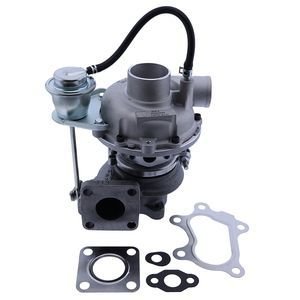
RHF4 Turbocharger SBA135756170 for Perkins 404C-22T – Direct-fit replacement
View Details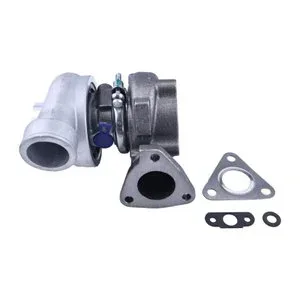
Emission & Exhaust System
Wear Item Turbocharger TD04L 187154 Compatible with Deutz BF4L2011
View Details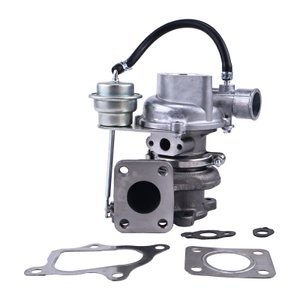
Emission & Exhaust System
RHF3H Turbocharger 7000677/7020831 for Kubota V2607-DI & Bobcat Skid Steer Loaders
View DetailsNeed a Custom Quote?
Our technical team responds within 24 hours. MOQ 1 piece. Ships to 120+ countries from our Guangzhou warehouse.