
Cylinder Components
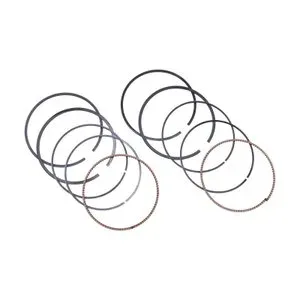
Piston Ring Set 13008-0569 | Service Part for FR651V FR691V FR730V
<p><strong>Piston Ring Set 13008-0569 (cross-reference), High-Carbon Alloy Steel, Ra ≤0.4 μm</strong> — compatible with Kawasaki FR651V, FR691V, FR730V and related FS/FT/FX series engines used in commercial mowing fleets.</p> <ul> <li>Replace rings when oil consumption rises, blue smoke appears, or compression drops below threshold — inspect piston groove side clearance and cylinder bore taper during the same service event.</li> <li>Planned stocking ahead of peak season keeps fleet turnaround on schedule.</li> </ul> <p>Replacement interval guidance included with each shipment for your maintenance planning records.</p>
Lead Time
2-5 Days
Warranty
3-12 Months
Min. Order
1 Piece
Ships To
120+ Countries
Request a Quote
Response within 24 hours
Product Details
Fleet Stocking — planned maintenance supply for Kawasaki FR/FS/FT/FX series engines with 6-month warranty and one-piece minimum order
Technical Specifications
| Parameter | Value |
|---|---|
| Part Number | 13008-0569 |
| Cross-Reference | 13008-0569 (reference only), 13008-7005 (reference only), KM-13008-0569 (reference only), 130080569 (reference only), 130087005 (reference only), KM130080569 (reference only) |
| Product Type | Piston Ring |
| Machine Fitment | FR651V, FR691V, FR730V, FS651V, FS691V, FS730V, FT651V, FT691V, FT730V, FX600V, FX651V, FX691V, FX730V |
| Brand Fitment | Kawasaki, Cub Cadet, MTD, Yard Man |
| Material | High-carbon alloy steel with precision ground surfaces |
| Surface Treatment | Top compression ring chrome-plated face; tapered land design on second ring |
| Dimensional Tolerance | ±0.005 mm thickness |
| Surface Finish | Ra ≤0.4 μm |
| Hardness | Rockwell C58–62 |
| Tensile Strength | ≥1,400 MPa |
| Elongation | ≥12% |
| Assembly State | New aftermarket |
| Warranty | 6-month warranty against manufacturing defects |
| MOQ | 1 piece |
| Quality Standard | ISO 9001 |
Application Suitability
| Service Interval | What to Check |
|---|---|
| Every 1,500–2,000 operating hours on commercial mowers | Cylinder bore taper and out-of-round measurement before ring installation |
| Peak mowing season preparation overhaul | Piston groove side clearance and ring end gap at top, middle, and bottom of bore |
| Between seasonal rental deployment cycles | Valve guide condition and cylinder head carbon buildup during ring replacement |
| Annual municipal groundskeeping fleet review | Compression and leak-down test results to confirm ring sealing performance |
| Older FR651V and FS651V engines past brand support thinning | Bore scoring depth to determine if rings alone restore compression or bore reconditioning is needed |
Why Fleet Operators Plan Ring Replacements Before Failure Forces Their Hand
Waiting until blow-by symptoms appear guarantees the mower is already sidelined during the busiest cutting weeks of the year.
In the Pearl River Delta maintenance circuit, I have watched too many commercial mowing operations lose entire weeks of peak season because a single Kawasaki-powered unit developed blue smoke mid-contract and no ring set was on the shelf. The pattern repeats: oil consumption creeps up gradually, compression drops below threshold, and by the time the exhaust smoke becomes visible on a Monday morning start-up, the machine needs a teardown that will not be finished until parts arrive [NEED_CITE: planned maintenance scheduling practices for commercial turf equipment fleets]. Sourcing a Piston Ring Set service part maintenance replacement on short notice during peak demand means competing with every other operator facing the same problem, often resulting in multi-week delays that cost far more in lost contract revenue than the parts themselves.
Where Rings Fit in the Engine’s Working Life
This piston ring set serves as a planned maintenance component for Kawasaki FR, FS, FT, and FX series small engines commonly found in zero-turn mowers and stand-on commercial turf equipment. Within the engine’s service life, rings occupy a middle-ground position — they wear predictably based on operating hours and load conditions, unlike catastrophic failures such as connecting rod bearing seizure. For a fleet running similar units across multiple properties, ring wear progression tends to cluster around comparable hour intervals, making batch procurement a straightforward planning exercise rather than a guessing game. The Piston Ring Set service part maintenance replacement sits alongside scheduled valve adjustments and governor linkage inspections as a preventive action that keeps revenue-generating equipment in the field.
Recognizing Wear Before It Becomes a Down Machine
Elevated oil consumption is typically the first measurable indicator, often noticed when a unit that previously ran three weeks between oil top-ups suddenly requires weekly additions. Blue exhaust smoke under load, particularly when the mower deck engages and engine RPM drops momentarily, signals that compression rings are no longer sealing effectively against combustion pressure [NEED_CITE: diagnostic indicators for small engine piston ring wear]. A compression test revealing readings significantly below the manufacturer’s published threshold confirms the diagnosis, though it does not reveal whether cylinder bore taper has progressed beyond what new rings can address. When bore scoring is visible through the spark plug hole or measurable with a bore gauge, the decision shifts from ring replacement to evaluating whether short-block exchange or bore reconditioning makes more economic sense for that particular unit’s remaining service life.
Material and Surface Engineering Behind Ring Performance
The high-carbon alloy steel base material provides the structural foundation needed to withstand repeated thermal cycling and combustion pressure loads typical of air-cooled small engines operating under sustained high-RPM mowing conditions. Chrome plating on the top compression ring face reduces friction against the cylinder wall while providing wear resistance that extends ring life through multiple heat cycles — a critical consideration for commercial mowers that may run eight or more hours daily during peak season. The tapered land design on the second ring serves a dual purpose: it assists in oil control during the downstroke while contributing to combustion gas sealing under load. Dimensional tolerance held to ±0.005 mm thickness ensures consistent ring tension and groove fitment across production batches, which matters when a fleet operator is ordering multiple sets for a scheduled overhaul day. Surface finish at Ra ≤0.4 μm allows the rings to seat properly during initial break-in without excessive material removal that would shorten the seating period or risk early blow-by.
The Accumulated Cost of Reactive Ring Procurement
Every hour a commercial mower sits waiting for parts during contract season represents lost revenue that cannot be recovered later — municipalities and golf courses do not extend mowing schedules because equipment was unavailable. Fleet operators who stock reactively end up paying expedited freight premiums repeatedly, and the cumulative logistics cost across a season often exceeds what a preventive stocking program would have required upfront. More insidiously, running engines past ring wear limits accelerates cylinder bore wear through increased blow-by contamination of the oil, meaning that when the overhaul finally happens, bore reconditioning or oversize pistons may be required instead of a simple ring swap [NEED_CITE: relationship between delayed ring replacement and cylinder bore wear progression]. The machine that gets a planned ring change at the right interval returns to service with minimal additional work, while the one that runs until failure often needs cylinder honing, new bearings, and sometimes crankshaft inspection before it can be reassembled.
Why Procurement Here Supports Your Maintenance Cadence
Production on selected lines combined with qualified sourced supply under a single account means your ring sets arrive with the same quality control and warranty terms regardless of manufacturing origin. Eight equipment categories covered means that when your overhaul plan calls for rings, gaskets, seals, and filters, everything ships as one consignment rather than arriving from multiple vendors on different schedules. One-piece minimum order eliminates the problem of being forced to buy ten ring sets when your current plan only calls for three, keeping your inventory aligned to actual fleet requirements rather than supplier minimums. Cross-reference verification covering superseded and alternate numbers — such as confirming whether 13008-7005 or KM-13008-0569 applies to your specific engine serial range — prevents the costly mistake of stocking the wrong variant. Sample supply for fitment confirmation before bulk commitment lets you verify groove fitment and end gap on one set before committing your entire seasonal budget.
Documentation & Verification
- Commercial invoice and packing list itemizing ring sets by engine model fitment
- Part compatibility sheet confirming cross-reference numbers as reference only
- Dimensional check record verifying thickness tolerance and surface finish
- Six-month warranty terms covering manufacturing defects
- Packing photographs showing protective packaging before dispatch
- HS code and customs documentation support for international fleet shipments
Service Interval & Stocking Guidance
- Plan ring replacement at manufacturer-recommended overhaul intervals or when compression drops below threshold
- Monitor oil consumption trends weekly; sudden increases signal ring wear requiring inspection
- Stock quantity should match fleet size plus one additional set for unexpected mid-season failures
- Store ring sets in original protective packaging in climate-controlled inventory to prevent surface corrosion
- Verify engine serial number against fitment list before issuing rings to technicians on overhaul day
Planning Your Next Overhaul Cycle
Provide your fleet composition including engine models and current operating hours to receive stocking recommendations aligned to your maintenance calendar. Specify which units are approaching typical ring replacement intervals so we can confirm availability and lead times for your scheduled overhaul dates. Include any cross-reference numbers you have been using previously so we can verify they match current production part numbers and engine serial ranges. Share your seasonal deployment schedule so we can align delivery timing to your pre-season preparation window rather than reactive mid-season emergencies.
Frequently Asked Questions
Q: How often should piston rings be replaced on these Kawasaki engine models?
A: Replacement intervals depend on operating conditions and maintenance history rather than fixed hour mandates. Commercial mowers running daily under heavy dust conditions typically need ring evaluation around 1,500 to 2,000 hours, though some units reach 2,500 hours before compression drops below threshold. The most reliable approach is tracking oil consumption trends and scheduling replacement when top-up frequency increases noticeably, rather than waiting for visible exhaust smoke or failed compression tests.
Q: What symptoms indicate rings are worn and due for replacement?
A: Increased oil consumption is usually the first measurable sign, followed by blue exhaust smoke under load when the mower deck engages. Compression readings below manufacturer specifications confirm ring sealing loss, though a leak-down test provides better insight into whether the problem is rings, valves, or head gasket. Visible cylinder bore scoring through the spark plug hole indicates wear has progressed beyond what new rings alone can correct, requiring bore measurement before committing to ring-only repair.
Q: Should I replace rings alone or consider a full short-block exchange?
A: This depends on cylinder bore condition and the unit’s remaining service life. If bore taper and out-of-round measurements fall within specifications and scoring is minimal, new rings restore performance cost-effectively. However, if bore wear exceeds limits or the crankshaft shows significant wear, a short-block exchange often proves more economical than machining the bore and sourcing oversize pistons. For older FR651V and FS651V engines nearing end-of-life, short-block exchange may provide better long-term reliability than investing in bore reconditioning work.
Q: How many sets should a fleet operator keep in stock?
A: Baseline stocking should cover scheduled overhauls plus one additional set per engine model variant in your fleet for unexpected mid-season failures. If you operate ten FR691V units and plan to overhaul three this season, stock four sets minimum. Fleet operators with standardized equipment across multiple properties can consolidate stocking more efficiently, while mixed fleets running several engine variants need to balance inventory investment against the risk of having a specific model down during peak demand periods.
Q: Are these rings still available for older FR651V and FS651V engines?
A: Yes, these piston ring sets remain available for older Kawasaki FR and FS series engines even as manufacturer support thins on early production models. Cross-reference verification confirms compatibility across superseded part numbers, so if your existing documentation shows 13008-7005 or other legacy numbers, we can confirm whether the current production set fits your specific engine serial range. This continuity allows fleet operators to maintain older equipment without being forced into premature machine replacement due to parts unavailability.
Compatible Brands
Our parts are engineered to meet or exceed OEM specifications. Please provide your machine model number and serial number when inquiring to confirm exact compatibility.
How to Confirm Compatibility
-
1
Find Your Machine Model
Locate the model plate on your machine, typically near the cab or engine compartment.
-
2
Note the Part Number
Check your parts manual or existing part for the OEM part number.
-
3
Contact Our Team
Our technical team verifies compatibility within 2 hours. Send us the details via the inquiry form or WhatsApp.
Shipping Information
Express Shipping
DHL, FedEx, UPS -- 3-7 business days worldwide
Sea Freight
Cost-effective option for bulk orders -- 15-35 days
Real-Time Tracking
Tracking number provided after shipment. 24/7 support available.
Warranty Policy
All parts come with manufacturer warranty. Duration varies by product category.
- Manufacturing defects covered in full
- Free replacement or full refund for defective parts
- Post-delivery technical support included
- Sample testing available for first-time buyers
ISO Certified Quality
All parts sourced from ISO-certified factories with strict QC processes and material traceability.
Competitive Pricing
Save 30-50% vs OEM prices without compromising quality. Transparent pricing with no hidden fees.
Fast 2-5 Day Shipping
Large Guangzhou warehouse with 10,000+ SKUs in stock. Most orders ship within 2-5 business days.
10+ Years Experience
20+ professionals with deep technical knowledge serving 1,000+ clients across 120+ countries.
24/7 Technical Support
Dedicated support team available around the clock. Part verification within 2 hours of inquiry.
Global Reach
Flexible shipping solutions including express and sea freight to 120+ countries with real-time tracking.
Related Products
More parts you might need



Need a Custom Quote?
Our technical team responds within 24 hours. MOQ 1 piece. Ships to 120+ countries from our Guangzhou warehouse.