
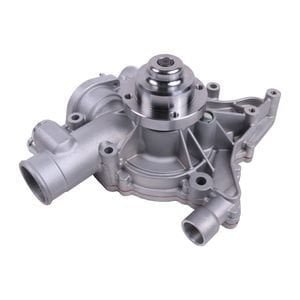
Lubrication & Cooling Systems

Lubrication & Cooling Systems
ISO Certified
Ships 2-5 Days
MOQ 1 Piece
Lubrication & Cooling Systems
Sea Water Pump 21212799 3812519 | Scheduled Maintenance for Volvo Penta 4.3L 5.0L 5.7L
<p><strong>Sea Water Pump 21212799 3812519 for Volvo Penta 4.3L 5.0L 5.7L</strong> — replacement for raw-water cooling circuit on GL, GXi, OSi, Gi and CE engine variants.</p> <ul> <li>Plan replacement around impeller erosion and bearing seal wear before overheating cascades into hoses and heat exchangers</li> <li>Pair with raw-water hoses, thermostat and inspection of the heat exchanger during scheduled service</li> <li>Supersedes earlier casting numbers across multiple displacement platforms</li> </ul> <p>Lifecycle replacement guidance included with every shipment to align with your fleet maintenance schedule.</p>
Lead Time
2-5 Days
Warranty
3-12 Months
Min. Order
1 Piece
Ships To
120+ Countries
21212799
3812519
Marine Engine Cooling
Service Part
Volvo Penta Compatible
water pump
Request a Quote
Response within 24 hours
Prefer instant chat?
WhatsApp
Product Details
Lifecycle Planning — Sea water pump replacement intervals mapped to Volvo Penta 4.3L, 5.0L, and 5.7L service schedules with verified cross-reference 21212799 and 3812519 (reference only).
Technical Specifications
| Parameter | Value |
|---|---|
| Part Number | 21212799, 3812519 |
| Cross-Reference | 21212799 (cross-reference only), 3812519 (cross-reference only) |
| Product Type | Water Pump |
| Part Name | Sea Water Pump |
| Engine Compatibility | 4.3L, 5.0L, 5.7L Volvo Penta marine petrol engines |
| Machine Fitment | 4.3GL-G, 4.3GL-GF, 4.3GL-J, 4.3GL-JF, 4.3GL-P, 4.3GXi-225-R, 4.3Gi-200-R, 4.3GXi-F, 4.3GXi-FF, 4.3OSi-F, 4.3GXi-G, 4.3GXi-GF, 4.3OSi-G, 4.3GXi-J, 4.3GXi-JF, 4.3OSi-J, 4.3GXi-P, 4.3GXi-Q, 4.3GXiE-225-R, 4.3GXiE-M, 4.3GXiE-P, 4.3GXiE-Q, 5.0GL-J, 5.0GL-JF, 5.0GXi-270-R, 5.0GXi-F, 5.0GXi-FF, 5.0OSi-F, 5.0GXi-G, 5.0GXi-GF, 5.0OSi-G, 5.0GXi-J, 5.0GXi-JF, 5.0OSi-J, 5.0GXi-P, 5.0GXiC-270-R, 5.0GiC-225-S, 5.0GXiC-J, 5.0GXiC-JF, 5.0GiC-J, 5.0GXiC-P, 5.0GXiCE-270-R, 5.0GiCE-225-S, 5.0GXiCE-J, 5.0GXiCE-JF, 5.0GXiCE-M, 5.0GXiCE-P, 5.0GXiE-270-R, 5.0GXiE-JF, 5.0GXiE-J, 5.0OSiE-JF, 5.0GXiE-P, 5.7Gi-300-J, 5.7Gi-300-JF, 5.7OSi-300-J, 5.7Gi-300-P, 5.7GXi-P, 5.7Gi-300-R, 5.7GXi-320-R, 5.7Gi-F, 5.7Gi-FF, 5.7GXi-G, 5.7Gi-G, 5.7Gi-GF, 5.7GXi-H, 5.7GiC-300-J, 5.7GiC-300-JF, 5.7GXiC-J, 5.7GiC-300-P, 5.7GXiC-P, 5.7GiC-300-R, 5.7GXiC-320-R, 5.7GiCE-300-J, 5.7GiCE-300-JF, 5.7GXiCE-J, 5.7GiCE-300-P, 5.7GXiCE-P, 5.7GiCE-300-R, 5.7GXiCE-320-R, 5.7GiE-300-J, 5.7GiE-300-JF, 5.7GXiE-J, 5.7GiE-300-P, 5.7GXiE-P, 5.7GiE-300-R, 5.7GXiE-320-R, 5.7GiI-F, 5.7GXiI-G, 5.7GiI-G, 5.7GXiI-H, V6-200-A, V6-225-A, V6-225-E-A, V8-225-C-A, V8-300-C-A, V8-320-C-A, V8-225-C-B, V8-300-C-B, V8-320-C-B, V8-225-CE-A, V8-300-CE-A, V8-320-CE-A, V8-225-CE-B, V8-300-CE-B, V8-320-CE-B, V8-270-A, V8-270-B, V8-270-C-A, V8-270-C-B, V8-270-CE-A, V8-270-E-A, V8-270-E-B, V8-300-A, V8-320-A, V8-300-B, V8-320-B, V8-300-E-A, V8-320-E-A, V8-300-E-B, V8-320-E-B |
| Brand Compatibility | Compatible with Volvo Penta marine engines |
| Condition | New Aftermarket |
| Warranty | 3–12 months against manufacturing defects |
| Manufacturing Standard | ISO-certified production |
| Operating Environment | Saltwater and freshwater marine applications |
Application Suitability
| Service Interval | What to Check |
|---|---|
| Annual / biannual scheduled service | Impeller blade condition, bearing seal integrity, housing corrosion |
| 500–600 operating hours | Raw-water flow output, weep hole leakage, shaft play |
| Between charter seasons | Heat exchanger scaling, hose deterioration, thermostat function |
| Legacy fleet life-extension | Parts availability for older GL, GXi, OSi generation suffixes |
| Pre-departure inspection cycle | Belt alignment, pulley condition, hose clamp torque |
Why Scheduled Cooling Maintenance Prevents Voyage Disruptions
A planned sea water pump replacement costs a fraction of the collateral damage caused by an unplanned overheat event.
Most operators first learn their raw-water circuit is failing when the temperature gauge climbs mid-crossing. By that point, the overheating cascade has already begun — warped cylinder heads, degraded head gaskets, and baked coolant passages turn a single-component swap into a multi-day engine teardown. On commercial workboats running tight charter schedules, an unplanned shutdown in a remote anchorage means a tug call-out, a missed booking, and a reputation hit that extends far beyond the repair invoice [NEED_CITE: marine engine overheating damage cascade and collateral component failure].
The sea water pump service part compatible with Volvo Penta 4.3L, 5.0L, and 5.7L engines sits in a predictable wear position. Impeller erosion, bearing seal fatigue, and saltwater housing corrosion advance gradually across operating seasons. Recognising the early signs — reduced raw-water exhaust flow, moisture weeping from the seal indicator, or abnormal bearing noise — allows fleet planners to schedule the swap during a routine haul-out rather than scrambling for emergency logistics.
Predictable Wear in the Raw-Water Cooling Circuit
The sea water pump is the first mechanical component in the raw-water loop, drawing unfiltered seawater through the heat exchanger before discharge. Because it handles abrasive particulate and corrosive brine directly, its wear trajectory is more aggressive than any closed-loop component. Planning its marine engine cooling maintenance interval around operating hours rather than waiting for failure keeps the vessel’s thermal management within design parameters and prevents downstream heat exchanger scaling.
Wear Progression and Linked Component Deterioration
Impeller vanes thin and lose profile over successive seasons, reducing flow volume before any visible symptom reaches the operator. Simultaneously, the shaft bearing seal degrades from continuous saltwater exposure, eventually allowing water to bypass the weep hole — a clear indicator that replacement is overdue. When the pump is due for service, the adjacent raw-water hoses, thermostat housing, and heat exchanger tube bundle should be inspected in the same work window. A failing pump that has circulated reduced flow may have already allowed accelerated corrosion or marine growth inside the exchanger. Addressing only the pump without evaluating the broader circuit risks the new component absorbing the consequences of unresolved upstream damage [NEED_CITE: raw-water cooling circuit inspection and heat exchanger condition assessment].
Interpreting Flow Capacity and Material Exposure
The impeller geometry on this water pump determines raw-water volume delivered to the heat exchanger at any given engine RPM. Undersized or eroded impeller profiles reduce flow below the thermal threshold the engine was designed to reject, meaning the cooling margin narrows progressively rather than failing suddenly. The pump housing is engineered for continuous saltwater immersion, but galvanic corrosion at the mating flanges and fastener bores accelerates when sacrificial anode replacement intervals are missed. Shaft bearing preload and seal material selection determine how long the assembly tolerates side-loading from belt tension before developing play or weeping — both parameters that degrade measurably across a single operating season in warm-water environments.
The Compounding Cost of Reactive Procurement
Fleet operators who treat the sea water pump as an emergency purchase rather than a planned consumable accumulate compounding penalties. Each unplanned failure forces a vessel off-hire, often at a location where parts arrival takes days rather than hours. The secondary damage — scorched hoses, contaminated coolant, warped manifolds — adds labour and component cost to every incident. Operators who stock pumps against their fleet’s annual hour projections consolidate freight, eliminate per-unit emergency surcharges, and retain scheduling control over their maintenance windows [NEED_CITE: planned versus reactive marine maintenance cost modelling for commercial fleets].
Sourcing Confidence for Lifecycle-Critical Cooling Components
This aftermarket water pump is produced under ISO-certified manufacturing controls with the same quality assurance applied across our self-produced and sourced supply lines, carrying identical warranty terms. Eight product categories sit under one account, so cooling circuit components, seal kits, belt-drive items, and general service spares for the same engine platform consolidate into a single dispatch. Orders start from one unit — a single emergency swap for a downed vessel or a fleet-scale stocking order receive the same documentation and warranty coverage. Part identification proceeds from the existing part number, engine model designation, or a photograph of the nameplate when corrosion has obscured the casting marks. Cross-reference verification covers both 21212799 and 3812519 interchange numbers along with any superseded references that preceded them. Sample units are available for fitment confirmation before larger fleet orders are committed, removing trial-fit risk from the procurement decision [NEED_CITE: aftermarket marine engine parts verification and cross-reference validation].
Documentation & Verification
- Commercial invoice and packing list itemising each pump with cross-reference numbers 21212799 and 3812519 marked reference only
- Compatibility sheet mapping specific GL, GXi, OSi, Gi, GiC, and GiCE engine variants to confirmed fitment
- Dimensional inspection record covering impeller clearance, shaft runout, and flange bolt pattern
- Warranty documentation specifying 3–12 month coverage aligned to the vessel’s planned service cycle
- Dispatch photographs showing pump condition, protective packaging, and crate labelling before closure
- HS code classification and export documentation support for destination port customs clearance
Service Interval & Stocking Guidance
- Schedule sea water pump replacement at annual haul-out or every 500–600 operating hours, whichever arrives first, to prevent unplanned thermal events.
- Monitor raw-water exhaust discharge volume during routine engine checks — a noticeable reduction in flow signals impeller erosion approaching the replacement threshold.
- Stock one pump per engine in the fleet plus one additional unit to cover unexpected seal failures between scheduled service windows.
- Store pumps in sealed packaging away from direct UV exposure and salt spray to preserve impeller elastomer condition and bearing seal integrity before installation.
- Inspect heat exchanger tube condition and raw-water hose flexibility at each pump change to determine whether the broader cooling circuit warrants simultaneous refresh.
- Rotate stock by date received, using older inventory first, to prevent shelf-age degradation of internal seals and gasket surfaces.
Planning Your Next Cooling System Service Window
Provide your vessel’s engine model designation, engine serial number, and annual operating hour estimate to receive a tailored replacement interval recommendation and stocking quantity aligned to your fleet’s maintenance calendar. Where multiple generation suffixes exist across your fleet — such as GL, GXi, and OSi variants — share the full engine plate details so the correct variant is confirmed for each unit.
Frequently Asked Questions
Q: How often should a sea water pump be replaced on a Volvo Penta 4.3L, 5.0L, or 5.7L engine under typical marine duty?
A: For commercial workboats and charter vessels operating in saltwater, planned replacement at annual intervals or every 500–600 hours provides a reliable margin before impeller erosion and seal degradation reduce cooling flow below design thresholds. Freshwater-only service environments may extend this interval, but bearing seal condition should be verified at every scheduled haul-out regardless of water type.
Q: What other cooling system components should be inspected or replaced alongside the sea water pump?
A: Raw-water hoses, hose clamps, the thermostat assembly, and heat exchanger tube bundle condition should all be evaluated during the same service window. A pump that has been circulating reduced flow may have already permitted scaling or corrosion inside the exchanger. Addressing these linked items in one work session prevents a second haul-out and protects the new pump’s service life.
Q: Should I replace just the pump or refresh the entire raw-water circuit during scheduled service?
A: The decision depends on engine hours, visible corrosion state, and heat exchanger condition at inspection. For engines with fewer operating hours and clean exchanger tubes, a targeted pump swap is cost-effective. For high-hour legacy platforms or vessels operating in warm, fouling-prone waters, a full circuit refresh — pump, hoses, thermostat, and exchanger service — delivers a meaningfully longer interval before the next cooling system intervention.
Q: How many spare pumps should a multi-vessel fleet keep in stock for planned maintenance?
A: A practical starting point is one spare per engine installed across the fleet, plus one additional unit held as emergency cover. This ratio consolidates freight costs, ensures readiness between scheduled service windows, and accounts for the reality that not every vessel’s pump reaches its planned interval simultaneously. Adjust upward for fleets operating in remote locations with extended supply lines.
Q: Are these pumps still available for older Volvo Penta engine variants past peak dealer support?
A: Yes. Verified aftermarket supply for the compatible 4.3L, 5.0L, and 5.7L platforms — including earlier GL, GXi, and OSi generation suffixes — ensures legacy fleet assets remain serviceable without extended lead times. Cross-reference verification covers both current and superseded part numbers so the correct variant is identified from the engine plate or existing casting marks.
Compatible Brands
CAT
KOMATSU
HITACHI
VOLVO
HYUNDAI
DOOSAN
KOBELCO
SANY
XCMG
Our parts are engineered to meet or exceed OEM specifications. Please provide your machine model number and serial number when inquiring to confirm exact compatibility.
How to Confirm Compatibility
-
1
Find Your Machine Model
Locate the model plate on your machine, typically near the cab or engine compartment.
-
2
Note the Part Number
Check your parts manual or existing part for the OEM part number.
-
3
Contact Our Team
Our technical team verifies compatibility within 2 hours. Send us the details via the inquiry form or WhatsApp.
Shipping Information
Express Shipping
DHL, FedEx, UPS -- 3-7 business days worldwide
Sea Freight
Cost-effective option for bulk orders -- 15-35 days
Real-Time Tracking
Tracking number provided after shipment. 24/7 support available.
Warranty Policy
3-12
Months Warranty
All parts come with manufacturer warranty. Duration varies by product category.
- Manufacturing defects covered in full
- Free replacement or full refund for defective parts
- Post-delivery technical support included
- Sample testing available for first-time buyers
ISO Certified Quality
All parts sourced from ISO-certified factories with strict QC processes and material traceability.
Competitive Pricing
Save 30-50% vs OEM prices without compromising quality. Transparent pricing with no hidden fees.
Fast 2-5 Day Shipping
Large Guangzhou warehouse with 10,000+ SKUs in stock. Most orders ship within 2-5 business days.
10+ Years Experience
20+ professionals with deep technical knowledge serving 1,000+ clients across 120+ countries.
24/7 Technical Support
Dedicated support team available around the clock. Part verification within 2 hours of inquiry.
Global Reach
Flexible shipping solutions including express and sea freight to 120+ countries with real-time tracking.
Related Products
More parts you might need
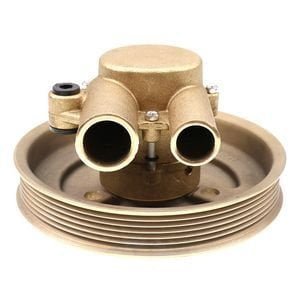
Lubrication & Cooling Systems
Volvo Penta Sea Water Pump 21212799/3812519 for 4.3L 5.0L 5.7L Engines
View Details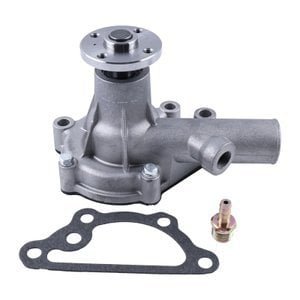
Lubrication & Cooling Systems
Water Pump with Gasket for CASE IH Tractors 234–1140, Direct Replacement
View Details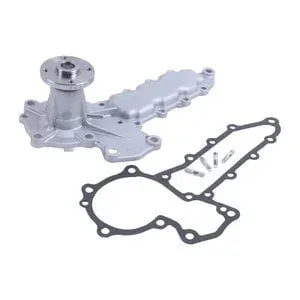
Lubrication & Cooling Systems
Water Pump 6684225 6653941 | Service Part for Kubota D1402 Bobcat
View DetailsNeed a Custom Quote?
Our technical team responds within 24 hours. MOQ 1 piece. Ships to 120+ countries from our Guangzhou warehouse.