
Belt Drive Systems
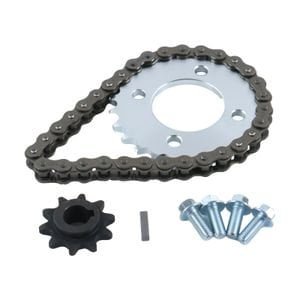
420 Chain Sprocket Kit for Coleman KT196/CK196 – Fleet Supply
<p><strong>420 Chain Sprocket Kit for Coleman KT196/CK196 and Predator 196cc/212cc Engines, 25T 32-Link</strong> — supplied as a matched set for recreational and commercial go kart drivetrains.</p> <ul> <li> <p>Replace chain and sprocket together at scheduled intervals to prevent accelerated wear from mismatched pitch engagement</p> </li> <li> <p>Inspect clutch and jackshaft bearings during the same service window to avoid cascading downtime across rental fleets</p> </li> <li> <p>Stock ahead of high-cycle consumption to keep karts running through peak demand periods</p> </li> <li> <p>Older Predator 196cc models remain supported with continued aftermarket supply</p> </li> </ul>
Lead Time
2-5 Days
Warranty
3-12 Months
Min. Order
1 Piece
Ships To
120+ Countries
Request a Quote
Response within 24 hours
Product Details
Fleet Stocking Planned — Sprocket and chain kits ship as matched sets so rental fleets schedule replacements instead of reacting to broken drivetrains.
Technical Specifications
| Parameter | Value |
|---|---|
| Product Type | Sprocket |
| Machine Fitment | Coleman KT196, Coleman CK196, Predator 196cc Engine, Predator 212cc Engine (6.5hp) |
| Teeth Count | 25T |
| Link Count | 32-link |
| Chain Standard | ANSI 420 |
| Material | Premium carbon steel |
| Condition | New aftermarket |
| Warranty | 3–12 months against manufacturing defects |
| MOQ | 1 piece |
| Standards | ISO 9001, ANSI B29.1 |
Application Suitability
| Service Interval | What to Check |
|---|---|
| Every 300–500 operating hours on rental karts | Sprocket tooth hooking and chain pitch elongation |
| Pre-season inspection for racing schools | Clutch engagement, jackshaft bearing play, tensioner condition |
| Annual amusement park maintenance cycle | Full drivetrain strip-down including chain guards and mounts |
| Post-incident after chain jump or tooth shear | Jackshaft alignment, engine mount integrity, rear axle bearings |
Why Drivetrain Wear Demands a Replacement Plan, Not a Reaction
A planned 420 chain sprocket kit service part maintenance swap costs one service window; a reactive repair costs the window, the cascade damage, and the lost revenue.
I spent years keeping Latin American racing fleets on track. The pattern is always the same — a rental kart comes in with a jumped chain, and by then the sprocket teeth are hooked, the chain links are elongated beyond pitch tolerance, and the clutch drum has scoring that did not exist two weeks earlier. Fleet operators who wait for visible failure absorb compounding damage across the entire drivetrain. Those who schedule matched-set replacement at defined intervals keep karts earning revenue instead of sitting on benches. [NEED_CITE: ANSI B29.1 chain elongation limits and replacement criteria]
The 420 chain sprocket kit service part maintenance cycle becomes predictable when fleet data is tracked. Tooth profile wear, chain stretch, and uneven engagement follow a progression curve tied to operating hours and load cycles, not calendar time.
Where the Drivetrain Sits in the Kart Service Life
Every recreational and commercial go kart depends on a simple chain-and-sprocket transfer from the centrifugal clutch to the rear axle. This 420 chain sprocket kit service part maintenance item occupies the highest-wear position in the entire drivetrain because it transmits every torque pulse from the engine directly to the wheels. On a Predator 196cc or 212cc platform, the 25T sprocket sees thousands of engagement cycles per operating hour, and each cycle advances wear on both the tooth profile and the chain roller seats.
Fleet managers who track component life across a season of rental use find that the sprocket and chain degrade as a pair. Replacing one without the other forces the new component to conform to the worn geometry of the surviving part, accelerating failure. The kit approach — matched 25T sprocket with a fresh 32-link ANSI 420 chain — resets the entire engagement interface at once.
Wear Progression and the Case for Matched Replacement
Tooth hooking is the first visible sign that the sprocket is past its service midpoint. The leading edge of each tooth develops a curved profile as chain rollers repeatedly load and release against the same contact point. At this stage, the chain has typically elongated by a measurable fraction of its original pitch, meaning the rollers no longer seat evenly across all teeth. [NEED_CITE: chain and sprocket wear progression patterns in high-cycle recreational equipment]
Some operators try to stretch life by flipping the sprocket or replacing only the chain. Both approaches shorten the next service interval because the mismatch accelerates wear on whichever component is new. The Coleman KT196 and CK196 platforms are particularly sensitive to this mismatch because their compact drivetrain geometry leaves minimal tolerance for pitch deviation. Scheduling the 420 chain sprocket kit service part maintenance as a matched-set swap at defined hour intervals eliminates the guesswork and keeps fleet availability predictable.
What the Specifications Mean on the Track
The ANSI 420 chain standard defines the pitch, roller diameter, and tensile strength envelope that this drivetrain was designed around. A 420-pitch chain on a Predator 212cc engine must handle the torque output of a 6.5hp single-cylinder platform through repeated clutch engagements, which means the premium carbon steel construction of the 25T sprocket must resist surface deformation under cyclic point loading.
The 32-link count is specific to the Coleman KT196 and CK196 frame geometry — it determines the chain loop length that spans from the clutch drum to the rear axle sprocket at the correct tension. A chain that is even one link too long or short forces the tensioner out of its working range, creating either slack-induced chain whip or excessive bearing preload. The 25-tooth count sets the final drive ratio, which directly governs the kart’s torque delivery and top speed characteristics across the engine’s power band.
The Hidden Cost of Reactive Procurement
Fleet operators who purchase sprockets and chains only after a failure have already absorbed the downtime cost of a non-revenue kart sitting in the workshop. Beyond the obvious lost rental hours, reactive procurement forces emergency shipping at premium freight rates, often for a single kit that could have been stocked at standard lead times. [NEED_CITE: unplanned downtime cost modeling for rental fleet equipment]
The compounding damage is harder to quantify but equally real. A chain that jumps off a worn sprocket can whip against the chain guard, bend the tensioner bracket, or score the clutch drum surface. Each of those secondary failures adds parts and labor to what should have been a straightforward swap. Fleet data consistently shows that scheduled replacement programs cost less per operating hour than reactive part ordering, even before accounting for the reputational damage of a kart that is unavailable during peak rental demand.
Why Source This Kit Here
Our production lines and qualified sourced partners both operate under a single warranty, so a 420 chain sprocket kit ordered here carries identical quality terms regardless of which facility produced it. The eight-category catalog means a fleet operator restocking drivetrain components can add clutch assemblies, jackshaft bearings, and tensioner hardware to the same order under one account.
Minimum order is one piece, which matters when a single kart needs an off-cycle replacement while the rest of the fleet waits for the next scheduled service window. The Guangzhou warehouse maintains stock on common recreational drivetrain items, supporting faster dispatch on standard configurations. Machine model identification — even from a worn nameplate or a photograph of the existing sprocket — lets the technical team confirm the correct 25T, 32-link variant before the order ships. Cross-reference verification covers superseded numbers and alternate listings so the kit that arrives matches the drivetrain that is already on the kart. Sample supply is available for fitment confirmation before a fleet commits to a bulk order across multiple karts.
Documentation & Verification
- Commercial invoice and packing list itemizing each 420 kit by kart model
- Chain standard and sprocket tooth count cross-reference sheet marked reference only
- Dimensional inspection record covering pitch, bore, and tooth profile
- Warranty terms covering manufacturing defects for 3–12 months
- Dispatch packing photographs showing kit contents before sealing
- HS code classification support for customs clearance at destination
Service Interval & Stocking Guidance
- Replace the 25T sprocket and 32-link chain as a matched set at defined operating hour intervals
- Inspect tooth profile for hooking and chain for pitch elongation at every scheduled service
- Stock one spare kit per ten karts in a rental fleet to cover off-cycle failures without emergency orders
- Store kits in dry conditions away from direct sunlight to preserve chain lubrication integrity
- Check clutch drum and jackshaft bearings at every sprocket replacement to catch adjacent wear early
- Align replacement batch orders with seasonal fleet maintenance calendars to consolidate freight
Planning Your Drivetrain Replacement Cycle
Provide your kart model, engine displacement, current operating hours per unit, and fleet size. We will map the 420 chain sprocket kit service part maintenance intervals to your usage pattern and propose a stocking plan that keeps replacement kits on hand before the next service window opens.
Frequently Asked Questions
Q: How often should sprocket and chain be replaced on rental karts?
A: Replacement timing depends on operating hours and load cycles rather than calendar dates. Rental karts running daily in high-demand environments typically need a matched-set swap at intervals determined by tooth profile inspection and chain elongation measurement. Our technical team can help define an interval based on your fleet’s specific usage data and engine platform.
Q: Should I replace the chain every time I replace the sprocket?
A: Yes. A worn sprocket with hooked teeth will accelerate wear on a new chain within the first hours of operation, and a stretched chain will grind down new sprocket teeth just as fast. The kit approach ensures both components start with matched geometry, which extends the service life of each and keeps the drivetrain engagement smooth across the full RPM range.
Q: What other drivetrain parts should I inspect during this service?
A: When the sprocket and chain are off, check the clutch drum for scoring, the jackshaft bearings for axial play, and the chain tensioner for bracket deformation. On Predator 196cc and 212cc engines, also verify the engine mount bolts for looseness, as mount shift changes chain alignment and accelerates asymmetric tooth wear on the sprocket.
Q: How many spare kits should a rental fleet keep on hand?
A: A common baseline is one spare 25T sprocket and 32-link chain kit per ten active karts. Fleets running older Coleman KT196 or CK196 units with higher cumulative hours may benefit from stocking additional kits, especially ahead of peak rental seasons when downtime directly impacts revenue and replacement lead times matter.
Q: Can older Predator 196cc engines still get replacement sprockets?
A: Yes. The ANSI 420 chain standard and 25T sprocket configuration remain available as aftermarket supply for older Predator 196cc platforms. Cross-reference verification ensures the correct variant is matched to your specific engine generation, even when original catalog numbers have been superseded across production years.
Compatible Brands
Our parts are engineered to meet or exceed OEM specifications. Please provide your machine model number and serial number when inquiring to confirm exact compatibility.
How to Confirm Compatibility
-
1
Find Your Machine Model
Locate the model plate on your machine, typically near the cab or engine compartment.
-
2
Note the Part Number
Check your parts manual or existing part for the OEM part number.
-
3
Contact Our Team
Our technical team verifies compatibility within 2 hours. Send us the details via the inquiry form or WhatsApp.
Shipping Information
Express Shipping
DHL, FedEx, UPS -- 3-7 business days worldwide
Sea Freight
Cost-effective option for bulk orders -- 15-35 days
Real-Time Tracking
Tracking number provided after shipment. 24/7 support available.
Warranty Policy
All parts come with manufacturer warranty. Duration varies by product category.
- Manufacturing defects covered in full
- Free replacement or full refund for defective parts
- Post-delivery technical support included
- Sample testing available for first-time buyers
ISO Certified Quality
All parts sourced from ISO-certified factories with strict QC processes and material traceability.
Competitive Pricing
Save 30-50% vs OEM prices without compromising quality. Transparent pricing with no hidden fees.
Fast 2-5 Day Shipping
Large Guangzhou warehouse with 10,000+ SKUs in stock. Most orders ship within 2-5 business days.
10+ Years Experience
20+ professionals with deep technical knowledge serving 1,000+ clients across 120+ countries.
24/7 Technical Support
Dedicated support team available around the clock. Part verification within 2 hours of inquiry.
Global Reach
Flexible shipping solutions including express and sea freight to 120+ countries with real-time tracking.
Related Products
More parts you might need
Need a Custom Quote?
Our technical team responds within 24 hours. MOQ 1 piece. Ships to 120+ countries from our Guangzhou warehouse.