
Belt Drive Systems
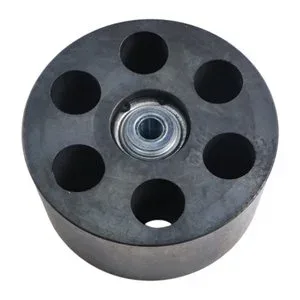
7167165 Belt Tensioner for Bobcat Loaders – Scheduled Maintenance
<p><strong>Belt Tensioner 7167165 for Bobcat Skid Steer Loaders, sealed ball-bearing pivot, AISI 4140 steel</strong> — compatible with A770, S530, S550, S570, S770, T590, T770 and more.</p> <ul> <li>Replacing the tensioner at scheduled intervals prevents cascading undercarriage wear on sprockets, idlers and track chains, avoiding costly full-assembly exchange.</li> <li>Pair with adjacent belt drive components during planned maintenance to protect the full undercarriage investment.</li> </ul> <p>Fleet replacement schedules and long-term supply for older skid steer models supported.</p>
Lead Time
2-5 Days
Warranty
3-12 Months
Min. Order
1 Piece
Ships To
120+ Countries
Request a Quote
Response within 24 hours
Product Details
Scheduled Maintenance — replacement intervals for Bobcat belt drive components are provided with shipment so fleet managers can plan undercarriage servicing ahead of failure.
Technical Specifications
| Parameter | Value |
|---|---|
| Part Number | 7167165 |
| Cross-Reference | 7167165 (reference only) |
| Product Type | Belt Tensioner |
| Machine Fitment | A770, S510, S530, S550, S570, S590, S630, S650, S750, S770, S850, T550, T590, T630, T650, T750, T770, T870 |
| Material | Heat-treated alloy steel (AISI 4140 equivalent) |
| Surface Hardness | 28–32 HRC |
| Yield Strength | ≥ 860 MPa |
| Spring Fatigue Resistance | ISO 10243 standard, 500,000 compression cycles |
| Dimensional Tolerance | ±0.05 mm on mounting bores and shaft diameters |
| Pivot Type | Sealed ball-bearing |
| Condition | New Aftermarket |
| Warranty | 3–12 months against manufacturing defects |
| MOQ | 1 piece |
Application Suitability
| Service Interval | What to Check |
|---|---|
| Every 500 operating hours | Track tension consistency and visible slack during direction changes |
| Every 1,000 operating hours | Sprocket and idler wear patterns correlated with tensioner spring fatigue |
| Annual fleet overhaul | Full undercarriage inspection including tensioner bore clearance and pivot bearing condition |
| Pre-season commissioning | Tensioner response on machines returning from extended storage or rental rotation |
When Scheduled Replacement Becomes an Emergency Instead
Most skid steer undercarriage damage traces back to a belt tensioner that was ignored until it failed completely.
At copper mine sites in northern Chile, I watched multiple Bobcat S770 loaders sit idle for days because a single tensioner snapped mid-shift and no spare was on the shelf. The sprockets and track chains that degraded alongside the worn tensioner then had to be replaced as well — a repair that started as a minor consumable swap turned into a full undercarriage teardown [NEED_CITE: skid steer undercarriage wear correlation studies for compact loaders]. Fleet operators who skip scheduled belt tensioner service part replacement consistently face compounded downtime when adjacent components fail in sequence.
Where This Tensioner Sits in the Machine’s Service Life
The belt tensioner occupies a critical midpoint in the undercarriage wear chain. It degrades gradually as spring fatigue accumulates, and its declining performance directly accelerates wear on track chains, sprockets, and idlers. Replacing this belt tensioner service part at planned intervals protects the broader undercarriage investment and keeps machines generating revenue rather than sitting in the yard.
Reading the Wear Signs Before They Become Failures
Inconsistent track tension, visible slack when the loader changes direction, and uneven wear across sprocket teeth all signal that the tensioner spring has lost meaningful fatigue life. I have seen rental fleets lose entire turnaround windows because a worn tensioner was dismissed as a minor concern until track derailment occurred on site [NEED_CITE: compact track loader maintenance interval guidelines for rental fleets]. Pairing belt tensioner service part replacement with adjacent component inspection ensures the entire undercarriage is evaluated as a system rather than as isolated pieces.
What the Specs Mean on the Job Site
The heat-treated AISI 4140 alloy steel construction provides a balance of core toughness and surface durability — the 28–32 HRC surface hardness resists abrasion from dust and debris while the tough core absorbs shock loads during direction changes. The sealed ball-bearing pivot eliminates the grease contamination issues that plague open-bearing tensioners in quarry and demolition environments. Dimensional tolerance held to ±0.05 mm on mounting bores and shaft diameters ensures the tensioner seats correctly without requiring shimming or rework during installation. Spring fatigue resistance rated to 500,000 compression cycles under ISO 10243 means the component maintains consistent tension output through its expected service window without premature relaxation.
The Compounding Cost of Reactive Procurement
A tensioner that fails unexpectedly rarely fails alone. By the time track slack becomes obvious on the job site, the sprocket teeth have typically worn to match the degraded tension profile, and replacing one without the other shortens the service life of both. Contractors who stock belt tensioner service part inventory ahead of predictable consumption avoid the cascading replacement costs that reactive procurement creates [NEED_CITE: fleet maintenance cost analysis for compact construction equipment]. For rental companies, a machine sitting idle while waiting for emergency parts arrival represents lost daily revenue across the entire fleet rotation schedule.
Why Source This Component Through XUNPO
Production on selected lines and qualified sourced supply operate under one account and one warranty, so belt drive components and their associated hardware ship with consistent quality terms. Eight product categories mean a complete undercarriage service list — tensioners, seals, track chains, sprockets — consolidates into a single consignment rather than arriving in mismatched batches. Orders from one piece are accepted, eliminating minimum-order barriers for single-machine emergency needs. Part identification works from a part number, machine model, photograph, or nameplate image when plates are worn beyond reading. Cross-reference verification covers superseded and alternate numbers so older Bobcat models with discontinued OEM listings remain supported. A technical team confirms compatibility and grade before commitment, preventing misfit shipments on variant-heavy platforms like the S-series and T-series loaders.
Documentation & Verification
- Commercial invoice and packing list with individual tensioner quantities and machine-fitment notes
- Compatibility and cross-reference sheet marking 7167165 as reference only
- Dimensional inspection record covering bore diameter and shaft tolerance before dispatch
- Warranty terms covering manufacturing defects for three to twelve months
- Packing photographs showing protective packaging and branded carton condition pre-shipment
- HS code and customs documentation support for international fleet maintenance shipments
Service Interval & Stocking Guidance
- Replace tensioners at every major undercarriage service interval to prevent spring fatigue failures
- Inspect pivot bearing play and spring return force during routine track tension checks
- Stock one tensioner per machine for single-unit fleets; two or more for multi-machine rental rotations
- Store in dry, temperature-stable conditions to preserve spring temper and bearing seal integrity
- Pair tensioner replacement with sprocket and idler inspection to catch correlated wear early
- Maintain a running consumption log to forecast future stocking quantities based on actual duty cycles
Planning Your Next Undercarriage Service Cycle
Provide your machine model, operating hours, and current undercarriage condition so we can recommend replacement intervals and stocking quantities aligned with your fleet’s duty cycle. For older Bobcat A770 or T870 units with discontinued factory support, share the serial number so we can verify cross-reference compatibility and confirm long-term supply availability.
Frequently Asked Questions
Q: How often should the belt tensioner be replaced under typical operating conditions?
A: Most fleet maintenance programs schedule tensioner replacement at every major undercarriage overhaul interval. In abrasive environments like quarry or demolition work, the interval shortens as dust accelerates pivot bearing wear. We recommend pairing replacement with sprocket and idler inspection so the full system is evaluated together rather than addressing components in isolation.
Q: What symptoms indicate the tensioner is nearing end of service life?
A: Visible track slack during direction changes, inconsistent tension readings across the track length, and uneven sprocket tooth wear all indicate spring fatigue has progressed beyond acceptable limits. The sealed pivot bearing may also develop play that becomes detectable during manual inspection. These signs typically appear well before complete failure, giving operators a planning window.
Q: Should I replace just the tensioner or the full undercarriage tensioning assembly?
A: If the sprockets and idlers show measurable wear from operating under degraded tension, replacing only the tensioner will not restore proper track geometry. A combined inspection determines whether individual component replacement is sufficient or whether assembly-level exchange delivers better long-term value. Our technical team can advise based on your machine’s operating history.
Q: Can I still source replacement tensioners for older or discontinued skid steer models?
A: Cross-reference verification covers superseded and alternate part numbers, so machines like early-production S510 or S530 units with discontinued factory listings remain supported. Provide the machine model and serial number so we can confirm exact fitment before dispatch. Long-term supply commitment applies regardless of machine age.
Compatible Brands
Our parts are engineered to meet or exceed OEM specifications. Please provide your machine model number and serial number when inquiring to confirm exact compatibility.
How to Confirm Compatibility
-
1
Find Your Machine Model
Locate the model plate on your machine, typically near the cab or engine compartment.
-
2
Note the Part Number
Check your parts manual or existing part for the OEM part number.
-
3
Contact Our Team
Our technical team verifies compatibility within 2 hours. Send us the details via the inquiry form or WhatsApp.
Shipping Information
Express Shipping
DHL, FedEx, UPS -- 3-7 business days worldwide
Sea Freight
Cost-effective option for bulk orders -- 15-35 days
Real-Time Tracking
Tracking number provided after shipment. 24/7 support available.
Warranty Policy
All parts come with manufacturer warranty. Duration varies by product category.
- Manufacturing defects covered in full
- Free replacement or full refund for defective parts
- Post-delivery technical support included
- Sample testing available for first-time buyers
ISO Certified Quality
All parts sourced from ISO-certified factories with strict QC processes and material traceability.
Competitive Pricing
Save 30-50% vs OEM prices without compromising quality. Transparent pricing with no hidden fees.
Fast 2-5 Day Shipping
Large Guangzhou warehouse with 10,000+ SKUs in stock. Most orders ship within 2-5 business days.
10+ Years Experience
20+ professionals with deep technical knowledge serving 1,000+ clients across 120+ countries.
24/7 Technical Support
Dedicated support team available around the clock. Part verification within 2 hours of inquiry.
Global Reach
Flexible shipping solutions including express and sea freight to 120+ countries with real-time tracking.
Related Products
More parts you might need

Need a Custom Quote?
Our technical team responds within 24 hours. MOQ 1 piece. Ships to 120+ countries from our Guangzhou warehouse.