
Belt Drive Systems
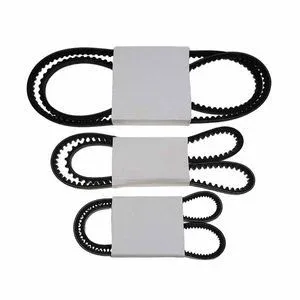
Belt Set 78-1341 78-603 78-629 for Thermo King SB – Service Part
<p><strong>Belt Set 78-1341 78-603 78-629</strong> for Thermo King SB Series, includes alternator, fan, and engine/idler belts — compatible with Spectrum DE, SB 100–400 transport refrigeration units.</p> <ul> <li>Replace all three belts as a matched set during scheduled service intervals to avoid staggered failures and unplanned cargo loss.</li> <li>Typical wear signs include cracking, glazing, and tension loss — inspect pulley alignment and tensioner condition at each change.</li> <li>Planned replacement cycles supported with advance stocking for fleet-level maintenance programs.</li> </ul> <p>Replacement interval guidance provided with shipment for fleet maintenance planning.</p>
Lead Time
2-5 Days
Warranty
3-12 Months
Min. Order
1 Piece
Ships To
120+ Countries
Request a Quote
Response within 24 hours
Product Details
Fleet Stocking & Lifecycle — Belt Set 78-1341 78-603 78-629 supports planned maintenance scheduling across Thermo King SB series fleets rather than reactive roadside repairs.
Technical Specifications
| Parameter | Value |
|---|---|
| Part Number | 78-1341 78-603 78-629 |
| Product Type | Belt Set |
| Cross-Reference | 78-1109, 781109, CP10703, 78-0603, 78-0695, TK-78-603, CP10704, 78-0629, CP10702 (reference only) |
| Machine Fitment | Spectrum DE, Spectrum SB 30, SB 100, SB 110, SB 130, SB 190, SB 200, SB 210, SB 210+, SB 230, SB 230+, SB 300, SB 310, SB 310+, SB 330, SB 400, SB 30 Multi-Temp |
| Brand Compatibility | Thermo King |
| Condition | New Aftermarket |
| Warranty | 3-12 months against manufacturing defects |
| Kit Contents | 1 PC Alternator Belt (78-1341), 1 PC Fan Belt (78-603), 1 PC Engine/Idler Belt (78-629) |
| Alternator Belt Feature | Reinforced rubber compounding for thermal stress resistance |
| Fan Belt Feature | Precise tooth profiling for pulley engagement |
| Engine/Idler Belt Feature | High-tensile cords for tension maintenance under load |
| Certification | ISO 9001 |
Application Suitability
| Service Interval | What to Check |
|---|---|
| Pre-season fleet service | Pulley alignment, tensioner bearing play, belt glazing or cracking |
| Mid-cycle inspection (typical road conditions) | Loss of tension, sidewall wear, alternator output stability |
| Lease turnaround maintenance | Complete belt set replacement, idler and tensioner condition |
| Older SB series units (SB 200, SB 210, SB 230) | Belt variant confirmation against engine serial, stock depth for aging fleets |
Planning Belt Replacement Before the Cargo Is at Risk
A snapped belt on a loaded Thermo King SB unit does not wait for a convenient service window.
Fleet operators running temperature-controlled cargo know the cost of a single roadside failure — spoiled pharmaceuticals, rejected food loads, and contractual penalties that dwarf the price of preventive parts. Yet belt replacement across transport refrigeration fleets is frequently deferred until visible failure, ignoring the predictable wear progression that makes scheduling possible. [NEED_CITE: transport refrigeration unit preventive maintenance scheduling standards] The Belt Set service part maintenance for Thermo King SB Series exists to close that gap between reactive breakdowns and planned service intervals, giving maintenance teams a matched set that aligns with fleet-wide scheduling rather than individual belt failures at staggered times.
Where This Belt Set Sits in the Fleet Service Calendar
Every Thermo King SB series transport refrigeration unit cycles through predictable wear phases on its three drive belts. The alternator belt faces continuous thermal cycling, the fan belt endures constant pulley engagement stress, and the engine/idler belt absorbs load variation under compressor operation. The Belt Set service part maintenance for Thermo King SB Series addresses all three wear points within one service event, eliminating the staggered failure pattern that occurs when belts are replaced individually at different times. Fleet operators who schedule this belt set at defined intervals avoid the scenario where one belt is new, one is mid-life, and one is approaching failure — a combination that guarantees repeat visits to the same unit.
Recognizing Wear Before It Becomes a Cargo Loss
Belt wear in transport refrigeration applications follows recognizable stages. Early cracking along the belt ribs, glazing on the contact surface, and gradual tension loss all signal that replacement should be scheduled within the next service cycle rather than postponed. Adjacent components deserve inspection during the same service window — pulley misalignment accelerates belt wear, worn tensioner bearings introduce vibration that degrades the new belt prematurely, and idler play creates uneven load distribution. [NEED_CITE: belt drive system inspection criteria for mobile refrigeration equipment] Replacing the full belt set while the unit is already opened for service captures these adjacent issues at marginal additional labor cost, compared to opening the same unit again weeks later for the next belt in the sequence.
Understanding Belt Material Selection for Thermal Cycling
The alternator belt within this set uses reinforced rubber compounding specifically chosen for thermal stress resistance — a requirement driven by the temperature extremes a transport refrigeration unit endures between hot engine compartments and sub-zero cargo environments. The fan belt features precise tooth profiling to maintain positive pulley engagement under the constant rotational load of the condenser fan. The engine/idler belt incorporates high-tensile cords that maintain tension under the cyclic loading of compressor clutch engagement. These three distinct material and construction approaches reflect the different failure modes each belt position experiences, which is precisely why a matched set outperforms generic single-belt replacements that treat all three positions identically.
The Accumulated Cost of Deferred Belt Replacement
Replacing a single failed belt on a Thermo King SB 300 or SB 400 unit seems efficient until the second belt fails three weeks later, requiring another service visit, another cargo temperature excursion risk, and another round of labor allocation. Fleet operators who track cumulative downtime across their SB series units typically find that reactive belt replacement generates meaningfully more unplanned service events than planned set replacement at defined intervals. [NEED_CITE: fleet maintenance cost analysis for transport refrigeration units] The older the SB series unit, the more pronounced this pattern becomes — worn pulleys and aging tensioners accelerate belt degradation, making the case for proactive set replacement stronger as units age past their initial service years.
Why Source This Belt Set Through a Lifecycle-Oriented Supplier
This belt set ships under a single warranty covering all three belts, matching the fleet operator’s need for one accountable supplier rather than three separate part sources with different warranty periods. The eight-category product range means pulleys, tensioners, and related drive components can be added to the same order if inspection reveals adjacent wear. Fleet operators can order from one piece upward, supporting trial fitment on a single SB unit before committing to fleet-wide stocking quantities. Part identification is supported through machine model, serial number, or nameplate photograph — resolving the common problem where belt numbers fade or become illegible after years of thermal cycling. Cross-reference verification covers superseded numbers across SB series generations, ensuring older units like the SB 200 and SB 210 receive correct belt variants rather than generic substitutions.
Documentation & Verification
- Commercial invoice listing all three belt part numbers with machine model cross-reference (reference only)
- Compatibility sheet confirming SB series variant fitment against unit serial range
- Quality inspection record covering belt tooth profile and dimensional checks before dispatch
- Warranty terms document specifying coverage period for the matched belt set
- Packing photographs showing belt set condition and labeling prior to shipment
- HS code and customs documentation aligned with belt drive parts classification
Service Interval & Stocking Guidance
- Schedule belt set replacement during pre-season fleet service to align with peak cargo demand periods
- Inspect belt rib cracking, glazing, and tension loss at every mid-cycle service visit as early replacement indicators
- Stock one belt set per two SB series units to cover both planned service and unexpected single-unit failures
- Store belt sets in dry, temperature-stable conditions away from direct sunlight to preserve rubber compound integrity
- Confirm belt variant against unit serial number before stocking for mixed fleets running SB 200 through SB 400 variants
Requesting a Lifecycle Maintenance Quote
Fleet operators preparing a maintenance plan should provide their SB series unit models, approximate fleet size, and current service interval frequency. This information enables a stocking recommendation that covers predictable consumption across planned service windows while maintaining a buffer for unexpected failures. Units with high operating hours or those approaching the later stages of their service life may benefit from adjusted stocking quantities that account for accelerated wear patterns.
Frequently Asked Questions
Q: How often should transport refrigeration belts be replaced under normal road conditions?
A: Replacement intervals depend on operating hours, ambient temperature exposure, and load cycling frequency rather than calendar time alone. Fleet operators typically align belt set replacement with pre-season service or defined hour-based intervals. Inspecting for rib cracking, glazing, and tension loss at each mid-cycle service visit provides the most reliable indicator for scheduling the next replacement across your SB series fleet.
Q: What signs indicate a belt is approaching end of service life?
A: Visible cracking along the belt ribs, a glazed or shiny contact surface, and measurable tension loss under manual deflection testing all signal advancing wear. On Thermo King SB units, alternator output instability or intermittent fan speed variation can also indicate belt slip from degradation. Catching these signs during scheduled inspections allows planned replacement before catastrophic failure disrupts cargo temperature control.
Q: Should all three belts be replaced together or individually?
A: Replacing the alternator, fan, and engine/idler belts as a matched set prevents staggered failures that occur when belts of different ages share the same drive system. Individual replacement leaves the remaining belts at unknown wear stages, virtually guaranteeing another service visit within weeks. The matched set approach also ensures consistent tension across all three drive positions, reducing uneven pulley wear.
Q: How many belt sets should a fleet keep in stock for planned maintenance?
A: Stocking quantity depends on fleet size, service interval cadence, and the age distribution of your SB series units. A practical baseline is one belt set per two units, adjusted upward for fleets running older SB 200, SB 210, or SB 230 models that experience accelerated belt wear. Aligning procurement with your annual maintenance calendar ensures stock arrives before peak cargo demand periods.
Q: Can I still source belts for older SB series units no longer in mainstream production?
A: Cross-reference verification covers superseded and alternate part numbers across SB series generations, including SB 200, SB 210, SB 230, and SB 310 variants that may have undergone belt specification changes during their production runs. Providing the unit serial number or a photograph of the existing belt and nameplate enables accurate variant identification, ensuring correct fitment even for aging units.
Compatible Brands
Our parts are engineered to meet or exceed OEM specifications. Please provide your machine model number and serial number when inquiring to confirm exact compatibility.
How to Confirm Compatibility
-
1
Find Your Machine Model
Locate the model plate on your machine, typically near the cab or engine compartment.
-
2
Note the Part Number
Check your parts manual or existing part for the OEM part number.
-
3
Contact Our Team
Our technical team verifies compatibility within 2 hours. Send us the details via the inquiry form or WhatsApp.
Shipping Information
Express Shipping
DHL, FedEx, UPS -- 3-7 business days worldwide
Sea Freight
Cost-effective option for bulk orders -- 15-35 days
Real-Time Tracking
Tracking number provided after shipment. 24/7 support available.
Warranty Policy
All parts come with manufacturer warranty. Duration varies by product category.
- Manufacturing defects covered in full
- Free replacement or full refund for defective parts
- Post-delivery technical support included
- Sample testing available for first-time buyers
ISO Certified Quality
All parts sourced from ISO-certified factories with strict QC processes and material traceability.
Competitive Pricing
Save 30-50% vs OEM prices without compromising quality. Transparent pricing with no hidden fees.
Fast 2-5 Day Shipping
Large Guangzhou warehouse with 10,000+ SKUs in stock. Most orders ship within 2-5 business days.
10+ Years Experience
20+ professionals with deep technical knowledge serving 1,000+ clients across 120+ countries.
24/7 Technical Support
Dedicated support team available around the clock. Part verification within 2 hours of inquiry.
Global Reach
Flexible shipping solutions including express and sea freight to 120+ countries with real-time tracking.
Related Products
More parts you might need


Belt Drive Systems
Clutch Drive Belt 3211218 | Overhaul Grade for Polaris Ranger Pro XD
View DetailsNeed a Custom Quote?
Our technical team responds within 24 hours. MOQ 1 piece. Ships to 120+ countries from our Guangzhou warehouse.