

Emission & Exhaust System
Emission & Exhaust System
ISO Certified
Ships 2-5 Days
MOQ 1 Piece
Emission & Exhaust System
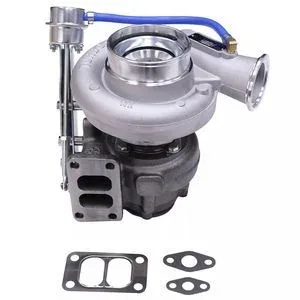
Cummins QSB6.7-Compatible HX35W Turbocharger – Fleet Supply
<p><strong>HX35W Turbocharger</strong> replacement for Cummins QSB6.7 and QSB Tier-3 engines, forged steel turbine shaft with dual ceramic ball bearings — supports predictable lifecycle maintenance across grader, excavator, and generator fleets.</p> <ul> <li>Inspect for shaft play, boost drop, or oil seepage as early wear indicators before downstream damage to EGR and oil cooler components</li> <li>Single-unit swap or full turbo kit exchange depending on housing and manifold condition; align replacement with oil change intervals</li> <li>Replacement cycle guidance and long-term supply commitment for Tier-3 machines included with shipment</li> </ul>
Lead Time
2-5 Days
Warranty
3-12 Months
Min. Order
1 Piece
Ships To
120+ Countries
Cummins QSB6.7
Dual Ceramic Ball Bearings
Fleet Supply
For Komatsu Grader
HX35W turbocharger
turbocharger
Request a Quote
Response within 24 hours
Prefer instant chat?
WhatsApp
Product Details
Fleet Stocking Strategy — HX35W turbocharger replacement planned around QSB6.7 service windows, with stocking guidance for Tier-3 machine fleets.
Technical Specifications
| Parameter | Value |
|---|---|
| Part Number | HX35W |
| Product Type | Turbocharger |
| Cross-Reference | 4955156, 4038597, 4042667, 4038597R, 4038597RX, 4038209, 4044890, 4033681, 4044890H, 4629082, 495515600, 4955156NX, 4955156RX, 5452082, 5452082NX, 5452082RX, 3802879, 3802878 (reference only for identification purposes) |
| Machine Fitment | Cummins QSB6.7, QSB Tier-3 engines, Komatsu Graders equipped with Cummins QSB Tier-3 engine |
| Turbo Model | HX35W-A77J70GM/A70Q86FE14PB-W |
| Condition | New Aftermarket |
| Warranty | 12 months against manufacturing defects |
| Operating Temperature | up to 750°C |
| Rotational Speed | >150,000 rpm |
| Turbine Shaft Material | Forged steel |
| Compressor Wheel Material | 7000-series aluminum alloy |
| Bearing Type | Dual ceramic ball bearings |
| Gasket Material | Viton elastomer, rated to 250°C |
| Mounting Tolerance | ±0.02 mm |
| Standard | ISO 9001 |
Application Suitability
| Service Interval | What to Check |
|---|---|
| Every 2,000 operating hours | Shaft play measurement, boost pressure baseline, oil seepage at compressor housing |
| Major engine service (4,000+ hours) | Full turbo inspection, gasket and oil feed line condition, intake seal integrity |
| Tier-3 emission system review | Downstream EGR and catalytic component condition linked to turbo health |
| Fleet turnover or rental redeployment | Complete HX35W turbocharger functional test and visual wear assessment |
| Older QSB6.7 units past peak OEM support | Supply continuity planning and adjacent component stock alignment |
When the Turbo Fails, the Repair Is Never Just the Turbo
Most unplanned QSB6.7 overhauls started as a delayed HX35W turbocharger service part swap.
In my time managing procurement for mining fleet operations across Central Asia, I watched maintenance teams save budget by replacing only the turbo core when boost pressure began to drop. Three months later, the QSB6.7 would be back in the shop — this time with exhaust back-pressure damage spreading into the oil cooler and EGR passages. A planned HX35W turbocharger maintenance exchange at the first sign of shaft play or oil seepage avoids that cascade [NEED_CITE: cumulative damage patterns from delayed turbo replacement in Tier-3 diesel engines].
The cost of reactive replacement compounds quickly across a fleet. Every machine sitting idle while waiting for collateral damage assessment represents lost production hours that could have been avoided with lifecycle-aware scheduling.
Where the HX35W Sits in the QSB6.7 Service Life
The HX35W turbocharger occupies a critical midpoint in the QSB6.7 engine’s service life. During the first several thousand hours, the turbo operates within factory tolerances with minimal degradation. As hours accumulate, bearing wear introduces shaft play, compressor efficiency drops, and oil begins migrating past seals into the intake tract. Recognizing where your machine sits on this curve determines whether you order a single HX35W turbocharger service part or plan a broader emission system refresh.
Fleet operators running multiple QSB Tier-3 units benefit from mapping turbo replacement timing against engine hours and duty cycles rather than waiting for audible or performance-based failure signals.
Wear Progression and the Case for Assembly Exchange
Early-stage turbo wear announces itself through measurable indicators before catastrophic failure occurs. Boost pressure drops noticeably under load, oil consumption increases without visible leaks, and intake piping develops a film that signals seal degradation. At this stage, replacing the HX35W turbocharger as a complete assembly — rather than attempting a core-only swap — preserves housing integrity and avoids mismatched tolerances between old and new components [NEED_CITE: turbocharger assembly replacement versus component-level rebuild outcomes].
Adjacent components degrade in parallel with the turbo. Oil feed lines develop internal restrictions, intake seals harden past their Viton temperature rating, and manifold gaskets compress beyond recovery. Addressing these during the same service window eliminates the need for a second teardown.
Reading the Specifications That Matter in the Field
The forged steel turbine shaft resists thermal fatigue at sustained 750°C exhaust temperatures, maintaining dimensional stability through repeated heat cycles common in grader and excavator duty. The 7000-series aluminum compressor wheel balances rotational mass against the >150,000 rpm operating speed, reducing bearing load during transient boost demand. Dual ceramic ball bearings handle radial and thrust loads simultaneously, extending the interval before shaft play exceeds acceptable limits.
Viton gaskets rated to 250°C maintain seal integrity at the turbo-to-manifold interface, where standard elastomers would degrade within a single service cycle. The ±0.02 mm mounting tolerance ensures consistent flange alignment, preventing exhaust leaks that would otherwise alter back-pressure readings and mask early wear indicators.
The Hidden Cost of Buying Just the Core
Replacing only the turbo core while retaining aged housings and manifolds introduces fitment variables that compound over the next service cycle. Housing warpage from previous heat cycles alters compressor geometry, meaning the new core operates outside its designed pressure ratio. Within months, the machine returns with symptoms identical to the original failure, and the maintenance team assumes the replacement part was defective.
This pattern of repeat failures traced to partial turbo service is common enough across Tier-3 fleet operations that it distorts maintenance cost tracking [NEED_CITE: total cost of ownership impact from partial versus complete turbo assembly replacement]. Budgets reflect chronic turbo issues when the actual problem was never the turbo itself.
What XUNPO Delivers Beyond the Part
Own production lines and qualified sourced supply operate under one account and one 12-month warranty, so your HX35W turbocharger order carries consistent quality terms regardless of which facility produced it. Eight product categories mean your turbo order consolidates with gaskets, oil feed lines, filters, and intake seals under a single dispatch — no split shipments or mismatched arrival times.
Minimum order from one piece lets you stage a single replacement for an imminent service window or build bulk stock across your fleet. Guangzhou warehouse inventory on common QSB6.7 components enables fast dispatch when planning horizons compress. Part identification from machine model, serial number, or nameplate photograph removes guesswork when equipment records are incomplete. Technical team support confirms Tier-3 variant compatibility before your order ships, and cross-reference verification covers superseded numbers across QSB engine generations.
Documentation & Verification
- Commercial invoice and packing list with HX35W line items clearly referenced
- Part compatibility sheet confirming QSB6.7 Tier-3 variant fitment (reference only)
- Quality inspection record covering shaft play, rotational balance, and housing dimensions
- 12-month warranty terms against manufacturing defects included with shipment
- Packing photographs documenting turbo condition before crate sealing
- HS code and customs documentation support for cross-border equipment supply
Service Interval & Stocking Guidance
- Inspect HX35W turbocharger shaft play and boost baseline every 2,000 hours on QSB6.7 units
- Replace complete turbo assembly when oil seepage or boost drop exceeds baseline thresholds
- Stock one turbo per three active QSB6.7 machines for predictable fleet coverage
- Store replacement units in sealed packaging away from moisture and particulate contamination
- Align turbo replacement timing with scheduled oil change and air filter service intervals
Planning Your Next Turbo Cycle
Provide your machine model, engine serial range, and current operating hours to receive replacement timing guidance specific to your fleet’s duty cycle. Sharing your Tier-3 variant details ensures the HX35W turbocharger airflow and pressure ratio match your application. Bulk stocking discussions benefit from fleet size and average annual hour data to align supply with your maintenance calendar.
Frequently Asked Questions
Q: What operating hours typically trigger a turbo inspection or replacement on the QSB6.7?
A: Most fleet operators schedule HX35W turbocharger inspection at 2,000-hour intervals, measuring shaft play and boost pressure against baseline. Replacement typically falls between 4,000 and 6,000 hours depending on duty cycle severity. Machines in high-dust quarry or demolition environments may require earlier intervention based on air filtration condition and intake contamination signs.
Q: What signs indicate the HX35W is approaching end of service life?
A: Measurable boost pressure drop under load, increasing oil consumption without visible external leaks, and audible whine at spool-up all signal bearing and seal wear progression. Shaft play beyond specification limits confirms mechanical degradation. Oil film accumulating in intake piping downstream of the compressor housing indicates seal migration requiring attention.
Q: Should I replace just the turbo or the full kit including gaskets and oil lines?
A: Complete assembly exchange including the HX35W turbocharger, gaskets, and oil feed lines eliminates variables from aged components that could compromise the new unit. Oil feed lines develop internal restrictions over time, and manifold gaskets compress beyond recovery. Addressing all interfaces during one service window prevents repeat teardowns within the same maintenance cycle.
Q: How many units should a fleet operator keep in stock?
A: Fleet stocking guidance typically suggests one HX35W turbocharger for every three active QSB6.7-powered machines. This ratio accounts for predictable wear timing while minimizing inventory carrying cost. Operations running machines in severe dust or high-altitude conditions may adjust this ratio upward based on accelerated wear patterns observed in their specific environment.
Q: Will this turbo remain available for older Tier-3 machines in the coming years?
A: XUNPO maintains supply commitment for QSB Tier-3 engine components beyond typical OEM support windows. Cross-reference verification covers superseded numbers across engine generations, ensuring identification accuracy for older fleet units. Long-term availability planning supports contractors and rental companies keeping Tier-3 machines productive as emission regulations shift toward newer platforms.
Compatible Brands
CAT
KOMATSU
HITACHI
VOLVO
HYUNDAI
DOOSAN
KOBELCO
SANY
XCMG
Our parts are engineered to meet or exceed OEM specifications. Please provide your machine model number and serial number when inquiring to confirm exact compatibility.
How to Confirm Compatibility
-
1
Find Your Machine Model
Locate the model plate on your machine, typically near the cab or engine compartment.
-
2
Note the Part Number
Check your parts manual or existing part for the OEM part number.
-
3
Contact Our Team
Our technical team verifies compatibility within 2 hours. Send us the details via the inquiry form or WhatsApp.
Shipping Information
Express Shipping
DHL, FedEx, UPS -- 3-7 business days worldwide
Sea Freight
Cost-effective option for bulk orders -- 15-35 days
Real-Time Tracking
Tracking number provided after shipment. 24/7 support available.
Warranty Policy
3-12
Months Warranty
All parts come with manufacturer warranty. Duration varies by product category.
- Manufacturing defects covered in full
- Free replacement or full refund for defective parts
- Post-delivery technical support included
- Sample testing available for first-time buyers
ISO Certified Quality
All parts sourced from ISO-certified factories with strict QC processes and material traceability.
Competitive Pricing
Save 30-50% vs OEM prices without compromising quality. Transparent pricing with no hidden fees.
Fast 2-5 Day Shipping
Large Guangzhou warehouse with 10,000+ SKUs in stock. Most orders ship within 2-5 business days.
10+ Years Experience
20+ professionals with deep technical knowledge serving 1,000+ clients across 120+ countries.
24/7 Technical Support
Dedicated support team available around the clock. Part verification within 2 hours of inquiry.
Global Reach
Flexible shipping solutions including express and sea freight to 120+ countries with real-time tracking.
Related Products
More parts you might need
Emission & Exhaust System
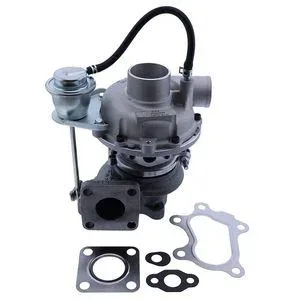
Turbocharger RHF4 SBA135756170 for Perkins 404C-22T – Fleet Supply
View Details
Emission & Exhaust System
HX40W Turbocharger for Cummins QSL/ISL/ISC8.3 – Direct Replacement
View Details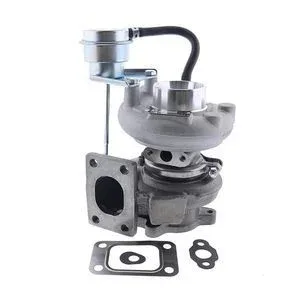
Emission & Exhaust System
Turbocharger 482-8480 Replacement for CAT C3.8 Engine – Scheduled Maintenance
View DetailsNeed a Custom Quote?
Our technical team responds within 24 hours. MOQ 1 piece. Ships to 120+ countries from our Guangzhou warehouse.