
Belt Drive Systems
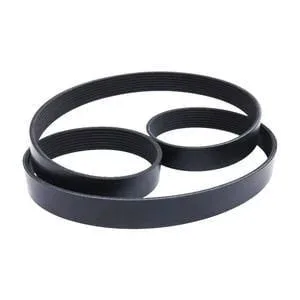
Fan Belt J911559 J902309 J903099 – Scheduled Maintenance
<p><strong>Fan Belt J911559 J902309 J903099</strong> for CASE and New Holland loaders, tractors, and graders, new aftermarket condition — fits 1840, 580K, 1150E, and 40+ additional models.</p> <ul> <li>Schedule replacement before visible cracking or glazing appears to prevent overheating and cascading engine damage</li> <li>Pair belt service with tensioner and pulley inspection during planned maintenance intervals</li> <li>Stocking across multi-model fleets reduces unplanned downtime on fast-wear items</li> </ul> <p>Replacement cycle guidance available with shipment for proactive fleet planning.</p>
Lead Time
2-5 Days
Warranty
3-12 Months
Min. Order
1 Piece
Ships To
120+ Countries
Request a Quote
Response within 24 hours
Product Details
Scheduled Belt Stocking — We keep this CASE fan belt in Guangzhou inventory specifically to support fleet maintenance programs, so your next service interval is covered without waiting on backorders.
Technical Specifications
| Parameter | Value |
|---|---|
| Part Number | J911559 J902309 J903099 |
| Product Type | Fan Belt |
| Cross-Reference | J911559, J911559-A, J911559A, 90500580, 73162121, J902309, J903099, J911570 (reference only) |
| Machine Fitment | CASE 1840, 1845C, 40XT, 480E, 480E LL, 480F, 480F LL, 580E, 580K, 580SE, 580SK, 590, 60XT, 621, 680K, 680L, 70XT, 750K, 75XT, 780C, 780D, 85XT, 90XT, 95XT, 650, 650G, 750H, 850D, 850E, 850G, 850H, 850K, 855D, 855E, 1150E, 1150G, 1150H, 1155E, 1896, 2096, 6030, 584E, 585E, 586E, 3185, SPX3150, SPX3185, SPX3200B, 845, RG140; New Holland compatible models |
| Condition | New Aftermarket |
| Warranty | 3–12 month warranty against manufacturing defects |
| Quality Standard | ISO 9001 |
Application Suitability
| Service Interval | What to Check |
|---|---|
| Every 500–1,000 operating hours | Inspect belt for cracking, glazing, fraying edges, and tension loss |
| Scheduled engine service | Check tensioner arm travel, pulley bearing play, and alignment marks |
| Annual fleet maintenance review | Verify stock levels cover all CASE loader, dozer, and backhoe models in active service |
| Pre-season preparation (agriculture/construction) | Replace belts showing any sidewall wear before peak demand periods |
| Post-overhaul re-commissioning | Confirm correct belt routing and tension after engine rebuild or coolant system service |
Why Scheduled Belt Replacement Matters More Than You Think
A snapped fan belt on site does not just stop the fan — it shuts down the alternator, water pump, and sometimes the hydraulic pump drive, turning a minor consumable into a full machine recovery.
In my years running channel support across Europe and Central Asia, I have watched entire job sites stall because a fleet manager treated belts as an afterthought. One CASE 850G dozer sat idle for days in Kazakhstan waiting for an air-freight belt delivery, costing the contractor far more in lost production than a year’s worth of planned belt inventory would have. Reactive purchasing of a fan belt service part maintenance replacement item like this almost always guarantees the machine is already down when the order is placed [NEED_CITE: planned maintenance versus reactive repair cost ratios in heavy equipment fleets]. The math is simple but rarely acted upon until the first expensive failure hits.
Where This Belt Sits in Your Machine’s Service Life
A fan belt service part maintenance replacement belongs to the shortest-interval consumable tier on any CASE loader, backhoe, or dozer. Unlike hydraulic hoses that might last several thousand hours or undercarriage components measured in seasons, belts degrade continuously from heat cycling, tension stress, and environmental exposure. This particular cross-reference group covers an unusually wide range of CASE and New Holland machines, which means a single part number can serve multiple units across your fleet if you plan inventory correctly.
The service life position of this belt is front-line preventive: it protects everything downstream. When a belt fails, the cooling system stops, engine temperature climbs, and in many of these CASE models the alternator quits simultaneously. You are not replacing a belt — you are preventing an overheating cascade that can warp cylinder heads and destroy head gaskets.
Reading the Wear Signs Before the Belt Reads Them for You
Cracking along the ribbed surface, glazing on the contact face, and frayed cord edges are the visible signals, but experienced mechanics also check for harmonic flutter at idle and squeal under load that disappears after warm-up. These symptoms indicate tension loss or pulley misalignment that will accelerate belt wear regardless of belt quality. Pairing belt replacement with a tensioner and idler pulley inspection during the same service window prevents the new belt from inheriting the old problem [NEED_CITE: belt drive system failure modes and root cause analysis in diesel engines].
For fleet managers running mixed CASE models — say a combination of 580K backhoes and 850G dozers — consolidating belt inventory around shared part numbers reduces stocking complexity. This J911559 cross-reference family covers enough machine variants to justify keeping several units on the shelf as standard planned consumption items rather than emergency-only stock.
What the Specification Actually Means in the Field
This fan belt service part maintenance replacement is manufactured under ISO 9001 quality management, which governs process consistency rather than making performance claims. The new aftermarket condition means the belt is produced to match the dimensional and material specifications required for the listed CASE and New Holland applications. The 3–12 month warranty covers manufacturing defects such as cord separation, premature cracking from curing faults, or dimensional variance that prevents proper seating in the pulley grooves.
The width of machine compatibility — from compact 40XT skid steers through to large 1150H crawlers — reflects a common belt profile and length shared across CASE engine families of that era. When stocking for a mixed fleet, verify each machine’s serial range against the fitment list because superseded numbers like J902309 and J903099 were consolidated into J911559 over successive production runs. Getting this cross-reference right at the planning stage avoids the situation where your stocked belt fits half the fleet but not the machine that actually needs it tomorrow.
The Accumulated Cost of Buying Belts Only After They Break
Every reactive belt purchase carries hidden charges beyond the part itself: the machine is already stopped, the operator is idle, the job schedule slips, and expedited freight costs multiply. Across a fleet operating in mining, agriculture, or port logistics, these unplanned belt failures compound into measurable production losses that dwarf the cost of keeping adequate stock. I have seen rental companies lose entire booking windows because a single belt failure on a CASE 855E triggered a multi-day wait for delivery to a remote site [NEED_CITE: equipment downtime cost modeling for fleet operations].
The alternative is straightforward: align belt order quantities with your documented service intervals, stock enough units to cover predictable consumption plus a safety margin, and treat this fan belt service part maintenance replacement as a budgeted line item in your annual maintenance plan rather than an emergency procurement.
What You Actually Get From This Supply Channel
Own production lines and qualified sourced supply operate under a single account and a single warranty framework, so whether your belt comes from our facility or a certified partner, the quality terms are identical. The eight-category product range means your belt order can ship alongside filters, seal kits, and undercarriage parts in one consolidated dispatch — no second order, no split freight. Minimum order starts at one piece, which supports both single-machine workshops and fleet-level stocking programs without forcing artificial quantity thresholds.
Guangzhou warehouse stock enables fast dispatch on common items like this CASE fan belt family. Our technical team verifies fitment from part number, machine model, photograph, or nameplate image, and cross-reference verification covers superseded and alternate numbers to confirm you are ordering the correct variant. Sample supply is available for fitment confirmation before you commit to bulk quantities.
Documentation & Verification
- Commercial invoice and packing list itemizing belt quantities and part references
- Part compatibility and cross-reference sheet marking OEM numbers as reference only
- Quality inspection record confirming dimensional checks on belt length and profile
- Warranty terms document covering manufacturing defects for 3–12 months
- Packing photographs showing belt packaging condition before crate sealing
- HS code and customs documentation support for international belt shipments
Service Interval & Stocking Guidance
- Replace this fan belt at documented service intervals or when cracking and glazing appear, whichever arrives first
- Inspect tensioner travel and pulley bearing play every time the belt is removed for any reason
- Stock one belt per active machine plus a shared reserve covering your most-used CASE models
- Store belts away from direct sunlight, ozone sources, and temperatures exceeding ambient norms
- Record belt replacement dates against machine hours to refine your own fleet consumption data
- Review superseded cross-reference numbers periodically to ensure inventory matches current machine roster
Planning Your Next Order
Send us your machine models, serial numbers, and annual operating hour estimates so we can confirm which part numbers in this cross-reference family fit your specific fleet. We will return a stocking recommendation aligned to your service intervals, not a generic catalog list.
Frequently Asked Questions
Q: How often should fan belts be replaced in heavy-duty CASE equipment?
A: Replacement intervals depend on operating hours and environment, but most fleet programs schedule belt inspection every 500 hours and replacement every 1,000 to 2,000 hours. Harsh conditions like mining dust or agricultural chaff accelerate wear. Always defer to your machine’s service manual and adjust based on observed wear patterns across your specific fleet.
Q: What other components should I inspect when changing this belt?
A: Check the tensioner arm for proper travel and spring force, spin each idler and drive pulley to detect bearing roughness, and verify pulley alignment with a straightedge. A worn tensioner or seized pulley will destroy a new belt prematurely. Addressing these during the same service window prevents early re-entry.
Q: Can one belt number cover multiple CASE models in my fleet?
A: The J911559 cross-reference family spans many CASE loaders, dozers, backhoes, and tractors, but fitment must be verified per machine serial number. Superseded numbers mean older machines may carry different labels for the same belt. Provide your machine list and we confirm exactly which units share this part.
Q: What happens operationally if a fan belt fails mid-shift?
A: The cooling fan stops immediately, engine temperature rises, and on most CASE models the alternator ceases charging. The machine must be shut down before overheating causes cylinder head or gasket damage. This is why stocking belts as planned consumables protects far more than just the belt itself.
Q: How should I plan belt inventory for a mixed CASE and New Holland fleet?
A: Map each machine to its correct cross-reference number, calculate annual consumption from your service intervals and fleet size, then stock planned quantities plus a shared safety reserve. Consolidating around shared part numbers reduces SKU count. We can build this stocking plan from your machine roster.
Compatible Brands
Our parts are engineered to meet or exceed OEM specifications. Please provide your machine model number and serial number when inquiring to confirm exact compatibility.
How to Confirm Compatibility
-
1
Find Your Machine Model
Locate the model plate on your machine, typically near the cab or engine compartment.
-
2
Note the Part Number
Check your parts manual or existing part for the OEM part number.
-
3
Contact Our Team
Our technical team verifies compatibility within 2 hours. Send us the details via the inquiry form or WhatsApp.
Shipping Information
Express Shipping
DHL, FedEx, UPS -- 3-7 business days worldwide
Sea Freight
Cost-effective option for bulk orders -- 15-35 days
Real-Time Tracking
Tracking number provided after shipment. 24/7 support available.
Warranty Policy
All parts come with manufacturer warranty. Duration varies by product category.
- Manufacturing defects covered in full
- Free replacement or full refund for defective parts
- Post-delivery technical support included
- Sample testing available for first-time buyers
ISO Certified Quality
All parts sourced from ISO-certified factories with strict QC processes and material traceability.
Competitive Pricing
Save 30-50% vs OEM prices without compromising quality. Transparent pricing with no hidden fees.
Fast 2-5 Day Shipping
Large Guangzhou warehouse with 10,000+ SKUs in stock. Most orders ship within 2-5 business days.
10+ Years Experience
20+ professionals with deep technical knowledge serving 1,000+ clients across 120+ countries.
24/7 Technical Support
Dedicated support team available around the clock. Part verification within 2 hours of inquiry.
Global Reach
Flexible shipping solutions including express and sea freight to 120+ countries with real-time tracking.
Related Products
More parts you might need

Need a Custom Quote?
Our technical team responds within 24 hours. MOQ 1 piece. Ships to 120+ countries from our Guangzhou warehouse.