
Belt Drive Systems
SKIP: no source title
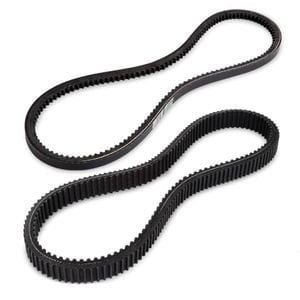
<p><strong>Drive & Starter Belt Kit 265-586</strong> for EZGO RXV, TXT, Workhorse, and ST carts (2008–up) with Kawasaki 13 HP engines — includes one 1/2" W × 35.5" OD starter generator belt and one 1" W × 35" OD drive belt with high-tensile aramid cord reinforcement.</p> <ul> <li>Replace both belts together when edge cracking, slippage noise, or unstable starter torque appears — synchronized renewal avoids a second teardown within weeks</li> <li>Check pulley groove wear and starter generator load during belt service to address the cause, not just the failed part</li> <li>Replacement interval guidance ships with your order to help plan fleet-level belt rotation across older and newer carts</li> </ul>
Lead Time
2-5 Days
Warranty
3-12 Months
Min. Order
1 Piece
Ships To
120+ Countries
Request a Quote
Response within 24 hours
Product Details
Planned maintenance supply — Fleet operators running EZGO RXV or TXT carts with Kawasaki 13 HP engines can align this belt kit with routine service schedules, avoiding reactive purchases that disrupt rotation planning.
Technical Specifications
| Parameter | Value |
|---|---|
| Part Number | 265-586, 265586, 606136, 606138, 16548G1 |
| Product Type | Belt |
| Cross-Reference (reference only) | 265-586, 265586, 606136, 606138, 16548G1 |
| Machine Fitment | EZGO RXV, TXT, Workhorse, ST (2008 and newer) |
| Brand Compatibility | Kawasaki, E-Z-GO |
| Starter Generator Belt Dimensions | 1/2" W × 35.5" OD |
| Drive Belt Dimensions | 1" W × 35" OD |
| Reinforcement | High-tensile aramid cord |
| Condition | New Aftermarket |
| Warranty | 3–12 months against manufacturing defects |
| Kit Contents | 1× Starter Generator Belt, 1× Drive Belt |
| Standards | ISO 9001, ISO 4184, SAE J1459 |
Application Suitability
| Service Interval | What to Check |
|---|---|
| Golf course maintenance fleet rotation | Belt edge cracking, glazing on drive face, squeal during start-up |
| Resort transport seasonal prep | Starter generator load variance, sheave groove wear, tension loss |
| Security patrol unit quarterly service | Heat-induced rubber degradation, aramid cord separation, idle vibration |
| Community utility vehicle annual overhaul | Pulley alignment, clutch sheave bushing condition, battery charging consistency |
Why Fleet Operators Delay Belt Replacement Until the Cart Stops Moving
A reactive approach to belt maintenance guarantees that the machine will fail during peak utilization, not in the garage.
In the Yangtze River Delta equipment service corridor, I frequently encountered fleet managers who treated these components as expendable rather than scheduled items. A golf course transport fleet lost three weekends in a row to reactive replacements because no one had aligned the Drive & Starter Belt Kit service part / Kawasaki 13 HP belt maintenance schedule with the high season. When the starter belt snaps, the cart does not just sit — it blocks the path for the rest of the rotation, creating a cascade of scheduling failures [NEED_CITE: preventive maintenance scheduling for light utility vehicle fleets].
The Position of the Belt Kit Within the Vehicle Service Life
The Drive & Starter Belt Kit service part / Kawasaki 13 HP belt maintenance interval sits at the intersection of electrical reliability and drivetrain engagement. The starter generator belt transfers the initial rotational force to spin the engine, while the drive belt manages the continuous power transfer from the clutch to the transaxle. Both degrade under thermal cycling and mechanical load, but they rarely fail at the same hour. Replacing them as a kit synchronizes their wear envelope, meaning the next service event addresses both simultaneously rather than forcing a second teardown weeks later.
Wear Progression and the Signals That Precede Failure
Belt wear follows a predictable curve. Edge cracking appears first, often visible during a routine visual check without removing the guard. Glazing on the drive face indicates the rubber compound is hardening and losing grip, which leads to slip under load. Squeal during cold start points to tension loss or sheave misalignment. If a fleet operator waits for the Drive & Starter Belt Kit service part / Kawasaki 13 HP belt maintenance to be triggered by a broken belt, the sheave grooves may already be worn, requiring a more expensive intervention [NEED_CITE: belt wear indicators and sheave inspection protocols for CVT systems].
Material Specification and Operational Tolerance
The high-tensile aramid cord reinforcement provides dimensional stability under the cyclic loading typical of frequent start-stop operation. Aramid resists elongation far better than polyester alternatives, which means the belt maintains correct tension over a longer portion of its service life. The neoprene rubber compound is selected for its resistance to oil mist and ozone exposure in an engine compartment. Tolerances of ±0.5 mm on width and ±1.0 mm on length ensure the belt tracks correctly in the sheave groove without excessive lateral movement that accelerates edge wear. Temperature resistance up to 120°C covers the thermal envelope encountered in air-cooled Kawasaki 13 HP installations where ambient heat and exhaust proximity combine to elevate compartment temperatures.
The Cumulative Cost of Reactive Procurement
When a fleet waits for failure, the immediate cost is the part. The secondary cost is the cart out of rotation for the hours or days required to source and install. The tertiary cost is the damage done to adjacent components: a slipping drive belt transfers heat to the clutch sheave, warping the movable face and accelerating bushing wear. A snapped starter belt can shock-load the starter generator shaft. These secondary failures convert a scheduled consumable replacement into an unplanned drivetrain or electrical repair, compounding the downtime across the fleet [NEED_CITE: secondary component damage from belt failure in small engine CVT systems].
Why Source This Kit Through This Supply Channel
Production and sourcing are unified under one account, meaning the belt kit ships with the same warranty terms whether the line is produced in-house or sourced from an ISO-certified partner. The eight-category inventory means a fleet operator can add filters, spark plugs, and brake components to the same consignment, consolidating freight. A one-piece minimum allows a maintenance team to order a single kit for a pilot fitment check before committing to fleet-wide stock. Part identification works from the machine model when the nameplate is illegible. Cross-reference verification covers superseded numbers, ensuring a cart from 2008 receives the correct current-production belt. Technical support confirms compatibility against the specific engine build, preventing the common error of ordering a belt sized for a different horsepower variant.
Documentation & Verification
- Commercial invoice lists each belt by dimension and cross-reference number for customs clearance.
- Compatibility sheet confirms fitment against EZGO RXV, TXT, Workhorse, and ST model years.
- Quality inspection record includes dimensional verification of belt width and outer diameter.
- Warranty terms specify coverage period against manufacturing defects in cord and compound.
- Packing photographs document kit contents before sealing for shipment.
- HS code provided supports accurate duty classification at destination.
Service Interval & Stocking Guidance
- Align kit replacement with seasonal fleet prep or quarterly service rotation.
- Inspect belt edges for cracking and drive face for glazing at each service event.
- Stock one kit per five carts to cover unplanned failures between scheduled replacements.
- Store belts in a cool, dry environment away from direct sunlight and ozone sources.
- Verify sheave groove condition before installing the new kit to prevent early wear.
- Record installation date and cart hour meter reading to track actual service life.
Planning the Next Service Window
To establish a sustainable stocking plan, provide the specific cart models in the fleet, the engine variant installed, and the typical annual operating hours. This allows the supply team to recommend a replacement interval tied to usage rather than calendar time, and to calculate a safety stock level that prevents reactive procurement without overcommitting inventory to slow-moving shelf space.
Frequently Asked Questions
Q: How do I determine the right interval for replacing this kit in a high-use fleet?
A: Base the interval on operating hours rather than months. Carts running daily in a resort or golf course rotation accumulate heat cycles faster than weekend-use units. Inspect the belt edges and drive face at every scheduled service; if glazing or cracking is visible, the replacement window has arrived regardless of the calendar date.
Q: What symptoms indicate the belts need immediate attention before the scheduled change?
A: Squeal during engine start suggests the starter belt has lost tension or the sheave is glazed. A noticeable hesitation or slip when the drive clutch engages points to the drive belt losing grip. Visible cracks on the belt sidewall or frayed edges mean structural failure is imminent and the cart should be pulled from rotation.
Q: Is it better to replace both belts together or just the one that shows wear?
A: Both belts in the kit operate in the same thermal and mechanical environment, so their degradation curves run in parallel. Replacing only the visibly worn belt often leads to the second belt failing shortly after, forcing another teardown. A synchronized kit replacement consolidates labor and keeps the cart in service longer.
Q: Can this kit be used for older EZGO models produced before 2008?
A: This kit is dimensioned for RXV, TXT, Workhorse, and ST models from 2008 onward equipped with the Kawasaki 13 HP engine. Earlier models or different engine installations may require different belt lengths or widths. Confirm the exact model year and engine type before ordering to ensure correct fitment.
Q: How many kits should a maintenance manager keep on the shelf?
A: A practical baseline is one kit for every five carts in the active fleet. This covers the statistical likelihood of an unplanned failure between scheduled service events without tying up capital in excessive inventory. Adjust upward if the fleet operates in high-temperature environments that accelerate rubber degradation.
Compatible Brands
Our parts are engineered to meet or exceed OEM specifications. Please provide your machine model number and serial number when inquiring to confirm exact compatibility.
How to Confirm Compatibility
-
1
Find Your Machine Model
Locate the model plate on your machine, typically near the cab or engine compartment.
-
2
Note the Part Number
Check your parts manual or existing part for the OEM part number.
-
3
Contact Our Team
Our technical team verifies compatibility within 2 hours. Send us the details via the inquiry form or WhatsApp.
Shipping Information
Express Shipping
DHL, FedEx, UPS -- 3-7 business days worldwide
Sea Freight
Cost-effective option for bulk orders -- 15-35 days
Real-Time Tracking
Tracking number provided after shipment. 24/7 support available.
Warranty Policy
All parts come with manufacturer warranty. Duration varies by product category.
- Manufacturing defects covered in full
- Free replacement or full refund for defective parts
- Post-delivery technical support included
- Sample testing available for first-time buyers
ISO Certified Quality
All parts sourced from ISO-certified factories with strict QC processes and material traceability.
Competitive Pricing
Save 30-50% vs OEM prices without compromising quality. Transparent pricing with no hidden fees.
Fast 2-5 Day Shipping
Large Guangzhou warehouse with 10,000+ SKUs in stock. Most orders ship within 2-5 business days.
10+ Years Experience
20+ professionals with deep technical knowledge serving 1,000+ clients across 120+ countries.
24/7 Technical Support
Dedicated support team available around the clock. Part verification within 2 hours of inquiry.
Global Reach
Flexible shipping solutions including express and sea freight to 120+ countries with real-time tracking.
Related Products
More parts you might need



Need a Custom Quote?
Our technical team responds within 24 hours. MOQ 1 piece. Ships to 120+ countries from our Guangzhou warehouse.