

Engine Auxiliary Components
Engine Auxiliary Components
ISO Certified
Ships 2-5 Days
MOQ 1 Piece
Engine Auxiliary Components
Spark Plug 4955850 4937472 5473010 – Scheduled Maintenance for Cummins
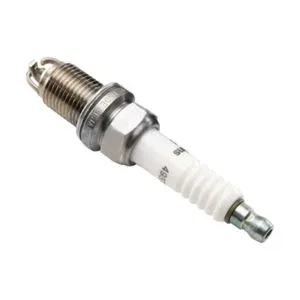
<p><strong>Spark Plug 4955850 4937472 5473010, Cummins-compatible, 14 mm × 1.25 mm thread</strong> — replacement for natural gas engines including ISB5.9G, ISC8.3 G, ISL G, L9N and QSL9 series.</p> <ul> <li>Scheduled ignition maintenance part for gas-powered fleets; replace at recommended service intervals to prevent misfire, rough idle and elevated NOx emissions.</li> <li>Full-engine set replacement advised over single-plug change to maintain balanced combustion across all cylinders.</li> <li>Supports planned stocking for municipal refuse trucks, landfill compactors and quarry haulers on Cummins gas platforms.</li> </ul> <p>Scheduled replacement intervals documented and included with each consignment for fleet maintenance planning.</p>
Lead Time
2-5 Days
Warranty
3-12 Months
Min. Order
1 Piece
Ships To
120+ Countries
4955850 4937472 5473010
Cummins Compatible
Engine Auxiliary Components
Nickel-chromium Alloy
Service Part
spark plug
Request a Quote
Response within 24 hours
Prefer instant chat?
WhatsApp
Product Details
Planned Ignition Spares — Natural gas fleet operators schedule replacements before misfire symptoms appear, keeping Cummins-compatible spark plugs in stock for ISL G, ISC8.3 G, and QSL9 G engines.
Technical Specifications
| Parameter | Value |
|---|---|
| Part Number | 4955850 4937472 5473010 |
| Product Type | Spark Plug |
| Cross-Reference | 4955850 (cross-reference only), 4937472 (cross-reference only), 5473010 (cross-reference only) |
| Machine Fitment | C GAS PLUS CM556, C8.3 G, ISB5.9G CM2180, ISC8.3 G CM2180, ISC8.3 G CM2180 C101, ISL G CM2180, L GAS PLUS CM556, L9N CM2380 L124B, QSL9 G CM558 |
| Condition | New Aftermarket |
| Electrode Material | Nickel-chromium alloy with laser-welded center electrode |
| Insulator Material | Alumina ceramic (95% Al₂O₃) |
| Continuous Operating Temperature | Up to 850°C |
| Thread Size | 14 mm × 1.25 mm |
| Seat Angle | 19° tapered seat |
| Hex Size | 16 mm |
| Reach | 19.5 mm |
| Spark Gap Tolerance | ±0.05 mm |
| Insulation Resistance | >10 GΩ at 1,000 V DC |
| Standards | ISO 9001, SAE J1330, ISO 15500-4 |
| Warranty | 3–12 months against manufacturing defects |
| MOQ | 1 piece |
Application Suitability
| Service Interval | What to Check |
|---|---|
| Standard ignition service cycle | Electrode erosion and gap widening beyond ±0.05 mm tolerance |
| Scheduled fleet maintenance window | Insulator cracking or carbon tracking on the ceramic body |
| Pre-overhaul inspection | Ignition coil output and gas supply pressure alongside plug condition |
| Seasonal fleet review | Spark plug service part maintenance Cummins gas engine compatibility with current serial variants |
| High-hour natural gas engine audit | Thread condition and seat sealing surface for heat transfer integrity |
Why Cummins Gas Engines Demand Scheduled Spark Plug Service Part Maintenance Cummins Gas Engine Replacements
Waiting for a misfire code means the fleet has already absorbed compounding losses.
A natural gas engine running on worn ignition components does not simply lose power. Incomplete combustion elevates exhaust temperatures, stresses catalytic converters, and accelerates oxygen sensor degradation across the bank. Fleet operators who treat this component as a reactive purchase item consistently report higher per-hour operating costs than those who align replacements with planned service windows [NEED_CITE: natural gas engine ignition system maintenance intervals]. From copper mine haul roads to municipal refuse routes, the pattern holds: unplanned ignition failures cascade into secondary component damage.
The Cummins-compatible Spark Plug service part maintenance Cummins gas engine lineup covering ISB5.9G, ISC8.3 G, ISL G, L9N, and QSL9 G platforms shares a common vulnerability. Nickel-chromium electrodes erode predictably under continuous 850°C thermal cycling, yet the degradation curve is invisible until gap tolerance exceeds the ±0.05 mm threshold. Operators running landfill compactors on biogas or quarry haulers on CNG face identical wear mechanics, making scheduled replacement the only defensible strategy.
Where Ignition Components Sit in the Fleet Service Calendar
Natural gas engines accumulate electrode wear as a direct function of operating hours and fuel composition. Biogas applications introduce sulfur compounds that accelerate insulator surface degradation compared to pipeline-quality CNG. Fleet maintenance planners who track Spark Plug service part maintenance Cummins gas engine consumption against engine hours build a predictable reorder rhythm. This eliminates emergency procurement cycles and the associated freight premiums that erode maintenance budgets over time.
Recognizing the Wear Progression Before Misfire Codes Trigger
Electrode erosion begins at the center tip and progresses outward, widening the spark gap incrementally. Early indicators include rough idle at low load, intermittent hesitation during throttle transitions, and gradual NOx emission increases. By the time the ECU logs a misfire fault, adjacent components — ignition coils, wiring harness connectors, and oxygen sensors — have already endured abnormal thermal and electrical stress [NEED_CITE: ignition system component interaction during electrode wear]. Synchronizing replacement across the full cylinder bank prevents partial-bank imbalance that masks underlying wear on remaining units.
How Material and Thermal Specifications Translate to Service Life
The nickel-chromium alloy center electrode resists oxidation and thermal fatigue under sustained combustion chamber temperatures. Laser welding anchors the electrode to the shell, preventing separation under vibration loads common in mobile construction and mining equipment. The 95% alumina ceramic insulator maintains dielectric strength above 10 GΩ at 1,000 V DC, ensuring the spark bridges the gap rather than tracking along the insulator surface. The 19° tapered seat provides gas-tight sealing against the cylinder head, directing heat transfer into the head rather than allowing combustion gases to leak past the thread interface.
The Hidden Cost of Reactive Ignition Procurement
Fleets that purchase ignition components only after a misfire event accept a pattern of repeated downtime. Each emergency order carries expedited freight costs, delayed machine availability, and the risk that secondary damage has already shortened the service life of coils and sensors. Over multiple cycles, the cumulative cost of reactive procurement exceeds the carrying cost of planned inventory. Operators who stock Spark Plug service part maintenance Cummins gas engine units against their fleet’s engine count and service intervals eliminate this recurring penalty [NEED_CITE: fleet inventory carrying cost versus emergency procurement].
Why Sourcing Through a Single Accountability Channel Matters
XUNPO maintains both self-produced and qualified sourced supply lines under unified quality control and warranty terms, meaning every unit ships with consistent inspection standards. The eight-category product range allows fleet operators to consolidate ignition components, filters, gaskets, and seals into a single consignment, reducing split freight and administrative overhead. Minimum order from one piece supports small fleets and single-machine emergency needs without forcing artificial volume commitments. Guangzhou warehouse stock on common SKUs enables rapid dispatch for operators who need to bridge a gap before a planned bulk order arrives. Technical confirmation of machine model and serial variants prevents misapplication across the ISB5.9G through L9N engine family.
Documentation & Verification
- Commercial invoice listing part numbers and engine compatibility references
- Cross-reference sheet mapping 4955850, 4937472, and 5473010 to applicable Cummins gas engine variants (reference only)
- Dimensional inspection record covering thread pitch, reach, and gap tolerance
- Warranty terms document specifying coverage period and claim procedure
- Packing photographs confirming sealed packaging and part number labeling
- HS code classification and customs documentation for international freight
Service Interval & Stocking Guidance
- Align replacement with the engine manufacturer’s published ignition service interval for the specific gas engine variant
- Inspect electrode gap and insulator condition at each scheduled oil change to track wear progression
- Stock one full cylinder bank set per engine in active service, plus a reserve proportional to fleet operating hours
- Store in sealed original packaging away from moisture and corrosive chemical vapors to preserve ceramic insulation integrity
- Rotate stock by receipt date to ensure oldest inventory is consumed first during scheduled maintenance windows
- Cross-check engine serial numbers against fitment lists before committing bulk orders to production
Planning Your Fleet’s Ignition Inventory
Provide your engine model designations, current fleet operating hours, and existing maintenance intervals. XUNPO’s technical team will confirm variant compatibility across the ISL G, ISC8.3 G, and QSL9 G platforms and recommend stocking quantities aligned with your service calendar. This prevents both over-inventory and the emergency orders that disrupt operational planning.
Frequently Asked Questions
Q: How often should these ignition components be replaced in natural gas engines?
A: Replacement intervals depend on engine model, fuel quality, and operating conditions. Biogas applications with higher sulfur content typically require shorter intervals than pipeline CNG. Consult the engine manufacturer’s service schedule for your specific variant and track electrode wear through scheduled inspections to establish a site-specific baseline.
Q: What symptoms indicate replacement is overdue?
A: Early indicators include rough idle, hesitation under load, and gradual emission increases. Visible electrode erosion beyond the ±0.05 mm gap tolerance and insulator carbon tracking confirm the need for immediate replacement. Waiting for ECU misfire codes risks secondary damage to ignition coils and oxygen sensors.
Q: Should I replace a single unit or the full cylinder bank set?
A: Full-bank replacement is strongly recommended. Partial replacement creates imbalance in combustion efficiency across cylinders, masking wear on remaining units and potentially causing the ECU to compensate unevenly. Synchronized replacement maintains consistent performance and simplifies future interval tracking.
Q: How many units should a fleet keep in stock?
A: A practical baseline is one full cylinder bank set per engine in active service, plus a reserve proportional to monthly operating hours. Fleet operators running multiple units of the same engine model benefit from consolidating orders to lock in batch consistency and reduce per-unit freight costs.
Q: Will these components remain available for older natural gas engine models?
A: XUNPO supports legacy platforms including C GAS PLUS CM556, L GAS PLUS CM556, and earlier ISC8.3 G variants through cross-reference verification covering superseded part numbers. Operators of aging fleets should confirm long-term supply continuity when planning multi-year maintenance budgets.
Compatible Brands
CAT
KOMATSU
HITACHI
VOLVO
HYUNDAI
DOOSAN
KOBELCO
SANY
XCMG
Our parts are engineered to meet or exceed OEM specifications. Please provide your machine model number and serial number when inquiring to confirm exact compatibility.
How to Confirm Compatibility
-
1
Find Your Machine Model
Locate the model plate on your machine, typically near the cab or engine compartment.
-
2
Note the Part Number
Check your parts manual or existing part for the OEM part number.
-
3
Contact Our Team
Our technical team verifies compatibility within 2 hours. Send us the details via the inquiry form or WhatsApp.
Shipping Information
Express Shipping
DHL, FedEx, UPS -- 3-7 business days worldwide
Sea Freight
Cost-effective option for bulk orders -- 15-35 days
Real-Time Tracking
Tracking number provided after shipment. 24/7 support available.
Warranty Policy
3-12
Months Warranty
All parts come with manufacturer warranty. Duration varies by product category.
- Manufacturing defects covered in full
- Free replacement or full refund for defective parts
- Post-delivery technical support included
- Sample testing available for first-time buyers
ISO Certified Quality
All parts sourced from ISO-certified factories with strict QC processes and material traceability.
Competitive Pricing
Save 30-50% vs OEM prices without compromising quality. Transparent pricing with no hidden fees.
Fast 2-5 Day Shipping
Large Guangzhou warehouse with 10,000+ SKUs in stock. Most orders ship within 2-5 business days.
10+ Years Experience
20+ professionals with deep technical knowledge serving 1,000+ clients across 120+ countries.
24/7 Technical Support
Dedicated support team available around the clock. Part verification within 2 hours of inquiry.
Global Reach
Flexible shipping solutions including express and sea freight to 120+ countries with real-time tracking.
Related Products
More parts you might need
Engine Auxiliary Components
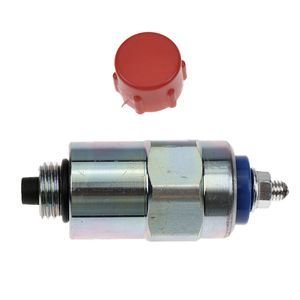
12V fuel cut-off solenoid for DPA/DPS/CAV/Lucas engines – OEM replacement
View Details
Engine Auxiliary Components
12V Fuel Cut-off Solenoid 7167-620B 9009-049 | Fleet Supply for DPA DPS Pumps
View Details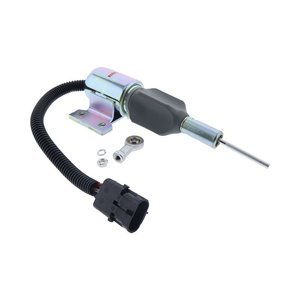
Engine Auxiliary Components
12V stop solenoid for Cummins 4BT 6BT engines – direct OEM replacement
View DetailsNeed a Custom Quote?
Our technical team responds within 24 hours. MOQ 1 piece. Ships to 120+ countries from our Guangzhou warehouse.