

Engine Auxiliary Components
Engine Auxiliary Components
ISO Certified
Ships 2-5 Days
MOQ 1 Piece
Engine Auxiliary Components
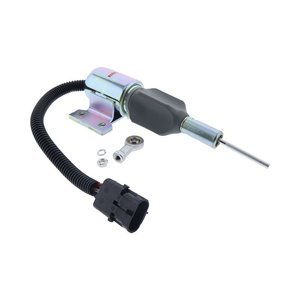
Stop Solenoid for Cummins 4BT 6BT – Scheduled Maintenance Service Part
<p><strong>Stop Solenoid 3930658, 12V, <45 ms Engagement</strong> — compatible with Cummins 4BT and 6BT engines as a planned maintenance replacement for the auxiliary shutdown system.</p> <ul> <li>Typical failure signs include coil insulation degradation and return spring fatigue, causing intermittent shutdown behavior before complete loss</li> <li>Single-component replacement is suitable when the fuel shutoff valve body and linkage remain within tolerance</li> <li>Forward stocking across service intervals reduces unplanned downtime for fleets operating multiple 4BT/6BT-powered machines</li> </ul> <p>Cross-reference verified against 3932529 and SA-4756-12, with replacement interval guidance supplied per consignment.</p>
Lead Time
2-5 Days
Warranty
3-12 Months
Min. Order
1 Piece
Ships To
120+ Countries
12V DC
3930658
Cummins 4BT 6BT
Engine Auxiliary
For Cummins
Service Part
stop solenoid
Request a Quote
Response within 24 hours
Prefer instant chat?
WhatsApp
Product Details
Fleet Maintenance Strategy — Predictable lifecycle replacement schedules for electrical shutdown components prevent unscheduled equipment halts across mixed Cummins fleets.
Technical Specifications
| Parameter | Value |
|---|---|
| Product Type | Stop Solenoid |
| Part Number | 3930658 |
| Cross-Reference | 3930658, 3932529, SA-4756-12, SA475612, 3939700, SA-4891-12, SA489112 (reference only) |
| Machine Fitment | Cummins 4BT, Cummins 6BT |
| Voltage | 12V |
| Coil Resistance | 12.2–12.8 Ω at 20°C |
| Engagement Time | <45 ms |
| Endurance | 50,000+ cycles |
| Operating Voltage Range | 10–14 VDC |
| Plunger Rod Material | Stainless steel with nitride surface hardening (HV950) |
| Housing Material | Die-cast aluminum |
| IP Rating | IP65 |
| Dimensional Tolerance | ±0.05 mm on mounting flange holes and shaft diameter |
| Condition | New Aftermarket |
| Warranty | 6 months against manufacturing defects |
| MOQ | 1 piece |
Application Suitability
| Service Interval | What to Check |
|---|---|
| 2,000–3,000 Hours | Visual inspection of plunger rod wear and connector corrosion. |
| 5,000 Hours | Coil resistance testing against baseline specification (12.2–12.8 Ω). |
| Engine Overhaul | Mandatory replacement during rebuild; inspect fuel shutoff linkage alignment. |
| Rental Turnaround | Functional test of engagement time (<45 ms) between rental cycles. |
| Seasonal Storage | Verify solenoid retraction spring tension before cold-weather deployment. |
Why Fleet Operators Misjudge Electrical Shutdown Component Lifespan
Stop Solenoid service part for Cummins 4BT 6BT maintenance failures rarely announce themselves until complete machine paralysis occurs.
Field experience across desert construction sites reveals a pattern: fleet managers track hydraulic pump hours and engine rebuild intervals meticulously, yet electrical auxiliary components like shutdown solenoids escape preventive scheduling entirely [NEED_CITE: preventive maintenance scheduling frameworks for mobile diesel equipment]. The solenoid coil insulation degrades gradually under thermal cycling, and the return spring loses tension over tens of thousands of actuations. By the time intermittent shutdown hesitation appears, internal components have already crossed their service threshold. Equipment sits idle while emergency procurement begins—a scenario that repeats across mixed fleets when critical wear parts lack defined replacement nodes.
The Component’s Position in Engine Auxiliary Systems
This solenoid controls fuel cutoff during shutdown sequences and emergency stops. It interfaces directly with the fuel shutoff valve assembly on Cummins 4BT and 6BT engines. When the ignition circuit breaks, the solenoid plunger retracts, allowing the fuel rack to move to the no-fuel position.
During scheduled service intervals, this component should be evaluated alongside adjacent wear items: the wiring harness connector integrity, mounting gasket compression set, and fuel shutoff linkage pivot wear. Replacing the solenoid alone while ignoring degraded connectors or worn linkage bushings invites premature re-failure.
Failure Progression and Linked Component Wear
Solenoid degradation follows a recognizable sequence. Coil resistance drifts outside the 12.2–12.8 Ω specification as insulation breaks down, causing slower engagement times. The plunger rod surface shows scoring where nitride hardening has worn through. Return spring fatigue manifests as incomplete retraction, leaving the fuel rack partially engaged during shutdown attempts [NEED_CITE: electromagnetic actuator fatigue mechanisms in diesel engine applications].
Fleet operators maintaining multiple 4BT/6BT-powered machines benefit from batch replacement during major service intervals rather than individual unit replacement upon failure. This approach consolidates labor and ensures consistent shutdown response across the fleet.
Engineering Parameters That Determine Service Life
Coil Resistance and Thermal Management
The 12.2–12.8 Ω resistance at 20°C reflects the copper wire gauge and winding density. Operating voltage fluctuations between 10–14 VDC cause current variations that generate heat. Exceeding the thermal envelope accelerates insulation breakdown.
Plunger Rod Surface Treatment
Stainless steel with HV950 nitride hardening provides wear resistance against cyclic friction. The ±0.05 mm dimensional tolerance on shaft diameter ensures consistent fit within the solenoid bore, preventing side-loading that causes uneven wear patterns.
Engagement Time Specification
Sub-45 millisecond response ensures immediate fuel cutoff during emergency shutdown commands. Slower engagement indicates internal friction buildup or coil degradation approaching failure threshold.
Environmental Protection Rating
IP65 sealing prevents dust ingress and water jet exposure from reaching internal coil windings. Compromised seals in abrasive environments allow contamination that accelerates plunger wear.
The Cumulative Cost of Reactive Procurement
Unplanned solenoid failures cascade through project timelines. A single excavator down during critical earthmoving phases delays dependent equipment and crew [NEED_CITE: construction equipment downtime impact analysis methodologies]. Emergency air freight for replacement parts consumes budget that planned procurement would have allocated efficiently.
Beyond direct costs, reactive purchasing forces compromises. The exact variant needed may not be available immediately, tempting substitution with marginally compatible units that fail prematurely. Fleet operators who stock predictable-wear electrical components ahead of consumption maintain schedule control and avoid cascading downtime across interdependent machine groups.
Procurement Approach for Planned Maintenance Programs
Consolidated Category Supply
Eight equipment part categories under one account means shutdown solenoids ship alongside filters, seal kits, and engine overhaul components in unified consignments. This eliminates split shipments and mismatched arrival times that fragment maintenance windows.
Cross-Reference Verification Across Generations
Part numbers supersede across Cummins engine generations. Verification covers discontinued numbers and alternate references, ensuring the unit supplied matches the specific engine serial variant in service rather than relying on copied tables with inherited errors.
Sample Supply for Fleet Validation
Before committing to batch quantities for mixed fleets, sample units allow fitment confirmation across different machine models. This validates dimensional compatibility and connector type before full inventory investment.
Technical Confirmation Support
Specification details including coil resistance baseline, engagement time expectations, and grade confirmation ensure the component matches the application’s duty cycle requirements.
Production and Sourced Supply Under Unified Warranty
Selected part lines produced in-house alongside qualified sourced supply carry identical quality control standards and warranty terms, simplifying fleet maintenance documentation.
Documentation & Verification
- Commercial invoice and packing list detailing solenoid quantities, batch codes, and cross-reference numbers
- Part compatibility sheet confirming Cummins 4BT/6BT fitment with OEM reference notation (reference only)
- Quality inspection records showing coil resistance measurements and engagement time tests per batch
- Six-month warranty terms aligned with typical service interval planning cycles
- Packing photographs documenting protective packaging before dispatch
- HS code and customs documentation support for international equipment maintenance supply chains
Service Interval & Stocking Guidance
- Replace solenoids during 5,000-hour major service intervals or engine overhaul events
- Monitor coil resistance drift beyond ±10% from 12.2–12.8 Ω baseline as replacement trigger
- Stock two units per machine for remote sites where emergency procurement lead times exceed acceptable downtime thresholds
- Store in climate-controlled conditions below 40°C to prevent premature coil insulation degradation
- Verify plunger rod surface condition and return spring tension during routine inspections
- Maintain cross-reference documentation covering superseded part numbers for aging fleet support
Requesting Maintenance Planning Support
Provide engine model designations, approximate service hours, and fleet composition to receive replacement interval recommendations aligned with your maintenance schedule structure. Including engine serial numbers enables precise variant confirmation across mixed-age Cummins 4BT and 6BT installations.
Frequently Asked Questions
Q: How often should the stop solenoid be replaced in normal fleet service cycles?
A: Typical replacement aligns with 5,000-hour major service intervals or during engine overhaul events. However, operating environment severity—extreme heat, dust contamination, voltage fluctuation—may necessitate earlier replacement. Fleet operators should establish baseline coil resistance measurements at installation and monitor drift during scheduled inspections to determine optimal replacement timing for specific duty cycles.
Q: What warning signs indicate the solenoid is approaching end of service life?
A: Intermittent shutdown hesitation, slower-than-normal engine stop response, and coil resistance readings outside the 12.2–12.8 Ω specification indicate degradation. Physical inspection may reveal plunger rod scoring, return spring tension loss, or connector corrosion. These symptoms typically progress gradually, allowing planned replacement before complete failure causes unplanned machine downtime.
Q: Should I replace just the solenoid or the complete fuel shutoff assembly?
A: Replace the complete assembly when linkage bushings show wear, pivot points exhibit play, or the valve body shows scoring. For units with intact mechanical components and only electrical degradation, solenoid-only replacement suffices. Inspect adjacent components during removal to determine whether system-level replacement provides better long-term value than repeated individual component swaps.
Q: How many units should I stock per machine in a mixed fleet?
A: Remote operations with extended emergency procurement lead times justify stocking two units per machine. Urban-based fleets with rapid supplier access may maintain one unit per machine plus shared pool inventory. Consider fleet age distribution—older machines approaching overhaul intervals benefit from dedicated stock rather than shared inventory that may be consumed by younger units.
Q: Can I still source this part for Cummins 4BT/6BT engines in older, discontinued equipment?
A: Yes. Aftermarket support continues for Cummins 4BT and 6BT engines installed in legacy construction equipment, generator sets, and industrial applications. Cross-reference verification covers superseded part numbers and alternate designations, ensuring compatibility confirmation even when original equipment manufacturer support has thinned. Provide engine serial numbers for precise variant matching.
Compatible Brands
CAT
KOMATSU
HITACHI
VOLVO
HYUNDAI
DOOSAN
KOBELCO
SANY
XCMG
Our parts are engineered to meet or exceed OEM specifications. Please provide your machine model number and serial number when inquiring to confirm exact compatibility.
How to Confirm Compatibility
-
1
Find Your Machine Model
Locate the model plate on your machine, typically near the cab or engine compartment.
-
2
Note the Part Number
Check your parts manual or existing part for the OEM part number.
-
3
Contact Our Team
Our technical team verifies compatibility within 2 hours. Send us the details via the inquiry form or WhatsApp.
Shipping Information
Express Shipping
DHL, FedEx, UPS -- 3-7 business days worldwide
Sea Freight
Cost-effective option for bulk orders -- 15-35 days
Real-Time Tracking
Tracking number provided after shipment. 24/7 support available.
Warranty Policy
3-12
Months Warranty
All parts come with manufacturer warranty. Duration varies by product category.
- Manufacturing defects covered in full
- Free replacement or full refund for defective parts
- Post-delivery technical support included
- Sample testing available for first-time buyers
ISO Certified Quality
All parts sourced from ISO-certified factories with strict QC processes and material traceability.
Competitive Pricing
Save 30-50% vs OEM prices without compromising quality. Transparent pricing with no hidden fees.
Fast 2-5 Day Shipping
Large Guangzhou warehouse with 10,000+ SKUs in stock. Most orders ship within 2-5 business days.
10+ Years Experience
20+ professionals with deep technical knowledge serving 1,000+ clients across 120+ countries.
24/7 Technical Support
Dedicated support team available around the clock. Part verification within 2 hours of inquiry.
Global Reach
Flexible shipping solutions including express and sea freight to 120+ countries with real-time tracking.
Related Products
More parts you might need

Engine Auxiliary Components
12V Stop Solenoid 3991167 SA-4941-12 – Scheduled Maintenance for 4BT R130 R170
View Details
Engine Auxiliary Components
Glow Plug H1 655 13721655 ED0021000890S – Scheduled Maintenance
View DetailsNeed a Custom Quote?
Our technical team responds within 24 hours. MOQ 1 piece. Ships to 120+ countries from our Guangzhou warehouse.