
Emission & Exhaust System
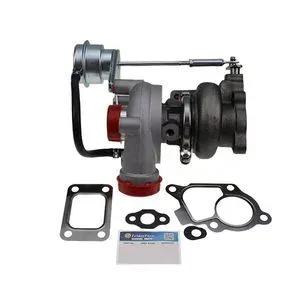
TD04L4 Turbocharger 7008469 Service Part for Kubota V3307 & Bobcat
<p><strong>TD04L4 Turbocharger 7008469, Ni-resist Ductile Iron Housing, Dual Ceramic Ball Bearings</strong> — replacement for Kubota V3307-DI-TE3-Q, V3300T and Bobcat S630, S650, T630, T650.</p> <ul> <li>Scheduled turbo exchange at the recommended interval prevents bearing wear from cascading into exhaust manifold and intake hose damage.</li> <li>Inspect oil feed lines, return lines, and manifold gaskets when planning this swap; replace as a set to avoid repeat teardowns.</li> </ul> <p>Older Kubota V3300T and Bobcat S630/T630 platforms remain supported with sustained aftermarket availability.</p>
Lead Time
2-5 Days
Warranty
3-12 Months
Min. Order
1 Piece
Ships To
120+ Countries
Request a Quote
Response within 24 hours
Product Details
Planned Replacement Strategy — Positioning the TD04L4 turbocharger (7008469, cross-reference only) within a documented maintenance cycle prevents reactive downtime across Bobcat and Kubota fleets.
Technical Specifications
| Parameter | Value |
|---|---|
| Part Number | 7008469 |
| Product Type | Turbocharger |
| Cross-Reference | 7008469 (reference only) |
| Machine Fitment | Kubota V3307-DI-TE3-Q, Kubota V3300T, Bobcat S630, Bobcat S650, Bobcat T630, Bobcat T650 |
| Turbo Model | TD04L4 |
| Condition | New Aftermarket |
| Turbine Housing Material | Ni-resist ductile iron |
| Compressor Wheel Material | Forged aluminum alloy (A380) |
| Bearing Type | Dual ceramic ball bearings |
| Bearing Speed Rating | 150,000 rpm |
| Seal Material | Viton O-rings |
| Shaft Runout | <0.02 mm |
| Compressor Hub Diameter | Ø42.0 ±0.05 mm |
| Flange Bolt Pattern | M8×1.25, 4-hole, 110 mm PCD |
| Boost Pressure | 1.2–1.5 bar |
| Operating Exhaust Gas Temperature | above 700°C |
| Warranty | 12 months against manufacturing defects |
| Standards | ISO 9001, ISO 8573-1 Class 2, SAE J1899 |
Application Suitability
| Service Interval | What to Check |
|---|---|
| Every 2,000 operating hours | Shaft play, oil seal condition, compressor wheel edge wear |
| Engine top-end overhaul | Exhaust manifold gasket condition, oil feed and return line integrity |
| Pre-winter or pre-season fleet service | Boost pressure consistency, intake hose clamps and boots |
| After sustained high-load quarry cycles | Turbine housing heat fatigue, bearing noise at idle and under load |
Why Fleets Lose More Money on Turbo Failures Than on the Part Itself
Reacting to a blown turbo almost always costs more than the replacement unit. When a TD04L4 turbocharger service part for Kubota V3307 and Bobcat skid steer maintenance fails catastrophically, the downstream damage — contaminated intake tract, scored cylinder walls, compromised head gasket — multiplies the repair bill and extends machine downtime well beyond a scheduled swap.
In demolition sites and quarry loading operations where Bobcat S630 and S650 units run continuously, the turbo is among the first emission-system components to show measurable wear. Operators who treat it as a run-to-failure item consistently face unplanned outages during peak utilization windows. [NEED_CITE: typical turbocharger failure modes in compact diesel engines under sustained load]
The pattern repeats across rental fleets: a single turbo failure triggers a chain of inspections and secondary replacements that a planned interval exchange would have avoided entirely.
Where This Turbo Sits in the Machine Service Life
The turbocharger occupies a midpoint position in the Kubota V3307-DI-TE3-Q engine’s lifecycle maintenance plan. Unlike oil filters or air cleaners that follow short replacement cycles, the TD04L4 operates across thousands of hours before measurable degradation demands attention — making it a component that fleet managers tend to overlook until symptoms appear.
Scheduling its replacement at a documented interval, typically aligned with the engine top-end service or a major inspection milestone, transforms it from an emergency purchase into a budgeted line item. This TD04L4 turbocharger service part for Kubota V3307 and Bobcat skid steer maintenance is most effective when it arrives at the workshop before the machine needs it.
Wear Progression and Linked Component Deterioration
Bearing wear inside the TD04L4 follows a predictable curve under sustained high-RPM, high-temperature operation. The dual ceramic ball bearings maintain stability up to 150,000 rpm, but oil quality degradation and thermal cycling gradually erode race surfaces. Once shaft runout exceeds the design tolerance of 0.02 mm, seal integrity degrades rapidly — Viton O-rings lose their sealing edge and oil begins migrating into both the compressor and turbine sides.
Adjacent components deteriorate on a linked timeline. Exhaust manifold gaskets exposed to sustained temperatures above 700°C harden and crack. Oil feed lines develop internal deposits that restrict flow to the turbo bearings. Air intake hoses soften at the clamps. [NEED_CITE: diesel engine turbocharger adjacent component wear correlation during high-temperature service] Replacing the turbo without inspecting these neighboring parts invites premature failure of the new unit, because the root cause — restricted oil supply or leaking intake — remains unresolved.
What the Engineering Numbers Mean on Site
The Ni-resist ductile iron turbine housing resists thermal fatigue under repeated heat-soak cycles typical of skid steer duty in quarry and demolition environments. Standard cast iron housings develop micro-cracks under the same thermal cycling; Ni-resist maintains structural integrity across thousands of heat-up and cool-down sequences.
Forged aluminum alloy (A380) compressor wheels hold dimensional stability under boost pressures of 1.2–1.5 bar without the edge erosion that affects cast alternatives. The M8×1.25 flange bolt pattern on a 110 mm PCD matches the Kubota V3307 exhaust manifold interface directly, eliminating adapter plates or modified gaskets that introduce leak paths. [NEED_CITE: turbocharger flange sealing requirements for compact diesel exhaust systems]
The Accumulating Cost of Reactive Turbo Procurement
Every unplanned turbo replacement cascades into secondary losses. The machine sits idle while the part is sourced, the workshop re-prioritizes its schedule, and rental penalty clauses activate for contracted equipment. For a fleet running multiple Bobcat T630 and T650 units, one reactive failure per quarter compounds into measurable lost revenue across a financial year. [NEED_CITE: equipment downtime cost impact in rental fleet operations]
Operators who switch from reactive to planned procurement report that the cumulative idle hours drop noticeably, and workshop workflow becomes predictable rather than crisis-driven. The turbo itself is a manageable expense; the downtime surrounding an unscheduled failure is not.
Why Operators Source This Turbo Through XUNPO
Own production lines and qualified sourced supply operate under one account and one warranty framework, so whether the TD04L4 ships from our facility or a certified partner, the 12-month warranty applies identically. Eight product categories mean the turbo, exhaust gaskets, oil lines, and intake hoses ship as one consignment rather than separate orders from separate vendors.
Single-piece minimum order eliminates the barrier for a one-unit emergency stock addition. Guangzhou warehouse stock on common Kubota and Bobcat service items supports faster dispatch than made-to-order alternatives. Part identification from machine model, serial number, or nameplate photograph resolves the frequent situation where the turbo data plate is illegible after years of heat exposure. Cross-reference verification covers superseded numbers and alternate references to confirm fitment before the order is placed. [NEED_CITE: aftermarket turbocharger cross-reference verification methods]
Documentation & Verification
- Commercial invoice and packing list referencing 7008469 turbocharger line items with quantities and HS codes
- Compatibility sheet confirming Kubota V3307 and Bobcat S630–T650 fitment with cross-reference notation (reference only)
- Dimensional inspection record covering shaft runout, flange bolt pattern, and compressor hub diameter
- 12-month warranty terms covering manufacturing defects under documented service conditions
- Packing photographs showing crate bracing and turbo orientation before dispatch closure
- HS code and export documentation support for customs clearance at destination
Service Interval & Stocking Guidance
- Schedule TD04L4 replacement at engine top-end overhaul or every 2,000 hours, whichever arrives first for quarry-duty machines
- Monitor shaft play and boost pressure consistency monthly; increasing oil consumption at the tailpipe signals seal degradation
- Stock one turbo per five Kubota V3307 or Bobcat S630–T650 units for fleets operating above 1,500 annual hours per machine
- Store unused turbos in sealed original packaging, upright on the flange, in a dry environment below 40°C ambient
- Rotate shelf stock on a first-in-first-out basis; Viton seals and bearing lubricants degrade if stored beyond recommended periods
- Verify oil feed line cleanliness before installation; flush lines to remove carbon deposits that accelerate bearing wear on the new unit
Requesting a Lifecycle Maintenance Quote
Provide the machine model, engine serial number where available, and current operating hours so we can confirm the correct TD04L4 variant and recommend stocking quantities aligned with your fleet utilization pattern. For older Bobcat S630 or T630 units past the period of strong brand-dealer support, include any previous turbo replacement records so we can advise on interval adjustments based on your specific duty cycle.
Frequently Asked Questions
Q: How often should the TD04L4 turbo be replaced under typical skid steer duty cycles?
A: In quarry and demolition applications running Bobcat S630–T650 units above 1,500 hours annually, scheduling replacement at 2,000-hour intervals or during engine top-end service is standard practice. Lighter-duty applications in material handling may extend this window, but monitoring shaft play and boost pressure remains essential regardless of cycle intensity.
Q: What warning signs indicate the turbo is approaching end of service life?
A: Increasing oil consumption visible as blue-grey exhaust smoke at idle, a noticeable drop in boost pressure under load, and audible whine or whistle from the turbo housing during spool-up all indicate bearing and seal wear. Any shaft play detectable by hand movement on the compressor wheel means the turbo has already passed its reliable service point.
Q: Should I replace just the turbo or the full intake and exhaust service set at the same time?
A: Replacing the turbo alone without inspecting the exhaust manifold gasket, oil feed and return lines, and intake hoses risks premature failure of the new unit. Contaminated oil feed lines or leaking intake connections replicate the conditions that wore the previous turbo, so addressing these adjacent components during the same service window protects the new investment.
Q: How many turbos should a fleet operator keep in stock?
A: A common baseline is one TD04L4 turbo per five Kubota-powered Bobcat units running high-utilization schedules. Fleets operating in remote quarry or mining sites with longer supply lead times typically increase this ratio. Providing your fleet size and annual hours per machine allows a stocking recommendation tailored to your specific exposure.
Q: Will this turbo remain available for older Kubota V3300T and Bobcat S630/T630 machines?
A: XUNPO maintains supply continuity for the Kubota V3307 and V3300T platform as long as these machines remain in active service across rental and contractor fleets. As machines age past peak brand-dealer inventory support, aftermarket availability through committed suppliers becomes the primary source for planned maintenance components.
Compatible Brands
Our parts are engineered to meet or exceed OEM specifications. Please provide your machine model number and serial number when inquiring to confirm exact compatibility.
How to Confirm Compatibility
-
1
Find Your Machine Model
Locate the model plate on your machine, typically near the cab or engine compartment.
-
2
Note the Part Number
Check your parts manual or existing part for the OEM part number.
-
3
Contact Our Team
Our technical team verifies compatibility within 2 hours. Send us the details via the inquiry form or WhatsApp.
Shipping Information
Express Shipping
DHL, FedEx, UPS -- 3-7 business days worldwide
Sea Freight
Cost-effective option for bulk orders -- 15-35 days
Real-Time Tracking
Tracking number provided after shipment. 24/7 support available.
Warranty Policy
All parts come with manufacturer warranty. Duration varies by product category.
- Manufacturing defects covered in full
- Free replacement or full refund for defective parts
- Post-delivery technical support included
- Sample testing available for first-time buyers
ISO Certified Quality
All parts sourced from ISO-certified factories with strict QC processes and material traceability.
Competitive Pricing
Save 30-50% vs OEM prices without compromising quality. Transparent pricing with no hidden fees.
Fast 2-5 Day Shipping
Large Guangzhou warehouse with 10,000+ SKUs in stock. Most orders ship within 2-5 business days.
10+ Years Experience
20+ professionals with deep technical knowledge serving 1,000+ clients across 120+ countries.
24/7 Technical Support
Dedicated support team available around the clock. Part verification within 2 hours of inquiry.
Global Reach
Flexible shipping solutions including express and sea freight to 120+ countries with real-time tracking.
Related Products
More parts you might need


Emission & Exhaust System
Service Part Turbo HX55 Turbocharger 3590044 3803938 for Cummins M11 ISM
View Details
Emission & Exhaust System
TD04L4 Turbocharger for Kubota V3307 & KX080-4S – Direct Replacement
View DetailsNeed a Custom Quote?
Our technical team responds within 24 hours. MOQ 1 piece. Ships to 120+ countries from our Guangzhou warehouse.