
Belt Drive Systems
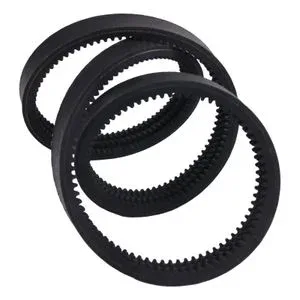
Wear Item 3 Groove Pump Drive Belt Compatible with Bobcat 753-7753
<p><strong>6660994 Pump Drive Belt</strong> — 3-groove EPDM rubber with aramid fiber reinforcement, 3×10×1550La, replacement for Bobcat 753, 763, 773, 7753 skid steer loaders.</p> <ul> <li>Scheduled replacement avoids hydraulic pump damage and unplanned fleet downtime</li> <li>Cracking, glazing, or fraying signals end of service life — inspect pulleys and bearings concurrently</li> <li>Ideal for rental fleet turnover and planned maintenance programs on aging Bobcat units</li> </ul> <p>Replacement interval recommendations ship with every order to support your maintenance schedule.</p>
Lead Time
2-5 Days
Warranty
3-12 Months
Min. Order
1 Piece
Ships To
120+ Countries
Request a Quote
Response within 24 hours
Product Details
Fleet-Level Stocking — EPDM aramid pump drive belts planned for Bobcat skid steer service intervals rather than emergency ordering
Technical Specifications
| Parameter | Value |
|---|---|
| Part Number | 6660994 |
| Product Type | Belt |
| Cross-Reference | 6660994 (reference only) |
| Machine Fitment | Bobcat 753, 763, 773, 7753 |
| Belt Profile | 3VX Joined V-Belt, 3 Grooves |
| Effective Length | 1550 mm La |
| Belt Height | 10 mm |
| Cord Material | Aramid Fiber Reinforcement |
| Compound | EPDM Rubber |
| Condition | New Aftermarket |
| Standards | ISO 9001, ISO 4184, SAE J1459 |
| Warranty | 3–12 months against manufacturing defects |
| MOQ | 1 piece |
Application Suitability
| Service Interval | What to Check |
|---|---|
| Every 1,000 operating hours | Surface cracking, glazing, and fraying on belt ribs and sidewalls |
| Rental turnover between contracts | Pulley alignment, bearing play, and tensioner condition alongside belt swap |
| Annual fleet preventive maintenance | Adjacent hydraulic pump seal condition and pulley groove wear depth |
| Older 753/763 units past 8,000 hours | Pulley bore wear and shaft runout that accelerate belt degradation |
Why Skid Steer Fleets Lose Days Over a Low-Cost Wear Part
A scheduled 3 groove pump drive belt service part swap costs hours of planned labor; an unscheduled failure costs days of lost production.
Running Bobcat skid steers on a reactive belt replacement strategy means waiting for the belt to snap before ordering one. By that point the hydraulic pump has already lost drive mid-cycle, and the machine sits idle while a replacement is sourced and shipped. Across rental fleets and contractor operations, the pattern repeats: a predictable wear component triggers unplanned downtime because it was never added to the preventive maintenance schedule [NEED_CITE: preventive maintenance scheduling for hydraulic drive belt systems in skid steer loaders].
From years of working with distributors across Europe and Central Asia, I have watched fleet managers treat pump belts as throwaway items until the machine actually stops. The skid steer belt maintenance conversation only happens after the failure, never before it.
Where This Belt Sits in the Machine’s Operating Life
The pump drive belt transfers engine output to the hydraulic pump that powers every function of the skid steer — lift, tilt, travel, and auxiliary circuits. On Bobcat 753, 763, 773, and 7753 models, this belt operates under continuous load with frequent start-stop cycles typical of urban construction and quarry work. As a 3 groove pump drive belt service part, it belongs in the scheduled maintenance rotation alongside hydraulic filters and engine oil changes, not on the emergency order list.
Reading Wear Before the Belt Fails
EPDM rubber with aramid fiber reinforcement resists heat buildup and elongation far longer than standard polyester-cord belts, but it still shows measurable degradation over time. Look for transverse cracking across the rib face, a glazed or polished sidewall surface, and fraying at the cord line. These are advance warnings, not failure events. When cracking spans the full belt width or glazing appears on more than one groove face, the replacement window has arrived [NEED_CITE: visual wear indicators for joined V-belts in heavy equipment drive systems]. Ignoring these signs pushes the belt toward sudden separation under load, which can damage the hydraulic pump pulley and shaft seal in the process.
How Material and Profile Define Service Life
The 3VX joined profile keeps all three belt strands tracking as a single unit, preventing individual strand turnover that plagues matched sets on high-vibration pump drives. The 1550 mm effective length and 10 mm height match the pulley geometry on Bobcat 753 through 7753 units, maintaining correct wrap angle and tension across the pump sheave. EPDM compound sustains flexibility at the elevated temperatures found near hydraulic pump housings, where ambient quarry heat compounds the thermal load. Aramid cord reinforcement limits stretch under peak pump startup torque, preserving tension and preventing the slip that causes rapid sidewall wear.
The Compounding Cost of Reactive Belt Procurement
Fleets that order belts only after failure accumulate hidden costs across the entire machine lifecycle. The first incident means a day of downtime while the part ships. The second incident, often on a different machine in the same fleet, reveals that no stocking plan exists. By the third failure, the pattern is normalized — the skid steer belt maintenance budget absorbs the repeated emergency freight and lost production without anyone questioning why the same part keeps causing the same stoppage [NEED_CITE: total cost of unplanned downtime versus planned preventive replacement in equipment fleets]. The belt itself was never the expensive item.
What Makes This Supply Arrangement Work for Fleet Buyers
Production on selected belt lines and sourcing through qualified partners both carry identical QC and warranty terms under a single account. Eight product categories mean the pump drive belt ships alongside hydraulic filters, seal kits, and tensioner components in one consignment, eliminating split freight across multiple suppliers. Orders start at one piece, so a single replacement belt for an older 753 does not require padding to meet a minimum. Cross-reference verification covers superseded and alternate part numbers for machines where the original designation has changed across production runs. Technical confirmation of machine model and serial range ensures the belt profile and length match before dispatch.
Documentation & Verification
- Commercial invoice listing 6660994 with Bobcat model compatibility noted
- Cross-reference sheet mapping superseded belt numbers (reference only)
- Dimensional inspection on groove profile and effective length before dispatch
- Warranty terms covering manufacturing defects for 3–12 months
- Packing photographs confirming belt condition prior to crating
- HS code and customs documentation for international belt shipments
Service Interval & Stocking Guidance
- Replace the 3VX belt at signs of rib cracking or sidewall glazing, typically around 1,000 operating hours
- Inspect pulley grooves and tensioner bearing each time the belt is removed for any reason
- Stock two spare belts per five machines to cover both planned swaps and unexpected failures
- Store belts flat in a dry environment away from direct sunlight to preserve EPDM compound integrity
- Record belt replacement dates in fleet maintenance logs to track interval accuracy per machine
Request a Stocking Plan for Your Fleet
Provide your Bobcat machine models, approximate operating hours, and current maintenance cycle so we can map replacement intervals to your schedule. Share any superseded part numbers from your existing records for cross-reference verification. We will confirm fitment against your specific serial ranges and suggest stocking quantities that match your fleet size and utilization rate.
Frequently Asked Questions
Q: How often should the hydraulic pump drive belt be replaced on a Bobcat skid steer?
A: Replacement timing depends on operating conditions and visual wear rather than a fixed hour interval. For machines in continuous quarry or demolition use, inspect the belt every 500 hours and plan replacement when rib cracking or sidewall glazing appears. Lighter-duty units may extend to 1,000 hours or more before the same wear indicators surface.
Q: What wear symptoms indicate the belt needs replacement before it fails?
A: Transverse cracking across the rib surface, a polished or glazed appearance on the sidewalls, and fraying near the aramid cord line all signal advancing degradation. If cracking spans the full width of any single rib, schedule replacement at the next service window rather than waiting for the next inspection cycle.
Q: Should I inspect or replace pulleys and bearings when changing the belt?
A: Always check pulley groove depth and bearing play during a belt swap. Worn pulley grooves cause the new belt to sit deeper and track poorly, accelerating early wear. If groove wear is measurable or the bearing shows radial play, replace both before installing the new belt.
Q: How many spare belts should a rental fleet keep in inventory?
A: A practical baseline is two belts per five machines of the same model series. This covers one planned preventive swap and one emergency replacement without overstocking. Adjust upward if your fleet operates in high-temperature environments that shorten belt service life.
Q: Can I still get this belt for older 753 and 763 models?
A: Yes. This belt remains in production as an aftermarket replacement for Bobcat 753, 763, 773, and 7753 units. Supply continues regardless of whether the original equipment manufacturer still lists the part, and cross-reference verification confirms fitment against your specific machine serial range.
Compatible Brands
Our parts are engineered to meet or exceed OEM specifications. Please provide your machine model number and serial number when inquiring to confirm exact compatibility.
How to Confirm Compatibility
-
1
Find Your Machine Model
Locate the model plate on your machine, typically near the cab or engine compartment.
-
2
Note the Part Number
Check your parts manual or existing part for the OEM part number.
-
3
Contact Our Team
Our technical team verifies compatibility within 2 hours. Send us the details via the inquiry form or WhatsApp.
Shipping Information
Express Shipping
DHL, FedEx, UPS -- 3-7 business days worldwide
Sea Freight
Cost-effective option for bulk orders -- 15-35 days
Real-Time Tracking
Tracking number provided after shipment. 24/7 support available.
Warranty Policy
All parts come with manufacturer warranty. Duration varies by product category.
- Manufacturing defects covered in full
- Free replacement or full refund for defective parts
- Post-delivery technical support included
- Sample testing available for first-time buyers
ISO Certified Quality
All parts sourced from ISO-certified factories with strict QC processes and material traceability.
Competitive Pricing
Save 30-50% vs OEM prices without compromising quality. Transparent pricing with no hidden fees.
Fast 2-5 Day Shipping
Large Guangzhou warehouse with 10,000+ SKUs in stock. Most orders ship within 2-5 business days.
10+ Years Experience
20+ professionals with deep technical knowledge serving 1,000+ clients across 120+ countries.
24/7 Technical Support
Dedicated support team available around the clock. Part verification within 2 hours of inquiry.
Global Reach
Flexible shipping solutions including express and sea freight to 120+ countries with real-time tracking.
Related Products
More parts you might need

Need a Custom Quote?
Our technical team responds within 24 hours. MOQ 1 piece. Ships to 120+ countries from our Guangzhou warehouse.