

Engine Auxiliary Components
Engine Auxiliary Components
ISO Certified
Ships 2-5 Days
MOQ 1 Piece
Engine Auxiliary Components
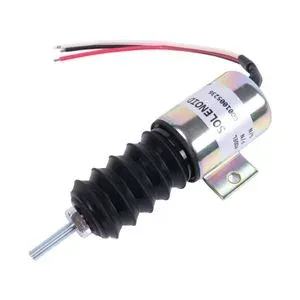
12V Pull Solenoid P610-B1V12 | Scheduled Maintenance for Excavator
<p><strong>P610-B1V12 Stop Solenoid, 12V Pull-Type With Springs</strong> — aftermarket fuel shut-off solenoid compatible with excavators, loaders, bulldozers, and tractors across multiple equipment brands.</p> <ul> <li>Intermittent shutdown hesitation, coil heat buildup, or sluggish spring return signal approaching failure — replace during scheduled service windows to avoid unplanned machine-down events.</li> <li>Fits mixed fleets where Trombetta-style references are common across excavator and loader assets, helping consolidate standby inventory.</li> <li>Engine shutdown circuit inspection guidance included with every shipment to support lifecycle planning across your fleet.</li> </ul>
Lead Time
2-5 Days
Warranty
3-12 Months
Min. Order
1 Piece
Ships To
120+ Countries
12V pull solenoid
Fleet Supply
Fuel System
P610-B1V12
Service Part
stop solenoid
Request a Quote
Response within 24 hours
Prefer instant chat?
WhatsApp
Product Details
Planned Replacement Cycle — Shutdown solenoid wear signs included with every dispatch to support fleet-level service interval tracking.
Technical Specifications
| Parameter | Value |
|---|---|
| Part Number | P610-B1V12 |
| Cross-Reference | P610B1V12 (cross-reference only) |
| Product Type | Stop Solenoid |
| Voltage | 12V |
| Actuation Type | Pull Solenoid With Springs |
| Condition | New Aftermarket |
| Machine Fitment | Excavators, Loaders, Bulldozers, Tractors, Harvesters |
| Brand Compatibility | Multiple Brands (Trombetta style replacement) |
| Warranty | 3-12 months against manufacturing defects |
| Manufacturing Standard | ISO-certified factories |
Application Suitability
| Service Interval | What to Check |
|---|---|
| Mid-life service (3,000–5,000 hours) | Coil resistance drift, spring return force, intermittent hesitation on shutdown |
| Pre-season inspection for agricultural units | Moisture ingress at connector, terminal corrosion, wiring harness chafing near mounting bracket |
| Fleet-wide preventive sweep | Common solenoid reference across mixed-brand assets to consolidate standing inventory |
| End-of-warranty machine audit | Full shutdown circuit continuity, relay switching time, solenoid pull stroke measurement |
| Older equipment lifecycle extension | Dealer part availability status, aftermarket cross-reference verification, harness connector condition |
When the 12V Stop Solenoid P610-B1V12 Maintenance Service Part Fails Mid-Shift
Most shutdown solenoid failures announce themselves weeks before the machine stops — if anyone is looking for the signs.
Fleet maintenance plans routinely cover filters, belts, and bearings at defined intervals, yet the fuel shut-off solenoid often stays on the machine until it fails completely. I have watched a mining excavator in Brazil sit idle for an entire shift because the solenoid was ignored through two consecutive service intervals. The operator reported intermittent hesitation on key-off for weeks beforehand [NEED_CITE: preventive maintenance scheduling practices for engine shutdown components in heavy equipment]. When the coil finally opened mid-cycle, the machine could not be restarted without a field bypass — a practice that introduces its own safety exposure.
The cost is never just the solenoid. It is the crew standing by, the haul truck waiting at the face, and the emergency freight bill for a part that could have ridden along with the last filter order. A planned 12V stop solenoid P610-B1V12 maintenance service part swap during a scheduled service window takes minutes. An unplanned failure costs the entire afternoon.
Where This Solenoid Sits in the Machine’s Service Life
The fuel shut-off solenoid occupies a deceptively simple position in the engine auxiliary system: it is the final electrical gate between the ignition circuit and the fuel delivery rack. Every 12V stop solenoid P610-B1V12 maintenance service part cycle begins the moment the key turns — the coil energizes, the plunger pulls against spring pressure, and fuel flow is permitted. When the key returns to off, spring force drives the plunger home and cuts fuel. This happens thousands of times across a machine’s working life, and each cycle erodes spring tension and coil insulation incrementally.
Recognizing Degradation Before the Machine Stops
Early-stage solenoid wear rarely triggers a hard fault code. The first symptom is usually a slight delay in shutdown response — the engine runs on for a second or two after the key is turned off. This hesitation indicates spring fatigue or partial coil degradation. If the unit operates in high-ambient-temperature environments such as mining or quarrying, coil heat buildup accelerates insulation breakdown [NEED_CITE: thermal degradation patterns in DC pull solenoids for mobile equipment]. A second indicator is inconsistent pull stroke: the solenoid sometimes fails to reach full travel on start-up, leaving the fuel rack in a partially restricted position that reduces engine response under load.
Voltage, Spring Rate, and Duty Cycle Explained
The 12V rating means this solenoid is designed for standard mobile equipment electrical systems, drawing a defined current to generate the electromagnetic force required to overcome spring preload. The pull-type spring-loaded design ensures fail-safe shutdown — if electrical power is lost entirely, spring force returns the plunger to the closed position and stops the engine. This is critical for safety on construction and mining sites where uncontrolled engine runaway must be prevented. The spring rate is calibrated to close the fuel rack reliably across the full operating temperature range, from cold starts in temperate climates to sustained heat in tropical mining applications. Coil winding resistance determines current draw and heat generation; as insulation degrades over thousands of cycles, resistance drifts and pull force diminishes. This is why checking coil resistance with a multimeter during scheduled service is a meaningful predictor of remaining life [NEED_CITE: coil resistance measurement as a predictive maintenance indicator for DC solenoids].
The Cost of Reacting Instead of Planning
Replacing a solenoid only after it fails means the machine has already been down for hours before the part even ships. Across a fleet of twenty excavators and loaders, reactive solenoid replacement accumulates into measurable lost production each quarter. The secondary cost is the temptation to replace only the solenoid without inspecting the relay, wiring harness, and connector that feed it. I have seen a fleet operator cycle through three replacement solenoids in one year on a single wheel loader before discovering a corroded relay contact was starving the coil of voltage — each new solenoid was working harder to compensate, burning out prematurely. That pattern of repeat failure is almost always a circuit problem, not a solenoid problem [NEED_CITE: electrical circuit root cause analysis for repeat solenoid failures in heavy machinery].
Why Source This Part Through XUNPO
Own production on selected solenoid lines and qualified sourced supply for the remainder operate under one account and one warranty framework, so fleet operators consolidate purchasing without splitting quality accountability. Eight equipment part categories mean the shutdown solenoid ships alongside filters, seal kits, and belt drive components in a single consignment — eliminating the second freight charge that arrives when items are sourced separately. Minimum order from one piece supports both emergency replacement and planned fleet-wide sweeps without forcing artificial volume. Guangzhou warehouse stock on common references enables fast dispatch for scheduled maintenance windows. The technical team confirms compatibility against machine model, serial range, and existing solenoid reference before the order is finalized, reducing the risk of variant mismatch across model generations.
Documentation & Verification
- Commercial invoice and packing list matching solenoid batch to purchase order line item
- Part compatibility and cross-reference sheet with P610-B1V12 and superseded references marked as reference only
- Coil resistance and pull-force quality inspection record included per shipment
- Warranty terms covering manufacturing defects for 3 to 12 months from dispatch
- Packing photographs showing individual solenoid protection and carton condition before sealing
- HS code and customs documentation support for international freight forwarding
Service Interval & Stocking Guidance
- Inspect coil resistance and shutdown response time at every major service interval to catch drift early
- Replace the solenoid proactively when hesitation exceeds normal range, typically around mid-life engine hours
- Stock one to two units per common reference across the fleet to cover both planned swaps and unexpected failures
- Store spare solenoids in dry, temperature-stable conditions to prevent terminal corrosion before installation
- Audit the relay and wiring connector whenever a solenoid is replaced to rule out upstream voltage loss as root cause
- Cross-check machine serial range against solenoid variant before pulling the unit from shelf stock
Request a Maintenance Planning Quotation
Provide your machine models, current operating hours, and the solenoid reference numbers already on your equipment. Share any history of shutdown hesitation or repeat solenoid replacement on specific units. This allows us to map the correct variant, suggest a replacement interval aligned with your service schedule, and recommend a standing stock level that covers your fleet without inflating inventory.
Frequently Asked Questions
Q: How often should a fuel shut-off solenoid be replaced as part of routine maintenance?
A: There is no universal hour interval because failure progression depends on operating temperature, vibration exposure, and electrical system health. Most fleet operators inspect coil resistance and shutdown response at each major service and plan replacement when measurable drift appears. For machines in high-heat mining environments, proactive replacement during mid-life overhauls is common practice to avoid unplanned downtime.
Q: What symptoms indicate the solenoid is degrading before complete failure?
A: The earliest sign is a slight delay when shutting down — the engine continues running briefly after the key turns off. Other indicators include intermittent start hesitation where the fuel rack does not open fully, and elevated coil resistance readings on multimeter checks. These symptoms typically appear weeks or months before the solenoid fails completely.
Q: Should I replace the solenoid alone or inspect the broader engine shutdown circuit?
A: Always inspect the relay, wiring harness, and connector alongside the solenoid. A corroded relay contact or damaged wire can starve the coil of voltage, causing premature burnout of the new unit. Replacing only the solenoid without checking upstream components is the most common reason for repeat failure within months.
Q: How many units should a fleet operator keep as standing inventory?
A: For a mixed-brand fleet sharing common Trombetta-style references, stocking one to two units per distinct solenoid part number is generally sufficient. This covers both planned preventive swaps and unexpected failures without tying up capital in excess inventory. Review consumption annually and adjust based on actual replacement frequency.
Q: Can this solenoid support older machines that are losing brand-dealer parts availability?
A: Yes. As equipment ages and brand dealers discontinue support for certain models, aftermarket cross-reference supply becomes the primary sourcing path. The P610-B1V12 reference covers a wide range of excavators, loaders, and agricultural equipment, and compatibility is verified against machine model and serial range before dispatch.
Compatible Brands
CAT
KOMATSU
HITACHI
VOLVO
HYUNDAI
DOOSAN
KOBELCO
SANY
XCMG
Our parts are engineered to meet or exceed OEM specifications. Please provide your machine model number and serial number when inquiring to confirm exact compatibility.
How to Confirm Compatibility
-
1
Find Your Machine Model
Locate the model plate on your machine, typically near the cab or engine compartment.
-
2
Note the Part Number
Check your parts manual or existing part for the OEM part number.
-
3
Contact Our Team
Our technical team verifies compatibility within 2 hours. Send us the details via the inquiry form or WhatsApp.
Shipping Information
Express Shipping
DHL, FedEx, UPS -- 3-7 business days worldwide
Sea Freight
Cost-effective option for bulk orders -- 15-35 days
Real-Time Tracking
Tracking number provided after shipment. 24/7 support available.
Warranty Policy
3-12
Months Warranty
All parts come with manufacturer warranty. Duration varies by product category.
- Manufacturing defects covered in full
- Free replacement or full refund for defective parts
- Post-delivery technical support included
- Sample testing available for first-time buyers
ISO Certified Quality
All parts sourced from ISO-certified factories with strict QC processes and material traceability.
Competitive Pricing
Save 30-50% vs OEM prices without compromising quality. Transparent pricing with no hidden fees.
Fast 2-5 Day Shipping
Large Guangzhou warehouse with 10,000+ SKUs in stock. Most orders ship within 2-5 business days.
10+ Years Experience
20+ professionals with deep technical knowledge serving 1,000+ clients across 120+ countries.
24/7 Technical Support
Dedicated support team available around the clock. Part verification within 2 hours of inquiry.
Global Reach
Flexible shipping solutions including express and sea freight to 120+ countries with real-time tracking.
Related Products
More parts you might need

Engine Auxiliary Components
12V Fuel Stop Solenoid 16851-60014 for Kubota RTV900 – Scheduled Maintenance
View Details
Engine Auxiliary Components
Glow Plug H1 655 Replacement for Lombardini Kohler Deutz Long-Life
View Details
Engine Auxiliary Components
16200-Z6L-003 Fuel Shut Off Solenoid for Honda GX630 – Scheduled Maintenance
View DetailsNeed a Custom Quote?
Our technical team responds within 24 hours. MOQ 1 piece. Ships to 120+ countries from our Guangzhou warehouse.