
Engine Auxiliary Components
12V Starter Motor 4996706 for Cummins – Scheduled Maintenance
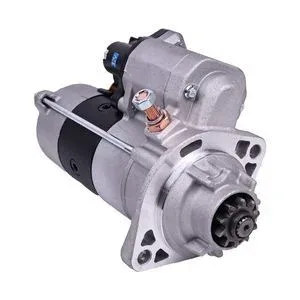
<p><strong>12V Starter Motor 4996706</strong> — 10T gear, replacement for Cummins B-Series and QSB engines including 4B3.9, 6B5.9, 6C8.3, ISB6.7, and QSB6.7 variants.</p> <ul> <li>Plan proactive replacement based on cranking cycle exposure and environmental conditions rather than engine hours alone</li> <li>Diagnose adjacent faults such as stop solenoid or battery relay before scheduling unit exchange</li> </ul> <p>Continued supply for aging Cummins-powered fleets when dealer support thins.</p>
Lead Time
2-5 Days
Warranty
3-12 Months
Min. Order
1 Piece
Ships To
120+ Countries
Request a Quote
Response within 24 hours
Product Details
Fleet Stocking Strategy — Securing replacement starter units for Cummins B-Series and QSB engines before predictable failures disrupt site operations.
Technical Specifications
| Parameter | Value |
|---|---|
| Part Number | 4996706 |
| Product Type | Starter Motor |
| Cross-Reference | 4996706 (reference only), 4280007090, 4280007091, 4280007092, 4380003110, 5128000980 (reference only) |
| Machine Fitment | Cummins 4B3.9, 6B5.9, 6C8.3, B3.3, B4.5, B6.7, F3.8, G5.9, ISB/ISD6.7, QSB4.5, QSB5.9, QSB6.7 series engines |
| Voltage | 12V |
| Pinion Teeth | 10T |
| Warranty | 3-12 months against manufacturing defects |
| MOQ | 1 piece |
| Manufacturing Standard | ISO-certified manufacturing |
Application Suitability
| Service Interval | What to Check |
|---|---|
| Pre-winter electrical audit | Battery voltage under load, solenoid engagement voltage, wiring insulation integrity |
| Mid-life engine refresh (8,000+ hours) | Starter cranking speed, pinion gear tooth wear, commutator condition |
| Annual fleet maintenance cycle | Cranking cycle count history, heat shield condition, mounting bolt torque |
| Seasonal standby equipment check | Storage corrosion on terminals, brush spring tension, moisture ingress |
Why Electrical Component Planning Prevents Unplanned Stops
A reactive starter replacement almost always costs more than the part itself.
When a fleet operator waits for a starter motor to fail before ordering, the machine sits idle while expedited freight is arranged — and in many cases, the root cause was never the 12V Starter Motor 4996706 maintenance service part at all. It was a failing stop solenoid, a corroded battery isolation relay, or a cracked ignition switch terminal. I have watched crews on Latin American mine haul routes swap three starters in a row before tracing a no-crank condition back to a $20 relay. Building starter inventory around predictable cranking cycle consumption — rather than treating each failure as a surprise — keeps machines in the pit instead of in the yard [NEED_CITE: heavy duty electrical component failure pattern analysis].
Where the Starter Sits in the Engine Service Lifecycle
The starter motor endures one of the harshest thermal and mechanical environments of any 12V Starter Motor 4996706 maintenance service part on a Cummins-powered machine. Unlike rotating components driven continuously, the starter sees extreme peak current draws in short bursts, often in dusty, oil-misted engine bays where ambient temperatures routinely exceed component ratings. For a loader or excavator doing multiple short-cycle starts per shift, cumulative cranking cycles — not engine hours — drive brush wear, commutator erosion, and solenoid contact degradation. Scheduling replacement around cranking cycle milestones rather than waiting for slow-crank symptoms avoids the cascade failure where a weak starter overheats and damages the flywheel ring gear.
Recognizing the Warning Signs Before Total Failure
Most fleet maintenance programs track hydraulic and fuel system wear closely but leave the starting circuit until it goes silent. Early indicators of a starter approaching end of life include a noticeable delay between key-turn and engine crank, an increasingly labored cranking speed on cold mornings, and a faint grinding that points to pinion tooth wear rather than ring gear damage. On QSB6.7 and 6B5.9 engines operating in high-dust environments, brush dust accumulation inside the starter housing accelerates commutator wear well ahead of typical replacement intervals [NEED_CITE: starter motor brush wear progression in contaminated environments]. Operators running mixed fleets should consider stocking depth based on the age profile of their Cummins units — machines past five years in service consume starters at a meaningfully higher rate than newer iron.
Reading the Specifications That Actually Matter on Site
A 12V electrical system under cranking load delivers voltage well below nominal — often dipping toward 9V at the starter terminal when battery condition or cable resistance is marginal. This starter’s 12V rating assumes healthy upstream supply; if your fleet’s battery maintenance is inconsistent, the starter will be blamed for failures that originate elsewhere. The 10-tooth pinion must match the flywheel ring gear specification for each engine variant — Cummins B-Series engines across the 4B3.9, B4.5, and 6B5.9 range share compatible ring gear tooth profiles for this pinion configuration, but verifying the specific engine serial variant eliminates the risk of tooth-count mismatch that causes engagement chatter. ISO-certified manufacturing ensures consistent winding quality and brush material composition, which directly affect cranking torque delivery and operational lifespan.
The Cost of Treating Starters as Disposable Rather Than Planned
Fleet operators who procure starters reactively — one at a time, after each failure — accumulate hidden costs that never appear on a single invoice. The idle machine misses its shift window. The operator sits on paid time with no work to do. A second failure on the same unit weeks later often means the root cause was never diagnosed, and the replacement starter absorbed damage from a failing solenoid or voltage drop that went unaddressed. Across a fleet of twenty or more Cummins-powered machines, this pattern produces a steady drip of unplanned downtime that consistently exceeds the cost of stocking verified replacement units in advance [NEED_CITE: total cost of unplanned electrical downtime in heavy equipment fleets].
Why Sourcing Through This Account Works for Fleet Planning
Production and sourcing lines for engine electrical components carry the same warranty terms, so whether the 12V Starter Motor 4996706 maintenance service part comes from our own facility or a qualified partner, it ships under one accountability. Eight product categories mean that when your annual electrical refresh also calls for alternators, sensors, stop solenoids, and relay assemblies, the entire list moves as one consignment — one commercial invoice, one freight booking, one set of customs documents. The single-piece minimum supports fleets that need to top up stock for a specific machine variant without committing to bulk. Cross-reference verification covers superseded numbers across Cummins engine generations, so a part number from a ten-year-old ISB6.7 CM2250 can be traced to its current equivalent. The technical team confirms pinion tooth count and mounting pattern against engine serial data before you commit to inventory.
Documentation & Verification
- Commercial invoice and packing list matched to each starter unit serial
- Cross-reference compatibility sheet covering 4996706 and alternate references (reference only)
- Electrical performance test record showing no-load current and cranking torque
- Warranty terms aligned to fleet maintenance cycle planning
- Packing photographs showing protective terminal caps and moisture barrier
- HS code classification and customs clearance documentation for cross-border dispatch
Service Interval & Stocking Guidance
- Schedule starter inspection at each mid-life engine service point to assess brush and commutator condition
- Stock one verified replacement unit per five to eight machines in active Cummins fleets
- Store spare starters in sealed bags with desiccant to prevent terminal corrosion before installation
- Record cranking cycle counts per machine to build site-specific replacement interval data
- Keep a stop solenoid and battery isolation relay alongside each spare starter to enable full-circuit diagnosis
- Rotate shelf stock so oldest inventory is deployed first during scheduled maintenance windows
Preparing Your Maintenance Forecast
Share your fleet composition — which Cummins engine variants are in service, approximate engine hours, and your next scheduled electrical maintenance window. We will map the applicable cross-references for each variant, confirm pinion tooth count and mounting compatibility against your engine serial ranges, and propose a stocking quantity based on your machine count and operational tempo. If you operate older B-Series or early QSB units where dealer support has thinned, specify those models so we can verify continued availability across the reference chain.
Frequently Asked Questions
Q: How often should a starter motor be replaced in heavy-duty service?
A: There is no universal hour interval — replacement timing depends on cranking cycle count, operating environment, and electrical system health. Machines doing multiple short-cycle starts in dusty conditions consume starters faster than units running long shifts with few restarts. We recommend inspecting brush wear and commutator condition at each mid-life service point and planning replacement around the symptoms rather than a fixed schedule.
Q: What symptoms indicate the starter is failing versus another electrical component?
A: Slow cranking speed with healthy battery voltage under load points to starter wear. A click with no crank suggests solenoid or relay failure upstream. Intermittent engagement often traces to wiring or ignition switch issues. Diagnose the full starting circuit before condemning the starter itself — replacing the motor without addressing the root cause leads to repeat failures.
Q: Should I replace the starter as a unit or have it rebuilt in-house?
A: Unit replacement minimizes machine downtime and requires no specialist bench capability. In-house rebuild is viable if your workshop has armature testing, brush replacement, and solenoid reconditioning equipment with controlled turnaround time. For fleets without dedicated electrical bench capacity, stocking complete replacement units keeps machines running while failed cores are evaluated at pace.
Q: How many spare starters should a fleet keep in stock?
A: A practical baseline is one unit per five to eight active machines of the same engine family, adjusted upward for older iron and high-cycle operations. Rental fleets and contractors running Cummins B-Series or QSB variants in remote sites typically stock deeper. Build your quantity from actual failure history across your specific machine age profile.
Q: Can I still get starter motors for older Cummins B-Series engines that dealers no longer support?
A: Aftermarket cross-reference chains often cover superseded and discontinued numbers that brand channels have dropped. Provide the engine model and serial number so we can verify pinion tooth count, mounting pattern, and voltage specification against the correct variant before supply.
Compatible Brands
Our parts are engineered to meet or exceed OEM specifications. Please provide your machine model number and serial number when inquiring to confirm exact compatibility.
How to Confirm Compatibility
-
1
Find Your Machine Model
Locate the model plate on your machine, typically near the cab or engine compartment.
-
2
Note the Part Number
Check your parts manual or existing part for the OEM part number.
-
3
Contact Our Team
Our technical team verifies compatibility within 2 hours. Send us the details via the inquiry form or WhatsApp.
Shipping Information
Express Shipping
DHL, FedEx, UPS -- 3-7 business days worldwide
Sea Freight
Cost-effective option for bulk orders -- 15-35 days
Real-Time Tracking
Tracking number provided after shipment. 24/7 support available.
Warranty Policy
All parts come with manufacturer warranty. Duration varies by product category.
- Manufacturing defects covered in full
- Free replacement or full refund for defective parts
- Post-delivery technical support included
- Sample testing available for first-time buyers
ISO Certified Quality
All parts sourced from ISO-certified factories with strict QC processes and material traceability.
Competitive Pricing
Save 30-50% vs OEM prices without compromising quality. Transparent pricing with no hidden fees.
Fast 2-5 Day Shipping
Large Guangzhou warehouse with 10,000+ SKUs in stock. Most orders ship within 2-5 business days.
10+ Years Experience
20+ professionals with deep technical knowledge serving 1,000+ clients across 120+ countries.
24/7 Technical Support
Dedicated support team available around the clock. Part verification within 2 hours of inquiry.
Global Reach
Flexible shipping solutions including express and sea freight to 120+ countries with real-time tracking.
Related Products
More parts you might need
Engine Auxiliary Components
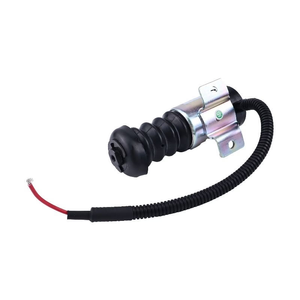
12V Fuel Cut-off Solenoid 7167-620B | Scheduled Maintenance for DPA DPS
View Details
Engine Auxiliary Components
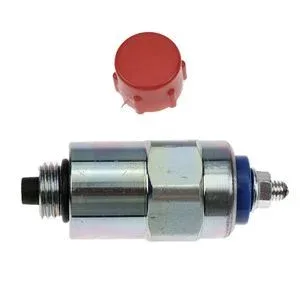
12V Fuel Shutoff Solenoid 17454-60010 for Kubota Engines – Scheduled Maintenance
View DetailsNeed a Custom Quote?
Our technical team responds within 24 hours. MOQ 1 piece. Ships to 120+ countries from our Guangzhou warehouse.