
Belt Drive Systems
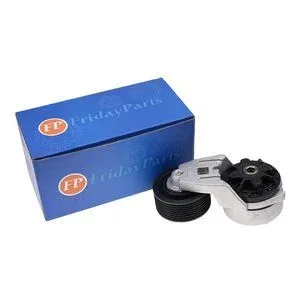
Belt Tensioner Assembly 3936213 for Cummins 6C ISB QSB – Fleet Supply
<p><strong>Fleet replacement interval guidance supplied with shipment</strong> for planned maintenance alignment</p>
Lead Time
2-5 Days
Warranty
3-12 Months
Min. Order
1 Piece
Ships To
120+ Countries
Request a Quote
Response within 24 hours
Product Details
Fleet Stocking Planning — keeping Cummins-powered machines running across mixed fleets starts with scheduling belt drive replacements before a minor wear item triggers a cascade failure.
Technical Specifications
| Parameter | Value |
|---|---|
| Part Number | 3936213 5259022 3976831 |
| Product Type | Belt Tensioner |
| Cross-Reference | 3936213, 5259022, 3976831 (for identification purposes) |
| Machine Fitment | Cummins 6C, ISB, QSB, 4B3.9, B4.5, 6B5.9, B6.7, 4B, 6B, ISC, QSC, ISL, QSL |
| Part Name | Belt Tensioner Assembly |
| Condition | New Aftermarket |
| Warranty | 3–12 months against manufacturing defects |
| Manufacturing Standard | ISO-certified production partners |
Application Suitability
| Service Interval | What to Check |
|---|---|
| Scheduled belt replacement | Inspect tensioner arm oscillation and bearing play before fitting new belts |
| 2,000–3,000 hour major service | Replace tensioner alongside idler pulleys and drive belt as a set |
| Rental turnaround between deployments | Listen for bearing chirp and check pulley face wear on each incoming unit |
| Aging fleet extension program | Verify cross-reference against current engine build documentation |
When a Planned Swap Becomes a Multi-Component Failure
A seized tensioner does not stop at the belt — it takes the water pump bearings and alternator output with it.
Fleet managers who treat the belt tensioner as a simple consumable often discover the real cost only after the machine is already down. The failure sequence is predictable: bearing degradation creates arm oscillation, oscillation shreds the belt, a missing belt disables the water pump, and an overheated engine compounds what should have been a routine service window. Across construction and mining fleets running Cummins ISB and QSB families, reactive tensioner procurement accounts for a disproportionate share of accessory drive downtime. [NEED_CITE: preventive maintenance scheduling for diesel engine accessory drives]
Where This Belt Tensioner Sits in the Machine’s Service Life
The belt tensioner occupies a specific position in the Cummins accessory drive lifecycle. It is neither a high-frequency consumable like filters nor a long-life structural component — it sits in the middle ground where planning discipline separates controlled maintenance from emergency breakdowns. Most fleet programs schedule belt replacement at defined intervals, yet the belt tensioner service part often gets left off the work order until the belt shows premature wear.
Reading the Wear Signals Before They Become Failures
Early-stage tensioner degradation announces itself through bearing noise that is easy to dismiss as normal engine clatter, arm oscillation visible only at idle, and belt chirp that mechanics sometimes attribute to misalignment. By the time uneven belt wear becomes obvious on the ribs, the internal damping mechanism has already lost effectiveness. Catching these signals during scheduled inspections — rather than waiting for belt separation — keeps the replacement within the planned maintenance window. A tensioner that fails in service can overload alternator bearings and water pump seals, turning a single-component swap into a full accessory drive overhaul. [NEED_CITE: belt drive system cascade failure patterns in heavy-duty diesel engines]
What the Cross-Reference Numbers Mean for Mixed Fleets
The interchange reference numbers 3936213, 5259022, and 3976831 reflect supersessions and alternate listings across Cummins engine generations. For fleet managers running a mix of 4B3.9, 6B5.9, ISB, QSB, and B6.7 variants, a single tensioner assembly covering multiple engine families simplifies stocking decisions considerably. Rather than maintaining separate inventory lines for each engine series, confirming that one part number serves the breadth of the fleet reduces warehouse complexity and cuts the risk of ordering the wrong variant during a time-pressured repair.
The Cost of Skipping the Tensioner During Belt Service
Mechanics who install a fresh belt over an aging tensioner are setting up a near-certain callback. The new belt conforms to worn pulley surfaces and absorbs the oscillation that the degraded damping spring can no longer control, leading to belt failure measured in days rather than months. Across fleets I have supported through Latin American mining and construction sites, the pattern repeats: a machine returns to the workshop within a single shift cycle because the maintenance team addressed the visible symptom — a cracked belt — without replacing the component that caused the damage. The cumulative cost of repeated belt failures, secondary component stress, and unplanned downtime consistently exceeds what a scheduled tensioner swap would have required. [NEED_CITE: total cost of reactive versus scheduled component replacement in fleet operations]
Why Source This Tensioner Through XUNPO
Selected part lines are produced in our own facility, with the remainder sourced from ISO-certified manufacturing partners — both carry identical quality control and warranty terms. Eight core categories mean a complete belt drive job list ships as one consignment, so tensioners, idler pulleys, and belts arrive together. Minimum order starts from one piece for emergency replacements, while fleet stocking programs benefit from consolidated pricing at volume. Guangzhou warehouse stock on common items supports fast dispatch for urgent service windows. Part identification works from engine serial number, machine model, or a nameplate photograph when the original plate is worn. Cross-reference verification covers superseded and alternate numbers across Cummins generations, and sample supply allows fitment confirmation before committing to bulk inventory.
Documentation & Verification
- Commercial invoice and packing list referencing all cross-reference numbers for customs clearance
- Part compatibility sheet confirming engine serial range fitment for ISB, QSB, and B6.7 variants
- Dimensional quality inspection record covering pulley profile and arm travel before dispatch
- Warranty terms document specifying coverage period against manufacturing defects
- Packing photographs showing individual unit protection and box condition at time of loading
- HS code classification support for destination-country import documentation
Service Interval & Stocking Guidance
- Schedule tensioner inspection at every belt replacement interval and replace if bearing play is detectable
- Stock one unit per machine for fleets running Cummins 6C and ISB families as minimum buffer
- Store tensioner assemblies in dry conditions with original packaging to prevent bearing corrosion
- Align stocking quantity with fleet size and the manufacturer-recommended accessory drive service window
- Replace the full belt drive group — tensioner, idler, belt — in a single service event to synchronize next overhaul
Requesting a Fleet Stocking Quote
Provide the engine models across your fleet along with approximate operating hours per machine, and we will map the correct tensioner variant to each unit and recommend a stocking quantity aligned with your service schedule. For mixed fleets, include any engine serial numbers available so we can confirm variant-specific fitment before building the consolidated order.
Frequently Asked Questions
Q: How often should the belt tensioner be replaced on Cummins ISB and QSB engines?
A: Replacement timing depends on operating conditions and duty cycle. Most fleet programs inspect the tensioner at every belt change interval and replace it whenever bearing play or arm oscillation is detected. In high-dust mining environments, the replacement window typically shortens. Aligning tensioner replacement with scheduled belt service prevents unplanned accessory drive failures and keeps the machine on its planned maintenance calendar.
Q: Should I replace just the tensioner or the whole belt drive set at the same time?
A: Replacing the tensioner, idler pulleys, and belt as a matched set synchronizes the next service interval and eliminates the risk of a new belt wearing prematurely against an old pulley surface. A single service event for the complete belt drive group is generally more efficient than staggered replacements that each require separate machine downtime and labor allocation.
Q: What early warning signs indicate the tensioner is approaching end of life?
A: Listen for bearing chirp or grinding at idle, observe whether the tensioner arm oscillates visibly during engine operation, and inspect the belt for uneven rib wear or glazing. These signals indicate degraded internal damping. Addressing them during a scheduled inspection avoids the cascade damage that occurs when a tensioner fails under load during normal operation.
Q: How many units should I stock for a mixed-engine fleet?
A: A practical starting point is one tensioner per machine for the most common engine families in your fleet. Since the cross-reference covers multiple Cummins variants including 4B3.9, 6B5.9, ISB, QSB, and B6.7, a single stocking number can serve diverse equipment types, reducing inventory complexity while maintaining readiness for scheduled and unscheduled replacements.
Q: Are these tensioners still available for older Cummins 4B and 6B engines?
A: Yes, this aftermarket belt tensioner covers the older 4B and 6B engine families alongside current ISB and QSB generations. Cross-reference verification against your specific engine serial number confirms the correct arm geometry and pulley profile. Continued availability through independent aftermarket channels supports aging machines where brand-dealer support has become difficult to source.
Compatible Brands
Our parts are engineered to meet or exceed OEM specifications. Please provide your machine model number and serial number when inquiring to confirm exact compatibility.
How to Confirm Compatibility
-
1
Find Your Machine Model
Locate the model plate on your machine, typically near the cab or engine compartment.
-
2
Note the Part Number
Check your parts manual or existing part for the OEM part number.
-
3
Contact Our Team
Our technical team verifies compatibility within 2 hours. Send us the details via the inquiry form or WhatsApp.
Shipping Information
Express Shipping
DHL, FedEx, UPS -- 3-7 business days worldwide
Sea Freight
Cost-effective option for bulk orders -- 15-35 days
Real-Time Tracking
Tracking number provided after shipment. 24/7 support available.
Warranty Policy
All parts come with manufacturer warranty. Duration varies by product category.
- Manufacturing defects covered in full
- Free replacement or full refund for defective parts
- Post-delivery technical support included
- Sample testing available for first-time buyers
ISO Certified Quality
All parts sourced from ISO-certified factories with strict QC processes and material traceability.
Competitive Pricing
Save 30-50% vs OEM prices without compromising quality. Transparent pricing with no hidden fees.
Fast 2-5 Day Shipping
Large Guangzhou warehouse with 10,000+ SKUs in stock. Most orders ship within 2-5 business days.
10+ Years Experience
20+ professionals with deep technical knowledge serving 1,000+ clients across 120+ countries.
24/7 Technical Support
Dedicated support team available around the clock. Part verification within 2 hours of inquiry.
Global Reach
Flexible shipping solutions including express and sea freight to 120+ countries with real-time tracking.
Related Products
More parts you might need


Need a Custom Quote?
Our technical team responds within 24 hours. MOQ 1 piece. Ships to 120+ countries from our Guangzhou warehouse.