
Belt Drive Systems
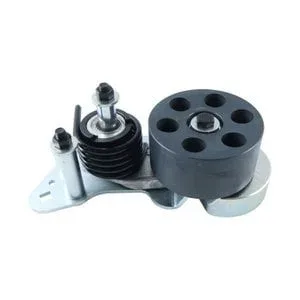
Belt Tensioner Assembly for Bobcat S510 S570 S590 – Service Part
<p><strong>Belt Tensioner Assembly 7167165 7274780 7273503, Complete with Bracket and Pulley</strong> — replacement for Bobcat S510–S850 and T550–T870 series loaders.</p> <ul> <li>Replace tensioner and belt together during scheduled accessory drive service to avoid unplanned downtime</li> <li>Watch for belt slippage, chirping noise, or uneven wear as early indicators of tensioner fatigue</li> <li>Heat-treated spring and high-strength steel bracket maintain consistent tension across extended intervals</li> <li>Stocking across shared part numbers reduces inventory complexity for mixed S-series and T-series fleets</li> </ul> <p>Replacement cycle recommendations ship with every order to support your fleet maintenance plan.</p>
Lead Time
2-5 Days
Warranty
3-12 Months
Min. Order
1 Piece
Ships To
120+ Countries
Request a Quote
Response within 24 hours
Product Details
Planned Maintenance Supply — Belt tensioner assemblies mapped to Bobcat loader service intervals so fleet downtime stays predictable rather than reactive.
Technical Specifications
| Parameter | Value |
|---|---|
| Part Number | 7167165 7274780 7273503 |
| Product Type | Belt Tensioner |
| Cross-Reference (reference only) | 7196910, 7201887, 7145358, 6564692, 7152658, 53DM12, 3GM12110, 59CM835, 7CM12140, 7273604 |
| Machine Fitment | S510, S530, S550, S570, S590, S595, S630, S650, S740, S750, S770, S850, T550, T590, T595, T630, T650, T740, T750, T770, T870 |
| Brand Compatibility | Fits Bobcat skid steer and compact track loaders |
| Condition | New Aftermarket |
| Assembly State | Complete assembly with bracket, rocker arm and pulley |
| Hardware Included | Bolts and nuts meeting original torque specifications |
| Warranty | 3–12 months against manufacturing defects |
| Manufacturing Standard | ISO-certified production |
Application Suitability
| Service Interval | What to Check |
|---|---|
| Every 500 hours | Belt deflection and tensioner arm movement range |
| Every 1,000 hours | Pulley bearing play and spring tension consistency |
| Engine overhaul | Replace tensioner assembly as part of accessory drive refresh |
| Seasonal fleet inspection | Check for belt dust accumulation indicating pulley misalignment |
| Pre-deployment for rental units | Verify tensioner bracket bolt torque and arm return force |
Why Bobcat Loaders Need a Belt Tensioner Service Part Maintenance Plan Before Failure
Scheduling belt tensioner service part maintenance around hour-based intervals keeps loader fleets running through seasonal peaks without surprise breakdowns.
Fleet managers running Bobcat skid steers and compact track loaders often find themselves ordering tensioner assemblies only after the belt has already slipped off or the accessory drive has gone silent. In my years maintaining loader fleets at mining and construction sites across Latin America, I watched machines sit idle for weeks simply because no tensioner was on the shelf when the old one failed. [NEED_CITE: preventive maintenance scheduling standards for compact loader fleets] Reactive purchasing means the belt tensioner service part maintenance cycle is always one failure behind where it should be, and each unplanned stop compounds into missed project deadlines and idle operator costs.
Where the Belt Tensioner Sits in the Loader Service Life
The belt tensioner is a predictable wear item inside the Bobcat loader engine accessory drive. Over hundreds of operating hours, the internal spring loses consistent return force, the pulley bearing develops radial play, and the bracket pivots wear at their contact surfaces. Treating this assembly as a scheduled belt tensioner service part maintenance item — rather than an emergency replacement — means you swap it during planned service windows when the machine is already stopped for filter and fluid changes. For a fleet of S590 or T770 units sharing the same accessory drive architecture, stocking a calculated quantity of tensioners against known consumption rates turns an unpredictable failure into a routine line item.
Reading the Wear Signs Before the Machine Goes Down
Several symptoms telegraph that a tensioner is approaching end of life well before catastrophic failure. Belt squeal during cold starts, visible belt dust around the accessory drive housing, and uneven belt wear across the rib profile all point to declining tensioner performance. [NEED_CITE: belt drive diagnostic indicators for off-highway diesel engines] When these signs appear during a routine service interval, scheduling the tensioner replacement for the next planned downtime avoids the compounding damage of a belt throwing mid-shift. Ignoring these signals typically means the belt tensioner service part maintenance window passes, and the next encounter with the component happens under breakdown conditions — often with secondary damage to the belt itself and adjacent pulleys.
Understanding the Assembly Components and Build Specification
The complete tensioner assembly includes the mounting bracket, the rocker arm with its internal spring mechanism, and the idler pulley as an integrated unit. Heat-treated spring components maintain consistent tension across the belt span through thousands of thermal cycles, while the high-strength steel bracket resists deflection under continuous load from the accessory drive belt. Replacing the full assembly rather than attempting individual pulley or spring swaps eliminates the risk of mismatched wear between old bracket pivots and new spring elements. Hardware meeting original torque specifications is included, so installation does not require sourcing separate fasteners that may or may not match the required grade for this vibration-intensive mounting location.
The Compounding Cost of Reactive Tensioner Purchasing
A fleet that buys tensioners only after failures accumulates hidden costs across multiple dimensions. Each unplanned downtime event means the operator is idle, the job schedule slips, and emergency freight charges apply to get the part on site faster than standard logistics allow. [NEED_CITE: total cost of unplanned equipment downtime in construction operations] When one loader in a multi-machine fleet fails from a neglected tensioner, the response is often to order a single unit — then another fails weeks later, triggering another emergency order. This pattern repeats because the belt tensioner service part maintenance discipline was never established at the fleet level. Consolidating purchases into planned stocking quantities eliminates the per-order overhead and positions the fleet to absorb individual unit failures without operational disruption.
Why Source This Belt Tensioner Assembly Through XUNPO
Our production and sourcing lines operate under unified quality control, so whether the tensioner assembly is manufactured in-house or sourced from an ISO-certified partner, warranty terms remain identical across the fleet order. Eight equipment part categories sit under one account, meaning your tensioner order ships alongside belts, filters, and seal kits in a single consignment — reducing split freight and partial deliveries. Orders start from one piece, supporting both single-machine owner-operators and multi-unit fleet contracts from the same inventory. Part identification works from the machine model alone when nameplates are illegible, backed by cross-reference verification that covers superseded numbers across Bobcat loader generations. Bulk stocking decisions are supported by technical confirmation of compatibility and grade, and sample units are available for fitment verification before full fleet commitment.
Documentation & Verification
- Commercial invoice listing tensioner assembly quantities with HS codes for customs clearance
- Compatibility sheet mapping cross-reference numbers to specific Bobcat S-series and T-series loaders (reference only)
- Dimensional inspection records verifying bracket hole spacing and pulley alignment before dispatch
- Warranty terms document covering the 3–12 month manufacturing defect period per unit
- Packing photographs showing tensioner assemblies secured against transit damage
- Export documentation support including customs classification for international fleet supply
Service Interval & Stocking Guidance
- Schedule replacement at every second engine service interval or when belt deflection exceeds specification
- Inspect pulley bearing for radial play by hand-spinning during each routine belt inspection
- Stock one tensioner assembly per three to five loaders sharing the same part number in the fleet
- Store assemblies in sealed packaging away from moisture to prevent bracket surface corrosion before installation
- Record installation hour-meter readings to track individual unit service life across the fleet
Preparing Your Fleet Maintenance Inquiry
Provide your Bobcat loader model list and current hour-meter readings so we can map the correct tensioner assembly cross-references to each machine in your fleet. Share your existing service interval schedule, and we will align stocking recommendations to your planned maintenance windows rather than proposing arbitrary order quantities. For fleets with older S-series or T-series units, include any known serial ranges so superseded part numbers are verified before the order ships.
Frequently Asked Questions
Q: How often should the belt tensioner be replaced on a Bobcat loader?
A: Replacement intervals depend on operating environment and duty cycle, but most fleet operators schedule tensioner inspection at every standard service interval and plan replacement at every second or third cycle. Units working in high-dust mining or demolition environments typically consume tensioners faster than machines in general construction. Tracking actual service life per unit across your fleet builds a reliable consumption baseline for stocking decisions.
Q: What symptoms indicate the tensioner is nearing end of life?
A: Early warning signs include belt squeal during cold engine starts, visible rubber dust accumulating around the accessory drive housing, and uneven wear patterns across the belt rib profile. The tensioner arm may also show reduced return force when manually displaced during inspection. Addressing these indicators during the next planned service window prevents unplanned belt failure and secondary damage to adjacent pulleys.
Q: Should the belt be replaced at the same time as the tensioner?
A: Replacing both the belt and tensioner together during scheduled service is standard practice for fleet maintenance programs. A worn tensioner accelerates belt wear, and installing a new belt against a degraded tensioner shortens belt life significantly. Coordinating both replacements within one service event reduces total machine downtime compared to staggered replacements.
Q: How many tensioners should I keep in stock for a fleet?
A: A practical starting point is one tensioner assembly for every three to five machines sharing the same part number, adjusted based on actual failure history and operating conditions. Fleets in severe environments or running extended shifts should increase this ratio. Reviewing consumption records annually allows you to refine stocking levels against documented replacement frequency.
Q: Can I still get supply support for older Bobcat loader models?
A: Cross-reference verification covers superseded and alternate part numbers across earlier Bobcat S-series and T-series generations, including models where original brand supply channels have thinned. Providing the machine model and serial range allows confirmation of the correct tensioner assembly variant before ordering. This supports fleet operators maintaining older machines past typical brand support windows.
Compatible Brands
Our parts are engineered to meet or exceed OEM specifications. Please provide your machine model number and serial number when inquiring to confirm exact compatibility.
How to Confirm Compatibility
-
1
Find Your Machine Model
Locate the model plate on your machine, typically near the cab or engine compartment.
-
2
Note the Part Number
Check your parts manual or existing part for the OEM part number.
-
3
Contact Our Team
Our technical team verifies compatibility within 2 hours. Send us the details via the inquiry form or WhatsApp.
Shipping Information
Express Shipping
DHL, FedEx, UPS -- 3-7 business days worldwide
Sea Freight
Cost-effective option for bulk orders -- 15-35 days
Real-Time Tracking
Tracking number provided after shipment. 24/7 support available.
Warranty Policy
All parts come with manufacturer warranty. Duration varies by product category.
- Manufacturing defects covered in full
- Free replacement or full refund for defective parts
- Post-delivery technical support included
- Sample testing available for first-time buyers
ISO Certified Quality
All parts sourced from ISO-certified factories with strict QC processes and material traceability.
Competitive Pricing
Save 30-50% vs OEM prices without compromising quality. Transparent pricing with no hidden fees.
Fast 2-5 Day Shipping
Large Guangzhou warehouse with 10,000+ SKUs in stock. Most orders ship within 2-5 business days.
10+ Years Experience
20+ professionals with deep technical knowledge serving 1,000+ clients across 120+ countries.
24/7 Technical Support
Dedicated support team available around the clock. Part verification within 2 hours of inquiry.
Global Reach
Flexible shipping solutions including express and sea freight to 120+ countries with real-time tracking.
Related Products
More parts you might need

Belt Drive Systems
Belt 120-3335/265-610 for Toro TimeMaster & Exmark Commercial Mowers
View DetailsNeed a Custom Quote?
Our technical team responds within 24 hours. MOQ 1 piece. Ships to 120+ countries from our Guangzhou warehouse.