
Engine Auxiliary Components
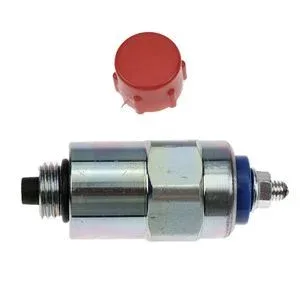
12V Fuel Cut-off Solenoid 7167-620B | Scheduled Maintenance for DPA DPS
<p><strong>7167-620B Fuel Cut-Off Solenoid, 12V, for CAV LUCAS DPA/DPS Systems</strong> — replacement for fuel injection platforms in construction, mining and agricultural diesel equipment.</p> <ul> <li>Replace during scheduled fuel system service to avoid unscheduled downtime and protect the injection pump from secondary damage</li> <li>Inspect filters, lines and pump seals in the same service window; plan fleet stock based on consumption intervals for machines sharing DPA/DPS platforms</li> </ul> <p>Replacement interval recommendations ship with your order to support planned maintenance scheduling.</p>
Lead Time
2-5 Days
Warranty
3-12 Months
Min. Order
1 Piece
Ships To
120+ Countries
Request a Quote
Response within 24 hours
Product Details
Fleet Stocking Strategy — 12V stop solenoid planned around DPA/DPS service intervals prevents reactive purchasing that strands entire crews on remote mining sites.
Technical Specifications
| Parameter | Value |
|---|---|
| Part Number | 7167-620B |
| Product Type | Stop Solenoid |
| Cross-Reference | 7167-620B, 7167620B, 9009-049, 9009049 (reference only) |
| Machine Fitment | Models utilizing CAV LUCAS DPA/DPS fuel systems |
| Voltage | 12V |
| Compatible Systems | DPA, DPS |
| Condition | New Aftermarket |
| Warranty | 3-12 months against manufacturing defects |
| MOQ | 1 piece |
| Standards | ISO 9001 |
Application Suitability
| Service Interval | What to Check |
|---|---|
| Scheduled fuel system overhaul | Inspect solenoid coil resistance and valve seat wear alongside injector servicing |
| Mid-life pump service | Verify plunger movement and spring tension against DPA pump service manual tolerances |
| Pre-deployment fleet check | Test energize and de-energize response on each unit before remote site mobilization |
| Post-rebuild validation | Confirm shut-off timing aligns with injection pump calibration after assembly exchange |
Why the Machine Stops Before the Crew Even Knows There Is a Problem
A failed 12V fuel cut-off solenoid service part does not announce itself gradually — the engine simply refuses to shut down cleanly or fails to start after a routine stop, leaving operators stranded on active work faces. In my years running through mining concessions across Southeast Asia, I watched entire fleets sit idle because a single solenoid on one DPA pump was ordered only after the machine went down, turning a minor consumable replacement into a multi-day sourcing delay [NEED_CITE: fleet maintenance planning standards for remote mining operations].
The real cost is never the solenoid itself. It is the loader sitting silent while a haul truck queue backs up at the loading point, or the excavator that cannot tram out of a blast zone because its fuel system will not cycle. Equipment owners treat this component as an emergency purchase when its wear pattern follows the same predictable curve as every other electrical wear item on the injection pump.
Where This Solenoid Sits in the Machine Service Life
The stop solenoid occupies a specific position in the DPA/DPS fuel system lifecycle. It is neither a high-frequency consumable like a fuel filter nor a major assembly like the injection pump itself. It is a predictable wear item whose coil insulation degrades with heat cycles and whose internal valve mechanism accumulates carbon deposits over thousands of engine hours. Replacing the 12V fuel cut-off solenoid service part at the same interval as the pump seal kit keeps the fuel shut-off function reliable without requiring a separate service visit.
Fleet operators running multiple units on common DPA/DPS platforms gain the most from scheduling this replacement during planned pump service windows rather than waiting for field failure.
Recognizing the Signs Before the Solenoid Strands the Machine
Solenoid failure rarely happens without warning. Intermittent starting hesitation, delayed engine shut-down after key-off, or a noticeable lag between the switch command and actual fuel cut-off all point to coil degradation or valve seat wear building toward complete failure. In tropical mining environments where ambient heat compounds the thermal load on the coil, these symptoms surface earlier than in temperate climates [NEED_CITE: electrical component derating curves in high ambient temperature operations].
When the solenoid valve begins to stick rather than snap cleanly, the injection pump is already operating outside its intended shut-off timing. Catching this progression during routine service checks allows the part to be swapped on schedule rather than in an emergency.
Reading the Specifications That Matter on Site
The 12V rating defines the coil’s operating voltage and must match the machine’s electrical system without deviation — applying higher voltage accelerates insulation breakdown, while lower voltage results in sluggish valve actuation. Compatibility with both DPA and DPS systems means the solenoid body and valve geometry match the mounting interface and fuel gallery dimensions of both pump families, which share a common CAV LUCAS lineage.
The new aftermarket condition ensures coil winding integrity and valve seat concentricity meet production tolerances, avoiding the unknowns that come with reconditioned electrical components where internal corrosion may already be progressing. ISO 9001 manufacturing oversight covers the dimensional and electrical testing applied before dispatch [NEED_CITE: quality management system requirements for automotive and diesel fuel system components].
The Compounding Cost of Reactive Purchasing
Every time a fleet operator waits for solenoid failure before ordering, the machine sits through a sourcing cycle that could have been eliminated by stocking a single unit per active pump platform. The reaction pattern repeats: the machine goes down, the workshop calls suppliers, the part ships, and meanwhile the crew is reassigned to tasks that do not require that equipment — tasks that often do not exist on a remote mine site.
Over a fleet of machines sharing DPA/DPS fuel systems, this reactive pattern accumulates into measurable lost production hours across a quarter. A contractor who pre-positions the 12V fuel cut-off solenoid service part alongside pump seal kits and fuel filters eliminates this entire chain of delay.
What This Supply Channel Actually Delivers
Our Guangzhou warehouse maintains stock on high-turnover engine auxiliary components, meaning common solenoid references ship without the multi-week lead times that accompany made-to-order sourcing. Both self-produced and sourced supply lines carry identical warranty terms, so buyers receive consistent coverage regardless of which production line fulfilled the order.
Part identification works from a part number, a machine model, or a photograph of the existing solenoid and nameplate — useful when field conditions have worn markings beyond readability. Cross-reference verification covers superseded and alternate numbers, ensuring that a reference like 9009-049 is confirmed against current application data before the order is finalized. A single-piece minimum order means a fleet operator can pull one unit for emergency fitment and confirm suitability before committing to a bulk stocking order.
Documentation & Verification
- Commercial invoice and packing list itemizing each solenoid with cross-reference numbers
- Compatibility sheet confirming DPA/DPS system fitment marked as reference only
- Quality inspection record covering coil resistance test and valve stroke measurement
- Warranty terms aligned to planned replacement intervals from three to twelve months
- Packing photographs showing individual solenoid protection and carton condition
- HS code classification and customs documentation for diesel fuel system electrical components
Service Interval & Stocking Guidance
- Replace the solenoid at each scheduled DPA/DPS pump service window to avoid standalone failures
- Monitor coil resistance drift during routine electrical checks as an early wear indicator
- Stock one unit per five active machines on common DPA/DPS platforms as a baseline reorder trigger
- Store solenoids in dry conditions away from direct heat to preserve coil insulation integrity
- Inspect valve seat and plunger for carbon buildup whenever the adjacent fuel filter is changed
- Cross-check fleet inventory against superseded references like 9009049 to consolidate stock keeping units
Planning Your Next Solenoid Order
Provide your machine models, the number of active DPA or DPS units in your fleet, and current service hour readings to receive a stocking recommendation aligned with your maintenance schedule. If your existing solenoid markings are worn, send a photograph of the component and the pump nameplate for cross-reference confirmation before the order is placed.
Frequently Asked Questions
Q: How often should the fuel cut-off solenoid be replaced under normal operating conditions?
A: The solenoid should be replaced during each scheduled DPA/DPS injection pump service interval rather than on a standalone basis. This aligns the replacement with pump seal and filter changes, eliminating separate downtime events. Exact intervals depend on engine operating hours and environmental conditions, but tying the solenoid to the pump service window ensures it never becomes the reason a machine sits idle.
Q: What symptoms indicate the solenoid is nearing failure before it strands the machine?
A: Delayed engine shut-down after key-off, intermittent starting hesitation, or a noticeable lag in fuel cut-off response all signal coil degradation or valve mechanism wear. These symptoms intensify in high-temperature environments. Spotting them during routine service checks allows planned replacement before the component fails completely on an active work face.
Q: Should I replace just the solenoid or the entire shut-off assembly?
A: For machines within normal service hours, replacing the solenoid alone is sufficient provided the valve seat and plunger bore show no scoring. When the pump itself is due for overhaul or has accumulated significant wear hours, exchanging the complete shut-off assembly may be justified to restore factory timing tolerances across the entire fuel cut-off mechanism.
Q: How many units should a fleet keep in stock based on service interval planning?
A: A practical baseline is one solenoid per five machines sharing the same DPA or DPS fuel platform, adjusted upward for remote sites where resupply lead times are long. Rental companies turnaround inventory should hold enough to cover simultaneous unit returns. Consumption data from your first two service cycles will refine this figure for your specific operating conditions.
Q: Can I still get this part for older machines that are no longer supported by the brand?
A: Yes. The aftermarket supply chain continues producing this solenoid for aging DPA/DPS platforms even after brand support thins. Cross-reference verification confirms that superseded numbers like 9009-049 map to current production references, ensuring older fleet assets remain serviceable without relying on discontinued original channels.
Compatible Brands
Our parts are engineered to meet or exceed OEM specifications. Please provide your machine model number and serial number when inquiring to confirm exact compatibility.
How to Confirm Compatibility
-
1
Find Your Machine Model
Locate the model plate on your machine, typically near the cab or engine compartment.
-
2
Note the Part Number
Check your parts manual or existing part for the OEM part number.
-
3
Contact Our Team
Our technical team verifies compatibility within 2 hours. Send us the details via the inquiry form or WhatsApp.
Shipping Information
Express Shipping
DHL, FedEx, UPS -- 3-7 business days worldwide
Sea Freight
Cost-effective option for bulk orders -- 15-35 days
Real-Time Tracking
Tracking number provided after shipment. 24/7 support available.
Warranty Policy
All parts come with manufacturer warranty. Duration varies by product category.
- Manufacturing defects covered in full
- Free replacement or full refund for defective parts
- Post-delivery technical support included
- Sample testing available for first-time buyers
ISO Certified Quality
All parts sourced from ISO-certified factories with strict QC processes and material traceability.
Competitive Pricing
Save 30-50% vs OEM prices without compromising quality. Transparent pricing with no hidden fees.
Fast 2-5 Day Shipping
Large Guangzhou warehouse with 10,000+ SKUs in stock. Most orders ship within 2-5 business days.
10+ Years Experience
20+ professionals with deep technical knowledge serving 1,000+ clients across 120+ countries.
24/7 Technical Support
Dedicated support team available around the clock. Part verification within 2 hours of inquiry.
Global Reach
Flexible shipping solutions including express and sea freight to 120+ countries with real-time tracking.
Related Products
More parts you might need


Engine Auxiliary Components
Stop Solenoid SA-4026-12 for Cummins 5.9L 8.3L – Fleet Supply
View Details
Engine Auxiliary Components
12V Shutoff Solenoid Valve for Kubota D722/D782/D902 Engines – Direct OEM Replacement
View DetailsNeed a Custom Quote?
Our technical team responds within 24 hours. MOQ 1 piece. Ships to 120+ countries from our Guangzhou warehouse.