
Belt Drive Systems
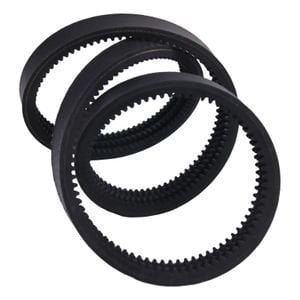
3 Groove Pump Drive Belt 6660994 for Bobcat 753 763 773 – Wear Item
<p><strong>6660994 3 Groove Pump Drive Belt, 3VX Profile, EPDM + Aramid</strong> — replacement for Bobcat 753, 763, 773, 7753 skid steer loaders. This belt drives the hydraulic pump and should be replaced on schedule before cracking or glazing leads to pump cavitation and unplanned downtime. Aramid fiber reinforcement minimizes elongation under peak load, while EPDM rubber resists heat up to 150°C.</p> <ul> <li>Scheduled replacement intervals recommended with every hydraulic service cycle</li> <li>Inspect pulleys and pump shaft seal when swapping the belt</li> <li>Cross-reference 6660994 verified; older Bobcat models remain supported</li> </ul>
Lead Time
2-5 Days
Warranty
3-12 Months
Min. Order
1 Piece
Ships To
120+ Countries
Request a Quote
Response within 24 hours
Product Details
Replacement Cycle Planning — Scheduled belt swaps prevent cascading hydraulic pump damage on Bobcat skid steer fleets.
Technical Specifications
| Parameter | Value |
|---|---|
| Part Number | 6660994 |
| Product Type | Belt |
| Cross-Reference | 6660994 (for identification purposes only) |
| Machine Fitment | Bobcat 753, 763, 773, 7753 |
| Part Name | 3 Groove Pump Drive Belt |
| Profile | 3VX type, 3-rib V-belt |
| Nominal Length | 1550 mm |
| Rib Height | 10 mm |
| Material Compound | EPDM rubber |
| Reinforcement | Aramid fiber |
| Thermal Stability | Up to 150°C |
| Condition | New Aftermarket |
| Warranty | 6-month warranty against manufacturing defects |
| Quality Standard | ISO 9001 |
Application Suitability
| Service Interval | What to Check |
|---|---|
| Routine hydraulic system service | Pulley alignment and bearing play before belt installation |
| Scheduled preventive maintenance | Belt tensioner spring force and idler condition |
| Annual fleet inspection cycle | Signs of glazing, cracking, or rib separation on existing belt |
| Pre-season storage preparation | Correct storage tension and environmental conditions for spares |
Planning Belt Replacement Before the Machine Stops
Reactive replacement after a 3 Groove Pump Drive Belt service part / wear part / maintenance failure on a skid steer loader typically means hours of idle time while sourcing a replacement, plus the risk of hydraulic pump cavitation damage that occurs when a s*rators running Bobcat 753 and 763 units in high-temperature, high-dust environments know this part sits at the heart of the hydraulic power transfer path — a predictable wear item that should be swapped on schedule. Waiting for visible cracking often means the belt is already past its safe service window.
I have watched entire demolition crews stand around a silent Bobcat 773 because a single pump drive belt snapped mid-shift. The belt cost was negligible; the lost production window was not. In African copper mining operations where I spent years managing equipment fleets, the machines that survived the longest were the ones with small wear components stocked ahead of their predicted failure points [NEED_CITE: preventive maintenance scheduling for mobile hydraulic equipment].
Where This Belt Sits in the Machine’s Service Life
The 3 Groove Pump Drive Belt service part / wear part / maintenance is not a component that fails randomly — it follows a wear curve tied to operating hours, ambient temperature, and hydraulic load cycles. On Bobcat skid steer loaders used in continuous-duty applications like quarry loading or port container handling, this belt transfers engine output directly to the hydraulic pump. As the EPDM compound ages under thermal cycling, micro-cracks develop along the rib roots long before they become visible during a casual walk-around inspection.
Fleet maintenance programs that track belt replacement against engine hours consistently avoid the unplanned downtime that reactive buyers absorb repeatedly.
Reading the Wear Signs Before Catastrophic Failure
Several indicators signal that the belt is approaching the end of its service window. Rib surface glazing indicates the compound has hardened from sustained heat exposure, reducing the friction coefficient needed for reliable power transfer. Fine transverse cracks along the belt back point to ozone and UV degradation that standard chloroprene belts succumb to much earlier. A high-pitched squeal during cold start suggests the belt is slipping on the pulley, which means elongation has exceeded the tensioner’s compensation range [NEED_CITE: V-belt wear progression indicators in mobile equipment].
When you see any of these signs, the replacement decision should already have been made weeks earlier. Running the belt to failure risks not just the belt itself but the hydraulic pump internals — cavitation from intermittent drive can score pump surfaces and contaminate the hydraulic fluid with metal particles, turning a simple belt swap into a full hydraulic system overhaul.
How Material Selection Extends the Replacement Interval
The EPDM rubber compound in this belt maintains dimensional stability across thermal cycles up to 150°C, resisting the ozone and UV degradation that causes premature cracking in standard chloroprene alternatives. This matters in applications where the engine bay temperature fluctuates dramatically between cold starts and sustained full-load operation. The aramid fiber reinforcement provides the tensile strength needed to minimize elongation under peak hydraulic load, which directly translates to longer intervals between tension adjustments and replacements.
The 3VX profile is manufactured with precise dimensional tolerances to ensure proper pulley alignment, reducing edge wear and vibration-induced fatigue that shortens belt life on misaligned drives. A micro-textured surface is calibrated for an optimal friction coefficient, preventing slip during the high-torque demands of cold-start conditions while maintaining grip through continuous duty cycles.
The Cumulative Cost of Reactive Belt Procurement
Fleet operators who treat pump drive belts as emergency purchases rather than planned consumables accumulate hidden costs across multiple failure events. Each unplanned stop involves not just the belt replacement time but the diagnostic period to confirm whether the hydraulic pump survived the belt failure without internal damage. Machines that experience belt slip before breakage often develop secondary issues in the pump and valve train that surface weeks later, making root cause tracing difficult [NEED_CITE: secondary damage from hydraulic pump drive belt failure].
Across a fleet of skid steer loaders, the difference between scheduled replacement and reactive procurement compounds into significant lost production hours over a single operating season.
Why Source This Wear Part Through XUNPO
Own production lines and qualified sourced supply operate under one account and one warranty structure, so this belt carries the same quality terms regardless of origin. Eight product categories mean the belt ships alongside filters, seal kits, and hydraulic fittings in a single consignment, eliminating split freight charges. Orders start from one piece, supporting emergency single-unit needs and bulk fleet stocking equally. Our Guangzhou warehouse maintains stock on common wear items for fast dispatch when lead time matters.
Part identification is confirmed from the part number, machine model, photograph, or nameplate image, and cross-reference verification covers superseded and alternate numbers. Sample supply is available for fitment confirmation before bulk commitment, and our technical team is available for compatibility and grade confirmation on aging Bobcat models.
Documentation & Verification
- Commercial invoice and packing list detailing belt quantities and batch traceability
- Part compatibility and cross-reference sheet marked reference only for OEM number 6660994
- Quality inspection record covering dimensional checks on profile and length tolerances
- Warranty terms document specifying the 6-month manufacturing defect coverage period
- Packing photographs showing individual protective sleeves and rigid cardboard boxing
- HS code and customs documentation support for international fleet procurement shipments
Service Interval & Stocking Guidance
- Replace the 3 Groove Pump Drive Belt at each scheduled hydraulic system service to prevent unplanned failures
- Inspect belt ribs for glazing, transverse cracking, or separation during every routine walk-around check
- Stock one spare belt per machine for fleets operating in remote or high-temperature environments
- Store spare belts flat in a cool, dry environment away from direct sunlight and ozone sources
- Record belt installation date and engine hours to build accurate replacement intervals for your specific operating conditions
- Check pulley bearings and tensioner mechanism whenever a belt is removed for any reason
Requesting a Fleet Maintenance Quote
Provide your Bobcat skid steer loader model designations and current engine hour readings so we can align replacement quantities with your service schedule. For mixed fleets running 753, 763, 773, and 7753 units, include the machine serial numbers to confirm fitment across all variants. If you are planning a long-term stocking program for machines approaching the end of manufacturer support, let us know the projected operating horizon so we can verify continued supply availability.
Frequently Asked Questions
Q: What is the typical replacement interval for this pump drive belt under continuous duty?
A: Replacement intervals depend on operating environment, hydraulic load profile, and ambient temperature rather than a fixed hour count. Fleet operators running Bobcat 753 and 763 loaders in continuous-duty applications typically schedule belt inspection at every hydraulic system service and plan replacement when early wear indicators appear. Recording installation hours against your specific conditions builds an accurate interval over two or three replacement cycles.
Q: What warning signs indicate the belt is approaching end of service life?
A: Key indicators include rib surface glazing from compound hardening, fine transverse cracks along the belt back from ozone exposure, and audible squealing during cold starts indicating elongation beyond tensioner compensation. Any of these signs mean the belt should be replaced at the next available maintenance window rather than run to failure, which risks hydraulic pump damage from intermittent drive.
Q: Should I replace just the belt or inspect the hydraulic pump and pulleys at the same time?
A: Every belt replacement is an opportunity to inspect pulley alignment, bearing play, and tensioner spring force. If the old belt showed signs of prolonged slip before removal, checking the hydraulic pump for cavitation damage and fluid contamination is prudent. Addressing worn pulleys or a weak tensioner during the belt swap prevents premature wear on the new component.
Q: How many spare belts should I stock for a fleet of skid steer loaders?
A: A practical baseline is one spare per machine for operations in remote or high-dust environments where supply lead times are unpredictable. For larger fleets operating from a central maintenance facility, pooling spares across identical machine models reduces total inventory while maintaining coverage. Your stocking quantity should reflect both fleet size and the distance to your nearest supply source.
Q: Can I still get this part for older Bobcat models that are no longer in current production?
A: Yes, we maintain supply for aging Bobcat models including the 753, 763, 773, and 7753 series even as original manufacturer support thins. Cross-reference verification confirms fitment across superseded part numbers, and our technical team can validate compatibility from machine serial numbers when documentation is incomplete. Long-term supply commitment is a core part of our fleet support approach.
Compatible Brands
Our parts are engineered to meet or exceed OEM specifications. Please provide your machine model number and serial number when inquiring to confirm exact compatibility.
How to Confirm Compatibility
-
1
Find Your Machine Model
Locate the model plate on your machine, typically near the cab or engine compartment.
-
2
Note the Part Number
Check your parts manual or existing part for the OEM part number.
-
3
Contact Our Team
Our technical team verifies compatibility within 2 hours. Send us the details via the inquiry form or WhatsApp.
Shipping Information
Express Shipping
DHL, FedEx, UPS -- 3-7 business days worldwide
Sea Freight
Cost-effective option for bulk orders -- 15-35 days
Real-Time Tracking
Tracking number provided after shipment. 24/7 support available.
Warranty Policy
All parts come with manufacturer warranty. Duration varies by product category.
- Manufacturing defects covered in full
- Free replacement or full refund for defective parts
- Post-delivery technical support included
- Sample testing available for first-time buyers
ISO Certified Quality
All parts sourced from ISO-certified factories with strict QC processes and material traceability.
Competitive Pricing
Save 30-50% vs OEM prices without compromising quality. Transparent pricing with no hidden fees.
Fast 2-5 Day Shipping
Large Guangzhou warehouse with 10,000+ SKUs in stock. Most orders ship within 2-5 business days.
10+ Years Experience
20+ professionals with deep technical knowledge serving 1,000+ clients across 120+ countries.
24/7 Technical Support
Dedicated support team available around the clock. Part verification within 2 hours of inquiry.
Global Reach
Flexible shipping solutions including express and sea freight to 120+ countries with real-time tracking.
Related Products
More parts you might need

Need a Custom Quote?
Our technical team responds within 24 hours. MOQ 1 piece. Ships to 120+ countries from our Guangzhou warehouse.