
Belt Drive Systems
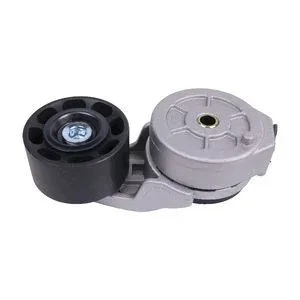
Belt Tensioner 3976832/3911621 for Cummins 4B3.9–QSB5.9 – Scheduled Maintenance
<p><strong>Belt Tensioner 3976832/3911621, Cummins 4B3.9–QSB5.9 Serpentine Drive</strong> — replacement for Hyundai R305LC-7, R290LC-7, HL740-9S and M939 series. </p> <ul> <li>Replace at scheduled service intervals alongside the serpentine belt and idler pulleys as a matched set to prevent cascading accessory-drive failures. </li> <li>Die-cast aluminum body with hardened 42CrMo pivot shaft maintains consistent preload under high-vibration digging and haul cycles. </li> <li>Typical wear indicators include spring preload loss, bearing noise, and belt squeal. </li> <li>Replacement interval recommendations ship with every consignment for fleet maintenance planning.</li> </ul>
Lead Time
2-5 Days
Warranty
3-12 Months
Min. Order
1 Piece
Ships To
120+ Countries
Request a Quote
Response within 24 hours
Product Details
Replacement cycle planning — Fleet-level belt drive maintenance for Cummins-powered Hyundai equipment supported by verified cross-reference data and predictable stocking intervals.
Technical Specifications
| Parameter | Value |
|---|---|
| Part Number | 3976832/3911621 |
| Product Type | Belt Tensioner |
| Cross-Reference | 3976832, 3911621, 3937556, 3936207, 3934823, 3922901, 3973825, 3936208, 3934824, 3928748, 3279446, 4063951 (reference only) |
| Machine Fitment | Hyundai R305LC-7, R290LC-7, R290LC-3, R250LC-7, HL757-7, HL740-9B, HL740-9S, HL760, HL740-3, HL740TM-3, HL750TM, HL720-3C, HL730-3, HL730TM-3, HL7303C, HL730TM3C, HL740-3ATM, HL740TM-3A, 42HDLL, 39HDRB, HDF35AII, HDF45AII; M939, M939A1, M939A2, M923, M931, M936, M925 series |
| Body Material | Die-cast aluminum alloy A380 with T6 heat treatment |
| Pivot Shaft | Hardened 42CrMo steel, HRC 48–52 |
| Internal Spring | ASTM A228 music wire |
| Mounting Tolerance | ±0.05 mm |
| Surface Treatment | Chromate conversion coating per MIL-DTL-5541 Class 3 |
| Condition | New Aftermarket |
| Warranty | 3–12 months against manufacturing defects |
| MOQ | 1 piece |
| Standards | ISO 9001, SAE J2044, ISO 10002 |
Application Suitability
| Service Interval | What to Check |
|---|---|
| Every major engine service (typically 1,000–2,000 operating hours) | Inspect tensioner arm travel and spring preload response; listen for bearing growl at idle |
| Belt replacement cycle | Check pivot shaft for lateral play and surface scoring; verify pulley face runout |
| Coolant system overhaul | Confirm tensioner bracket mounting holes are within tolerance; inspect for heat-induced spring fatigue |
| Pre-season fleet inspection | Document belt squeal or chirp during cold start as early tensioner wear indicator |
| Machine handover for rental turnover | Validate full serpentine belt engagement under rapid throttle transition |
Why Fleet Operators Keep Missing the Belt Tensioner Until It Is Too Late
Most unplanned belt drive failures trace back to a tensioner that was never scheduled for replacement.
I have spent years around mining and quarry sites in Latin America where a single failed tensioner cascades into damaged pulleys, overheated coolant circuits, and alternator bearing wear. The belt tensioner service part is inexpensive relative to the downstream damage, yet it rarely appears on preventive maintenance lists until a machine is already down. Fleet operators running Cummins 4B3.9 and QSB5.9 engines across Hyundai excavators and wheel loaders frequently discover that reactive procurement for this serpentine belt tensioner maintenance item costs them far more in secondary component damage and extended downtime than a planned replacement ever would [NEED_CITE: preventive maintenance scheduling standards for diesel engine belt drive systems].
Where the Tensioner Sits in the Engine Service Life
The belt tensioner occupies a deceptively central position in the accessory drive system. It maintains constant preload on the serpentine belt, which in turn drives the alternator, water pump, and cooling fan. When spring preload degrades over thousands of operating hours, belt slip begins silently — first as a faint chirp during cold starts, then as visible glazing on the belt ribs. At this stage, the belt tensioner wear part has already begun imposing friction and heat loads on every downstream accessory bearing.
Replacing the tensioner at a defined service interval, rather than waiting for audible failure signs, keeps the entire accessory drive circuit within engineered operating parameters throughout the machine’s working life.
Reading the Wear Signs Before Catastrophic Slip
Tensioner wear follows a recognizable progression on Cummins 4B3.9 and QSB5.9 engines in excavation and quarrying duty. The internal ASTM A228 music wire spring gradually loses preload under high-vibration, rapid throttle-transition cycles typical of hydraulic excavator digging routines. The pivot shaft bearing develops lateral play, producing a low-frequency growl at idle that disappears under load — often masking the problem during normal operation checks. Belt squeal during cold start or after rain exposure signals that the tensioner arm can no longer maintain adequate contact pressure [NEED_CITE: serpentine belt drive wear progression indicators in off-highway diesel applications].
Fleet managers who track these signs and replace the tensioner alongside the belt and idler pulleys as a matched set avoid the common pattern where a new belt fails prematurely on a worn tensioner within weeks of installation.
Material and Tolerance Choices That Matter in the Field
The die-cast A380 aluminum alloy body with T6 heat treatment provides dimensional stability under the thermal cycling that quarry and mining environments impose. The hardened 42CrMo steel pivot shaft at HRC 48–52 resists the surface wear and galling that softer shaft materials develop after repeated belt tension cycles. Mounting tolerance held to ±0.05 mm ensures the tensioner arm tracks the belt plane correctly, preventing the edge wear and premature rib cracking that result from even slight misalignment.
The chromate conversion coating per MIL-DTL-5541 Class 3 protects against the salt-laden dust and moisture ingress common at port material handling and coastal quarry sites, extending the interval before corrosion-induced pivot binding occurs.
The Accumulated Cost of Reactive Tensioner Procurement
When a fleet treats the belt tensioner as a failure-only replacement item, the consequences compound across the maintenance budget. A tensioner that fails in service typically takes the serpentine belt with it, and the resulting loss of water pump drive can push coolant temperatures past safe limits within minutes under load. The alternator bearing, starved of proper belt engagement, develops race wear that shortens its own service life. The machine then enters the workshop needing a tensioner, belt, idler pulleys, and often a coolant system flush — turning a single planned component swap into a multi-line repair order [NEED_CITE: cost impact of unplanned accessory drive failures on fleet availability].
Fleets that stock belt tensioner wear parts against a defined replacement schedule eliminate this cascade and keep workshop bay time focused on productive overhaul work rather than avoidable collateral damage.
What Supports Planned Maintenance Procurement Here
Production on selected belt drive lines and qualified sourced supply both carry the same warranty terms, so fleet stocking decisions do not depend on which production batch fills an order. Eight equipment categories ship under one account and one consignment, meaning tensioners, belts, idler pulleys, filters, and seals for a complete service event move together rather than arriving on split schedules. The one-piece minimum order allows a single emergency unit for a down machine without forcing a bulk commitment. Guangzhou warehouse stock on common Cummins-compatible items supports faster dispatch for scheduled service windows.
Cross-reference verification covers superseded and alternate numbers across the full 3976832 and 3911621 family, so older machines past thinning brand-dealer support remain serviceable. Technical team availability for compatibility and grade confirmation means fleet managers can validate the correct variant before committing to a stocking order.
Documentation & Verification
- Commercial invoice listing each tensioner part number with cross-reference identifiers marked reference only
- Compatibility sheet mapping engine serial ranges to correct tensioner variant for fleet-wide verification
- Dimensional inspection record covering pivot shaft play and mounting hole tolerance before dispatch
- Warranty terms document specifying manufacturing defect coverage period for stocking decisions
- Packing photographs showing tensioner units protected against transit corrosion
- HS code and customs documentation support for cross-border fleet supply
Service Interval & Stocking Guidance
- Replace the belt tensioner service part at each major engine service interval alongside belt and idler pulley renewal
- Listen for bearing growl at idle and belt chirp during cold start as early replacement triggers
- Stock one tensioner per two engines in active fleet to cover predictable consumption without over-committing
- Store tensioners in dry, temperature-stable conditions to preserve spring preload and surface coating integrity
- Record tensioner replacement hours per machine to refine fleet-level reorder points over successive service cycles
- Inspect pivot shaft lateral play and pulley face condition whenever a tensioner is removed for scheduled service
Planning Your Next Belt Drive Service Event
Provide the engine model, machine serial number, and current operating hours for each unit in your fleet. This allows us to confirm the correct tensioner variant from the cross-reference family, align dispatch with your next scheduled service window, and suggest matched belt and pulley quantities for consolidated shipment.
Frequently Asked Questions
Q: How often should the belt tensioner be replaced on Cummins 4B3.9 and QSB5.9 engines?
A: Replacement timing depends on operating conditions and duty cycle. In high-vibration excavation and quarrying applications, inspect the tensioner at every major engine service interval. Replace it when spring preload loss, bearing noise, or belt squeal appear — typically before the belt itself requires renewal. Planned replacement alongside the serpentine belt avoids premature re-failure on worn adjacent components.
Q: Should I replace the belt and idler pulleys at the same time as the tensioner?
A: Yes. A new belt tensioner service part installed with a worn belt or scored idler pulleys will experience accelerated wear from the mismatched contact surfaces. Replacing all three as a matched set ensures consistent belt engagement and prevents the common pattern where a single new component fails early because adjacent parts were not renewed.
Q: What signs indicate the tensioner is approaching end of service life?
A: Early indicators include belt chirp during cold starts, a low-frequency bearing growl at idle that disappears under load, and visible belt rib glazing from intermittent slip. Later signs involve lateral play in the pivot shaft and visible arm oscillation at operating speed. Addressing these signs during a planned service window prevents cascading accessory drive damage.
Q: How many tensioners should I stock for a fleet of mixed Hyundai excavators and wheel loaders?
A: Base your stocking quantity on fleet size, average operating hours, and observed replacement intervals. A practical starting point is one belt tensioner wear part per two active Cummins-powered machines, adjusted upward if your fleet operates in high-dust or high-vibration environments that accelerate spring and bearing wear.
Q: Can I still source this tensioner for older machine models that are no longer actively supported by the brand dealer?
A: Yes. The cross-reference list for this serpentine belt tensioner maintenance component covers superseded numbers across multiple generations. Older Hyundai and Cummins-powered equipment remains serviceable through verified interchange references, even when brand-dealer support has thinned or ceased for specific model years.
Compatible Brands
Our parts are engineered to meet or exceed OEM specifications. Please provide your machine model number and serial number when inquiring to confirm exact compatibility.
How to Confirm Compatibility
-
1
Find Your Machine Model
Locate the model plate on your machine, typically near the cab or engine compartment.
-
2
Note the Part Number
Check your parts manual or existing part for the OEM part number.
-
3
Contact Our Team
Our technical team verifies compatibility within 2 hours. Send us the details via the inquiry form or WhatsApp.
Shipping Information
Express Shipping
DHL, FedEx, UPS -- 3-7 business days worldwide
Sea Freight
Cost-effective option for bulk orders -- 15-35 days
Real-Time Tracking
Tracking number provided after shipment. 24/7 support available.
Warranty Policy
All parts come with manufacturer warranty. Duration varies by product category.
- Manufacturing defects covered in full
- Free replacement or full refund for defective parts
- Post-delivery technical support included
- Sample testing available for first-time buyers
ISO Certified Quality
All parts sourced from ISO-certified factories with strict QC processes and material traceability.
Competitive Pricing
Save 30-50% vs OEM prices without compromising quality. Transparent pricing with no hidden fees.
Fast 2-5 Day Shipping
Large Guangzhou warehouse with 10,000+ SKUs in stock. Most orders ship within 2-5 business days.
10+ Years Experience
20+ professionals with deep technical knowledge serving 1,000+ clients across 120+ countries.
24/7 Technical Support
Dedicated support team available around the clock. Part verification within 2 hours of inquiry.
Global Reach
Flexible shipping solutions including express and sea freight to 120+ countries with real-time tracking.
Related Products
More parts you might need


Need a Custom Quote?
Our technical team responds within 24 hours. MOQ 1 piece. Ships to 120+ countries from our Guangzhou warehouse.