

Block & Internal Parts
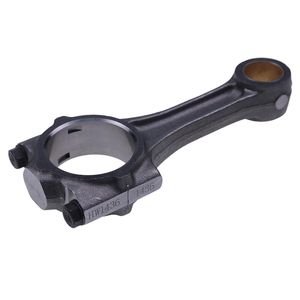
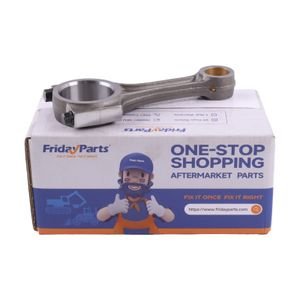
Connecting Rod 17311-22014 Replacement for Kubota Engine Long-Life
<p><strong>Connecting Rod 17311-22014</strong> compatible with Kubota D1403, D1703, D1803, V1903, V2003, V2203 engines — new aftermarket condition, 3-12 month warranty.</p> <ul> <li>Replace during mid-life or major overhaul intervals when knock, oil pressure drop, or metal debris in oil analysis signals wear progression.</li> <li>Inspect piston, pin, rod bearing and cylinder liner simultaneously to avoid secondary teardown.</li> <li>Cross-reference 17311-22012, 17311-22013, 17331-22010 verified; confirm variant by engine serial before ordering.</li> </ul> <p>Older Kubota fleets remain supported with continuous supply for predictable maintenance planning.</p>
Lead Time
2-5 Days
Warranty
3-12 Months
Min. Order
1 Piece
Ships To
120+ Countries
Request a Quote
Response within 24 hours
Product Details
Fleet Stock Planning — Kubota D1703 connecting rod inventory mapped to engine service intervals and fleet overhaul schedules.
Technical Specifications
| Parameter | Value |
|---|---|
| Part Number | 17311-22014 |
| Product Type | Connecting Rod |
| Cross-Reference | 17311-22014, 1731122014, 17311-22012, 17311-22013, 17331-22010, 1731122012, 1731122013, 1733122010 (for identification purposes) |
| Engine Fitment | D1403M, D1403, D1703, D1803, D1803MDI, V1903, V2003, V2203 |
| Machine Fitment | Kubota Excavator: KX91-3, KX121-2, KX121-3, KX161-2, KX161-3, U35, U45S; Kubota Tractor: L2800, L3010, L3240, L3400, L3430, L3710, L3830, L3940, L4240, L4330, L4400, L4610, L4630, L4740, L5030, M4700, M4900, M5400, M5700, MX5000; Kubota Generator: SQ-1140, SQ-1200, SQ-3170, SQ-3250, KJ-S130D, KJ-S150V, KJ-T210V, KJ-T270F; Kubota Wheel Loader: R420, R510, R520 |
| Condition | New Aftermarket |
| Warranty | 3-12 months against manufacturing defects |
| Manufacturing Standard | ISO-certified partners |
Application Suitability
| Service Interval | What to Check |
|---|---|
| Mid-life overhaul (6,000–8,000 hours) | Connecting rod bearing clearance, bolt stretch, rod weight variance |
| Full rebuild (12,000+ hours) | Rod straightness, big-end bore ovality, crankshaft journal condition |
| Post-failure inspection | Metal debris in oil pan, piston skirt scoring, crankshaft damage from rod failure |
| Fleet rotation stock | Match quantity to engines in service, account for multi-engine platform overlap |
When a Connecting Rod Failure Becomes a Fleet Problem, Not Just a Part Order
Plan the overhaul window around rod replacement, not around the breakdown.
A connecting rod in a Kubota D1703 or V2203 rarely fails in isolation. When fleet operators pull a sump and find metal flakes, the rod is already the last piece in a chain that started with bearing wear, oil pressure drift, or crankshaft scoring months earlier. Reaction-based purchasing then means the machine sits idle while sourcing not only the rod but the piston, pin, shell bearings, and possibly the crankshaft itself [NEED_CITE: connecting rod fatigue progression and secondary damage in diesel engines]. I have seen repair centres quote a rod replacement that turned into a full bottom-end rebuild once the engine was open — and the parts list tripled. For fleets running multiple KX121-3 excavators or L3430 tractors on the same Kubota block, keeping a matched set of rods, shells, and bearings on the shelf is what separates a planned three-day turnaround from a three-week grounding.
Where the Rod Sits in Your Service Lifecycle
A connecting rod is a mid-block motion component that connects piston assembly to crankshaft. In engines like the D1703, D1803, and V2003, it operates under cyclic loads that make it one of the highest-stress parts below the head gasket. Unlike filters or belts, you do not replace a connecting rod on a schedule — you replace it during a planned teardown when dimensional checks flag wear beyond tolerance, or reactively after oil analysis or audible knocking reveals trouble already underway.
Recognising the Point of No Return
The typical progression starts with gradual bearing shell wear, measurable as increasing big-end clearance over successive oil changes. If that wear goes unaddressed, the connecting rod small-end bushing follows, then piston pin clearance opens up. By the time metallic debris appears in the oil filter or a knock is audible at idle, the rod itself may have taken on micro-bending [NEED_CITE: diesel engine bearing wear progression to connecting rod damage]. At that stage, swapping only the rod without inspecting the crankshaft journal, piston, and cylinder liner is a temporary fix. I have seen a contractor replace a single rod on a D1703 without addressing the worn crank journal, and the new rod failed at the same bearing within the next service cycle. For any fleet operating Kubota excavators, tractors, or generators past mid-life, the realistic decision is whether to plan a full bottom-end refresh or accept that the next failure will cost more in downtime than the overhaul would have.
Reading the Specs That Matter for Service Planning
The engine fitment range — D1403, D1703, D1803, V1903, V2003, V2203 — covers both naturally aspirated and turbocharged configurations across the Kubota 03 series. These engines share the same connecting rod architecture, but the loading environment differs. A V2203 in a KX161-3 excavator sees sustained high-load duty that accelerates bearing wear, while the same rod in an L2800 tractor running intermittent PTO work accumulates fatigue more slowly. The cross-reference chain covering 17311-22012 through 17311-22014 reflects superseded part numbers across production years, so older machines with earlier engine serials may carry the -22012 or -22013 variant. Confirming the exact rod against the engine serial number prevents ordering a dimensionally similar but non-interchangeable piece. The 3-12 month warranty against manufacturing defects gives reasonable coverage for a planned overhaul, but it does not substitute for verifying crankshaft journal condition and oil system health before reassembly.
The Cost of Replacing One Rod Instead of the Set
Pulling a single connecting rod from a Kubota engine without replacing its companion bearings, piston, and pin saves the cost of a few parts but ignores the wear gradient across the entire bottom end. If one rod has reached the point of bearing failure, the others have endured the same oil quality, the same thermal cycles, and the same load history. The remaining rods are simply a few hundred hours behind [NEED_CITE: matched set replacement practice for diesel engine rotating assemblies]. Replacing only the damaged rod leaves the fleet exposed to a second teardown for the next rod to fail — same labour, same fluid drain, same machine downtime, just scheduled at the worst possible time.
Why Source This Part Through XUNPO
Own production on selected engine lines and qualified sourced supply on the remainder carry the same quality control and warranty terms, so you manage one account for rods sourced alongside piston sets, bearing shells, and gasket kits. Eight product categories — engine, hydraulic, electrical, undercarriage, cabin, seals, tools, and general spares — mean a full Kubota overhaul list ships in a single consignment. Minimum order is one piece, but fleet stocking orders for a mixed fleet of KX excavators, L-series tractors, and SQ generators consolidate just as easily. Part identification from the engine serial number or a nameplate photograph resolves superseded numbers without guesswork. Cross-reference verification covers the full chain from 17311-22012 through 17311-22014 so older machines are not orphaned. Technical team confirmation on engine variant and grade prevents ordering standard-size bearings for a block that has already been machined oversize in a previous rebuild.
Documentation & Verification
- Commercial invoice and packing list matched to your engine serial and part variant.
- Cross-reference sheet mapping 17311-22014 to superseded numbers, marked reference only.
- Dimensional inspection record covering rod length, big-end bore, and weight tolerance.
- Warranty terms document specifying coverage period for manufacturing defects.
- Packing photographs taken before crate closure for visual dispatch confirmation.
- HS code and customs documentation support for cross-border equipment fleet shipments.
Service Interval & Stocking Guidance
- Schedule connecting rod inspection at every mid-life engine teardown, typically around the 6,000 to 8,000 hour mark.
- Monitor oil analysis results for bearing metal particles as an early indicator of rod bearing wear.
- Stock one complete rod and bearing set per engine platform in your active fleet for unplanned overhauls.
- Store connecting rods horizontally in original protective packaging to prevent bending under their own weight.
- Rotate shelf stock periodically and re-inspect stored rods before installation after extended warehousing.
Share Your Fleet Data for a Stocking Plan
Provide the engine models across your fleet, current hour readings, and planned overhaul windows. With that information, we can map which Kubota variants in your inventory share this connecting rod, calculate how many sets to hold against your failure probability, and align delivery with your next scheduled teardown rather than an emergency breakdown.
Frequently Asked Questions
Q: How do I determine when a connecting rod needs replacement in my Kubota fleet?
A: Connecting rods are not replaced on a fixed hour interval. They are evaluated during planned engine teardowns by measuring big-end bore ovality, checking rod straightness, and inspecting bearing shell wear patterns. Oil analysis showing elevated bearing metals across successive samples is a reliable early indicator that a teardown is due.
Q: Should I replace just the damaged rod or the entire set during an overhaul?
A: Replacing the full set is the standard practice for engines with significant service hours. All rods in a Kubota D1703 or V2203 share the same load history, and the remaining rods are typically close to the same wear state. Partial replacement often leads to a second teardown within a short period.
Q: Can I still source this connecting rod for older Kubota machines past official support?
A: Yes. The aftermarket supply chain for the Kubota 03 series remains active because these engines power a large installed base of excavators, tractors, and generators worldwide. Cross-reference verification covers superseded numbers from earlier production runs, so older machines with -22012 or -22013 variants are still serviceable.
Q: How do I confirm which cross-reference number applies to my specific engine?
A: The superseded number chain — 17311-22012, -22013, -22014, and 17331-22010 — corresponds to different engine serial ranges and production years. Provide your engine serial number or a clear nameplate photograph, and the correct variant is confirmed against cross-reference records marked for identification purposes.
Q: What other components should I plan to replace alongside the connecting rod?
A: A bottom-end overhaul typically includes connecting rod bearing shells, piston and piston pin, piston rings, and main bearings. Cylinder liner condition should be assessed at the same time. If the crankshaft journal shows scoring or is undersize from a prior machining, the connecting rod must be matched to the current journal dimension.
Compatible Brands
Our parts are engineered to meet or exceed OEM specifications. Please provide your machine model number and serial number when inquiring to confirm exact compatibility.
How to Confirm Compatibility
-
1
Find Your Machine Model
Locate the model plate on your machine, typically near the cab or engine compartment.
-
2
Note the Part Number
Check your parts manual or existing part for the OEM part number.
-
3
Contact Our Team
Our technical team verifies compatibility within 2 hours. Send us the details via the inquiry form or WhatsApp.
Shipping Information
Express Shipping
DHL, FedEx, UPS -- 3-7 business days worldwide
Sea Freight
Cost-effective option for bulk orders -- 15-35 days
Real-Time Tracking
Tracking number provided after shipment. 24/7 support available.
Warranty Policy
All parts come with manufacturer warranty. Duration varies by product category.
- Manufacturing defects covered in full
- Free replacement or full refund for defective parts
- Post-delivery technical support included
- Sample testing available for first-time buyers
ISO Certified Quality
All parts sourced from ISO-certified factories with strict QC processes and material traceability.
Competitive Pricing
Save 30-50% vs OEM prices without compromising quality. Transparent pricing with no hidden fees.
Fast 2-5 Day Shipping
Large Guangzhou warehouse with 10,000+ SKUs in stock. Most orders ship within 2-5 business days.
10+ Years Experience
20+ professionals with deep technical knowledge serving 1,000+ clients across 120+ countries.
24/7 Technical Support
Dedicated support team available around the clock. Part verification within 2 hours of inquiry.
Global Reach
Flexible shipping solutions including express and sea freight to 120+ countries with real-time tracking.
Related Products
More parts you might need

Block & Internal Parts
Connecting Rod 17311-22014 for Kubota D1703/V2203 Engines – Direct Replacement
View Details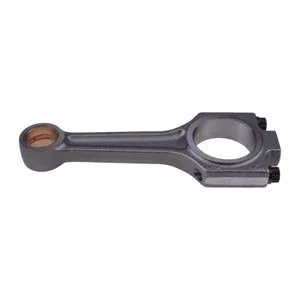
Block & Internal Parts
Connecting Rod 119E10-23001 for Yanmar 3TNV88/3TNV80 – OEM-Replacement Grade
View DetailsNeed a Custom Quote?
Our technical team responds within 24 hours. MOQ 1 piece. Ships to 120+ countries from our Guangzhou warehouse.