
Belt Drive Systems
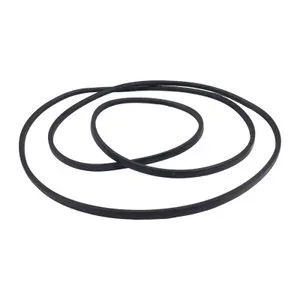
Deck Belt 108-7192 | Overhaul Grade for Toro TimeCutter Z480
<p><strong>Deck Belt 108-7192 for Toro TimeCutter Z480, 48" Deck</strong> — replacement for OEM reference 108-7192, compatible with Toro 74352 (SN 250000001–250999999) and 74353 (SN 260000001–260999999) zero-turn mowers.</p> <ul> <li>Inspect belt at seasonal service intervals; slipping, noise, or uneven cutting signal replacement is due.</li> <li>Replace all deck belts together to avoid tension imbalance and linked failure across the drive system.</li> <li><strong>Maintenance cycle planning</strong> — replacement interval guidance provided with each shipment for fleet scheduling.</li> </ul>
Lead Time
2-5 Days
Warranty
3-12 Months
Min. Order
1 Piece
Ships To
120+ Countries
Request a Quote
Response within 24 hours
Product Details
Lifecycle Stocking Plan — Replacement intervals mapped to Toro Z480 service hours keep this belt on your shelf before mowing season peaks.
Technical Specifications
| Parameter | Value |
|---|---|
| Part Number | 108-7192 |
| Product Type | Belt |
| Cross-Reference | 108-7192 (reference only), 087192 (reference only), 2011A136R (reference only) |
| Machine Fitment | 74352 (Z 480) — 48" TimeCutter Zero-Turn Mower (SN: 250000001 – 250999999) (2005), 74353 (Z 480) — 48" TimeCutter Zero-Turn Mower (SN: 260000001 – 260999999) (2006) |
| Condition | New Aftermarket |
| Warranty | 3–12 months against manufacturing defects |
| MOQ | 1 piece |
| Quality Standard | ISO 9001 |
Application Suitability
| Service Interval | What to Check |
|---|---|
| Pre-season inspection | Belt cracking, glazing, frayed edges, tension loss |
| Every 250 operating hours | Pulley groove wear, idler bearing play, tensioner spring fatigue |
| End-of-season overhaul | Full deck belt set replacement, spindle bearing condition |
| Fleet preventive schedule | Stock one spare belt per mower before peak mowing months |
Why Planned Replacement Beats Emergency Belt Orders
A deck belt that breaks mid-job costs more than the belt itself — it costs the entire crew’s afternoon.
In commercial mowing operations, reactive purchasing means the machine sits idle while a replacement ships across the country. Fleet managers who track operating hours and order ahead avoid this pattern entirely. The Deck Belt service part wears predictably; its failure is a calendar event, not a surprise. [NEED_CITE: preventive maintenance scheduling for commercial turf equipment fleets] Teams that treat mower belt maintenance replacement as a line item in their annual consumables budget see fewer mid-season breakdowns and lower per-hour operating costs over time.
Where This Belt Fits in the Mower’s Service Life
A zero-turn mower’s deck belt drives the blade spindles through continuous engagement cycles, absorbing shock loads every time the blades hit dense or wet grass. Over a typical mowing season, the Deck Belt service part accumulates thousands of engagement cycles, each one contributing to cord fatigue and surface wear. Recognizing where this component sits in the machine’s consumable hierarchy helps fleet planners budget accurately.
Reading the Wear Signs Before Failure Strikes
Operators often notice cutting quality degrade before they inspect the belt itself. Uneven grass height across the deck, a squealing sound during engagement, or visible slipping under load all point to a belt approaching end of service. By the time these symptoms appear, the mower belt maintenance replacement should already be in your stockroom. Waiting for a visible break means the belt has already exceeded its useful life, and secondary damage to pulleys or tensioner springs may have begun. [NEED_CITE: belt wear progression indicators in commercial mowing deck assemblies] Scheduling replacement at the first sign of tension loss preserves the surrounding hardware.
Belt Construction and What It Means on the Deck
The deck belt transmits engine power to three blade spindles simultaneously, requiring a construction that resists both longitudinal stretch and lateral flex fatigue. Cord integrity under repeated bending around small-diameter pulleys determines actual service life rather than simple tensile strength alone. Surface treatment on the belt’s contact face affects grip on the pulley sheaves, particularly in dusty or wet conditions common during early-morning mowing. A belt that loses surface friction will slip before it breaks, reducing cutting efficiency and generating excess heat at the pulley contact point. Heat buildup accelerates rubber compound degradation, shortening the interval before the next replacement becomes necessary.
The Compounding Cost of Reactive Belt Procurement
A fleet running ten mowers through peak season without planned belt stock faces repeated emergency orders, each one carrying expedited freight charges and crew downtime. The cumulative effect is not just the sum of belt prices — it is the lost revenue from cancelled or delayed mowing contracts. When a mower belt maintenance replacement arrives late, the machine has already missed its scheduled route, and the crew has either sat idle or shifted to less efficient backup equipment. Over multiple seasons, this reactive pattern erodes the margin that planned procurement would have preserved. [NEED_CITE: equipment downtime cost modeling for landscaping fleet operations]
Why Source This Belt Through Our Supply Chain
We produce selected belt lines in our own facility and source the remainder from qualified ISO-certified manufacturing partners, so both self-produced and sourced supply carry the same QC and warranty terms. Eight product categories mean your deck belt order can ship alongside spindle bearings, air filters, and seal kits under one account and one consignment. Minimum order starts at one piece, so a single emergency replacement and a season’s planned stock are handled identically. Our Guangzhou warehouse holds common items for fast dispatch, and our technical team verifies compatibility against machine model and serial range before confirming your order. Cross-reference verification covers superseded and alternate numbers, preventing the wrong-variant problem that plagues copied compatibility tables. Sample supply is available for fitment confirmation before you commit to bulk quantities.
Documentation & Verification
- Commercial invoice and packing list itemized by belt part number and machine model
- Compatibility and cross-reference sheet marking all OEM references as reference only
- Quality inspection record covering dimensional check and visual surface examination
- Warranty terms document specifying coverage period against manufacturing defects
- Packing photographs confirming belt condition and protective packaging before dispatch
- HS code and customs documentation support for cross-border shipment clearance
Service Interval & Stocking Guidance
- Inspect the Deck Belt service part at every 250-hour service point for cracking and edge fraying
- Replace the full deck belt set simultaneously to maintain uniform tension across all spindles
- Stock one spare belt per active mower before each mowing season begins
- Check pulley groove depth and idler bearing play whenever a belt is removed for any reason
- Store spare belts in a cool, dry environment away from direct sunlight and chemical exposure
Request a Fleet Maintenance Quotation
Provide your mower model numbers, serial ranges, and current operating hour counts so we can confirm fitment and recommend stocking quantities aligned with your seasonal usage patterns. Include any superseded part numbers you have encountered in past orders for cross-reference verification.
Frequently Asked Questions
Q: How often does the deck belt need replacement under normal commercial use?
A: Replacement intervals depend on operating hours, grass conditions, and deck load. Most commercial operators schedule inspection at every 250 hours and plan for at least one full replacement per mowing season. Tracking actual hours rather than calendar months gives the most accurate prediction, since usage intensity varies significantly between fleet machines.
Q: What symptoms indicate the belt is nearing end of service life?
A: Early warning signs include audible squealing during blade engagement, visible slipping under thick grass loads, and uneven cutting height across the deck width. Surface glazing, edge fraying, and longitudinal cracks on the belt back are visual confirmations. Addressing these signs promptly prevents secondary damage to pulleys and tensioner components.
Q: Should I replace all deck belts at once or just the failed one?
A: Replacing the full set simultaneously maintains uniform tension across all blade spindles. A new belt paired with worn belts creates uneven load distribution, causing the new belt to stretch faster and the old belts to slip more frequently. Synchronized replacement simplifies scheduling and reduces cumulative downtime across the mowing season.
Q: How many spare belts should a fleet keep in stock?
A: A practical baseline is one spare per active mower before peak season, plus a small buffer for your highest-hour machines. This covers unexpected failures between planned replacements without over-investing in slow-moving inventory. Adjust upward if your operation runs multiple shifts or covers extended seasonal contracts.
Q: Can older Toro TimeCutter models still receive replacement belts?
A: Yes. We maintain cross-reference records covering superseded numbers and verify compatibility against specific serial ranges. Even when a manufacturer discontinues a particular reference, verified aftermarket equivalents remain available. Providing your machine model and serial number allows us to confirm the correct belt variant before shipping.
Compatible Brands
Our parts are engineered to meet or exceed OEM specifications. Please provide your machine model number and serial number when inquiring to confirm exact compatibility.
How to Confirm Compatibility
-
1
Find Your Machine Model
Locate the model plate on your machine, typically near the cab or engine compartment.
-
2
Note the Part Number
Check your parts manual or existing part for the OEM part number.
-
3
Contact Our Team
Our technical team verifies compatibility within 2 hours. Send us the details via the inquiry form or WhatsApp.
Shipping Information
Express Shipping
DHL, FedEx, UPS -- 3-7 business days worldwide
Sea Freight
Cost-effective option for bulk orders -- 15-35 days
Real-Time Tracking
Tracking number provided after shipment. 24/7 support available.
Warranty Policy
All parts come with manufacturer warranty. Duration varies by product category.
- Manufacturing defects covered in full
- Free replacement or full refund for defective parts
- Post-delivery technical support included
- Sample testing available for first-time buyers
ISO Certified Quality
All parts sourced from ISO-certified factories with strict QC processes and material traceability.
Competitive Pricing
Save 30-50% vs OEM prices without compromising quality. Transparent pricing with no hidden fees.
Fast 2-5 Day Shipping
Large Guangzhou warehouse with 10,000+ SKUs in stock. Most orders ship within 2-5 business days.
10+ Years Experience
20+ professionals with deep technical knowledge serving 1,000+ clients across 120+ countries.
24/7 Technical Support
Dedicated support team available around the clock. Part verification within 2 hours of inquiry.
Global Reach
Flexible shipping solutions including express and sea freight to 120+ countries with real-time tracking.
Related Products
More parts you might need


Need a Custom Quote?
Our technical team responds within 24 hours. MOQ 1 piece. Ships to 120+ countries from our Guangzhou warehouse.