

Belt Drive Systems
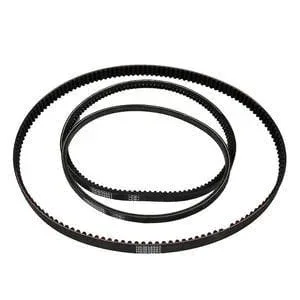
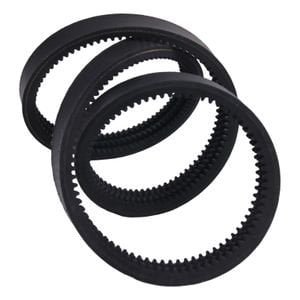
Drive Belt 106-4383 for Toro Groundsmaster 322-D – Service Part
<p><strong>Drive Belt 106-4383 for Toro Groundsmaster 322-D, Aramid-Reinforced, Trapezoidal Profile</strong> — replacement for commercial mower fleet service cycles.</p> <ul> <li>Fits Toro Groundsmaster 322-D, 325-D, 327, 328-D, 345, and Lawn-Boy units</li> <li>Plan replacement at first signs of edge cracking, slippage, or elongation under sustained load</li> <li>Aramid cord maintains tension across extended intervals; trapezoidal profile preserves pulley geometry</li> </ul> <p>Scheduled wear part — replacement interval guidance and long-term supply continuity for aging mower models available with every order.</p>
Lead Time
2-5 Days
Warranty
3-12 Months
Min. Order
1 Piece
Ships To
120+ Countries
Request a Quote
Response within 24 hours
Product Details
Fleet Stocking Guidance — Predictable replacement intervals for Toro Groundsmaster mower fleets keep drive belts in stock before seasonal peaks, eliminating reactive purchasing and unscheduled downtime across multi-unit operations.
Technical Specifications
| Parameter | Value |
|---|---|
| Part Number | 106-4383 53-9660 |
| Cross-Reference | 106-4383, 53-9660, 265-896, 23-1820 (reference only) |
| Product Type | Belt |
| Machine Fitment | Toro 72" Groundsmaster 322-D, Groundsmaster 325-D, Groundsmaster 327, Groundsmaster 328-D, Groundsmaster 345, Toro 30721, Lawn-Boy Mower |
| Condition | New Aftermarket |
| Material | High-modulus synthetic rubber compound with aramid cord reinforcement |
| Dimensional Tolerance | ±0.15 mm |
| Operating Temperature | –20°C to +85°C |
| Profile | Trapezoidal |
| Certification | ISO 9001 |
| Warranty | 6-month warranty against manufacturing defects |
Application Suitability
| Service Interval | What to Check |
|---|---|
| Pre-season inspection (before peak mowing) | Edge cracking, glazing on contact surface, loss of tension under load |
| Mid-season at 250–400 operating hours | Belt elongation, slippage under sustained cutting load, pulley groove wear |
| End-of-season fleet audit | Full deck belt set condition, clutch assembly engagement, pulley alignment |
| Aging Groundsmaster units past OEM support | Aftermarket supply continuity, correct variant match for serial range |
| Rental fleet turnover preparation | Drive belt service part replacement alongside spindle bearings and idler pulleys |
Why Reactive Belt Purchasing Costs More Than the Belt Itself
Schedule drive belt replacement before failure, not after the machine stops cutting.
Fleet operators managing commercial turf equipment frequently treat a Drive Belt service part as an emergency purchase rather than a predictable wear component. When a Groundsmaster 322-D goes down during peak mowing season, the belt itself is the cheapest line item on the invoice — the real cost sits in rushed freight, idle operator hours, and missed contract deadlines. [NEED_CITE: commercial turf fleet maintenance scheduling practices for seasonal operations] Across multi-unit fleets, the cumulative effect of reactive purchasing compounds quickly: one mower down means redistributing workload to remaining units, accelerating their wear cycles in turn. Operators who stock drive belts ahead of seasonal demand consistently report fewer unscheduled stoppages and lower total operating costs over a mowing season.
Where the Drive Belt Sits in the Mower Service Life
A Drive Belt service part occupies a specific position in the commercial mower maintenance cycle — it is neither a daily consumable like a cutting blade nor a long-interval component like a spindle bearing. For Toro Groundsmaster models operating in municipal parks, golf courses, and airport groundskeeping, the belt typically reaches its replacement window between scheduled seasonal overhauls. Planning its renewal alongside other wear items means the machine opens once and closes once, rather than returning to the bench three weeks later for a related failure. Fleet-level thinking requires mapping each mower’s hour count against known belt wear progression and ordering replacement stock before the peak cutting months begin.
Wear Progression and the Signals Before Failure
Trapezoidal-profile belts in heavy-duty cutting applications exhibit a recognizable wear sequence. Initial signs include subtle slippage under sustained load — the operator notices the deck losing RPM on dense or wet turf. Edge cracking follows as the synthetic rubber compound ages through repeated thermal cycles between –20°C and +85°C operating ranges. [NEED_CITE: belt wear progression indicators in commercial turf cutting equipment] Eventually, aramid cord reinforcement begins to separate from the rubber matrix, causing visible elongation. At this stage, the belt may still turn the pulleys but cannot maintain proper tension, transferring abnormal loads to the clutch assembly and idler pulleys. Catching the belt at the edge-cracking stage rather than the elongation stage prevents secondary damage to adjacent drivetrain components.
Reading the Specifications That Matter in the Field
The aramid cord reinforcement in this belt addresses the primary failure mode in commercial mowing: stretch under sustained load. Standard polyester cords elongate measurably over a mowing season, requiring repeated tension adjustments and eventual replacement. Aramid fibers maintain dimensional stability across the full operating temperature range, meaning the belt holds its tension setting from the first cut of spring through the last cut of autumn. The ±0.15 mm dimensional tolerance ensures the trapezoidal profile seats correctly in OEM groove geometry, preventing the edge wear and sidewall glazing that occurs when a belt rides too high or too low in the pulley groove. ISO 9001 certification confirms the manufacturing process holds these tolerances consistently across production batches — a meaningful consideration when stocking belts for a fleet where every mower must receive identical fitment.
The Hidden Cost of Buying One Belt at a Time
Fleet operators who purchase drive belts reactively — one at a time, only after failure — accumulate costs that never appear on a single invoice. Each emergency order carries expedited freight charges. Each down mower sits idle while the belt is in transit, and the remaining fleet absorbs redistributed acreage, accelerating their own wear cycles. [NEED_CITE: total cost of ownership for reactive versus planned maintenance in groundskeeping fleets] Over a single mowing season, a fleet of ten Groundsmaster units managed reactively may generate multiple emergency orders, each triggering freight premiums and operator downtime. The alternative — stocking a calculated quantity of drive belts during pre-season procurement — converts unpredictable emergency spending into a single planned line item on the maintenance budget.
What This Supplier Brings to Fleet Maintenance Planning
Own production on selected belt lines and qualified sourced supply operate under one account and one warranty structure, simplifying procurement for multi-unit fleets. Eight product categories mean a complete seasonal maintenance order — belts, filters, seals, blades, and electrical components — ships as a single consignment rather than fragmented deliveries from multiple vendors. Minimum order of one piece supports operators who need to validate fitment on a single Groundsmaster 322-D before committing to fleet-wide stock. Guangzhou warehouse inventory enables fast dispatch on commonly requested belt variants. Cross-reference verification covers superseded numbers like 53-9660 and 265-896, ensuring correct variant selection even for older Groundsmaster models where OEM reference documentation may be incomplete.
Documentation & Verification
- Commercial invoice listing belt part numbers and Toro Groundsmaster model compatibility
- Cross-reference sheet mapping 106-4383, 53-9660, 265-896, and 23-1820 (reference only)
- Dimensional inspection record confirming trapezoidal profile tolerance at ±0.15 mm
- Warranty terms document covering manufacturing defects for six months from delivery
- Packing photographs showing individual polybag and reinforced cardboard packaging before dispatch
- HS code classification support for customs clearance in destination country
Service Interval & Stocking Guidance
- Inspect belt edges for cracking and surface glazing at each pre-season service before peak mowing begins
- Check belt tension and pulley groove alignment at mid-season intervals to catch elongation early
- Stock at least one spare drive belt per mower for fleets operating in remote or high-utilization environments
- Store belts in a cool, dry environment away from direct sunlight to preserve rubber compound integrity
- Replace the full deck belt set simultaneously when one belt shows advanced wear to avoid staggered failures
- Verify machine serial range against belt variant before bulk ordering for mixed-age Groundsmaster fleets
Request a Fleet Stocking Proposal
Provide your Groundsmaster model list, current machine hour counts, and seasonal mowing schedule so we can align belt replacement intervals with your maintenance calendar. If your fleet includes older units with superseded part numbers, share the serial plates and we will confirm the correct variant through cross-reference verification. For mixed fleets spanning multiple Toro and Lawn-Boy models, a consolidated maintenance list lets us quote the full belt requirement alongside any associated wear components in a single shipment.
Frequently Asked Questions
Q: How often should drive belts be replaced on commercial Groundsmaster mowers?
A: Replacement intervals depend on operating hours, turf conditions, and load cycles. Most commercial operators schedule drive belt inspection at pre-season and mid-season service points, replacing when edge cracking or elongation appears. Fleet managers who track hour counts per unit find that planned replacement at predictable intervals avoids the cost and disruption of in-season failures during peak mowing demand.
Q: What symptoms indicate a belt is nearing end of service life?
A: Early indicators include slippage under sustained cutting load, visible edge cracking along the belt sidewalls, and a glazed appearance on the contact surface. As wear progresses, the belt elongates and loses the ability to maintain tension, causing the deck to lose RPM on dense turf. Catching these signs during scheduled inspections prevents secondary damage to pulleys and clutch assemblies.
Q: Should I replace just the drive belt or the full deck belt set at once?
A: Replacing the full set simultaneously is generally recommended for fleet operations. Belts installed at the same time wear at similar rates, so replacing one while leaving aged companions in place often leads to staggered failures within weeks. A complete set change also means the deck is opened once, reducing labor cost per service event.
Q: How many spare belts should a fleet keep on hand?
A: A practical baseline is one spare belt per mower for peak-season coverage, with additional stock for high-utilization units operating in remote locations. Fleet managers who review their previous season’s failure records can refine this figure based on actual consumption patterns and lead time requirements for their operating region.
Q: Can I still get belts for older Groundsmaster models?
A: Aftermarket supply continues for aging Groundsmaster units even as OEM support thins. Cross-reference verification covers superseded and alternate numbers, ensuring the correct belt variant reaches older machines. Providing the machine model and serial range allows confirmation of compatibility before ordering, particularly when nameplates are worn or previous rebuilds have introduced variant uncertainty.
Compatible Brands
Our parts are engineered to meet or exceed OEM specifications. Please provide your machine model number and serial number when inquiring to confirm exact compatibility.
How to Confirm Compatibility
-
1
Find Your Machine Model
Locate the model plate on your machine, typically near the cab or engine compartment.
-
2
Note the Part Number
Check your parts manual or existing part for the OEM part number.
-
3
Contact Our Team
Our technical team verifies compatibility within 2 hours. Send us the details via the inquiry form or WhatsApp.
Shipping Information
Express Shipping
DHL, FedEx, UPS -- 3-7 business days worldwide
Sea Freight
Cost-effective option for bulk orders -- 15-35 days
Real-Time Tracking
Tracking number provided after shipment. 24/7 support available.
Warranty Policy
All parts come with manufacturer warranty. Duration varies by product category.
- Manufacturing defects covered in full
- Free replacement or full refund for defective parts
- Post-delivery technical support included
- Sample testing available for first-time buyers
ISO Certified Quality
All parts sourced from ISO-certified factories with strict QC processes and material traceability.
Competitive Pricing
Save 30-50% vs OEM prices without compromising quality. Transparent pricing with no hidden fees.
Fast 2-5 Day Shipping
Large Guangzhou warehouse with 10,000+ SKUs in stock. Most orders ship within 2-5 business days.
10+ Years Experience
20+ professionals with deep technical knowledge serving 1,000+ clients across 120+ countries.
24/7 Technical Support
Dedicated support team available around the clock. Part verification within 2 hours of inquiry.
Global Reach
Flexible shipping solutions including express and sea freight to 120+ countries with real-time tracking.
Related Products
More parts you might need


Need a Custom Quote?
Our technical team responds within 24 hours. MOQ 1 piece. Ships to 120+ countries from our Guangzhou warehouse.