
Belt Drive Systems
Drive Pump Belt 6736775 for Bobcat Loader – Service Part
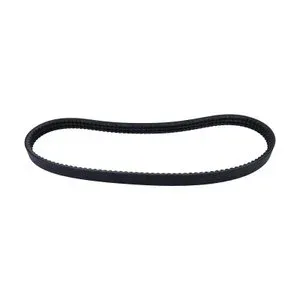
<p><strong>Drive Pump Belt 6736775 for Bobcat Loader, 58.15 in Length, 3-Groove Cogged Design</strong> — replacement for Bobcat skid steer and compact track loaders including 753, S130, S150, S175, T140, T180 and Toolcat 5600.</p> <ul> <li>Fiber-loaded backing with high-tensile cord reinforcement resists heat buildup and elongation under continuous hydraulic load</li> <li>Scheduled belt replacement at service intervals prevents unplanned downtime and protects adjacent drive components from cascading wear</li> <li>Flat cogged profile ensures consistent pulley engagement and stable pump RPM across extended duty cycles</li> </ul> <p>Replacement interval guidance provided with shipment to support proactive fleet maintenance planning.</p>
Lead Time
2-5 Days
Warranty
3-12 Months
Min. Order
1 Piece
Ships To
120+ Countries
Request a Quote
Response within 24 hours
Product Details
Proactive Fleet Stocking — This Drive Pump Belt service part ships with a recommended replacement schedule aligned to Bobcat loader duty cycles, helping fleet operators plan ahead instead of reacting to snaps on site.
Technical Specifications
| Parameter | Value |
|---|---|
| Part Number | 6736775 |
| Product Type | Belt |
| Cross-Reference | 6736775 (reference only) |
| Machine Fitment | Bobcat Loader 753, S130, S150, S160, S175, S185, S205, T140, T180, T190; Bobcat Toolcat 5600 |
| Belt Design | Flat, cogged drive belt with 3 grooves |
| Length | 58.15 inches (1477 mm) |
| Width | 1.19 inches (30.2 mm) |
| Construction | Fiber-loaded backing with additional cord support |
| Condition | New Aftermarket |
| Warranty | 3–12 months against manufacturing defects |
| Minimum Order | 1 piece |
| Quality Standard | ISO 9001 |
Application Suitability
| Service Interval | What to Check |
|---|---|
| Every 500–1,000 operating hours | Inspect cogged surface for cracking, glazing, or missing teeth |
| Annual fleet maintenance audit | Measure belt tension and verify no elongation beyond spec |
| Pre-season startup (rental fleets) | Check pulley alignment and confirm belt tracks without lateral drift |
| Post-rebuild verification | Confirm pump RPM stability under continuous hydraulic load |
| Machine handover between contracts | Replace belt if surface shows fiber exposure or cord separation |
Why Reactive Belt Replacement Costs More Than Planned Downtime
A scheduled swap during a lunch break beats an unplanned three-day standstill every time.
In my years pulling apart Bobcat loaders at the shop, the pattern was always the same: a fleet manager would call in a panic because a drive belt snapped mid-shift on a T180, and suddenly the machine sat idle while we sourced a replacement. The belt itself was never the expensive part. The cost came from the rental contract penalties, the crew standing around, and the cascade of rescheduled jobs. I have watched that cycle repeat across dozens of machines, from 753 skid steers to Toolcat 5600 units working agricultural loading sites. [NEED_CITE: unplanned equipment downtime cost impact on construction fleet operations]
Fleet operators who treat this Drive Pump Belt service part as a consumable with a defined replacement interval avoid that trap entirely. The math is straightforward — stocking two or three belts in the site locker costs a fraction of what one afternoon of idle labor charges.
Where This Belt Sits in the Bobcat Powertrain Lifecycle
The drive pump belt is the mechanical link between the engine crankshaft and the hydraulic pump assembly. In Bobcat compact loaders like the S130 through S205 series, it transfers rotational energy that pressurizes the hydraulic system powering every boom, bucket, and drive motor function. When the belt degrades, hydraulic response becomes sluggish before outright failure occurs.
Replacing this Drive Pump Belt service part on a scheduled basis keeps the entire hydraulic system performing within spec. Unlike a cylinder seal or a solenoid valve, the belt is visible and inspectable without disassembly — which makes it one of the easiest components to include in a proactive maintenance checklist across a mixed-model fleet.
Reading Wear Signs Before the Belt Fails Catastrophically
Cogged belts do not usually fail without warning. The fiber-loaded backing on this unit resists heat buildup over extended duty cycles, but even well-constructed belts develop surface glazing after prolonged exposure to hydraulic oil mist and ambient dust on demolition zones. That glazing reduces friction between the belt and pulley, introducing slippage that manifests as a slight lag in hydraulic response under load.
Edge fraying along the 1.19-inch width indicates misalignment between the drive and driven pulleys — a condition that accelerates wear on the three-groove profile unevenly. [NEED_CITE: belt drive misalignment wear patterns in mobile hydraulic equipment] If operators notice a high-pitched squeal during cold starts or a rhythmic vibration through the cab floor, the belt is likely approaching the end of its usable service life. Catching these signs during a weekly walkaround inspection means the replacement happens on your schedule, not the machine’s.
How Cogged Construction and Cord Reinforcement Affect Field Performance
The three-groove cogged design serves a specific mechanical purpose beyond basic power transfer. Cogging allows the belt to flex around relatively small-diameter pulleys without generating excessive internal heat — a critical factor in compact loaders where engine bay space constrains pulley sizing. The fiber-loaded backing compound dissipates thermal energy that would otherwise degrade the rubber matrix from the inside out during continuous operation at quarry or port material handling sites.
High-tensile cord reinforcement running through the belt body resists elongation under sustained hydraulic load. When a belt stretches, pump RPM drops slightly below the engine’s intended ratio, reducing hydraulic flow rate and pressure output. On a T140 or T190 working a grading attachment, that pressure loss translates to slower cycle times and reduced breakout force. The cord structure in this Drive Pump Belt service part maintains dimensional stability across the 58.15-inch length, preserving the designed pump-to-engine speed relationship throughout its service interval.
The Hidden Cost of Running a Belt Past Its Service Window
Every hour a degraded belt remains in service, it risks snapping under peak hydraulic demand — typically when the operator is pushing the loader hardest through dense material or climbing a grade with a full bucket. A belt failure at that moment does not just stop the machine; it can allow the hydraulic pump to seize momentarily or the sudden loss of drive load to shock the engine governor.
I have seen secondary damage to pump shaft seals and pulley bearings that traced back to a belt that should have been swapped during the last scheduled service. [NEED_CITE: secondary component damage from sudden belt drive failure in compact loaders] The reactive approach turns a fifteen-minute belt change into a multi-component repair that pulls the machine out of rotation for days rather than minutes.
Why Fleet Buyers Source This Belt Through XUNPO
Our Guangzhou warehouse stocks this Drive Pump Belt service part alongside thousands of other Bobcat-compatible components, so fleet operators ordering for multiple machine models consolidate everything under one account with one warranty structure. Whether you need a single belt for an emergency top-up or a case lot for quarterly consumption across a rental fleet, the minimum order starts at one piece.
We verify cross-reference compatibility against the specific Bobcat loader serial ranges, catching superseded part numbers that might otherwise lead to a misfit on an earlier-production S150 versus a later S160 variant. Our technical team confirms groove count, length, and width against your machine’s build configuration before dispatch. [NEED_CITE: aftermarket cross-reference verification standards for compact equipment belts] Production lines and sourced supply both carry identical QC protocols and warranty terms, so you receive consistent quality regardless of which manufacturing partner fulfilled the order.
Documentation & Verification
- Commercial invoice listing 6736775 belt with HS code for customs clearance
- Cross-reference sheet mapping 6736775 (reference only) to compatible Bobcat loader serial ranges
- Dimensional inspection record confirming 58.15-inch length and 1.19-inch width tolerances
- Warranty certificate covering manufacturing defects for 3 to 12 months
- Dispatch photographs showing belt packaging condition before container loading
Service Interval & Stocking Guidance
- Replace the three-groove cogged belt at intervals aligned to your fleet’s hydraulic system service schedule
- Inspect belt surface monthly for glazing, edge fraying, or fiber exposure on the backing
- Stock a minimum of two belts per active machine to cover one in-service replacement and one reserve
- Store belts flat in a cool, dry environment away from direct sunlight and hydraulic fluid contact
- Rotate stock on a first-in-first-out basis to prevent rubber compound aging before installation
Request a Replacement Schedule Recommendation
Share your Bobcat loader model list, typical annual operating hours per machine, and current maintenance cycle structure so we can align belt stocking quantities to your actual consumption rate and flag any serial-range-specific fitment notes before you commit to a fleet order.
Frequently Asked Questions
Q: How often should the drive pump belt be replaced under normal operating conditions?
A: Replacement intervals depend on operating environment and duty cycle severity. Machines working dusty demolition zones or continuous hydraulic applications typically need earlier inspection and replacement than units in clean agricultural settings. We recommend checking the cogged surface and tension during every major service interval and replacing the Drive Pump Belt service part when glazing, cracking, or elongation is detected, rather than waiting for failure.
Q: What warning signs indicate the belt is approaching end of service life?
A: Surface glazing that creates a shiny appearance on the cogged face, edge fraying along the belt width, and visible fiber separation in the backing compound all signal advanced wear. Operators may also notice hydraulic response lag under load or a squealing sound during engine startup. Any of these indicators warrants immediate inspection and likely replacement to prevent unplanned downtime.
Q: Should the belt be replaced individually or as part of a broader drive system refresh?
A: If pulley bearings show play or the tensioner mechanism has not been serviced recently, addressing those components alongside belt replacement prevents the new belt from wearing prematurely due to misalignment or inconsistent tension. A system-level review during scheduled maintenance ensures the new Drive Pump Belt service part achieves its full service interval.
Q: How many belts should a fleet keep on hand to avoid downtime?
A: The right stocking quantity depends on fleet size, machine utilization intensity, and how quickly replacement stock can be replenished from your supplier. Fleet operators running mixed Bobcat models such as S130, S175, and T180 units often maintain a small buffer per machine model rather than a single bulk quantity, since consumption rates vary by application and environment.
Q: Can this belt still be sourced for older or discontinued Bobcat loader models?
A: Compatibility with machines like the 753 and earlier T140 series is maintained through verified cross-reference identification. We confirm fitment against your specific machine serial number to ensure the 58.15-inch length and three-groove profile match your unit’s pulley configuration, even for models no longer actively supported through dealer channels.
Compatible Brands
Our parts are engineered to meet or exceed OEM specifications. Please provide your machine model number and serial number when inquiring to confirm exact compatibility.
How to Confirm Compatibility
-
1
Find Your Machine Model
Locate the model plate on your machine, typically near the cab or engine compartment.
-
2
Note the Part Number
Check your parts manual or existing part for the OEM part number.
-
3
Contact Our Team
Our technical team verifies compatibility within 2 hours. Send us the details via the inquiry form or WhatsApp.
Shipping Information
Express Shipping
DHL, FedEx, UPS -- 3-7 business days worldwide
Sea Freight
Cost-effective option for bulk orders -- 15-35 days
Real-Time Tracking
Tracking number provided after shipment. 24/7 support available.
Warranty Policy
All parts come with manufacturer warranty. Duration varies by product category.
- Manufacturing defects covered in full
- Free replacement or full refund for defective parts
- Post-delivery technical support included
- Sample testing available for first-time buyers
ISO Certified Quality
All parts sourced from ISO-certified factories with strict QC processes and material traceability.
Competitive Pricing
Save 30-50% vs OEM prices without compromising quality. Transparent pricing with no hidden fees.
Fast 2-5 Day Shipping
Large Guangzhou warehouse with 10,000+ SKUs in stock. Most orders ship within 2-5 business days.
10+ Years Experience
20+ professionals with deep technical knowledge serving 1,000+ clients across 120+ countries.
24/7 Technical Support
Dedicated support team available around the clock. Part verification within 2 hours of inquiry.
Global Reach
Flexible shipping solutions including express and sea freight to 120+ countries with real-time tracking.
Related Products
More parts you might need


Need a Custom Quote?
Our technical team responds within 24 hours. MOQ 1 piece. Ships to 120+ countries from our Guangzhou warehouse.