

Block & Internal Parts
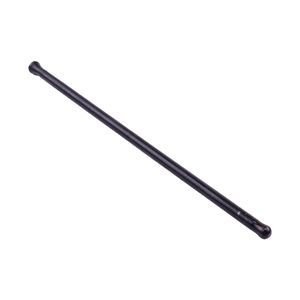
Block & Internal Parts
ISO Certified
Ships 2-5 Days
MOQ 1 Piece
Block & Internal Parts
Push Rod 31434307 for Perkins 1004-40T – Long-Life Service Part
<p><strong>Push Rod 31434307 for Perkins 1004-40T</strong>, high-strength alloy steel (SAE 5140), induction-hardened contact ends — compatible with CASE C100, Landini 6500–9880 series, and Kobelco 700–900 equipment.</p> <ul> <li>Replace at scheduled valve train service intervals when end pitting or length deviation appears, preventing unplanned valve-to-piston contact and protecting downstream components</li> <li>Inspect tappets, rocker arms, and valve springs at each push rod cycle; single-component replacement is viable when camshaft lobes and guide bores remain within tolerance</li> </ul> <p>Replacement interval guidance and legacy engine variant support included with every consignment.</p>
Lead Time
2-5 Days
Warranty
3-12 Months
Min. Order
1 Piece
Ships To
120+ Countries
31434307
Fleet Supply
For Case
For Landini
Perkins 1004-40T
push rod
Wear Part
Request a Quote
Response within 24 hours
Prefer instant chat?
WhatsApp
Product Details
Lifecycle planning — replacement intervals and stocking guidance for Perkins 1004-40T valve train components keep mixed fleets running without reactive part chasing.
Technical Specifications
| Parameter | Value |
|---|---|
| Part Number | 31434307 |
| Product Type | Push Rod |
| Cross-Reference | 795728R1, 131434307, 505089 (reference only) |
| Machine Fitment | CASE C100, C70, C80, C90, CX70, CX80, CX90, CX100, MX80C, MX90C, MX100C, 321D, 689G; Landini 6500–9880 series, Blizzard, Ghibli, Globus, Legend, Mythos, Powerfarm, Rex, Trekker, Vision, Globalfarm, LARGE, TECHNOFARM; New Holland 1496; Kobelco 700, 800, 900 |
| Material | High-strength alloy steel (SAE 5140) |
| Surface Treatment | Induction-hardened contact ends, quench and temper |
| Condition | New Aftermarket |
| Standard | ISO 9001 |
| Warranty | 3–12 months against manufacturing defects |
| MOQ | 1 piece |
Application Suitability
| Service Interval | What to Check |
|---|---|
| Every major valve adjustment cycle | Push rod end pitting, length deviation, and guide bore binding |
| High-hour engine overhaul planning | Camshaft lobe profile, tappet face wear, rocker arm pivot condition |
| Lease turnaround for rental fleets | Full valve train visual inspection and dimensional verification |
| Legacy machine life extension | Supply continuity for discontinued Perkins 1004-40T variants |
Planning Valve Train Consumables Before They Stop the Machine
Most valve train failures on Perkins 1004-40T engines trace back to push rod wear that was visible during the last service interval but never acted upon.
Running a mixed fleet of CASE, Landini, and Kobelco equipment means the Perkins 1004-40T under the hood ages in a predictable pattern. Fleet supervisors I have worked with in the Yangtze River Delta region consistently underestimated how quickly push rod end pitting progresses to guide bore binding, especially in high-dust earthmoving duty. The Push Rod service part / wear part / maintenance for Perkins 1004-40T is small enough to overlook in a standard service checklist yet critical enough to cause valve-to-piston contact when neglected [NEED_CITE: valve train wear progression indicators in medium-duty diesel engines]. Reaction-based procurement for these components turns a scheduled consumable swap into an emergency engine teardown.
Where This Push Rod Sits in the Engine Service Life
The push rod is a wear-driven link between the camshaft tappet and the rocker arm in the Perkins 1004-40T overhead valve train. Its service life tracks directly with cam lobe condition and tappet face integrity, meaning it rarely fails in isolation. Replacing the Push Rod service part / wear part / maintenance for Perkins 1004-40T at scheduled intervals—aligned with valve adjustment cycles—protects the more expensive downstream components like valves, springs, and the cylinder head itself.
Wear Progression and the Case for Scheduled Replacement
Pitting on the push rod contact ends is the first measurable sign of wear, followed by subtle length deviation that alters valve timing under load. By the time guide bore binding becomes audible, the tappet faces have usually sustained matching damage. Scheduling replacement before these secondary failures appear avoids pulling the cylinder head for a problem that started with a consumable part [NEED_CITE: scheduled versus reactive maintenance cost impact in diesel valve trains]. Fleet-level stocking of these components—calibrated to machine count and duty severity—keeps planned maintenance on track rather than waiting for parts after a breakdown.
Material Specification and Its Effect on Service Life
The SAE 5140 alloy steel construction provides a balanced combination of core toughness and surface hardness after heat treatment. Induction-hardened contact ends resist the repeated point loading from tappet and rocker arm interfaces, while the quench and temper treatment through the rod body prevents bending fatigue under high-RPM valve cycling. Precision grinding ensures consistent length across the set, which matters because even slight deviation between cylinders causes uneven valve lift and accelerated wear on the rocker arm pivots. These material and process choices are specifically suited to the continuous load cycles of agricultural and earthmoving applications where engines run at governed speed for extended periods.
The Accumulated Cost of Reactive Procurement
Ordering push rods only after a failure means the machine has already been down for diagnosis, and the damage may have propagated to tappets or rocker arms. Each reactive event compounds: unplanned downtime on a rented machine carries penalty exposure, while delayed agricultural work during harvest windows creates cascading schedule losses across the fleet. Fleet operators who treat this component as a scheduled consumable avoid repeating this cycle [NEED_CITE: total cost of unplanned downtime in construction and agricultural equipment fleets].
Why Source This Component Through XUNPO
XUNPO produces selected part lines in-house and sources the remainder from ISO 9001-certified partners, with identical QC and warranty terms across both channels. Eight product categories allow valve train components, seal kits, and engine overhaul gaskets to ship under one account and one consignment. Minimum order starts at one piece, supporting both single-machine repairs and fleet-wide stocking programs. The Guangzhou warehouse holds common items for fast dispatch, and the technical team verifies compatibility across Perkins 1004 sub-series variants using engine serial prefix confirmation. Cross-reference verification covers superseded and alternate numbers, including legacy variants where brand-direct support has thinned.
Documentation & Verification
- Commercial invoice and packing list with line-item part numbers for customs and inventory reconciliation
- Part compatibility and cross-reference sheet marking OEM numbers as reference only
- Dimensional and surface hardness quality inspection record per batch
- Warranty terms covering manufacturing defects for 3–12 months
- Packing photographs documenting protective sleeve and anti-rust paper application
- HS code and customs documentation support for international shipments
Service Interval & Stocking Guidance
- Inspect push rod ends and length at each valve adjustment interval for early pitting or deviation
- Stock one full engine set plus spare units per high-utilization machine in the fleet
- Replace as a matched set when camshaft lobe wear or tappet face scoring is present
- Store in dry conditions with anti-rust packaging intact until installation
- Align bulk reorder quantities with annual operating hour projections across the fleet
- Confirm engine serial prefix before ordering to match correct variant for Perkins 1004 sub-series
Planning Your Next Order
Provide your machine model, engine serial prefix, and current operating hours to receive replacement interval recommendations and stocking quantities calibrated to your fleet. Including duty cycle details—such as continuous earthmoving or seasonal agricultural use—helps refine the guidance.
Frequently Asked Questions
Q: How often should push rods be inspected on a Perkins 1004-40T?
A: Inspection should align with the engine valve adjustment interval specified in the service manual. Check both contact ends for pitting and measure overall length for deviation. High-dust or continuous-load applications typically require more frequent checks than light-duty cycles.
Q: What symptoms indicate push rod wear before catastrophic failure?
A: Early indicators include pitting visible on the contact ends, slight valve timing irregularity under load, and increased valve train noise at operating temperature. Guide bore binding and rocker arm misalignment suggest the wear has progressed beyond the push rod itself and warrants broader inspection.
Q: Should I replace the full valve train set or only worn push rods?
A: If camshaft lobes and tappet faces show matching wear, replacing push rods alone will accelerate wear on the new components. A full valve train inspection determines whether matched replacement is needed to protect the cylinder head and avoid early rework.
Q: How many push rods should a fleet stock per machine?
A: One complete engine set plus at least one spare set per high-utilization machine covers most planned maintenance scenarios. Fleet-wide stocking should factor in machine count, duty severity, and lead times to avoid reactive procurement during peak operating seasons.
Q: Is aftermarket support still available for older Perkins 1004 variants?
A: Yes. Aftermarket supply continues for Perkins 1004-40T variants even where brand-direct support has diminished. Cross-reference verification ensures correct part matching across superseded numbers and production variants when the engine serial prefix is confirmed.
Compatible Brands
CAT
KOMATSU
HITACHI
VOLVO
HYUNDAI
DOOSAN
KOBELCO
SANY
XCMG
Our parts are engineered to meet or exceed OEM specifications. Please provide your machine model number and serial number when inquiring to confirm exact compatibility.
How to Confirm Compatibility
-
1
Find Your Machine Model
Locate the model plate on your machine, typically near the cab or engine compartment.
-
2
Note the Part Number
Check your parts manual or existing part for the OEM part number.
-
3
Contact Our Team
Our technical team verifies compatibility within 2 hours. Send us the details via the inquiry form or WhatsApp.
Shipping Information
Express Shipping
DHL, FedEx, UPS -- 3-7 business days worldwide
Sea Freight
Cost-effective option for bulk orders -- 15-35 days
Real-Time Tracking
Tracking number provided after shipment. 24/7 support available.
Warranty Policy
3-12
Months Warranty
All parts come with manufacturer warranty. Duration varies by product category.
- Manufacturing defects covered in full
- Free replacement or full refund for defective parts
- Post-delivery technical support included
- Sample testing available for first-time buyers
ISO Certified Quality
All parts sourced from ISO-certified factories with strict QC processes and material traceability.
Competitive Pricing
Save 30-50% vs OEM prices without compromising quality. Transparent pricing with no hidden fees.
Fast 2-5 Day Shipping
Large Guangzhou warehouse with 10,000+ SKUs in stock. Most orders ship within 2-5 business days.
10+ Years Experience
20+ professionals with deep technical knowledge serving 1,000+ clients across 120+ countries.
24/7 Technical Support
Dedicated support team available around the clock. Part verification within 2 hours of inquiry.
Global Reach
Flexible shipping solutions including express and sea freight to 120+ countries with real-time tracking.
Related Products
More parts you might need

Block & Internal Parts
Connecting Rod Service Part for Kubota D905-D1505 – Scheduled Maintenance
View Details
Block & Internal Parts
Aftermarket Accelerator Rod 26607-26602-71 – Fleet Supply for Toyota Forklift
View Details
Block & Internal Parts
Connecting Rod 719810-23100 for Yanmar 3TNE78 Engine – OEM-Replacement Grade
View DetailsNeed a Custom Quote?
Our technical team responds within 24 hours. MOQ 1 piece. Ships to 120+ countries from our Guangzhou warehouse.