

Engine Auxiliary Components
Engine Auxiliary Components
ISO Certified
Ships 2-5 Days
MOQ 1 Piece
Engine Auxiliary Components
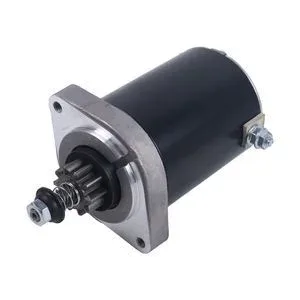
Starter Motor for Kawasaki FR541V FR691V FS600V – Scheduled Maintenance
<p><strong>21163-0749, 21163-0711, 21163-0714 Starter Motor</strong> — 12 V, 1.8 N·m torque, 180 A peak, replacement for Kawasaki FR541V, FR691V, FS600V series and compatible Cub Cadet and John Deere zero-turn mowers and compact tractors.</p> <ul> <li>Replace during scheduled maintenance when cranking slows or solenoid clicks without engagement — inspect battery and cable condition alongside the starter</li> <li>Supports fleet-level planned service intervals, reducing unplanned downtime across high-cycle landscaping operations</li> <li>Long-term supply continuity for older machines as brand-direct parts availability declines</li> </ul> <p>Replacement interval guidance included with shipment.</p>
Lead Time
2-5 Days
Warranty
3-12 Months
Min. Order
1 Piece
Ships To
120+ Countries
12 V Starter
21163-0749
For Cub Cadet
Kawasaki FR691V
Service Part
starter motor
Request a Quote
Response within 24 hours
Prefer instant chat?
WhatsApp
Product Details
Fleet Stocking Supported — scheduled replacement planning for Kawasaki FR/FS/FX starting systems based on accumulated start cycles and service history.
Technical Specifications
| Parameter | Value |
|---|---|
| Part Number | 21163-0749, 21163-0711, 21163-0714, 21163-7035 |
| Cross-Reference | MIA11761, MIA11949, MIA11984, MIA12214, MIA12455, MIA12485, MIA12926, FR691V-AS04 (reference only) |
| Product Type | Starter Motor |
| Machine Fitment | Kawasaki FR541V, FR691V, FR730V, FS481V, FS600V, FS651V, FS691V, FS730V, FX600V, FX651V, FX691V, FX730V; Cub Cadet RZT46, RZT50, RZT54, Z-Force 48, Z-Force 54, Z-Force 60, LTX1046, LTX1050; John Deere X360, S240, X300, X300R, X304, X305R, X310, X320, X324, X350, X350R, X354, X370, X380, X384, X390, X394, Z530M, Z530R |
| Voltage | 12 V ±15% |
| Torque Output | 1.8 N·m |
| Engagement Speed | 2,100 rpm |
| Max Peak Current | 180 A |
| Hold Current | 45 A |
| Armature Shaft Material | 40Cr steel (HRC 52–55) |
| Field Coil Insulation | Class H (180°C thermal rating) |
| Internal Contacts | Silver-plated brass |
| Housing Surface Treatment | Zinc-nickel plating (≥15 μm thickness, ASTM B633 SC4) |
| Dimensional Tolerance Standard | JIS B 8201 |
| Cold-Crank Operating Temperature | Down to –15°C |
| Vibration Resistance | Up to 15 G |
| Condition | New Aftermarket |
| Warranty | 3–12 months against manufacturing defects |
| MOQ | 1 piece |
Application Suitability
| Service Interval | What to Check |
|---|---|
| Every 800–1,200 start cycles or annual service | Brush wear depth, armature commutator condition, solenoid engagement consistency |
| Seasonal turnover for rental fleets | Battery health, cable terminal corrosion, flywheel ring gear tooth condition |
| Pre-storage winterization for landscaping fleets | Current draw under load, cold-crank response, pinion gear engagement clearance |
| Older Kawasaki FR/FS/FX models past OEM support | Cross-reference verification for superseded part numbers, mounting bolt pattern confirmation |
| John Deere X300 series scheduled maintenance | Solenoid click-to-crank transition timing, voltage drop across starter circuit |
Why Starter Motors Fail on Schedule Rather Than by Surprise
Most starter motor failures in commercial landscaping fleets follow a predictable wear curve — the question is whether you plan the replacement or let the machine dictate the timing.
Running a mixed fleet of Kawasaki-powered zero-turn mowers and compact tractors across long seasonal hours means each unit accumulates hundreds of start cycles per month. In my time managing maintenance for Latin American fleet operations, I watched too many crews react to a dead starter on a Monday morning instead of replacing it during the Friday service window. The machine sits idle, the crew is reassigned, and an emergency parts order eats into the week’s margins [NEED_CITE: unplanned downtime cost impact on commercial landscaping operations].
A Starter Motor service part like this one belongs on a preventive replacement list — not because it is fragile, but because its wear signature is readable well before complete failure. Sluggish cranking, a solenoid click that hesitates before engagement, and rising amperage draw on a bench test all point to brush and armature wear that will only worsen. Planning the swap during a scheduled service interval keeps the fleet on its operational calendar.
Where This Starter Motor Fits in the Equipment Lifecycle
Small-engine starting systems in commercial mowers and compact tractors occupy a specific position in the machine’s service life. Unlike filters or belts that are consumed on fixed intervals, a Starter Motor reaches its replacement window based on cumulative engagement cycles and thermal loading. Machines running extended daily hours in landscaping or municipal grounds maintenance accumulate these cycles rapidly, making this component a schedulable item rather than an unpredictable failure point.
For fleets built around Kawasaki FR541V, FR691V, or FX-series engines, the starting system often outlasts the first major engine service but begins showing wear before the second overhaul. Replacing the starter motor maintenance replacement at this midpoint avoids the compounding cost of a machine-down event during peak season.
Recognizing Wear Before It Becomes Downtime
The progression from healthy cranking to complete starter failure typically moves through observable stages. Early signs include a slight delay between key turn and engine turnover, a change in cranking tone that experienced operators notice before technicians do, and intermittent no-crank events that resolve on a second attempt. As brush material wears and commutator surfaces degrade, peak current draw increases — a measurement that maintenance teams with basic bench equipment can track across service intervals [NEED_CITE: starter motor bench testing procedures for small engine fleets].
Beyond the starter itself, a proper assessment includes battery terminal condition, cable gauge integrity, and flywheel ring gear tooth profile. Addressing only the failed component without inspecting the surrounding starting circuit invites repeat failures within the same service season. For rental fleets turning equipment between customers, this system-level check at each turnover prevents the reputation damage of a machine that will not start on delivery.
Material and Thermal Design Behind the Service Life
The armature shaft in this starter motor is manufactured from 40Cr steel hardened to HRC 52–55, which resists the torsional shear loads generated during engagement with the flywheel ring gear. This material choice directly affects how many start cycles the unit sustains before shaft deflection causes pinion misalignment — a common failure mode in high-cycle fleet applications.
Field coil insulation rated at Class H (180°C thermal rating) addresses the heat buildup from repeated cranking attempts, particularly in hot-climate operations where ambient temperatures reduce thermal headroom. The silver-plated brass internal contacts maintain low resistance across the solenoid circuit, reducing voltage drop that would otherwise force the battery to compensate. Housing zinc-nickel plating per ASTM B633 SC4 provides corrosion protection in environments where machines are stored outdoors or pressure-washed between shifts.
The Compounding Cost of Reactive Replacement
When a starter motor is replaced only after complete failure, the costs extend beyond the component itself. The machine sits idle while the part is sourced, the crew assigned to that unit is redirected or stands down, and the replacement order often carries premium freight charges for rush delivery. Across a fleet of twenty or more units, these reactive events accumulate into measurable seasonal losses [NEED_CITE: fleet maintenance reactive versus preventive cost comparison in grounds keeping].
There is also the secondary damage risk. A starter that has been laboring through its final weeks places sustained high-current load on the battery and cable connections, accelerating their degradation. By the time the starter is finally swapped, the battery may already be weakened from repeated deep-crank events, shortening its remaining service life and setting up the next failure event within the same maintenance cycle.
Sourcing This Part for Long-Term Fleet Support
Our own production lines and qualified sourced supply operate under one account and one warranty, so whether this starter motor comes from our facility or a certified partner, the quality inspection and coverage terms remain identical. The eight-category product range means that when you identify other service items due during the same maintenance window — belts, filters, seal kits — everything ships in a single consignment rather than arriving from separate suppliers on mismatched timelines.
We accept orders from one piece upward, which matters when a specific fleet unit needs a single starter motor replacement outside your bulk order cycle. Our Guangzhou warehouse maintains stock on high-demand items for fast dispatch. Part identification can be completed from a part number, machine model, photograph, or nameplate image — practical when field machines have worn or painted-over identification plates. Cross-reference verification covers superseded and alternate numbers, critical for older Kawasaki and John Deere models where OEM numbering has changed across production years. Sample units are available for fitment confirmation before you commit to a fleet-wide order, and our technical team assists with compatibility and grade confirmation.
Documentation & Verification
- Commercial invoice and packing list with line-item part numbers for customs clearance
- Compatibility and cross-reference sheet marking OEM numbers as reference only
- Quality inspection record covering dimensional checks and no-load bench test results
- Warranty terms document specifying coverage period and claim procedure
- Packing photographs showing protective packaging before crate closure
- HS code guidance and export documentation support for destination country requirements
Service Interval & Stocking Guidance
- Schedule starter motor inspection at each annual service or every 1,000 start cycles based on fleet telematics
- Track cranking amperage trend across service intervals to identify units approaching end of life
- Maintain minimum stock of one unit per ten fleet machines running extended daily hours
- Store spare units in dry, temperature-stable conditions with terminal caps to prevent contact corrosion
- Cross-check engine serial numbers when ordering for mixed-model fleets to avoid variant mismatches
- Review superseded OEM number lists annually to update your internal cross-reference database
Planning Your Starter Motor Procurement
To receive accurate compatibility confirmation and stocking recommendations, provide your fleet’s machine models, engine serial numbers, and approximate operating hours per unit. This information allows us to verify the correct starter motor variant for each machine in your fleet, confirm cross-references against any superseded numbers in your records, and suggest stock quantities aligned with your service intervals and operational tempo.
Frequently Asked Questions
Q: What symptoms indicate the starter motor is approaching end of service life?
A: Early indicators include slower cranking speed, a noticeable delay between solenoid engagement and engine turnover, and increasing current draw measured during bench testing. Operators often report a change in cranking sound before technical symptoms become obvious. Tracking these signs across service intervals lets you schedule replacement during planned maintenance rather than after complete failure.
Q: Should I replace just the starter or inspect the full starting system at the same time?
A: A system-level assessment is recommended whenever a starter motor is replaced. Battery health, cable terminal condition, and flywheel ring gear tooth profile all affect starting performance and can accelerate wear on the new unit if left unaddressed. Replacing the starter without checking these adjacent components risks a repeat failure within the same service season.
Q: How many units should I keep in stock for my fleet size?
A: A practical baseline is one spare starter motor per ten machines operating extended daily hours, adjusted upward for rental fleets with rapid turnover or operations in remote locations where resupply takes longer. Reviewing your fleet’s start-cycle data and historical failure timing helps refine this quantity to match your actual consumption pattern.
Q: My machine model is older — will this part still be available in future years?
A: Aftermarket availability for Kawasaki FR/FS/FX series and compatible Cub Cadet and John Deere models is maintained independently of OEM production decisions. As brand-direct support thins for older machines, aftermarket supply channels continue supporting these platforms. Cross-reference verification ensures correct variant matching even when OEM numbering has been superseded across production years.
Q: How do I confirm the correct variant when OEM numbers have been superseded?
A: Provide the machine model, engine serial number, and any visible part number from the existing unit — even if partially worn. Cross-reference verification maps superseded and alternate numbers to confirm interchangeability. For mixed fleets with production-year variations, engine serial confirmation ensures the correct starter motor variant is selected before shipment.
Compatible Brands
CAT
KOMATSU
HITACHI
VOLVO
HYUNDAI
DOOSAN
KOBELCO
SANY
XCMG
Our parts are engineered to meet or exceed OEM specifications. Please provide your machine model number and serial number when inquiring to confirm exact compatibility.
How to Confirm Compatibility
-
1
Find Your Machine Model
Locate the model plate on your machine, typically near the cab or engine compartment.
-
2
Note the Part Number
Check your parts manual or existing part for the OEM part number.
-
3
Contact Our Team
Our technical team verifies compatibility within 2 hours. Send us the details via the inquiry form or WhatsApp.
Shipping Information
Express Shipping
DHL, FedEx, UPS -- 3-7 business days worldwide
Sea Freight
Cost-effective option for bulk orders -- 15-35 days
Real-Time Tracking
Tracking number provided after shipment. 24/7 support available.
Warranty Policy
3-12
Months Warranty
All parts come with manufacturer warranty. Duration varies by product category.
- Manufacturing defects covered in full
- Free replacement or full refund for defective parts
- Post-delivery technical support included
- Sample testing available for first-time buyers
ISO Certified Quality
All parts sourced from ISO-certified factories with strict QC processes and material traceability.
Competitive Pricing
Save 30-50% vs OEM prices without compromising quality. Transparent pricing with no hidden fees.
Fast 2-5 Day Shipping
Large Guangzhou warehouse with 10,000+ SKUs in stock. Most orders ship within 2-5 business days.
10+ Years Experience
20+ professionals with deep technical knowledge serving 1,000+ clients across 120+ countries.
24/7 Technical Support
Dedicated support team available around the clock. Part verification within 2 hours of inquiry.
Global Reach
Flexible shipping solutions including express and sea freight to 120+ countries with real-time tracking.
Related Products
More parts you might need

Engine Auxiliary Components
12V Fuel Shut-Off Solenoid for CAT 3013C/3024C Engines – Direct OEM Replacement
View Details
Engine Auxiliary Components
Recoil Pull Starter 1137-080-2115 for Stihl MS194T – Wear Item
View Details
Engine Auxiliary Components
12V 9T starter motor 1G023-63010 for Kubota D722/D782 engines
View DetailsNeed a Custom Quote?
Our technical team responds within 24 hours. MOQ 1 piece. Ships to 120+ countries from our Guangzhou warehouse.