
Belt Drive Systems
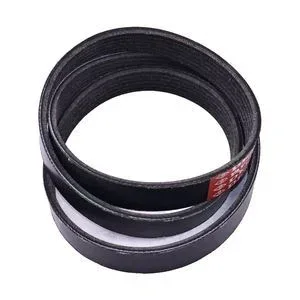
Thermo King TriPac APU-Compatible Alternator Belt – Long-Life
<p><strong>Alternator Belt 78-1918 / 78-1543 for Thermo King TriPac APU, EPDM Compound, Multi-Ribbed</strong> — engineered for sustained grip under continuous thermal cycling in APU engine bays. Replacing this belt on schedule prevents voltage instability, battery drain, and downstream refrigeration faults; inspect tensioners and pulleys at the same service interval to avoid linked failures. Scheduled replacement intervals and fleet stocking guidance provided with each order.</p>
Lead Time
2-5 Days
Warranty
3-12 Months
Min. Order
1 Piece
Ships To
120+ Countries
Request a Quote
Response within 24 hours
Product Details
Fleet Stocking Strategy — Thermo King TriPac APU alternator belts scheduled for predictive consumption across cold chain fleets.
Technical Specifications
| Parameter | Value |
|---|---|
| Part Number | 78-1918 / 78-1543 |
| Product Type | Belt |
| Cross-Reference | 78-1918 (reference only), 781918 (reference only), 78-1543 (reference only), 781543 (reference only) |
| Machine Fitment | TriPac APU |
| Brand Compatibility | Thermo King |
| Material | EPDM (Ethylene Propylene Diene Monomer) rubber compound |
| Reinforcement | Polyester cord construction |
| Design | Multi-ribbed |
| Dimensional Tolerance | ±0.3 mm across length and width |
| Operating Temperature Range | –20°C to +60°C |
| Fatigue Life | >120,000 cycles under standard APU duty cycles |
| Condition | New Aftermarket |
| Warranty | 3–12 months against manufacturing defects |
| MOQ | 1 piece |
| Standard | ISO 9001 |
Application Suitability
| Service Interval | What to Check |
|---|---|
| Scheduled belt replacement per fleet maintenance calendar | Tensioner bearing play and pulley surface condition |
| Pre-season inspection for refrigerated trailer fleets | Adjacent belt condition and alignment marks |
| Rental turnover maintenance between contract cycles | APU mounting bolt torque and bracket integrity |
| Older TriPac APU units past thinning brand support | Pulley groove wear depth and belt seating position |
Why Reactive Belt Buying Drains Fleet Profitability
An alternator belt snapping on a TriPac APU at 2 a.m. in a distribution yard is never just a belt problem — it is a cargo temperature excursion waiting to happen.
Fleet maintenance teams across the Pearl River Delta logistics corridor see the same pattern repeat: a refrigerated trailer arrives with the APU silent, the battery bank depleted, and the cargo already drifting out of spec. The alternator belt is a predictable wear item with a known service window, yet purchasing it only after failure converts a minor scheduled swap into a cold chain emergency. When a fleet of fifty trailers each suffers one unplanned belt failure per year, the cumulative cargo claims and recovery freight costs far exceed what a disciplined stocking program would have consumed [NEED_CITE: cold chain temperature excursion cost analysis for refrigerated transport fleets].
The core issue is that procurement treats this belt as an emergency spare rather than a scheduled consumable, leaving warehouse shelves empty the moment the maintenance calendar demands replacement.
Where the Alternator Belt Sits in the APU Service Lifecycle
The alternator belt drives the charging system that keeps the TriPac APU battery bank topped between compressor cycles. When this belt degrades, voltage instability appears first as flickering control panel indicators, then as intermittent compressor clutch disengagement. Scheduling the Alternator Belt service part for TriPac APU maintenance at the manufacturer-recommended interval prevents these downstream electrical faults from masquerading as compressor or controller failures.
Reading the Wear Signs Before the Belt Snaps
Edge cracking along the rib flanks, glazing on the contact face, and material transfer onto the pulley grooves all signal that the belt has exceeded its effective service window. In Guangdong’s subtropical operating environment, continuous thermal cycling between the APU engine bay heat and ambient humidity accelerates EPDM surface hardening, shortening the gap between inspection and required replacement. Catching these indicators during a routine service visit allows the maintenance team to swap the belt on their own schedule rather than reacting to a roadside failure [NEED_CITE: EPDM belt aging characteristics under thermal cycling in auxiliary power units].
Material Selection and Its Effect on APU Bay Performance
The EPDM compound resists the ozone and heat exposure typical inside a compact APU engine enclosure, where coolant lines and exhaust routing elevate ambient temperatures well above standard underhood conditions. Polyester cord reinforcement maintains tensile stability across the –20°C to +60°C operating envelope, preventing the belt from stretching beyond the tensioner’s compensation range as the unit cycles through seasonal extremes. The multi-ribbed profile distributes load across several contact surfaces, reducing peak stress on any single rib and extending fatigue life past 120,000 standard duty cycles. Dimensional tolerance held to ±0.3 mm ensures the belt seats correctly in the pulley grooves without riding high or bottoming out, both of which accelerate wear.
The Compounding Cost of Treating Belts as Emergency Spares
When a fleet waits for belt failure before ordering, each incident triggers an expedited freight surcharge, a technician callout outside normal workshop hours, and potential cargo rejection at the receiving dock. Multiply this across dozens of trailers, and the annual reactive spending dwarfs what a planned inventory of Alternator Belt service part for TriPac APU maintenance would have cost on standard lead-time procurement. Worse, a belt that fails catastrophically can shed material into the tensioner mechanism, forcing a component replacement that a scheduled swap would have avoided entirely [NEED_CITE: total cost of ownership comparison between scheduled and reactive belt replacement in transport refrigeration].
Why Fleet Planners Source This Belt Through XUNPO
XUNPO produces selected belt lines in-house and sources the remainder from ISO-certified partners, with both channels carrying identical quality control and warranty terms. A single account covers all eight maintenance categories — belts, filters, seals, electrical, engine, hydraulic, undercarriage, and cabin — so a complete APU service kit ships as one consignment. The Guangzhou warehouse maintains stock depth on fast-moving consumables for dispatch without multi-week procurement delays. Buyers can order from one piece for a single trailer’s emergency need up to fleet-quantity stocking programs. Technical staff verify APU serial prefix and cross-reference superseded numbers before confirmation, ensuring the belt ordered matches the specific unit build. Sample supply is available for fitment confirmation before a fleet commits to bulk quantities.
Documentation & Verification
- Commercial invoice listing alternator belt part numbers and cross-reference identifiers
- Fitment sheet mapping belt to specific TriPac APU serial ranges (reference only)
- Dimensional inspection record confirming rib profile and length tolerance
- Warranty certificate covering manufacturing defects for 3–12 months
- Packing photographs showing belt condition before crate sealing
- HS code and export documentation prepared for cross-border shipment
Service Interval & Stocking Guidance
- Replace the alternator belt at the APU manufacturer’s published interval or at first sign of rib edge cracking, whichever arrives first
- Inspect tensioner bearing and pulley groove surfaces each time the belt is off — replace tensioner if free play is detectable by hand
- Stock one belt per active APU unit plus a small buffer quantity sized to fleet expansion plans
- Store belts in original packaging away from direct sunlight and ozone sources to preserve EPDM compound integrity
- Rotate stock using first-in-first-out to prevent shelf aging from consuming fatigue life before installation
Requesting a Fleet Stocking Proposal
Provide your TriPac APU unit model, serial prefix, and the number of active trailers in your fleet to receive a consumption-based stocking recommendation. If your maintenance calendar specifies a replacement interval, share that timeline so the proposal aligns belt quantities with your scheduled service windows.
Frequently Asked Questions
Q: How often should the TriPac APU alternator belt be replaced?
A: Replacement timing follows the APU manufacturer’s published service interval, adjusted for operating conditions such as high ambient heat or continuous duty cycles. Fleets running year-round in subtropical climates typically shorten the interval based on inspection findings. Confirming the exact interval requires the specific APU serial prefix, as build revisions across production years can alter the recommended schedule.
Q: What wear signs indicate the belt needs replacement before the scheduled interval?
A: Edge cracking along the rib flanks, visible glazing on the belt contact face, and rubber material transfer onto the pulley grooves all indicate advancing wear. Unusual squealing during APU startup or voltage fluctuation on the control panel can also point to belt slip caused by surface degradation. Any of these signs should trigger an immediate inspection rather than waiting for the next scheduled service visit.
Q: Should tensioners and pulleys be replaced together with the belt?
A: The tensioner bearing should be checked for free play and roughness each time the belt is removed. If play is detectable, replacing the tensioner alongside the belt prevents premature failure of the new belt caused by misalignment. Pulleys generally outlast several belt cycles but should be inspected for groove wear that could reduce contact area and accelerate the new belt’s wear rate.
Q: How many belts should a fleet keep in stock for predictable consumption?
A: A practical starting point is one belt per active APU unit plus a buffer quantity scaled to fleet growth plans and replacement interval length. Fleets operating in remote corridors with limited parts access may hold higher buffer quantities. XUNPO can model consumption rates based on your fleet size and service calendar to recommend a stocking quantity that avoids both shortages and excess shelf inventory.
Q: Can older TriPac APU models still be supported with this belt?
A: Yes. The cross-reference numbers 78-1918 and 78-1543 (reference only) cover multiple TriPac APU production revisions. Older units past thinning brand-dealer support can still be serviced through verified aftermarket supply. Providing the APU serial prefix allows confirmation that this belt matches the specific alternator and pulley configuration of older builds.
Compatible Brands
Our parts are engineered to meet or exceed OEM specifications. Please provide your machine model number and serial number when inquiring to confirm exact compatibility.
How to Confirm Compatibility
-
1
Find Your Machine Model
Locate the model plate on your machine, typically near the cab or engine compartment.
-
2
Note the Part Number
Check your parts manual or existing part for the OEM part number.
-
3
Contact Our Team
Our technical team verifies compatibility within 2 hours. Send us the details via the inquiry form or WhatsApp.
Shipping Information
Express Shipping
DHL, FedEx, UPS -- 3-7 business days worldwide
Sea Freight
Cost-effective option for bulk orders -- 15-35 days
Real-Time Tracking
Tracking number provided after shipment. 24/7 support available.
Warranty Policy
All parts come with manufacturer warranty. Duration varies by product category.
- Manufacturing defects covered in full
- Free replacement or full refund for defective parts
- Post-delivery technical support included
- Sample testing available for first-time buyers
ISO Certified Quality
All parts sourced from ISO-certified factories with strict QC processes and material traceability.
Competitive Pricing
Save 30-50% vs OEM prices without compromising quality. Transparent pricing with no hidden fees.
Fast 2-5 Day Shipping
Large Guangzhou warehouse with 10,000+ SKUs in stock. Most orders ship within 2-5 business days.
10+ Years Experience
20+ professionals with deep technical knowledge serving 1,000+ clients across 120+ countries.
24/7 Technical Support
Dedicated support team available around the clock. Part verification within 2 hours of inquiry.
Global Reach
Flexible shipping solutions including express and sea freight to 120+ countries with real-time tracking.
Related Products
More parts you might need



Need a Custom Quote?
Our technical team responds within 24 hours. MOQ 1 piece. Ships to 120+ countries from our Guangzhou warehouse.