
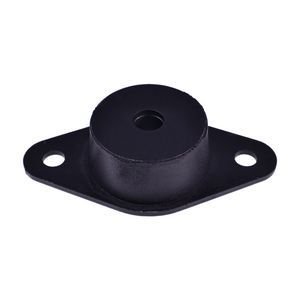
Cushion Damper
Wear Item Vibration Mount Compatible with Yanmar 3.95 Thermo King
<p><strong>91-2281 Cushion Damper, Shore A 55±3, 82 mm OD</strong> — compatible with Thermo King TS-200, TS-300, KD-II, MD-II, RD-II, TD-II, Super TD-II and McTRK-II refrigeration units with Yanmar 3.95 engine.</p> <ul> <li>Typical wear signs include rubber hardening, cracking and rebound loss, which accelerate compressor bracket fatigue and high-pressure hose leakage</li> <li>Replacing dampers at scheduled intervals prevents misalignment damage to adjacent bearings and piping across the refrigeration assembly</li> <li>Older Thermo King models remain supported with verified aftermarket fitment for ongoing fleet serviceability</li> </ul>
Lead Time
2-5 Days
Warranty
3-12 Months
Min. Order
1 Piece
Ships To
120+ Countries
Request a Quote
Response within 24 hours
Product Details
Fleet Stocking Plans — We map vibration mount replacement intervals against your Thermo King unit run hours so spares arrive before elastomer degradation triggers secondary damage.
Technical Specifications
| Parameter | Value |
|---|---|
| Part Number | 91-2281 |
| Product Type | Cushion Damper |
| Cross-Reference | 91-2281, 912281, 912-281, 91-7967, 917967, 917-967, 1080A17G61, TB-37-91-2281, TB37912281 (for identification purposes) |
| Machine Fitment | Thermo King TS-200, TS-300, TS200, TS300, KD-II, KD2, KDII, MD-II, MD2, MD100, MD200, MD300, MDII, RD-II, RD2, RDII, Super TD-II, Super TD2, SuperTDII, TD-II, TD2, TDII, McTRK-II, McTRK2, McTRKII |
| Brand Compatibility | Thermo King, Yanmar |
| Material | Natural and synthetic elastomers |
| Shore Hardness | Shore A 55±3 |
| Inner Steel Insert Coating | Zinc-plated (≥8 μm) |
| Radial Stiffness | 12.8 kN/mm |
| Outer Diameter | Ø82 mm |
| Height | 45 mm |
| Bolt Hole Spacing | 62 mm center-to-center |
| Dimensional Tolerance | ±0.15 mm |
| Condition | New Aftermarket |
| Warranty | 3–12 months against manufacturing defects |
| Standards | ISO 9001, ISO 10816-3 |
Application Suitability
| Service Interval | What to Check |
|---|---|
| Every 2,000 operating hours | Rubber hardening, surface cracking, rebound attenuation on all four mounts |
| Annual cold-chain inspection | Compressor bracket stress marks, high-pressure hose fitting seepage near mount positions |
| Before long-haul season deployment | Bolt hole elongation, zinc coating integrity on steel inserts, Shore A hardness drift |
| After major engine overhaul | Mount compression set, misalignment between engine and compressor base plate |
| Fleet-wide batch rotation | Swap full set simultaneously when any single mount shows radial stiffness loss |
Why Reactive Procurement Costs More Than the Part Itself
Replacing a worn vibration mount on schedule costs a fraction of the compressor rebuild you trigger by ignoring it.
When I was running fleet maintenance for a copper mine operation in Chile, we had a Yanmar 3.95 engine on a Thermo King transport refrigeration unit crack its mounting flange because the crew deferred a Cushion Damper swap. The machine sat idle for weeks waiting for a replacement block. That Vibration Mount service part would have cost very little compared to the engine teardown, the freight for a donor block, and the cargo spoilage from a dead reefer. [NEED_CITE: transport refrigeration unit engine vibration isolation failure modes]
Fleet operators and rental companies treating these mounts as non-critical spares accumulate hidden costs across their entire rolling stock. One hardened mount shifts the dynamic load to the remaining three, accelerating their fatigue cycle and introducing harmonic stress into the compressor bracket and refrigerant lines.
Positioning the Vibration Mount in Your Preventive Maintenance Calendar
This Vibration Mount service part sits at the boundary between the Yanmar 3.95 power source and the Thermo King refrigeration compressor assembly. Its job is continuous: absorb torsional pulses from the diesel engine, isolate thermal expansion cycles from the compressor housing, and maintain precise alignment between both shafts across thousands of operating hours. When it degrades, nothing else in the drivetrain stays neutral.
When Elastomer Decay Starts Damaging Adjacent Hardware
Rubber hardening is rarely the first sign. More often, maintenance crews notice the compressor bracket developing hairline cracks near the bolt flange, or high-pressure refrigerant hoses beginning to weep at their fittings. By that point, the Cushion Damper has already lost meaningful damping capacity and the engine vibration is transmitting directly into the chassis structure. [NEED_CITE: ISO 10816-3 vibration severity evaluation for transport refrigeration machinery] Replacing the full set before bracket damage begins is the difference between a planned consumable swap and a structural repair.
Reading the Wear Signs Before They Become Failures
The Shore A 55±3 hardness spec means this mount is tuned for medium-duty isolation. When the elastomer compound ages under sustained heat from the engine bay and ozone exposure from highway running, it stiffens well past that target band. A technician pressing a durometer into an in-service mount can confirm whether the rubber still falls within spec or has drifted into a range where radial stiffness no longer matches the design envelope. Cracks radiating from the steel insert edge are a later-stage indicator and usually mean the mount is already transmitting destructive harmonics into the subframe.
Interpreting Material and Dimensional Specs for Service Life
The natural and synthetic elastomer blend in this Cushion Damper balances flexibility at cold-start temperatures with resistance to heat soak during sustained highway haulage. The zinc-plated steel insert, coated to a minimum of 8 μm, prevents corrosion creep between the metal core and the rubber body — a failure mode common in port drayage units exposed to salt spray. The 12.8 kN/mm radial stiffness figure defines how much lateral deflection the mount allows before bottoming out against the bolt plate; units running in rough-terrain intermodal yards load this parameter harder than long-haul highway rigs. The Ø82 mm outer diameter and 45 mm height set the physical envelope, while the 62 mm bolt hole spacing must match the Thermo King mounting plate pattern exactly. [NEED_CITE: elastomer vibration isolator material selection for diesel-driven refrigeration compressors] Dimensional tolerance at ±0.15 mm keeps the engine-to-compressor alignment within the range the coupling can absorb.
The Cumulative Cost of Deferred Mount Replacement
A single failed mount shifts the engine’s harmonic node to the remaining three, which then age faster in an asymmetric load pattern. I have seen fleet workshops replace just the visibly cracked unit, only to have a second mount fail within weeks and take a compressor bearing with it. [NEED_CITE: vibration-induced bearing failure mechanisms in engine-driven compressor assemblies] That second teardown doubles the labour cost and extends the unit’s downtime far beyond what a full-set preventive swap would have required. For rental companies cycling units between clients, a vibration-related compressor failure in the field also means cargo liability exposure.
Why Fleets Source This Vibration Mount Through One Account
Our own production lines and qualified sourced supply both carry the same QC protocol and warranty terms, so you are not managing separate quality expectations across your mount inventory. Eight product categories mean the compressor gaskets, refrigerant hose fittings, and bracket fasteners that accompany a mount swap can ship in one consignment rather than arriving from three suppliers on different schedules. Minimum order starts at one piece, so a single emergency unit is never blocked by a batch threshold. Guangzhou warehouse stock covers common Thermo King and Yanmar fitments for faster dispatch on routine replenishment. Our technical team verifies machine model and engine serial compatibility before confirming fitment, reducing the risk of mounting a dimensionally correct but stiffness-mismatched part. Cross-reference verification covers superseded numbers like 91-7967 alongside the current 91-2281 identifier.
Documentation & Verification
- Commercial invoice and packing list matched to your fleet purchase order and unit serial records
- Part compatibility sheet listing Thermo King TS, KD, MD, RD, TD series and Yanmar 3.95 cross-reference (reference only)
- Dimensional and hardness inspection record for bolt hole spacing, outer diameter, and Shore A verification
- Warranty terms document covering manufacturing defects for the stated coverage period
- Packing photographs of sealed units with protective foam before carton closure
- HS code and customs documentation support for cross-border cold-chain fleet procurement
Service Interval & Stocking Guidance
- Inspect elastomer condition every 2,000 hours or annually, whichever arrives first, focusing on rebound response
- Replace full four-mount set simultaneously when any single unit shows hardness drift beyond Shore A 55±3
- Stock one complete set per five active units for fleets running port drayage or rough-terrain intermodal routes
- Store unused mounts in original sealed packaging away from direct sunlight and ozone-generating electrical equipment
- Record mount replacement dates against unit hour meters to build a predictive swap schedule across your fleet
- Verify bolt hole spacing at 62 mm center-to-center against your Thermo King mounting plate before installation
Plan Your Next Batch Replenishment
Provide your active Thermo King unit models, current engine hour readings, and fleet size so we can align replacement quantities and delivery timing with your next scheduled maintenance window. Include any superseded part numbers from your existing records for cross-reference confirmation.
Frequently Asked Questions
Q: How often should I inspect the vibration mounts on a Thermo King transport refrigeration unit?
A: Schedule a visual and durometer check every 2,000 operating hours or at your annual cold-chain inspection, whichever comes first. Look for surface cracking, rubber hardening beyond Shore A 55±3, and any rebound attenuation. Units in port drayage or high-idle applications may need more frequent checks due to sustained heat and vibration exposure.
Q: What signs indicate a failed cushion damper is already damaging other components?
A: Early indicators include hairline cracks forming on the compressor bracket near the mount flange, refrigerant hose fittings beginning to seep, and unusual harmonic buzz at idle. These symptoms mean the Vibration Mount service part has stopped isolating effectively and engine vibration is loading adjacent hardware beyond its design limits.
Q: Should I replace one damaged mount or swap the entire set at once?
A: Always replace the full set. A single new mount beside three aged ones creates asymmetric stiffness across the engine base, shifting harmonic loads unevenly and accelerating failure of the remaining old units. A matched set maintains the designed radial stiffness balance and protects compressor bearings and hose connections.
Q: How many spare mounts should a fleet keep in stock for emergency coverage?
A: A practical baseline is one complete four-mount set for every five active Thermo King units, adjusted upward if your fleet operates in rough-terrain or high-idle environments. This ratio covers unexpected single-unit failures while keeping inventory carrying costs manageable across your maintenance programme.
Q: Can I still source compatible vibration mounts for older Thermo King models no longer supported by the brand?
A: Yes. Aftermarket supply for legacy Thermo King TS, KD, MD, RD, and TD series units remains available through verified cross-reference identification. Providing your machine model and engine details allows fitment confirmation even when the original manufacturer has discontinued direct parts support for those platforms.
Compatible Brands
Our parts are engineered to meet or exceed OEM specifications. Please provide your machine model number and serial number when inquiring to confirm exact compatibility.
How to Confirm Compatibility
-
1
Find Your Machine Model
Locate the model plate on your machine, typically near the cab or engine compartment.
-
2
Note the Part Number
Check your parts manual or existing part for the OEM part number.
-
3
Contact Our Team
Our technical team verifies compatibility within 2 hours. Send us the details via the inquiry form or WhatsApp.
Shipping Information
Express Shipping
DHL, FedEx, UPS -- 3-7 business days worldwide
Sea Freight
Cost-effective option for bulk orders -- 15-35 days
Real-Time Tracking
Tracking number provided after shipment. 24/7 support available.
Warranty Policy
All parts come with manufacturer warranty. Duration varies by product category.
- Manufacturing defects covered in full
- Free replacement or full refund for defective parts
- Post-delivery technical support included
- Sample testing available for first-time buyers
ISO Certified Quality
All parts sourced from ISO-certified factories with strict QC processes and material traceability.
Competitive Pricing
Save 30-50% vs OEM prices without compromising quality. Transparent pricing with no hidden fees.
Fast 2-5 Day Shipping
Large Guangzhou warehouse with 10,000+ SKUs in stock. Most orders ship within 2-5 business days.
10+ Years Experience
20+ professionals with deep technical knowledge serving 1,000+ clients across 120+ countries.
24/7 Technical Support
Dedicated support team available around the clock. Part verification within 2 hours of inquiry.
Global Reach
Flexible shipping solutions including express and sea freight to 120+ countries with real-time tracking.
Related Products
More parts you might need
Engine Auxiliary Components
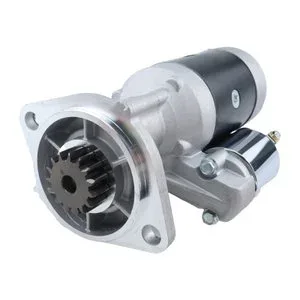
12V Starter Motor AT318141 for Yanmar & John Deere – Service Part
View Details
Engine Auxiliary Components
Fuel Solenoid 2852741 for New Holland F4CE9484C J600 – Scheduled Maintenance
View DetailsNeed a Custom Quote?
Our technical team responds within 24 hours. MOQ 1 piece. Ships to 120+ countries from our Guangzhou warehouse.