
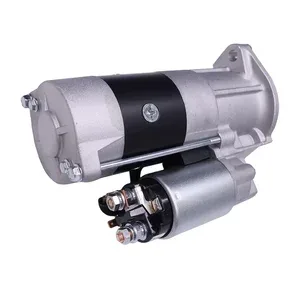
Engine Auxiliary Components

Engine Auxiliary Components
ISO Certified
Ships 2-5 Days
MOQ 1 Piece
Engine Auxiliary Components
12V Throttle Solenoid P12972 – Service Part for Niftylift Fleet Maintenance
<p><strong>P12972 Stop Solenoid, 12V, sealed epoxy coil</strong> — replacement for Niftylift TD34, SD34, SD50, HR17D and HR21D aerial platforms. Coil insulation breakdown and armature fatigue accumulate over repeated start-stop cycles; erratic idle or failure to shut down are early indicators. Swapping the solenoid alone avoids unnecessary teardown of the linkage and injection pump interface when it is the only faulted element.</p> <ul> <li>Fits Niftylift scissor and boom lifts including HR10, HR12, HR15N, HR17N, 120SD, 170SD, NL210</li> <li>Operating voltage range 10–14V DC with <35ms response time</li> <li>Cross-reference: 1502ES-12C7U1B1, ES1502C-12V T20</li> </ul> <p>Replacement interval guidance ships with every order to support fleet-level maintenance planning.</p>
Lead Time
2-5 Days
Warranty
3-12 Months
Min. Order
1 Piece
Ships To
120+ Countries
12V DC
Engine Auxiliary
For Niftylift
P12972
Service Part
stop solenoid
Request a Quote
Response within 24 hours
Prefer instant chat?
WhatsApp
Product Details
Continuous Supply Commitment — Aging Niftylift models remain supported with verified replacement solenoids, preventing fleet grounding when brand-dealer channels thin out.
Technical Specifications
| Parameter | Value |
|---|---|
| Part Number | P12972 |
| Product Type | Stop Solenoid |
| Cross-Reference (reference only) | 1502ES-12C7U1B1, 1502ES12C7U1B1, ES1502C-12V T20, ES1502C12VT20 |
| Machine Fitment | TD34, SD34, SD50, HR17D, HR21D, HR10, HR12, HR15N, HR17N, 120SD, 170SD, NL210 |
| Voltage | 12V DC |
| Operating Voltage Range | 10–14V DC |
| Coil Encapsulation | Sealed epoxy |
| Armature Core Material | Cold-drawn low-carbon steel |
| Condition | New Aftermarket |
| Standards | ISO 9001, ISO 4414 |
| Warranty | 6 months against manufacturing defects |
| MOQ | 1 piece |
Application Suitability
| Service Interval | What to Check |
|---|---|
| 1,500–2,000 operating hours | Coil resistance drift and armature travel consistency |
| Annual fleet preventive review | Connector corrosion and wiring harness integrity at the solenoid plug |
| Between rental contract cycles | Full throttle shutdown response and idle stability under load |
| Post-injection-pump service | Solenoid seating alignment and linkage free-play |
| Older unit recommissioning | Voltage drop across supply circuit under cranking conditions |
Why Stop Solenoid Service Part Maintenance Matters for Aging Niftylift Fleets
Replacing a single solenoid before it fails keeps the lift running; waiting until it seizes turns a five-minute swap into a multi-day shutdown.
Fleet operators running Niftylift scissor lifts and boom lifts across urban construction and demolition sites face a recurring pattern: the machine starts fine in the morning, then refuses to shut down cleanly or stalls mid-cycle. [NEED_CITE: diesel engine shutdown solenoid failure modes in high-cycle aerial work platforms]. The throttle stop solenoid is a predictable wear item whose lifespan tracks directly with start-stop cycle count rather than calendar age. I have seen entire rental fleets grounded because one solenoid failed on a Friday afternoon and no spares were on the shelf.
When brand-dealer support thins for older TD34, SD34, or HR17D models, sourcing a single stop solenoid service part maintenance component becomes unexpectedly difficult. Reactive purchasing introduces lead times that compound the original equipment downtime.
Where the Throttle Solenoid Sits in the Machine’s Service Life
The stop solenoid occupies a critical position at the fuel-shutdown control point of diesel-powered Niftylift aerial work platforms. Every engine start and stop cycles the armature through its full stroke, and each cycle contributes incrementally to coil insulation stress and mechanical fatigue. This stop solenoid service part maintenance component is not a failure you can inspect your way out of — by the time symptoms become obvious, the internal degradation is already advanced.
Fleet maintenance planners who track component replacement against operating hours consistently outperform those who rely on breakdown response. Building this solenoid into a scheduled parts rotation means the swap happens during planned downtime, not in the middle of a concrete pour.
Wear Progression and the Case for Proactive Replacement
The typical failure sequence begins with intermittent idle irregularity — the engine hesitates during shutdown or takes a second attempt to kill the fuel supply. [NEED_CITE: diesel engine auxiliary component wear indicators in mobile equipment fleets]. Coil insulation breakdown accumulates gradually across thousands of thermal cycles, and the sealed epoxy encapsulation that protects against moisture ingress also conceals the degradation from visual inspection. A failing solenoid can also deliver inconsistent fuel timing signals, which accelerates wear on the injection pump and downstream fuel lines.
When the solenoid is the only faulted element, swapping it alone avoids unnecessary teardown of the full throttle linkage and injection pump interface. However, the adjacent fuel delivery components should be inspected during every solenoid replacement to catch secondary wear before it cascades into a larger repair.
What the Electrical Specifications Mean in Practice
The 12V rating with a 10–14V operating range means this solenoid is designed to function within the typical voltage envelope of mobile diesel electrical systems, including the voltage sag that occurs during cranking. The sealed epoxy coil encapsulation prevents moisture and diesel vapor ingress from degrading the winding insulation — a critical factor in the humid, fuel-saturated environment around an engine bay. The cold-drawn low-carbon steel armature core provides consistent magnetic response across the solenoid’s operating temperature range without embrittlement.
Compliance with ISO 4414 addresses the general safety requirements for solenoid-operated equipment in industrial applications, while ISO 9001 confirms manufacturing process control. These specifications matter because a stop solenoid service part maintenance component that drifts outside its electrical tolerance can cause incomplete fuel shutoff — leaving the engine running when the operator expects it to stop.
The Hidden Cost of Reactive Purchasing for Fleet Operators
A fleet manager who waits for solenoid failure before ordering creates a compounding cost structure. The machine sits idle while the part is sourced, operator wages continue without productive output, and rental revenue windows close. [NEED_CITE: cost of unplanned equipment downtime in construction fleet operations]. For older Niftylift models where brand-dealer stock is thinning, the lead time for a single component can stretch into weeks — during which the grounded lift occupies yard space and delays project schedules.
Proactive stocking of predictable wear items like the throttle stop solenoid converts an unpredictable breakdown event into a planned maintenance task. The difference between having one solenoid on the shelf and ordering one after failure is not just the component cost — it is the entire chain of secondary losses that reactive purchasing triggers.
Why Source This Stop Solenoid Through Our Supply Channel
Our production and qualified sourcing lines operate under a single warranty framework, meaning the stop solenoid carries the same quality terms regardless of which manufacturing partner produced it. We maintain stock in our Guangzhou warehouse for fast dispatch on common Niftylift auxiliary components. The minimum order is one piece, so a single emergency replacement ships without waiting to batch into a larger order.
Cross-reference verification covers superseded numbers and alternate designations, ensuring the P12972 matches your specific Niftylift serial range. [NEED_CITE: aftermarket cross-reference verification standards for construction equipment parts]. Technical support is available to confirm compatibility and variant selection before you commit to bulk quantities, and sample supply allows fitment confirmation on your actual machine before a fleet-wide order.
Documentation & Verification
- Commercial invoice listing P12972 with cross-reference numbers marked reference only
- Compatibility sheet confirming fitment across TD34, SD34, HR17D, and HR21D serial ranges
- Dimensional and electrical test record for coil resistance and response verification
- Six-month warranty terms covering manufacturing defects in coil and armature assembly
- Dispatch packing photographs confirming sealed epoxy condition at shipment
- HS code and customs classification support for international clearance
Service Interval & Stocking Guidance
- Plan solenoid inspection at 1,500–2,000 operating hours using coil resistance measurement
- Stock one spare per three active Niftylift units running high-cycle start-stop duty
- Monitor for idle hesitation or delayed shutdown as early indicators of coil degradation
- Store spare solenoids in sealed packaging away from diesel vapor and moisture
- Inspect connector pins and wiring harness during every scheduled solenoid check
- Record each replacement to build a fleet-specific consumption profile for future orders
Requesting a Fleet Maintenance Proposal
Provide your Niftylift model range, fleet size, and current operating hour totals so we can map the appropriate stocking quantity and replacement cadence. If your machines span multiple serial generations, include the serial number ranges to confirm variant compatibility across the fleet.
Frequently Asked Questions
Q: How often should the throttle stop solenoid be replaced as a preventive measure?
A: Replacement intervals depend on start-stop cycle frequency rather than calendar time. Fleets running urban construction or demolition cycles typically see solenoid wear accumulate noticeably by 1,500–2,000 operating hours. We recommend building the solenoid into your annual preventive review and replacing it when coil resistance drifts outside specification or shutdown response becomes inconsistent.
Q: What symptoms indicate the solenoid is nearing end of service life?
A: Early indicators include delayed engine shutdown, intermittent idle instability, or the engine requiring a second key cycle to kill fuel delivery. These symptoms reflect coil insulation breakdown or armature travel restriction. Because the sealed epoxy encapsulation conceals internal degradation, electrical resistance measurement is the most reliable diagnostic approach.
Q: Should I replace just the solenoid or the entire throttle control assembly?
A: When diagnostic testing confirms the solenoid as the only faulted element, single-component replacement avoids unnecessary teardown of the linkage and injection pump interface. However, inspect the fuel lines, injection pump timing, and throttle linkage for secondary wear during every solenoid swap to prevent cascading failures.
Q: How many spares should a fleet keep on hand?
A: A practical starting point is one spare solenoid for every three active Niftylift units in high-cycle service. Refine this ratio by tracking your actual replacement history across the fleet. We can help model consumption rates once you share your operating hour data and machine count.
Q: Can I still source this part for older Niftylift models no longer supported by the brand dealer?
A: Yes. We maintain continuous supply for aging Niftylift models including TD34, SD34, HR17D, and HR21D through our aftermarket production and qualified sourcing channels. Cross-reference verification ensures the correct variant matches your specific serial range, and sample supply is available for fitment confirmation before committing to bulk orders.
Compatible Brands
CAT
KOMATSU
HITACHI
VOLVO
HYUNDAI
DOOSAN
KOBELCO
SANY
XCMG
Our parts are engineered to meet or exceed OEM specifications. Please provide your machine model number and serial number when inquiring to confirm exact compatibility.
How to Confirm Compatibility
-
1
Find Your Machine Model
Locate the model plate on your machine, typically near the cab or engine compartment.
-
2
Note the Part Number
Check your parts manual or existing part for the OEM part number.
-
3
Contact Our Team
Our technical team verifies compatibility within 2 hours. Send us the details via the inquiry form or WhatsApp.
Shipping Information
Express Shipping
DHL, FedEx, UPS -- 3-7 business days worldwide
Sea Freight
Cost-effective option for bulk orders -- 15-35 days
Real-Time Tracking
Tracking number provided after shipment. 24/7 support available.
Warranty Policy
3-12
Months Warranty
All parts come with manufacturer warranty. Duration varies by product category.
- Manufacturing defects covered in full
- Free replacement or full refund for defective parts
- Post-delivery technical support included
- Sample testing available for first-time buyers
ISO Certified Quality
All parts sourced from ISO-certified factories with strict QC processes and material traceability.
Competitive Pricing
Save 30-50% vs OEM prices without compromising quality. Transparent pricing with no hidden fees.
Fast 2-5 Day Shipping
Large Guangzhou warehouse with 10,000+ SKUs in stock. Most orders ship within 2-5 business days.
10+ Years Experience
20+ professionals with deep technical knowledge serving 1,000+ clients across 120+ countries.
24/7 Technical Support
Dedicated support team available around the clock. Part verification within 2 hours of inquiry.
Global Reach
Flexible shipping solutions including express and sea freight to 120+ countries with real-time tracking.
Related Products
More parts you might need

Engine Auxiliary Components
Scheduled Maintenance Starter Motor – Fits Kubota KX41-3 KX71-3 Series
View Details
Engine Auxiliary Components
12V 9T Starter Motor 1J755-63010 for Kubota SVL75 & V3307 Engine
View Details
Need a Custom Quote?
Our technical team responds within 24 hours. MOQ 1 piece. Ships to 120+ countries from our Guangzhou warehouse.