
Block & Internal Parts
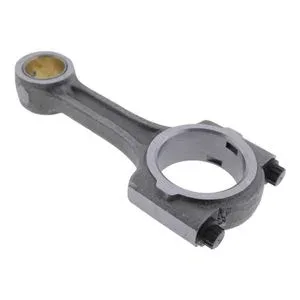
Connecting Rod 16851-22010 for Kubota Z482 D722 – Scheduled Maintenance
<p><strong>16851-22010 Connecting Rod for Kubota Z482, D722, D782, D902</strong> — high-carbon alloy steel, phosphate coated, ISO 9001 certified aftermarket.</p> <ul> <li>Replace during scheduled bottom-end overhauls alongside crankshaft journal inspection and con rod bearing renewal to prevent cascading failures.</li> <li>Watch for abnormal vibration and oil consumption spikes as early indicators that rod service is due.</li> <li>Stocking ahead of predictable overhaul intervals keeps fleet downtime minimal.</li> </ul> <p>Older Kubota engine generations remain in active supply with replacement intervals documented for planning.</p>
Lead Time
2-5 Days
Warranty
3-12 Months
Min. Order
1 Piece
Ships To
120+ Countries
Request a Quote
Response within 24 hours
Product Details
Fleet Stocking Strategy — Aligning connecting rod procurement with overhaul intervals prevents secondary bottom-end damage and keeps Kubota-powered fleets running past thinning brand support.
Technical Specifications
| Parameter | Value |
|---|---|
| Part Number | 16851-22010 16851-22012 16851-22015 16851-22017 |
| Cross-Reference | 16851-22010, 16851-22012, 16851-22015, 16851-22017, K168512201 (reference only) |
| Product Type | Connecting Rod |
| Machine Fitment | Kubota Excavator: K008, K008-3, K008-5, KX018-4, KX41-3, U10-5, U10-3, U17, KX36-3, KX016-4; Kubota Compact Tractor: BX2370, BX2380, BX1860, BX1870, BX1880, BX25DLB, B7300HSD, B7400HSD; Kubota Garden Tractor: G1900, G1900S, GR2110, GR2120, G2160; Kubota Zero Turn Mower: ZD18, ZD18F, ZD1011, ZD1021, ZD221, ZD321, ZD323, ZG332LP, ZP330LP; Kubota Utility Vehicle: RTV900XTG, RTV-X900G, RTV-X900R |
| Material | High-carbon alloy steel (SAE 1045 equivalent) |
| Surface Treatment | Phosphate coating |
| Assembly State | New Aftermarket |
| Certification | ISO 9001 |
| Warranty | 3–12 months against manufacturing defects |
| MOQ | 1 piece |
Application Suitability
| Service Interval | What to Check |
|---|---|
| Planned Overhaul | Inspect crankshaft journals for scoring and measure bearing clearances before fitting the new connecting rod. |
| Periodic Bottom-End Service | Check oil consumption trends and abnormal vibration signatures that signal reciprocating assembly wear. |
| High-Cycle Fleet Rotation | Verify rod bolt stretch limits and replace fasteners at each overhaul to prevent fatigue failure. |
| Aging Equipment Support | Confirm engine serial variant to ensure the correct connecting rod profile is matched to the crankshaft. |
Why the Same Kubota Connecting Rod Service Part Ships Across Multiple Generations
The connecting rod maintenance replacement schedule must account for engine serial variations that change internal dimensions without altering the external part reference.
Fleet operators managing mixed-age Kubota excavators and tractors often find that a single base reference like the ones listed here spans several engine builds. The Z482, D722, and D782 engines share architectural similarities, yet journal diameters and rod bolt specifications shifted across production years. Purchasing without verifying the engine serial range leads to fitment issues during time-critical overhauls. [NEED_CITE: Kubota engine serial range identification for aftermarket parts matching]
I have seen connecting rods of this type arrive on site only to be returned because the big-end bore did not match the crankshaft journal on a mid-generation D722. The downtime cost from a single mismatched rod exceeds the effort of upfront serial verification. Fleet maintenance planners who map their engine inventory against the correct rod variant avoid these costly delays.
Scheduling the Kubota Connecting Rod Service Part Into Your Overhaul Calendar
A connecting rod sits at the heart of the engine’s reciprocating assembly. Its replacement timing should never be treated in isolation from the crankshaft, bearings, and piston assemblies. When planning fleet overhauls, the connecting rod maintenance replacement interval aligns with the major service window where the bottom end is fully disassembled. Replacing rods during minor services is impractical and unnecessary; the cost of engine teardown dominates the labor equation.
Reading the Wear Signals Before Catastrophic Failure
Abnormal low-frequency vibration, unexplained oil consumption spikes, and metallic particles in oil filters all point toward reciprocating assembly degradation. [NEED_CITE: diesel engine vibration analysis for bottom-end wear detection] These symptoms rarely appear in isolation. When one connecting rod shows fatigue or bearing shell wear, the adjacent rods have endured identical stress cycles. Fleet managers who replace individual rods while ignoring the broader bottom-end condition invite repeat failures within months. The prudent approach involves inspecting all rods, measuring crankshaft journal wear, and renewing bearing shells as a matched set during the same service window.
Interpreting Material and Coating Specifications
The high-carbon alloy steel construction, equivalent to SAE 1045, provides the tensile strength needed for the alternating tension and compression loads within a small-displacement diesel engine. This material grade resists the cyclic fatigue that causes crack propagation at the rod bolt hole and the big-end cap parting line. The phosphate surface treatment serves a distinct purpose: it retains a thin oil film during initial startup, reducing scuffing between the rod bore and the bearing shell before full hydrodynamic lubrication establishes. This coating also provides short-term corrosion protection during storage and transit.
The Hidden Cost of Reactive Procurement
When a connecting rod fails catastrophically, the damage rarely stops at that single component. The crankshaft journal sustains scoring, adjacent bearing shells are destroyed, and in severe cases, the rod punches through the engine block. Fleet operators who purchase rods only after a failure occurs face compound downtime: waiting for the replacement rod, waiting for the replacement crankshaft or block, and waiting for the ancillary components that were never included in the initial order. [NEED_CITE: cascading failure patterns in small diesel engine bottom ends] The cumulative cost of reactive procurement, measured in lost machine availability and emergency freight charges, far exceeds the investment in planned spare stocking.
Why Source This Connecting Rod Through XUNPO
We maintain production capability on selected part lines and source the remainder from qualified ISO 9001-certified partners, ensuring that whether self-produced or sourced, every connecting rod carries identical warranty terms and quality control scrutiny. Our eight core product categories allow fleet operators to consolidate piston sets, bearing shells, gasket kits, and crankshaft components into a single consignment, eliminating the coordination burden of multiple suppliers. The one-piece minimum order quantity supports both single-unit emergency replacements and fleet-level bulk stocking. Our technical team verifies engine serial compatibility before dispatch, cross-referencing superseded part numbers to ensure the rod variant matches your specific engine build. For legacy Kubota engine generations where brand-direct supply has thinned, we maintain availability through dedicated aftermarket production runs. Sample supply is available for fitment confirmation before you commit to bulk quantities.
Documentation & Verification
- Commercial invoice and packing list detailing each connecting rod reference and quantity for customs clearance.
- Part compatibility sheet listing your specific engine serial ranges against the supplied rod variant (reference only).
- Quality inspection record showing dimensional checks on big-end bore diameter and center-to-center length.
- Warranty terms covering manufacturing defects for the stated period from delivery date.
- Packing photographs documenting protective wrapping and carton labeling before dispatch.
- HS code and customs documentation support for international shipment of engine internal components.
Service Interval & Stocking Guidance
- Schedule connecting rod replacement during planned major overhauls when the bottom end is fully accessible.
- Inspect for abnormal vibration and oil consumption trends as early indicators of reciprocating assembly wear.
- Stock spare connecting rods in quantities aligned with your fleet overhaul cycle, typically one full engine set plus spares.
- Store rods in their original phosphate-coated state, wrapped in VCI paper to prevent corrosion during extended storage.
Planning Your Next Overhaul Procurement
Provide your engine model, serial number range, and current service hour readings to receive a comprehensive overhaul parts list. Our team will verify the correct connecting rod variant against your specific engine build and recommend complementary bottom-end components that should be renewed simultaneously.
Frequently Asked Questions
Q: How often should the connecting rod be replaced during normal fleet operation?
A: The connecting rod itself is typically replaced only during major overhauls or when inspection reveals fatigue cracking, bearing bore distortion, or bolt stretch beyond specification. Unlike filters or belts, rods are not consumables with fixed intervals. Instead, plan replacement around the engine’s overhaul schedule, which depends on operating conditions and maintenance history.
Q: What symptoms indicate the connecting rod needs attention before catastrophic failure?
A: Watch for low-frequency vibration that increases with engine speed, unexplained rises in oil consumption, and metallic particles appearing in oil filters during routine sampling. These indicators suggest reciprocating assembly wear. Catching degradation early allows planned replacement rather than emergency repair after a rod breaks or a bearing seizes.
Q: Should I replace individual rods or the full bottom-end assembly during an overhaul?
A: If one rod shows fatigue or bearing damage, the others have endured identical stress cycles. Replacing the full set, along with matched bearing shells, ensures uniform load distribution and prevents early failure of the remaining original rods. The incremental cost of a full set is small compared to a repeat teardown.
Q: How many spare connecting rods should I keep on hand for my Kubota fleet?
A: Base your stocking quantity on fleet size and overhaul frequency. A practical approach is one complete engine set plus one or two individual spares for emergency replacements. This covers both planned overhauls and unexpected failures without tying up excessive capital in slow-moving inventory.
Q: Can I still source connecting rods for older Kubota engine generations?
A: Yes. As brand-direct supply thins for legacy engines, aftermarket production continues to support these models. We maintain availability for older Z482, D722, and similar generations by verifying engine serial ranges and producing to original dimensional specifications. Confirm your engine serial number to ensure the correct rod variant is supplied.
Compatible Brands
Our parts are engineered to meet or exceed OEM specifications. Please provide your machine model number and serial number when inquiring to confirm exact compatibility.
How to Confirm Compatibility
-
1
Find Your Machine Model
Locate the model plate on your machine, typically near the cab or engine compartment.
-
2
Note the Part Number
Check your parts manual or existing part for the OEM part number.
-
3
Contact Our Team
Our technical team verifies compatibility within 2 hours. Send us the details via the inquiry form or WhatsApp.
Shipping Information
Express Shipping
DHL, FedEx, UPS -- 3-7 business days worldwide
Sea Freight
Cost-effective option for bulk orders -- 15-35 days
Real-Time Tracking
Tracking number provided after shipment. 24/7 support available.
Warranty Policy
All parts come with manufacturer warranty. Duration varies by product category.
- Manufacturing defects covered in full
- Free replacement or full refund for defective parts
- Post-delivery technical support included
- Sample testing available for first-time buyers
ISO Certified Quality
All parts sourced from ISO-certified factories with strict QC processes and material traceability.
Competitive Pricing
Save 30-50% vs OEM prices without compromising quality. Transparent pricing with no hidden fees.
Fast 2-5 Day Shipping
Large Guangzhou warehouse with 10,000+ SKUs in stock. Most orders ship within 2-5 business days.
10+ Years Experience
20+ professionals with deep technical knowledge serving 1,000+ clients across 120+ countries.
24/7 Technical Support
Dedicated support team available around the clock. Part verification within 2 hours of inquiry.
Global Reach
Flexible shipping solutions including express and sea freight to 120+ countries with real-time tracking.
Related Products
More parts you might need
Block & Internal Parts
Connecting Rod 1L5Z-6200-A Replacement for Ford 2.3L Service Part
View Details

Block & Internal Parts
Valve Cover with Gasket & Bolt 420610393 for Can-Am – Scheduled Maintenance
View DetailsNeed a Custom Quote?
Our technical team responds within 24 hours. MOQ 1 piece. Ships to 120+ countries from our Guangzhou warehouse.