
Block & Internal Parts
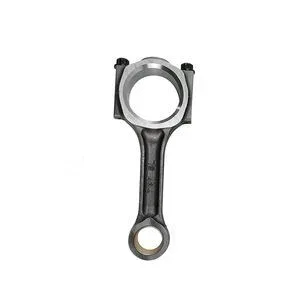
Connecting Rod 31A19-10024 – Fleet Supply for Mitsubishi S3L S4L
<ul> <li><strong>Replacement for</strong> Mitsubishi T233, T273 tractor platforms with one-piece MOQ</li> <li>Planned overhaul support for aging S-series fleets where OEM dealer supply is thinning</li> <li>Maintenance interval guidance and cross-reference sheet included with shipment</li> </ul>
Lead Time
2-5 Days
Warranty
3-12 Months
Min. Order
1 Piece
Ships To
120+ Countries
Request a Quote
Response within 24 hours
Product Details
Replacement Cycle Support — Connecting rod wear progression mapped to engine-hour intervals for S3L and S4L fleet planning.
Technical Specifications
| Parameter | Value |
|---|---|
| Part Number | 31A19-10024 |
| Product Type | Connecting Rod |
| Cross-Reference | 31A19-10024 (reference only), 31A1910024 (reference only) |
| Machine Fitment | S3L, S4L, S3L2, S4L2, T233, T273 |
| Brand Compatibility | Mitsubishi |
| Material | High-strength steel |
| Surface Treatment | Heat-treated for fatigue resistance |
| Assembly State | New Aftermarket |
| Warranty | 3-12 months against manufacturing defects |
| Minimum Order | 1 piece |
| Factory Standard | ISO 9001 certified facility |
Application Suitability
| Service Interval | What to Check |
|---|---|
| 3,000–4,000 hours (heavy load) | Bearing shell wear, rod bolt stretch, journal scoring |
| 5,000–6,000 hours (moderate duty) | Pin bore ovality, small-end bush condition |
| Pre-overhaul teardown | Crankshaft journal dimensions, piston-to-rod alignment |
| Late-life fleet support (T233 / T273) | Availability of matched rod-and-piston sets as OEM channels thin |
| Seasonal turnaround (rental fleets) | Full bottom-end inspection before redeployment |
When Planned Overhauls Turn Into Reactive Engine Swaps
Most operators wait for audible knock or oil pressure drop before pulling the sump — by then, a single worn connecting rod has often scored the crankshaft journal and contaminated the entire lubrication circuit. The Connecting Rod service part for Mitsubishi S3L S4L engine maintenance sits at the centre of the bottom-end rebuild cycle, yet it is routinely ignored until secondary damage multiplies the repair scope. Replacing the rod on a planned schedule, alongside bearings and piston inspection, keeps the overhaul within budget and avoids unplanned machine swaps mid-season.
Fleet managers running Mitsubishi S-series tractors through agricultural and construction cycles frequently discover that a reactive rod replacement turns into a full short-block exchange. The cost is not the rod itself but the accumulated downtime and the cascade of adjacent parts — bearings, crankshaft regrind, gasket sets — that a delayed intervention demands. [NEED_CITE: diesel engine bottom-end failure progression in off-highway equipment]
Where This Rod Sits in the Machine’s Service Life
The connecting rod endures tensile and compressive reversal every crankshaft revolution, making fatigue the governing failure mode rather than simple wear. In a Mitsubishi S3L or S4L platform, the rod typically reaches its inspection threshold between the first and second major overhaul window. Catching rod stretch or small-end bush migration at this stage prevents the piston-to-valve interference events that write off cylinder heads. Planning the Connecting Rod service part for Mitsubishi S3L S4L engine maintenance into the mid-life overhaul keeps the tractor on a predictable replacement curve rather than a crisis timeline.
Linked Wear That Travels With the Rod
A rod does not fail in isolation. The big-end bearing shells absorb the same shock loads, and their wear pattern often reveals whether the rod itself has twisted under load. Crankshaft journals that have been polished by failing bearings must be measured for out-of-round before a new rod is installed — otherwise the replacement inherits the same misalignment. Piston pins and small-end bushes complete the wear chain; replacing the rod without checking these adjacent surfaces invites early recurrence. [NEED_CITE: connected wear patterns in reciprocating diesel engine assemblies]
Reading the Material and Heat-Treatment Specs
The high-strength steel forging and heat-treated surface specified for this rod address two distinct load regimes: the tensile stretch at top dead centre and the compressive crush at firing. Heat treatment raises the fatigue limit so that micro-cracks do not propagate from the bolt-hole radius — a common origin point for rod failure in untreated or under-treated components. For tractors operating under sustained heavy draft such as deep plowing or ripping, this fatigue margin separates a rod that reaches its planned overhaul interval from one that snaps mid-season.
The Hidden Cost of Waiting for the Knock
A rod that has stretched beyond its dimensional tolerance no longer clamps the bearing shell uniformly. Oil film thickness drops, localised overheating follows, and the shell material smears across the journal. By the time knock is audible, the crankshaft journal often requires regrind or replacement — converting a scheduled rod-and-bearing swap into an unbudgeted short-block rebuild. Fleet records consistently show that machines entering overhaul with scored crankshafts spend meaningfully longer off-hire than those torn down on a planned schedule. [NEED_CITE: crankshaft damage correlation with delayed connecting rod replacement]
Why Source This Rod Through a Lifecycle-Focused Supply Chain
Own production on selected lines plus qualified sourced supply means the same warranty terms cover every rod shipped, whether from the in-house forge or a partner facility. Eight product categories allow a complete overhaul kit — rods, bearings, pistons, gaskets, seal kits — to ship as one consignment under one account. One-piece minimum order quantity removes the barrier to stocking a single spare for an aging T233 tractor that sees seasonal use. Guangzhou warehouse stock on common S3L and S4L items supports fast dispatch when a teardown reveals an unexpected rod issue. Cross-reference verification across superseded and alternate numbers ensures the correct rod variant is identified even when the original nameplate is illegible. Technical support is available for grade confirmation and compatibility checks before commitment.
Documentation & Verification
- Commercial invoice listing each rod by engine model and serial variant
- Cross-reference sheet mapping 31A19-10024 to superseded numbers (reference only)
- Dimensional inspection record covering big-end bore and small-end bush diameter
- Warranty certificate stating coverage period against manufacturing defects
- Packing photographs showing rod protection and crate condition before dispatch
- HS code and customs documentation aligned with destination import requirements
Service Interval & Stocking Guidance
- Inspect rods at every bottom-end teardown; measure big-end bore for ovality before reuse
- Stock matched rod-and-bearing sets together to avoid partial-kit delays during overhaul
- For rental fleets, schedule rod inspection at seasonal turnaround between contracts
- Store spare rods in VCI-wrapped packaging to prevent bore surface corrosion
- Retain engine serial and hour-meter records to predict replacement windows
- Flag any tractor exceeding its second overhaul cycle for full rod-set exchange
Planning Your Overhaul? Share the Details That Matter
Provide the engine model, serial number, and current hour-meter reading so the correct rod variant and matching bearing grade can be confirmed. If the tractor has undergone a previous bottom-end rebuild, note any oversize bearings or crankshaft regrind history — this determines whether standard or undersize shells are needed with the new rod. Fleet operators managing multiple T233 or T273 units benefit from sharing the full engine roster to consolidate a single stocking plan.
Frequently Asked Questions
Q: At what engine-hour interval should connecting rods be inspected or replaced?
A: Inspection should occur at every bottom-end teardown, typically aligned with the first major overhaul window. Replacement is driven by dimensional measurement rather than a fixed hour count — big-end bore ovality and bolt stretch are the governing checks. Heavy-draft agricultural use may bring the inspection point forward compared to lighter construction duty cycles.
Q: What symptoms indicate a rod is approaching end of service life?
A: Early indicators include subtle bearing knock at low idle, rising oil consumption without external leaks, and metallic particles in the oil filter. By the time knock is clearly audible under load, secondary damage to the crankshaft journal is likely already present, expanding the repair scope well beyond the rod itself.
Q: Should I replace one rod or the full set during an overhaul?
A: If only one rod shows stretch or bearing distress while the others measure within tolerance, single-rod replacement is acceptable. However, on engines past their second overhaul cycle or those with uneven hour-meter histories across cylinders, replacing the full set maintains balanced reciprocating mass and uniform bearing load.
Q: How many spare rods should a fleet stock for predictable turnover?
A: For a fleet running multiple S3L or S4L tractors, stocking one complete rod set plus individual spares equal to the number of units provides coverage for both planned overhauls and unexpected teardowns. Matched bearing sets should be stocked alongside to prevent partial-kit delays.
Q: Can I still get parts for older Mitsubishi S3L / S4L tractors?
A: Aftermarket supply for these platforms remains available even as OEM dealer support thins on aging T233 and T273 models. Cross-reference verification across superseded numbers ensures the correct variant is sourced, and sample supply allows fitment confirmation before committing to bulk quantities for fleet-wide stocking.
Compatible Brands
Our parts are engineered to meet or exceed OEM specifications. Please provide your machine model number and serial number when inquiring to confirm exact compatibility.
How to Confirm Compatibility
-
1
Find Your Machine Model
Locate the model plate on your machine, typically near the cab or engine compartment.
-
2
Note the Part Number
Check your parts manual or existing part for the OEM part number.
-
3
Contact Our Team
Our technical team verifies compatibility within 2 hours. Send us the details via the inquiry form or WhatsApp.
Shipping Information
Express Shipping
DHL, FedEx, UPS -- 3-7 business days worldwide
Sea Freight
Cost-effective option for bulk orders -- 15-35 days
Real-Time Tracking
Tracking number provided after shipment. 24/7 support available.
Warranty Policy
All parts come with manufacturer warranty. Duration varies by product category.
- Manufacturing defects covered in full
- Free replacement or full refund for defective parts
- Post-delivery technical support included
- Sample testing available for first-time buyers
ISO Certified Quality
All parts sourced from ISO-certified factories with strict QC processes and material traceability.
Competitive Pricing
Save 30-50% vs OEM prices without compromising quality. Transparent pricing with no hidden fees.
Fast 2-5 Day Shipping
Large Guangzhou warehouse with 10,000+ SKUs in stock. Most orders ship within 2-5 business days.
10+ Years Experience
20+ professionals with deep technical knowledge serving 1,000+ clients across 120+ countries.
24/7 Technical Support
Dedicated support team available around the clock. Part verification within 2 hours of inquiry.
Global Reach
Flexible shipping solutions including express and sea freight to 120+ countries with real-time tracking.
Related Products
More parts you might need


Block & Internal Parts
Cummins 4BT 4B3.9-Compatible Push Rod Cover & Gasket – Fleet Supply
View Details
Block & Internal Parts
Connecting Rod Bearing Replacement for Kubota D1105 Engine Long-Life
View Details
Need a Custom Quote?
Our technical team responds within 24 hours. MOQ 1 piece. Ships to 120+ countries from our Guangzhou warehouse.