

Belt Drive Systems
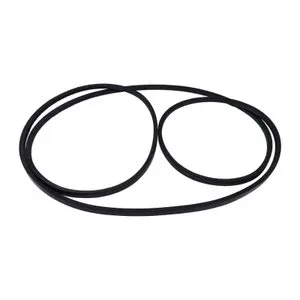
Drive Pump Belt 6736775 for Bobcat Loaders – Wear Item
<p><strong>6736775 Drive Pump Belt</strong>, 3-groove cogged design, 58.15 in. (1477 mm) length — replacement for Bobcat S130, S150, S160, S175, S185, S205, T140, T180, T190 and Toolcat 5600 loaders.</p> <ul> <li>Scheduled wear part in hydraulic drive systems; typical replacement aligns with major service intervals to prevent unplanned downtime and secondary pump damage</li> <li>Cogged profile reduces heat buildup under continuous-duty cycles, extending flex life versus standard rubber belts</li> <li>Inspect pulleys for groove wear when replacing — mismatched wear accelerates new belt failure</li> </ul> <p>Fleet replacement interval recommendations ship with each consignment for maintenance planning.</p>
Lead Time
2-5 Days
Warranty
3-12 Months
Min. Order
1 Piece
Ships To
120+ Countries
Request a Quote
Response within 24 hours
Product Details
Fleet Maintenance Planning — Drive pump belts stocked for Bobcat S-series and T-series loaders with replacement intervals mapped to duty cycles.
Technical Specifications
| Parameter | Value |
|---|---|
| Part Number | 6736775 |
| Product Type | Belt |
| Cross-Reference | 6736775 (reference only) |
| Machine Fitment | 753, S130, S150, S160, S175, S185, S205, T140, T180, T190, Toolcat 5600 |
| Design Type | Flat, cogged drive belt with 3 grooves |
| Length | 58.15 inches (1477 mm) |
| Width | 1.19 inches (30.2 mm) |
| Condition | New Aftermarket |
| Warranty | 3–12 months against manufacturing defects |
| Manufacturing Standard | ISO 9001 |
Application Suitability
| Service Interval | What to Check |
|---|---|
| First replacement at initial hydraulic service | Pulley groove wear, belt seating depth, tensioner spring force |
| Standard duty cycle — 1,500 to 2,000 operating hours | Sidewall cracking, cog deformation, glazing on contact face |
| High-cycle quarry or demolition use | Accelerated heat checking, groove base separation, abnormal noise |
| Rental fleet turnaround between deployments | Belt condition log, adjacent seal weeping, pump shaft play |
| Aging units past OEM thinning support | Cross-reference confirmation, pulley runout, tensioner fatigue |
Why Reacting to a Snapped Belt Costs More Than the Belt Itself
Waiting until a Drive Pump Belt service part maintenance issue surfaces on site means the loader is already down, and the replacement is days or weeks away from a remote depot. Fleet operators who plan this wear item into scheduled service intervals control their own uptime instead of surrendering it to logistics delays.
In Nigerian copper mines and Kenyan quarry sites, I have watched Bobcat loaders sit idle for extended periods because a single drive pump belt was not on the shelf when it failed. The belt itself is a minor line item; the lost production hours and emergency freight charges are not. [NEED_CITE: unplanned downtime cost modeling for compact equipment fleets]
Where This Belt Sits in the Loader’s Service Life
A hydraulic drive belt is not a lifetime component. It flexes continuously under load, transmitting engine output to the drive pump that moves the machine. Over hundreds of operating hours, rubber compound fatigue accumulates at the cog roots, sidewall plies develop micro-cracks, and the contact surface loses grip. Treating this belt as a scheduled Drive Pump Belt service part maintenance item — replaced before catastrophic failure — keeps the loader on the production schedule rather than in the repair bay awaiting freight.
Recognizing Wear Before It Becomes a Breakdown
The warning signs appear well before the belt snaps. Heat checking across the cog face, a high-pitched squeal under initial load, and visible fiber separation at the groove base all indicate the belt has entered its final wear stage. On Bobcat T-series compact track loaders running continuous duty in abrasive environments, these signs accelerate. Inspecting the belt at every hydraulic oil change gives maintenance teams a predictable window to schedule replacement alongside other planned work. [NEED_CITE: visual inspection criteria for cogged drive belts in mobile hydraulic systems]
How Cog Geometry Affects Service Life Under Loader Duty Cycles
The 3-groove cogged design of this belt is not cosmetic. Cogged profiles reduce bending resistance as the belt wraps around relatively small-diameter pulleys typical in compact loader engine bays. Less bending resistance means lower internal heat generation per revolution, which directly extends compound life in high-cycle applications. The 58.15-inch length and 1.19-inch width match the pulley spacing and groove pitch specified for Bobcat S130 through S205 skid steer loaders and T140 through T190 compact track loaders. Using a flat non-cogged alternative in this application increases heat buildup noticeably and shortens replacement intervals.
The Cumulative Cost of Reactive Belt Procurement
Fleet managers who purchase drive belts only after failure absorb compounding losses. A loader standing down in a remote location burns contract deadlines while the belt is in transit. Secondary damage is also a risk: a belt that snaps at operating speed can whip against hydraulic hoses, scored pulleys damage replacement belts prematurely, and shock loading on the pump shaft accelerates bearing wear. These downstream failures turn a simple belt change into a multi-component repair that keeps the machine offline far longer. [NEED_CITE: secondary failure modes from drive belt breakage in hydrostatic systems]
Sourcing Decisions That Support Fleet Uptime
This belt is produced on dedicated aftermarket lines and carries the same warranty terms as components sourced from qualified ISO-certified partners — one account, one quality standard. Eight product categories mean tensioners, pulleys, hydraulic filters, and seal kits for the same Bobcat model ship in a single consignment, eliminating split deliveries. Minimum order starts at one piece, so a single emergency replacement can be dispatched from Guangzhou warehouse stock without waiting for bulk quantities. Part identification works from machine model alone when nameplates are worn or painted over, and cross-reference verification covers superseded numbers across machine generations. Technical support confirms variant compatibility before commitment, reducing the risk of stocking the wrong belt for a mixed fleet.
Documentation & Verification
- Commercial invoice listing belt part number, machine fitment, and quantity per line
- Cross-reference sheet mapping 6736775 to superseded numbers, marked reference only
- Dimensional inspection record confirming belt length and groove width tolerances
- Warranty certificate specifying coverage period for manufacturing defects
- Dispatch photographs showing belt packaging and carton labeling before shipment
- HS code and customs paperwork prepared for destination-country clearance
Service Interval & Stocking Guidance
- Schedule belt inspection at every hydraulic oil change and replace at the first sign of cog cracking
- Check pulley groove depth and tensioner spring pressure whenever the belt is off the machine
- Stock one spare belt per three loaders in continuous-duty fleet service to cover unexpected failures
- Store belts flat in a dry, dark environment to prevent rubber compound degradation before installation
Planning Your Fleet’s Next Belt Replacement Cycle
Provide your Bobcat machine models, current operating hours, and typical duty environment — quarry loading, port logistics, or general construction — so we can recommend replacement intervals and stocking quantities matched to your fleet size and deployment pattern.
Frequently Asked Questions
Q: How often should a drive pump belt be replaced under typical loader duty cycles?
A: Replacement timing depends on operating hours and environment. Under standard construction duty, belts typically reach end of service life between 1,500 and 2,000 hours. In high-cycle quarry or demolition applications, inspection intervals should be shortened. Monitoring cog face condition and sidewall integrity at each hydraulic service provides the most reliable replacement signal.
Q: What wear signs indicate the belt needs replacement before it fails?
A: Heat checking across the cog surface, fiber separation at the groove base, glazing on the contact face, and abnormal noise under load all signal advanced wear. Any visible cracking or ply exposure means the belt should be replaced immediately rather than returned to service. Early replacement avoids secondary damage to pulleys and pump shafts.
Q: Should pulleys be replaced together with the belt, or inspected separately?
A: Pulleys should be inspected each time the belt is removed. Worn groove profiles accelerate wear on new belts and reduce grip. If groove depth exceeds wear limits or surface scoring is visible, replacing the pulley alongside the belt restores full system performance and prevents premature repeat replacement.
Q: How many belts should a fleet operator keep in stock for a mixed Bobcat fleet?
A: Stocking strategy depends on fleet size and site remoteness. For a mixed fleet running multiple Bobcat S-series and T-series models, confirming which units share the same belt variant through cross-reference reduces SKU count. Maintaining at least one spare per three active loaders covers most unplanned failures without tying up excessive inventory.
Q: Can older Bobcat models still be supported with this belt long-term?
A: Yes. This belt fits Bobcat 753 and Toolcat 5600 models alongside current S-series and T-series loaders. As OEM support for older machines thins, aftermarket supply with verified cross-references ensures continued availability. Confirming machine serial range at the time of order ensures the correct variant is dispatched.
Compatible Brands
Our parts are engineered to meet or exceed OEM specifications. Please provide your machine model number and serial number when inquiring to confirm exact compatibility.
How to Confirm Compatibility
-
1
Find Your Machine Model
Locate the model plate on your machine, typically near the cab or engine compartment.
-
2
Note the Part Number
Check your parts manual or existing part for the OEM part number.
-
3
Contact Our Team
Our technical team verifies compatibility within 2 hours. Send us the details via the inquiry form or WhatsApp.
Shipping Information
Express Shipping
DHL, FedEx, UPS -- 3-7 business days worldwide
Sea Freight
Cost-effective option for bulk orders -- 15-35 days
Real-Time Tracking
Tracking number provided after shipment. 24/7 support available.
Warranty Policy
All parts come with manufacturer warranty. Duration varies by product category.
- Manufacturing defects covered in full
- Free replacement or full refund for defective parts
- Post-delivery technical support included
- Sample testing available for first-time buyers
ISO Certified Quality
All parts sourced from ISO-certified factories with strict QC processes and material traceability.
Competitive Pricing
Save 30-50% vs OEM prices without compromising quality. Transparent pricing with no hidden fees.
Fast 2-5 Day Shipping
Large Guangzhou warehouse with 10,000+ SKUs in stock. Most orders ship within 2-5 business days.
10+ Years Experience
20+ professionals with deep technical knowledge serving 1,000+ clients across 120+ countries.
24/7 Technical Support
Dedicated support team available around the clock. Part verification within 2 hours of inquiry.
Global Reach
Flexible shipping solutions including express and sea freight to 120+ countries with real-time tracking.
Related Products
More parts you might need


Need a Custom Quote?
Our technical team responds within 24 hours. MOQ 1 piece. Ships to 120+ countries from our Guangzhou warehouse.