
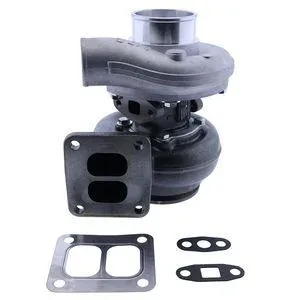
Emission & Exhaust System
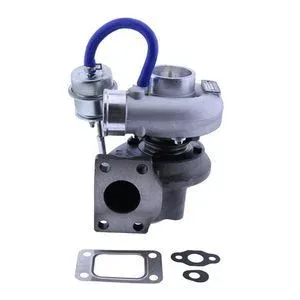
Emission & Exhaust System
ISO Certified
Ships 2-5 Days
MOQ 1 Piece
Emission & Exhaust System
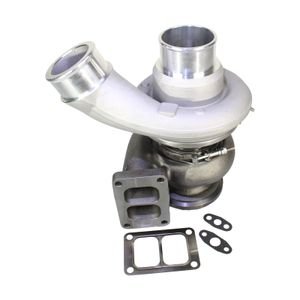
GT2052 Turbocharger 02/202400 for Perkins 1004-40T – Scheduled Maintenance
<p><strong>GT2052 Turbocharger 02/202400 for Perkins 1004-40T</strong> — compatible with JCB 3CX, 4CX, and telescopic handlers operating under heavy-duty cycles.</p> <ul> <li>Inspect at scheduled service intervals for power loss, excessive exhaust smoke, or whining noise that signals turbo degradation</li> <li>Evaluate intake, exhaust, and lubrication components alongside the turbocharger to address linked wear and avoid repeat failures</li> <li>Stocking ahead of predictable replacement points keeps fleet machines revenue-ready and reduces unplanned downtime</li> </ul> <p>Replacement cycle guidance included with shipment to support your preventive maintenance planning.</p>
Lead Time
2-5 Days
Warranty
3-12 Months
Min. Order
1 Piece
Ships To
120+ Countries
02/202400
Fleet Supply
GT2052 Turbo
JCB 3CX
Perkins 1004-40T
Service Part
turbocharger
Request a Quote
Response within 24 hours
Prefer instant chat?
WhatsApp
Product Details
Fleet Stocking Strategy — Perkins 1004-40T turbo replacements planned against operating hours, preventing reactive downtime across JCB backhoe and telehandler fleets.
Technical Specifications
| Parameter | Value |
|---|---|
| Part Number | 02/202400 |
| Product Type | Turbocharger |
| Cross-Reference | 02/202400, 02-202400, 02202400, 02/201870, 02/202415, 02-202415, 02-201870, 727266-5003S, 452301-0003, 452301-5003S (reference only) |
| Machine Fitment | JCB 3CX, 4CX, 4CX444 SUPER, 214-4, 540, 525-50, 537H, 533-105, 535-95 FS PLUS, 530 SWAY, 535-95, 532H, 537, 411B, 411, 416, TM200, 411ZX, 410ZX, ROBOT 1110, ROBOT 1110THF, ROBOT 1110T, ROBOT 1110HF, ROBOT 190T, ROBOT 190 |
| Turbo Model | GT2052, GT2052S |
| Compatible Engine | Perkins 1004-40T, T4.40 |
| Condition | New Aftermarket |
| Quality Certification | ISO 9001 |
| Warranty | 3-12 months against manufacturing defects |
Application Suitability
| Service Interval | What to Check |
|---|---|
| Pre-overhaul inspection | Turbo shaft play, compressor wheel blade condition, oil feed line restriction |
| 4,000–6,000 operating hours | Boost pressure output, exhaust smoke density, wastegate actuator response |
| Annual fleet maintenance cycle | Intake hose integrity, intercooler condition, crankcase ventilation function |
| Machine redeployment between sites | Full emission and exhaust system leak test, turbo mounting hardware torque |
Planning Ahead for Turbocharger Failure on Perkins 1004-40T Engines
Reactive sourcing of a Turbocharger service part Perkins 1004-40T means the machine is already down, and your crew is already waiting.
When a GT2052 turbo fails on a JCB 3CX in the middle of a site contract, the immediate problem is not the part itself but the cascade of lost production hours, idle operators, and missed milestones that accumulate during the sourcing window. Fleet operators running multiple Perkins 1004-40T powered machines often discover too late that turbocharger degradation follows a predictable curve — yet most procurement systems only trigger a purchase order after power loss is reported. [NEED_CITE: preventive maintenance scheduling for turbocharged diesel engines in construction fleets]
I spent years on the buyer side, managing parts procurement for a fleet working Indonesian mining and quarry sites. The pattern was always the same: a JCB 4CX loses boost pressure on a Thursday afternoon, the supervisor calls it in, and by the time we confirmed the correct turbocharger variant and arranged freight, the machine had been idle for days. That experience shifted my approach entirely. Now, from the supply side, I work with fleet owners to build turbocharger replacement into scheduled maintenance windows rather than treating each failure as an emergency.
Where the Turbocharger Sits in the Engine Service Lifecycle
The GT2052 turbocharger is not a wear item you inspect every service interval and leave in place if it looks acceptable. It operates under continuous thermal and rotational stress, and its degradation typically shows up as gradual power loss, increased fuel consumption, or a high-pitched whine under load before reaching outright failure. Positioning this component within the broader Perkins 1004-40T maintenance schedule means aligning its replacement with major service events — typically alongside injector service, valve adjustment, and emission system inspection — so that a single planned downtime window covers the entire intake and exhaust path.
Wear Progression and the Case for Scheduled Replacement
Turbocharger bearings wear progressively, and once shaft play exceeds tolerance, the compressor and turbine wheels begin contacting their housings. At that point, metal particles enter the intake tract and the engine itself, converting what would have been a turbocharger swap into a far more expensive engine repair. Monitoring boost pressure trends and exhaust smoke character across your fleet gives you a lead time window. In dusty environments like quarries and mining sites, that window closes faster due to accelerated compressor wheel erosion and air filter bypass risk. Stocking one or two units per machine group, aligned with your projected service intervals, eliminates the procurement delay entirely. [NEED_CITE: turbocharger failure progression and secondary engine damage risk in off-highway diesel applications]
Reading the Specs That Matter for Fleet Planning
The GT2052 and GT2052S designations represent turbocharger variants within the same base family, matched to different Perkins 1004-40T and T4.40 engine configurations across the JCB machine range. The turbine and compressor trim sizes determine the airflow and boost profile — selecting the wrong variant results in either under-boosting at working RPM or excessive exhaust back pressure that shortens turbo and engine life. ISO 9001 certification on the manufacturing side ensures that dimensional tolerances on the bearing housing, shaft diameter, and wheel clearances are held within specification across production batches. The 3-to-12-month warranty range reflects standard aftermarket coverage against manufacturing defects, giving fleet operators a reasonable window to validate fitment and early-life performance.
The Hidden Cost of Buying Only When the Machine Stops
Every reactive turbocharger purchase carries a cost that never appears on the invoice: the days of machine downtime while the part is identified, sourced, and shipped. For a JCB 535-95 telehandler on a contracted lifting schedule, or a 3CX backhoe on a trenching deadline, that downtime compounds into penalty clauses, crew reallocation, and reputational damage. Fleet operators who treat turbochargers as emergency-only purchases consistently spend more on expedited freight and lose more revenue to idle machines than those who maintain a small, planned stock. The difference is not dramatic per unit — it is the accumulated pattern across a fleet over multiple service cycles that separates profitable equipment management from constant firefighting. [NEED_CITE: cost of unplanned downtime versus preventive stocking in construction equipment fleets]
Sourcing That Supports Your Maintenance Schedule
Our own production lines and qualified sourced supply operate under a single account and a single warranty structure, so fleet operators ordering turbochargers alongside filters, gaskets, and adjacent emission system components manage one procurement relationship. With over 10,000 SKUs across eight categories, a complete scheduled maintenance kit ships as one consignment rather than arriving in staggered deliveries. The one-piece minimum order means you can stock a single GT2052 unit for a specific machine in your fleet without meeting bulk thresholds. Cross-reference verification covers superseded and alternate part numbers, resolving the confusion that arises when older Perkins 1004-40T machines carry multiple historical turbocharger references. Our technical team confirms variant applicability against your machine model and engine serial before dispatch. Sample units are available for fitment confirmation before you commit to fleet-wide stocking quantities.
Documentation & Verification
- Commercial invoice and packing list referencing GT2052 variant and machine fitment
- Part compatibility sheet mapping OEM numbers 02/202400 and alternates as cross-reference only
- Quality inspection record with dimensional checks on bearing housing and shaft clearance
- Warranty terms covering manufacturing defects for 3-12 months from delivery
- Packing photographs confirming turbocharger condition before crate closure
- HS code and customs documentation support for international fleet supply
Service Interval & Stocking Guidance
- Schedule GT2052 inspection at each major Perkins 1004-40T service event, checking shaft play and boost output
- Replace the turbocharger when shaft radial movement exceeds manufacturer tolerance, not when failure occurs
- Stock one unit per five machines in quarry or mining service, two units per ten machines in general construction
- Store turbochargers in sealed packaging, upright orientation, away from moisture and vibration sources
- Log turbocharger operating hours at installation to track service life across your fleet and refine replacement intervals
Requesting a Fleet Maintenance Quote
Share your machine models, engine serial numbers, and current operating hours, and we will confirm the correct GT2052 or GT2052S variant for each unit in your fleet. If you are planning a scheduled maintenance cycle, include the other emission and exhaust system components you intend to service, and we will consolidate everything into a single shipment with aligned lead times.
Frequently Asked Questions
Q: How many operating hours before the turbocharger should be inspected or replaced?
A: Inspection should occur at every major service interval. Actual replacement timing depends on operating environment and duty cycle. Machines in dusty quarry or mining conditions typically reach turbo end-of-life sooner than those in general construction. Monitoring boost pressure trends across your fleet gives the most reliable indicator for scheduling replacement before failure.
Q: What symptoms signal that the turbocharger is nearing end of service life?
A: Gradual power loss under load, increased fuel consumption, blue or black exhaust smoke during acceleration, and a noticeable whining or whistling from the turbo housing all indicate bearing wear or wheel degradation. Any of these symptoms warrants immediate inspection. Continuing to operate past these warnings risks secondary damage to the engine through oil or metal ingestion.
Q: Should I replace just the turbocharger or the full emission and exhaust assembly?
A: A turbocharger failure often reveals linked wear in adjacent components — intake hoses, intercooler cores, exhaust manifold gaskets, and oil feed lines. Replacing the turbocharger alone without inspecting these items risks early repeat failure. Planning a broader emission and exhaust system review during the same downtime window protects your maintenance investment.
Q: How many units should I stock per machine in my fleet?
A: Stocking ratios depend on fleet size, operating environment, and machine duty cycle. A common approach is one spare turbocharger per five machines in severe service and one per ten in standard construction. Align your stock level with your service interval schedule so that replacements are available when maintenance windows open rather than after failures occur.
Q: Can I still get turbocharger supply for older Perkins 1004-40T engines?
A: Yes. The Perkins 1004-40T and T4.40 platforms remain widely used across JCB equipment, and aftermarket supply for the GT2052 turbocharger family continues even as brand-supported channels thin for older machines. Cross-reference verification ensures the correct variant is matched to your specific engine serial and machine model, including superseded part numbers.
Compatible Brands
CAT
KOMATSU
HITACHI
VOLVO
HYUNDAI
DOOSAN
KOBELCO
SANY
XCMG
Our parts are engineered to meet or exceed OEM specifications. Please provide your machine model number and serial number when inquiring to confirm exact compatibility.
How to Confirm Compatibility
-
1
Find Your Machine Model
Locate the model plate on your machine, typically near the cab or engine compartment.
-
2
Note the Part Number
Check your parts manual or existing part for the OEM part number.
-
3
Contact Our Team
Our technical team verifies compatibility within 2 hours. Send us the details via the inquiry form or WhatsApp.
Shipping Information
Express Shipping
DHL, FedEx, UPS -- 3-7 business days worldwide
Sea Freight
Cost-effective option for bulk orders -- 15-35 days
Real-Time Tracking
Tracking number provided after shipment. 24/7 support available.
Warranty Policy
3-12
Months Warranty
All parts come with manufacturer warranty. Duration varies by product category.
- Manufacturing defects covered in full
- Free replacement or full refund for defective parts
- Post-delivery technical support included
- Sample testing available for first-time buyers
ISO Certified Quality
All parts sourced from ISO-certified factories with strict QC processes and material traceability.
Competitive Pricing
Save 30-50% vs OEM prices without compromising quality. Transparent pricing with no hidden fees.
Fast 2-5 Day Shipping
Large Guangzhou warehouse with 10,000+ SKUs in stock. Most orders ship within 2-5 business days.
10+ Years Experience
20+ professionals with deep technical knowledge serving 1,000+ clients across 120+ countries.
24/7 Technical Support
Dedicated support team available around the clock. Part verification within 2 hours of inquiry.
Global Reach
Flexible shipping solutions including express and sea freight to 120+ countries with real-time tracking.
Related Products
More parts you might need
Emission & Exhaust System
GT1241Z Turbocharger 7030304 – Service Part for Doosan D24 Bobcat
View Details
Emission & Exhaust System
Turbocharger S300A113 for Mack CV713 Truck – Direct Replacement 631GC5172M5
View DetailsNeed a Custom Quote?
Our technical team responds within 24 hours. MOQ 1 piece. Ships to 120+ countries from our Guangzhou warehouse.