

Cylinder Components
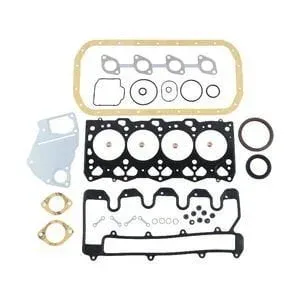
Cylinder Components
ISO Certified
Ships 2-5 Days
MOQ 1 Piece
Cylinder Components
Overhaul Gasket Kit for Isuzu 4LE2 Engine Hitachi ZX40U ZX50U – Fleet Supply
<p><strong>Overhaul Gasket Kit 5-87814-313-1, 8-97235-261-0 (cross-reference)</strong> — replacement for Isuzu 4LE2 engines in Hitachi ZX40U, ZX50U, CASE CX75, and Kobelco SK70 excavators.</p> <ul> <li>Planned engine rebuilds at scheduled overhaul intervals reduce unplanned downtime and emergency freight costs across your fleet</li> <li>Complete kit exchange outperforms single-gasket replacement, addressing adjacent seal wear that accumulates between service cycles</li> <li>Sustained aftermarket supply supports aging ZX55UR and EX55UR-3 units past peak brand production years</li> </ul> <p>Replacement cycle guidance aligned to your fleet duty cycles ships with every order.</p>
Lead Time
2-5 Days
Warranty
3-12 Months
Min. Order
1 Piece
Ships To
120+ Countries
5-87814-313-1
Hitachi Fitment
Isuzu 4LE2 Engine
overhaul gasket kit
Service Part
ZX40U Parts
Request a Quote
Response within 24 hours
Prefer instant chat?
WhatsApp
Product Details
Fleet Lifecycle Supply — Overhaul gasket kits for Isuzu 4LE2 engines shipped with maintenance intervals and stocking guidance aligned to your fleet’s service calendar.
Technical Specifications
| Parameter | Value |
|---|---|
| Part Number | 5-87814-313-1, 8-97235-261-0, 8-97201466-1, 5-87814-313-2, 5-87818-348-0, 5-87818-011-0 |
| Cross-Reference | 5878143131, 8972352610, 8972014661, 5878143132, 5878183480, 5878180110 (reference only) |
| Machine Fitment | ZX40U, ZX50U, ZX55UR, ZX55UR-HHE, EX55UR-3, CX75, CX80, SK70, SK80 |
| Product Type | Overhaul Gasket Kit |
| Engine Compatibility | Isuzu 4LE2, 4LE2-XYBB01 |
| Condition | New Aftermarket |
| Quality Standard | ISO 9001 |
| Warranty | 3–12 months against manufacturing defects |
| MOQ | 1 piece |
Application Suitability
| Service Interval | What to Check |
|---|---|
| Major Overhaul (High Hours) | Cylinder head flatness, block deck condition, liner protrusion |
| Mid-Life Top End Refresh | Valve guide wear, injector sleeve sealing surface, manifold stud condition |
| Preventive Maintenance Stocking | Fleet age profile, upcoming scheduled rebuilds, remote site deployment |
Why Reactively Buying Gaskets Bleeds More Than Just Oil
Purchasing an Overhaul Gasket Kit service part maintenance only when a leak appears ignores the degradation already underway inside the crankcase. Waiting for visible seepage means heat-cycled elastomers have lost resilience and fiber-reinforced composite sheets have compressed past recovery.
Fleet operators who treat gaskets as a line-item emergency expense consistently see higher cumulative downtime than those who schedule kit replacement alongside planned engine teardowns [NEED_CITE: engine overhaul scheduling best practices for mobile construction equipment]. A single cylinder head removal without a full kit exchange frequently leads to a second disassembly within months, as adjacent aged seals fail under the thermal stress of a fresh rebuild. This pattern repeats across remote mining sites where equipment availability directly dictates production output.
Positioning the Kit Within the Engine’s Service Life
An Isuzu 4LE2 reaches a point where individual seal replacements no longer address the underlying compression and oil control issues. The Overhaul Gasket Kit service part maintenance sits at the center of a planned teardown, where the engine is stripped, measured, and reassembled with all soft parts renewed simultaneously. This approach aligns with the wear trajectory of hard components like liners, bearings, and pistons, ensuring the sealing system matches the mechanical condition of the rotating assembly.
Reading the Wear Signs Before Catastrophic Failure
External oil weeping around the rocker cover or timing case is often the final symptom, not the first. Rising blow-by pressure, increased oil consumption between service intervals, and coolant traces in the lubricant all signal that the Overhaul Gasket Kit service part maintenance is approaching its functional limit [NEED_CITE: diesel engine blow-by and gasket degradation indicators]. When these signs appear across multiple units in a fleet, it indicates a synchronized aging pattern that is best addressed through coordinated rebuilds rather than staggered emergency repairs.
Material Selection and Thermal Endurance in the 4LE2
The 4LE2 operates at cylinder pressures and exhaust temperatures that demand specific material responses from each gasket in the kit. The cylinder head gasket typically utilizes a multi-layer steel or graphite composite construction to maintain seal integrity under combustion pressure spikes. Valve stem seals and crankshaft seals must withstand continuous exposure to hot lubricant without hardening or losing lip tension. O-rings for coolant passages require EPDM or equivalent compounds to resist glycol-based coolant at elevated temperatures without swelling or extruding from their grooves.
The Cost of Piecemeal Seal Replacement
Replacing a single failed gasket on a high-hour 4LE2 often triggers a cascade of secondary failures as the engine returns to operating temperature. The labor cost of a second teardown to address a newly leaking seal dwarfs the price difference between a single component and a complete Overhaul Gasket Kit service part maintenance [NEED_CITE: comparative cost analysis of full kit versus individual seal replacement in diesel rebuilds]. Fleet managers who authorize partial seal replacements during scheduled overhauls frequently track higher warranty claims and more frequent unplanned machine stops in the quarters that follow.
Supply Continuity and Fleet Planning Advantages
Guangzhou warehouse inventory supports immediate dispatch for common Isuzu 4LE2 configurations, reducing the gap between rebuild decision and parts arrival. Technical verification of part numbers from engine serial plates prevents mis-ordering across the multiple 4LE2 variants deployed in Hitachi, CASE, and Kobelco machines. Sample supply allows fitment confirmation on a single engine before committing to bulk quantities for a fleet-wide overhaul program. All production and sourced supply lines carry uniform quality control and identical warranty terms under a single account. Consolidated shipping places the complete gasket set alongside associated hard parts in one consignment. Cross-reference verification covers superseded and alternate part numbers to ensure continuity for older machines.
Documentation & Verification
- Commercial invoice detailing kit contents and applicable engine serial ranges.
- Cross-reference sheet mapping OEM numbers (reference only) to supplied components.
- Dimensional and material verification records for critical cylinder head gasket layers.
- Warranty documentation specifying coverage period and defect claim procedure.
- Packing photographs confirming kit completeness before crate closure.
- HS code classification support for customs clearance in destination markets.
Service Interval & Stocking Guidance
- Schedule full kit replacement coinciding with major overhaul at high operating hours, inspecting block and head mating surfaces.
- Monitor crankcase pressure and oil consumption trends to forecast kit requirement before external leaks develop.
- Stock one kit per engine in active service for remote sites where supply chain delays risk extended machine downtime.
- Store kits in original sealed packaging, away from direct sunlight and ozone sources to preserve elastomer properties.
- Verify engine serial number against kit compatibility list before opening, as 4LE2 variants use different seal profiles.
Planning Your Fleet’s Gasket Requirements
Provide your excavator model list and current engine hour readings to receive a replacement cycle projection and stocking recommendation. Our technical team can cross-reference your existing engine serial numbers to confirm the correct kit variant for each unit in your fleet, supporting both immediate rebuild needs and long-term inventory planning.
Frequently Asked Questions
Q: How often should the overhaul gasket kit be replaced in heavy-duty excavator service?
A: Replacement timing aligns with major engine overhaul intervals, typically coinciding with bearing and liner service. Operating conditions such as high dust ingress, sustained high load, or poor cooling system maintenance accelerate gasket degradation, making condition-based monitoring through oil analysis and blow-by measurement more reliable than fixed hour targets alone.
Q: What signs indicate the engine gaskets are approaching end of service life?
A: Key indicators include rising crankcase pressure measured at the dipstick tube, increasing oil consumption without visible external leaks, and coolant traces appearing in oil samples. These symptoms suggest internal seal boundaries are compromising, and planning a complete kit exchange prevents the progressive damage that follows catastrophic gasket failure under load.
Q: Should I replace individual gaskets or the complete kit during a rebuild?
A: A complete kit exchange during a teardown ensures all seals share the same service life and material condition, preventing older adjacent seals from failing shortly after reassembly. The labor cost of a second disassembly to address a piecemeal failure typically exceeds the cost of the full kit, making comprehensive replacement the standard practice for reliable fleet operation.
Q: How many kits should I stock for a fleet of similar excavators?
A: A prudent baseline is one kit per machine deployed at remote sites where emergency supply delays cause significant production losses. For centrally maintained fleets with reliable access to regional parts supply, a smaller pool covering a percentage of active units may suffice, adjusted based on the fleet’s average age and upcoming scheduled overhaul calendar.
Q: Can I still get gasket support for older excavator models no longer in production?
A: Aftermarket manufacturing and qualified sourcing networks continue to supply overhaul gasket kits for legacy Isuzu 4LE2 applications long after the host machine’s production ends. Cross-reference verification ensures correct part matching across superseded numbers, and sample supply allows fitment validation before committing to larger inventory positions for aging fleets.
Compatible Brands
CAT
KOMATSU
HITACHI
VOLVO
HYUNDAI
DOOSAN
KOBELCO
SANY
XCMG
Our parts are engineered to meet or exceed OEM specifications. Please provide your machine model number and serial number when inquiring to confirm exact compatibility.
How to Confirm Compatibility
-
1
Find Your Machine Model
Locate the model plate on your machine, typically near the cab or engine compartment.
-
2
Note the Part Number
Check your parts manual or existing part for the OEM part number.
-
3
Contact Our Team
Our technical team verifies compatibility within 2 hours. Send us the details via the inquiry form or WhatsApp.
Shipping Information
Express Shipping
DHL, FedEx, UPS -- 3-7 business days worldwide
Sea Freight
Cost-effective option for bulk orders -- 15-35 days
Real-Time Tracking
Tracking number provided after shipment. 24/7 support available.
Warranty Policy
3-12
Months Warranty
All parts come with manufacturer warranty. Duration varies by product category.
- Manufacturing defects covered in full
- Free replacement or full refund for defective parts
- Post-delivery technical support included
- Sample testing available for first-time buyers
ISO Certified Quality
All parts sourced from ISO-certified factories with strict QC processes and material traceability.
Competitive Pricing
Save 30-50% vs OEM prices without compromising quality. Transparent pricing with no hidden fees.
Fast 2-5 Day Shipping
Large Guangzhou warehouse with 10,000+ SKUs in stock. Most orders ship within 2-5 business days.
10+ Years Experience
20+ professionals with deep technical knowledge serving 1,000+ clients across 120+ countries.
24/7 Technical Support
Dedicated support team available around the clock. Part verification within 2 hours of inquiry.
Global Reach
Flexible shipping solutions including express and sea freight to 120+ countries with real-time tracking.
Related Products
More parts you might need


Need a Custom Quote?
Our technical team responds within 24 hours. MOQ 1 piece. Ships to 120+ countries from our Guangzhou warehouse.