
Emission & Exhaust System
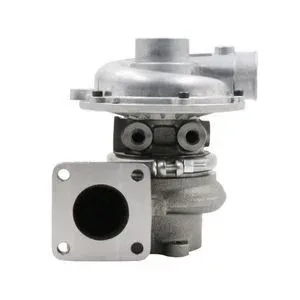
RHF5 Turbocharger 898185-1951 | Service Part for Isuzu 4JJ1X
<p><strong>RHF5 Turbocharger 898185-1951</strong> — replacement for Isuzu 4JJ1X engines in Hitachi ZX110-3, ZX120-3, ZX130K-3, ZX135US-3 and John Deere 135D excavators.</p> <ul> <li>Scheduled turbo swap at defined engine-hour intervals prevents unplanned downtime and protects downstream intake components from secondary damage</li> <li>Watch for shaft play increase, oil seepage at compressor housing, and slow boost response as end-of-service indicators</li> <li>Replace alongside exhaust manifold gaskets, oil feed and drain lines, and air intake seals during the same service window</li> </ul> <p>Replacement interval recommendations ship with every order to support your fleet maintenance planning.</p>
Lead Time
2-5 Days
Warranty
3-12 Months
Min. Order
1 Piece
Ships To
120+ Countries
Request a Quote
Response within 24 hours
Product Details
Fleet Stocking Plans — Scheduled turbocharger replacement windows keep Isuzu 4JJ1X-powered fleets running without reactive breakdowns.
Technical Specifications
| Parameter | Value |
|---|---|
| Part Number | 898185-1951 |
| Product Type | Turbocharger |
| Cross-Reference | 898185-1951, VA430131, VB430131, VC430131, VD430131, 8980681970, 8-98068-1970, 8-98185-1951, F51CND-S0131B, F51CND-S0131G (reference only) |
| Engine Fitment | Isuzu 4JJ1X |
| Condition | New Aftermarket |
| Warranty | 3–12 months against manufacturing defects |
| Manufacturing Standard | ISO 9001 |
| Machine Fitment | Hitachi ZX110-3, ZX110-3-AMS, ZX110-3-HCME, ZX110M-3, ZX110M-3-HCME, ZX120-3, ZX130-3-AMS, ZX130-3-HCME, ZX130K-3, ZX135US-3, ZX135US-3-HCME, ZX135US-3F-HCME, ZX135USK-3, PZX135USK-3F, CP220-3; John Deere 135D |
Application Suitability
| Service Interval | What to Check |
|---|---|
| 4,000–5,000 engine hours | Shaft play measurement and compressor wheel inspection for early bearing wear |
| Scheduled major service | Exhaust manifold gasket condition, oil feed and drain line integrity, intercooler charge pipe seals |
| Pre-winter fleet audit | Boost pressure response under load to catch slow spool-up before cold-weather demand peaks |
| End-of-contract turnaround | Compressor housing for oil seepage and turbine wheel edge condition on rental return units |
Planning Turbocharger Replacement Before the Machine Fails
A scheduled RHF5 turbocharger service part swap during planned downtime costs a fraction of an emergency repair after catastrophic failure.
Most fleet operators treat turbochargers as run-to-failure components, waiting until boost pressure drops or oil appears in the intake before ordering replacements. By that point, the excavator has already sat idle while the fault was diagnosed, and ingested debris may have damaged downstream engine components. In high-utilization applications like quarrying and continuous excavation cycles, reactive turbocharger maintenance replacement creates cascading delays across the entire job site [NEED_CITE: predictive maintenance scheduling for heavy equipment powertrains]. I have seen machines sit for days waiting for a single turbo to arrive, while the crew and supporting equipment all lost productive hours.
Where the RHF5 Turbocharger Sits in the Isuzu 4JJ1X Service Life
The RHF5 turbocharger service part operates at the center of the Isuzu 4JJ1X intake system, compressing charge air to maintain combustion efficiency under the sustained high-load conditions that excavators demand. As shaft bearings wear over thousands of operating hours, boost pressure gradually declines and fuel consumption rises — changes that often go unnoticed until the machine can no longer meet cycle time targets. Scheduling turbocharger maintenance replacement at defined engine-hour intervals allows fleet managers to align the swap with other planned service items, minimizing total machine-off-wrench time.
Recognizing Wear Progression and Linked Component Renewal
Early warning signs of turbocharger degradation include increased shaft play when the compressor wheel is checked by hand, oil seepage at the compressor housing joint, and slower boost response during hydraulic stall tests. When these symptoms appear, the RHF5 turbocharger service part is approaching the end of its reliable service window. At this stage, adjacent components have typically accumulated matching wear: exhaust manifold gaskets harden and leak, oil feed lines develop internal carbon deposits that restrict flow, and air intake seals lose their elasticity [NEED_CITE: turbocharger lubrication system failure modes in diesel engines]. Replacing the turbo alone while leaving degraded oil lines in place invites premature failure of the new unit, as restricted oil supply starves the fresh bearings from the first hour of operation.
Reading the Specifications That Matter in the Field
The RHF5 designation identifies this turbocharger’s frame size and compressor geometry, which determine the airflow volume and pressure ratio matched to the Isuzu 4JJ1X displacement and combustion characteristics. A mismatched frame size would either under-boost the engine at rated RPM or over-speed the turbine, both leading to rapid failure. The ISO 9001 manufacturing standard ensures dimensional consistency across production batches, meaning shaft journal diameters, bearing clearances, and housing port alignments stay within tolerance — critical for oil film stability at turbine speeds exceeding 100,000 RPM. The new aftermarket condition means all rotating assemblies are balanced as a unit before assembly, preventing the vibration-induced bearing wear that plagues poorly reconditioned cores.
The Hidden Cost of Swapping Only the Cartridge
Some maintenance teams attempt to save budget by replacing only the turbocharger center cartridge while retaining the original compressor and turbine housings. On Hitachi ZX120-3 machines working high-load demolition cycles, I have watched this approach fail within a few hundred hours because the existing housings had accumulated thermal distortion and carbon buildup that the new cartridge could not compensate for. The bearing seats in the old housing were already worn slightly out of round, causing the fresh cartridge shaft to run off-center and leak oil past the seals almost immediately. The machine came back down, the crew lost another shift, and a complete turbocharger maintenance replacement was eventually performed anyway — but only after paying twice for labor and once for a wasted cartridge. Fleet-level thinking means replacing the complete assembly on a planned schedule rather than chasing partial fixes that compound downtime [NEED_CITE: total cost of ownership analysis for rotating component replacement strategies].
Why Source This Turbocharger Through XUNPO
Own production lines and qualified sourced supply operate under one account and one warranty, so your procurement team manages a single relationship regardless of which turbocharger variant your fleet requires. Eight product categories under one roof mean the exhaust manifold gaskets, oil feed lines, and air intake seals ship in the same consignment as the RHF5 turbocharger service part, eliminating split deliveries that delay the repair. Minimum order of one piece supports both single-machine emergency needs and multi-unit fleet stocking without artificial volume thresholds. Guangzhou warehouse stock on common items enables fast dispatch when a scheduled service window is approaching. Part identification from machine model, serial number, or nameplate photograph resolves fitment questions when equipment records are incomplete. Cross-reference verification covers superseded and alternate numbers across the Isuzu 4JJ1X platform, preventing misorders caused by outdated parts catalogs.
Documentation & Verification
- Commercial invoice and packing list listing 898185-1951 with declared value and HS code for customs clearance
- Part compatibility sheet confirming Isuzu 4JJ1X fitment and cross-reference numbers marked reference only
- Quality inspection record documenting shaft play, housing port dimensions, and balance check before dispatch
- Warranty terms specifying coverage period and manufacturing defect conditions
- Packing photographs showing anti-vibration foam and reinforced carton before the crate is sealed
- HS code and customs documentation support for destination-country import requirements
Service Interval & Stocking Guidance
- Inspect shaft play and boost response at every 500-hour service; schedule RHF5 turbocharger replacement at confirmed wear signs.
- Check oil feed and drain lines for carbon restriction whenever the turbo is removed; replace if internal deposits are visible.
- Stock one complete turbocharger assembly per five Isuzu 4JJ1X machines in the fleet to cover predictable consumption.
- Store spare units in sealed packaging, upright orientation, in a dry environment to prevent bearing corrosion before installation.
Requesting a Maintenance Supply Quote
Provide your machine model, engine serial prefix, and current engine-hour readings so we can confirm fitment across variant builds and recommend stocking quantities aligned with your service schedule. For multi-machine fleets operating Hitachi ZX-3 series or John Deere 135D units, share your planned maintenance calendar and we will align turbocharger availability with your downtime windows.
Frequently Asked Questions
Q: How often should the turbocharger be inspected or replaced on an Isuzu 4JJ1X engine?
A: Inspect shaft play and boost response at every 500-hour service interval. Full replacement timing depends on operating conditions — machines in continuous high-load applications like quarrying typically reach turbocharger service limits sooner than units in intermittent light-duty use. Confirm replacement timing based on measured shaft play and boost pressure rather than hours alone.
Q: What warning signs indicate the turbo is approaching failure?
A: Watch for increased shaft play when the compressor wheel is moved by hand, oil residue in the charge air piping, slower boost response under load, and rising fuel consumption without a corresponding change in work output. Any combination of these symptoms suggests the RHF5 turbocharger service part is nearing end of life and should be scheduled for replacement.
Q: Should I replace just the turbo or the full intake system assembly?
A: Replace the turbocharger as a complete assembly and renew the exhaust manifold gaskets, oil feed and drain lines, and air intake seals at the same time. Retaining degraded adjacent components risks premature failure of the new turbocharger due to restricted oil supply or exhaust leaks that alter turbine inlet conditions.
Q: How many spare turbos should a fleet keep in stock?
A: A practical starting point is one complete turbocharger assembly for every five machines sharing the Isuzu 4JJ1X platform. Adjust upward if your fleet operates in remote locations where delivery lead times are extended, or if your machines run high annual hours that accelerate predictable wear.
Q: Can I still source this turbo for older Hitachi ZX-3 series machines?
A: Yes. The RHF5 turbocharger service part remains in production for the Isuzu 4JJ1X engine across Hitachi ZX110-3, ZX120-3, ZX130K-3, ZX135US-3, and related variants. Cross-reference verification covers superseded numbers to ensure correct fitment even when original equipment catalogs list discontinued part numbers.
Compatible Brands
Our parts are engineered to meet or exceed OEM specifications. Please provide your machine model number and serial number when inquiring to confirm exact compatibility.
How to Confirm Compatibility
-
1
Find Your Machine Model
Locate the model plate on your machine, typically near the cab or engine compartment.
-
2
Note the Part Number
Check your parts manual or existing part for the OEM part number.
-
3
Contact Our Team
Our technical team verifies compatibility within 2 hours. Send us the details via the inquiry form or WhatsApp.
Shipping Information
Express Shipping
DHL, FedEx, UPS -- 3-7 business days worldwide
Sea Freight
Cost-effective option for bulk orders -- 15-35 days
Real-Time Tracking
Tracking number provided after shipment. 24/7 support available.
Warranty Policy
All parts come with manufacturer warranty. Duration varies by product category.
- Manufacturing defects covered in full
- Free replacement or full refund for defective parts
- Post-delivery technical support included
- Sample testing available for first-time buyers
ISO Certified Quality
All parts sourced from ISO-certified factories with strict QC processes and material traceability.
Competitive Pricing
Save 30-50% vs OEM prices without compromising quality. Transparent pricing with no hidden fees.
Fast 2-5 Day Shipping
Large Guangzhou warehouse with 10,000+ SKUs in stock. Most orders ship within 2-5 business days.
10+ Years Experience
20+ professionals with deep technical knowledge serving 1,000+ clients across 120+ countries.
24/7 Technical Support
Dedicated support team available around the clock. Part verification within 2 hours of inquiry.
Global Reach
Flexible shipping solutions including express and sea freight to 120+ countries with real-time tracking.
Related Products
More parts you might need
Emission & Exhaust System
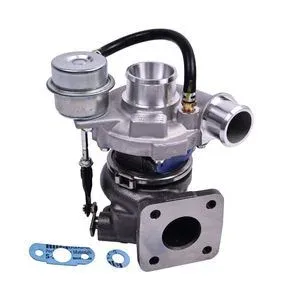
TD04HL Turbocharger for CAT 3044C & Mitsubishi S4S – OEM Replacement
View Details
Need a Custom Quote?
Our technical team responds within 24 hours. MOQ 1 piece. Ships to 120+ countries from our Guangzhou warehouse.