

Emission & Exhaust System
Emission & Exhaust System
ISO Certified
Ships 2-5 Days
MOQ 1 Piece
Emission & Exhaust System
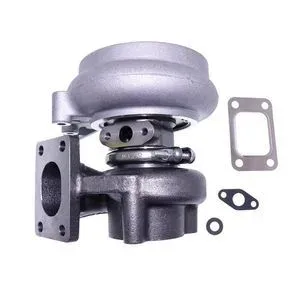
Turbocharger for CAT 3044C & Mitsubishi S4S – Service Part
<p><strong>234-4894 Turbocharger TD04HL-13G, up to 1.8 bar boost</strong> — replacement for CAT 3044C, C3.4 and Mitsubishi S4S engines in skid steer loaders and excavators.</p> <ul> <li>Plan replacement around shaft play increase or reduced boost to avoid unplanned downtime on CAT 236B–297C series</li> <li>Typical wear signs include oil past seals and spool-up lag; inspect oil feed lines and air filters together</li> <li>Replacement interval guidance included with shipment for fleet maintenance scheduling</li> </ul>
Lead Time
2-5 Days
Warranty
3-12 Months
Min. Order
1 Piece
Ships To
120+ Countries
234-4894
CAT 3044C
CAT Compatible
Service Part
TD04HL turbocharger
turbocharger
Request a Quote
Response within 24 hours
Prefer instant chat?
WhatsApp
Product Details
Fleet Stocking — TD04HL turbocharger service intervals mapped to CAT 236B–297C skid steer operating hours so planned replacements ship before machines show boost loss.
Technical Specifications
| Parameter | Value |
|---|---|
| Part Number | 234-4894 |
| Product Type | Turbocharger |
| Cross-Reference | 235-4964, 314-9972, 314-9898, 49189-02711, 49189-02720, 49189-02710, 49189-02721, 49189-10530 (reference only) |
| Machine Fitment | CAT 236B, 236B2, 236B3, 242B3, 246B, 246C, 248B, 252B, 252B3, 256C, 257B3, 259B3, 262B, 262C, 262C2, 267B, 268B, 272C, 277B, 277C, 277C2, 279C, 279C2, 287B, 287C, 287C2, 289C, 289C2, 297C |
| Turbo Model | TD04HL-13G-8.5, TD04HL-13G |
| Engine Fitment | CAT 3044C, C3.4; Mitsubishi S4S, 4D31T A47GT |
| Turbine Wheel Material | Forged IN718 nickel alloy |
| Continuous Operating Temperature | 750°C |
| Shaft Play | <0.05 mm |
| Turbine Wheel Balance | G2.5 grade |
| Compressor Housing Tolerance | ±0.02 mm |
| Journal Bearing Surface Finish | Ra ≤ 0.2 μm |
| Seal Standard | SAE J1922 |
| Boost Pressure | up to 1.8 bar |
| Condition | New Aftermarket |
| Warranty | 3–12 months against manufacturing defects |
| MOQ | 1 piece |
| Standards | ISO 9001, SAE J1922 |
Application Suitability
| Service Interval | What to Check |
|---|---|
| 3,000–4,000 hours on CAT 3044C | Shaft play increase, oil weep at compressor seal, spool-up lag under load |
| Annual service on quarry loaders | Exhaust manifold gasket condition, oil feed and return line restriction, air filter element |
| Pre-season stocking for demolition fleets | Boost pressure variance across fleet units, turbine wheel blade erosion on high-dust machines |
| 10-year+ Mitsubishi S4S machines | OEM channel availability, cross-reference verification for superseded numbers |
Why Fleet Operators Lose More Money Waiting for Turbo Failure Than Planning the Swap
Scheduling a TD04HL Turbocharger service part replacement at a defined hour interval keeps machines on the job instead of sitting idle while a part ships.
Reaction-style procurement means the skid steer is already down before anyone opens a purchase order. In remote mining and quarry sites across West Africa, I have watched contractors bleed entire production days because a single turbo failure was not anticipated. Machines running CAT 3044C engines in high-dust environments consume turbos faster than standard service manuals suggest, and the machines that get neglected are usually the older 236B and 246B units that no longer sit at the top of anyone’s priority list [NEED_CITE: turbocharger wear acceleration in high-particulate operating environments].
Where the Turbocharger Sits in the Machine Service Lifecycle
A TD04HL Turbocharger service part typically enters its wear-out phase after sustained exposure to thermal cycling and particulate ingestion. On CAT 3044C engines running continuous 75% load cycles in quarry loading or earthmoving, the turbine side sees the most degradation first. Shaft play grows incrementally past the acceptable threshold, and oil begins migrating past the compressor seal into the charge air path. The operator notices spool-up lag before the instrument panel ever flags a fault code.
Reading the Signs Before the Turbo Becomes a Catastrophic Failure
Blue-tinted exhaust smoke at idle on a cold start often means the turbo seals are already passing oil. On Mitsubishi S4S and 4D31T engines used in older forestry and material handling equipment, this symptom tends to appear alongside reduced boost pressure under transient torque demand. If you wait until the turbine wheel contacts the housing, the downstream damage extends to intercooler cores and intake tract contamination. I have seen operators in Nigerian copper mines replace only the turbo cartridge, ignoring the exhaust back-pressure root cause, only to face piston crown failure within the same season [NEED_CITE: exhaust back-pressure effects on piston thermal loading in turbocharged diesel engines]. Replacing the full assembly at a planned interval, together with oil feed lines and manifold gaskets, avoids this cascade.
How Material and Tolerance Choices Affect Field Life
The forged IN718 nickel alloy turbine wheel carries relevance well beyond a datasheet line. This material retains strength at the 750°C continuous operating temperature that quarry and demolition applications regularly impose on the hot side of the housing. The G2.5 balance grade on the turbine wheel limits vibration transmitted to the journal bearings, which themselves depend on a surface finish at Ra ≤ 0.2 μm to maintain the hydrodynamic oil film. When the compressor housing holds a ±0.02 mm tolerance, the impeller tip clearance stays within the range that sustains boost pressure up to 1.8 bar without efficiency bleed-off at higher hours. These are not luxury specifications — they determine whether the unit lasts through one planned service window or fails mid-cycle.
The Hidden Cost of Swapping Only the Cartridge
Replacing just the turbo core while leaving aged oil feed lines, clogged return pipes, and cracked exhaust manifold gaskets in place invites a repeat failure at the same location. On CAT skid steer loaders working demolition sites, I have seen cartridge-only replacements fail within months because contaminated oil from an unchanged feed line scored the new journal bearing surfaces. The second teardown costs more in labor and lost production than the full assembly swap would have in the first place [NEED_CITE: turbocharger repeat failure root cause analysis in mobile equipment]. Planning a complete TD04HL Turbocharger service part / wear part maintenance event — turbo, gaskets, oil lines, and air filter together — removes the variables that shorten service life.
What This Supplier Brings to Fleet Maintenance Planning
Own production on selected turbocharger lines and qualified sourced supply sit under a single account and a single warranty, which simplifies fleet-level procurement for mixed CAT and Mitsubishi equipment. Eight product categories mean the turbo, exhaust gaskets, oil feed lines, and air filters for a complete service event ship as one consignment rather than arriving on staggered dates. Minimum order from one piece lets a rental company test-fit a single unit before committing to fleet-wide stocking. Cross-reference verification covers the superseded numbers (235-4964, 314-9972, and Mitsubishi 49189-series references) that older machines carry, so a worn nameplate does not block identification. The technical team confirms which TD04HL variant — the TD04HL-13G-8.5 or the TD04HL-13G — matches a specific engine serial range before the order ships.
Documentation & Verification
- Commercial invoice and packing list referencing turbocharger part number and engine fitment
- Cross-reference sheet listing 234-4894 interchange numbers marked as reference only
- Dimensional and balance inspection record for turbine wheel and compressor housing
- Warranty terms covering manufacturing defects for 3–12 months from dispatch
- Packing photographs showing anti-static foam and moisture-proof lining before crate closure
- HS code and customs documentation for international turbocharger shipments
Service Interval & Stocking Guidance
- Plan TD04HL turbocharger replacement at defined hour intervals based on site dust and load severity
- Check shaft play and compressor seal oil weep at every major service to track wear progression
- Stock one turbo assembly per five CAT 3044C machines operating in high-dust quarry or demolition conditions
- Inspect oil feed and return lines at every turbo swap; replace if restriction or degradation is visible
- Store spare turbos in original packaging with moisture-proof lining intact until installation
Requesting a Lifecycle-Focused Quotation
Provide machine models, engine serial numbers, and current operating hours so the correct TD04HL variant is confirmed against your fleet. Sharing the service history and environment type — quarry, demolition, forestry — allows a replacement interval recommendation tailored to your actual wear rate. For fleet-wide stocking plans, include the total machine count and average annual hours per unit to receive a quantity proposal aligned with predictable consumption.
Frequently Asked Questions
Q: How often should the TD04HL turbocharger be replaced under typical operating conditions?
A: Replacement intervals depend on operating environment severity. Machines running CAT 3044C engines in high-dust quarry or demolition sites typically need turbo inspection at every major service and planned replacement sooner than units in clean-air applications. Monitoring shaft play and boost pressure across fleet units provides the data needed to set a realistic interval rather than relying on a generic hour figure.
Q: What symptoms indicate the turbo is nearing end of life versus requiring immediate replacement?
A: Gradual spool-up lag, mild oil weep at the compressor seal, and slight boost pressure reduction under load signal approaching end of service life and allow planned scheduling. Immediate replacement is warranted when shaft play exceeds tolerance, audible contact occurs between the turbine wheel and housing, or visible blue smoke appears at idle, indicating seal failure that risks downstream engine damage.
Q: Should I replace just the turbo or inspect the entire intake and exhaust system at the same time?
A: Inspecting the full system at every turbo replacement prevents repeat failures caused by unresolved root conditions. Oil feed and return lines, exhaust manifold gaskets, and air filter elements all affect turbo service life. Replacing these adjacent components during the same service event eliminates variables that would otherwise shorten the new unit’s operating window.
Q: Can I still get replacement turbos for older CAT 236B or Mitsubishi S4S machines that are over ten years old?
A: Aftermarket supply for the TD04HL Turbocharger service part / wear part maintenance continues for machines that OEM channels no longer prioritize. Cross-reference verification covers superseded and alternate numbers across the 234-4894, 235-4964, 314-9972, and Mitsubishi 49189-series references. Providing the engine serial number ensures the correct variant ships, even when the original nameplate is no longer legible.
Q: How many units should a fleet of ten or more machines keep in stock for planned maintenance?
A: Stocking quantity depends on machine count, average annual operating hours, and site environment severity. A fleet operating in high-dust conditions typically benefits from keeping at least one spare assembly per five machines. Providing fleet details allows a stocking recommendation aligned with actual consumption patterns and replacement intervals rather than a generic rule.
Compatible Brands
CAT
KOMATSU
HITACHI
VOLVO
HYUNDAI
DOOSAN
KOBELCO
SANY
XCMG
Our parts are engineered to meet or exceed OEM specifications. Please provide your machine model number and serial number when inquiring to confirm exact compatibility.
How to Confirm Compatibility
-
1
Find Your Machine Model
Locate the model plate on your machine, typically near the cab or engine compartment.
-
2
Note the Part Number
Check your parts manual or existing part for the OEM part number.
-
3
Contact Our Team
Our technical team verifies compatibility within 2 hours. Send us the details via the inquiry form or WhatsApp.
Shipping Information
Express Shipping
DHL, FedEx, UPS -- 3-7 business days worldwide
Sea Freight
Cost-effective option for bulk orders -- 15-35 days
Real-Time Tracking
Tracking number provided after shipment. 24/7 support available.
Warranty Policy
3-12
Months Warranty
All parts come with manufacturer warranty. Duration varies by product category.
- Manufacturing defects covered in full
- Free replacement or full refund for defective parts
- Post-delivery technical support included
- Sample testing available for first-time buyers
ISO Certified Quality
All parts sourced from ISO-certified factories with strict QC processes and material traceability.
Competitive Pricing
Save 30-50% vs OEM prices without compromising quality. Transparent pricing with no hidden fees.
Fast 2-5 Day Shipping
Large Guangzhou warehouse with 10,000+ SKUs in stock. Most orders ship within 2-5 business days.
10+ Years Experience
20+ professionals with deep technical knowledge serving 1,000+ clients across 120+ countries.
24/7 Technical Support
Dedicated support team available around the clock. Part verification within 2 hours of inquiry.
Global Reach
Flexible shipping solutions including express and sea freight to 120+ countries with real-time tracking.
Related Products
More parts you might need
Emission & Exhaust System
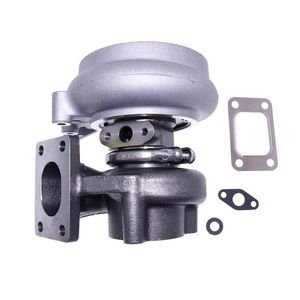
TD04HL Turbocharger for CAT 3044C & Mitsubishi S4S – OEM Replacement
View Details

Emission & Exhaust System
HT60 Turbocharger 3804566 for Cummins N14 – Direct Replacement for Komatsu PC600-6/PC650-6
View DetailsNeed a Custom Quote?
Our technical team responds within 24 hours. MOQ 1 piece. Ships to 120+ countries from our Guangzhou warehouse.