
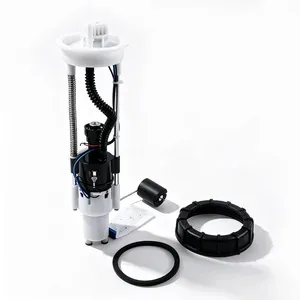
Fuel Pump
Wear Item Fuel Pump Assembly 2521307 Compatible with Polaris Ranger
<p><strong>Fuel Pump Assembly 2521307 for Polaris Ranger 570/900, 45–55 psi Output</strong> — replacement for off-road utility fleets where pump wear leads to lean misfire and ECU fault codes.</p> <ul> <li>Plan replacement at service intervals based on operating hours rather than waiting for failure</li> <li>NBR diaphragm rated -40°C to +120°C handles ethanol-blended fuels in tropical and cold-climate operations</li> <li>Single pump assembly swap avoids full fuel delivery system overhaul unless lines or regulators show symptoms</li> <li>Cross-reference 2204852 verified for 2013–2019 Ranger 570 and 900 series variants</li> </ul> <p>Replacement interval guidance included with shipment to support your fleet maintenance scheduling.</p>
Lead Time
2-5 Days
Warranty
3-12 Months
Min. Order
1 Piece
Ships To
120+ Countries
Request a Quote
Response within 24 hours
Product Details
Fleet Stocking Strategy — Fuel pump assemblies planned ahead of predictable service intervals to keep off-road utility vehicles running without emergency orders.
Technical Specifications
| Parameter | Value |
|---|---|
| Part Number | 2521307 |
| Product Type | Fuel Pump Assembly |
| Cross-Reference | 2204852 (reference only) |
| Machine Fitment | 2015 Polaris Ranger 570 Crew Full-Size, 2015–2019 Polaris Ranger 570 Full-Size, 2014–2015 Polaris Ranger 900 Crew, 2014–2015 Polaris Ranger 900 Crew EPS, 2013–2015 Polaris Ranger 900 XP, 2016 Polaris Ranger Crew 900-5, 2016 Polaris Ranger Crew 900-5 EPS, 2016 Polaris Ranger Crew 900-6, 2016 Polaris Ranger Crew 900-6 EPS, 2017–2019 Polaris Ranger Crew XP 900, 2017–2019 Polaris Ranger Crew XP 900 EPS, 2016–2019 Polaris Ranger XP 900, 2019 Polaris Ranger XP 900 EPS |
| Condition | New Aftermarket |
| Diaphragm Material | Nitrile rubber (NBR) |
| Operating Temperature Range | -40°C to +120°C |
| Rated Pressure Output | 45–55 psi |
| Port Material | Brass |
| Electrical Connector Rating | IP67 |
| Dimensional Tolerance | ±0.05 mm |
| Endurance Standard | SAE J1849 (10,000-cycle minimum) |
| Warranty | 6-month warranty against manufacturing defects |
Application Suitability
| Service Interval | What to Check |
|---|---|
| Every 1,500–2,000 operating hours | Fuel pressure consistency at idle and under load |
| Annually for seasonal fleets | Diaphragm condition and connector corrosion |
| Before wet-season deployment | Electrical connector seal integrity and port thread condition |
| At first sign of lean misfire | Fuel delivery volume and pump amperage draw |
| When ECU logs fuel trim faults | Pump output pressure against rated 45–55 psi specification |
Why Fleet Operators Lose Uptime Waiting on Fuel Pumps
Most fuel pump failures on utility vehicles are not sudden — they announce themselves weeks before total failure, yet most fleets only order after the machine stops.
In remote mining support operations across Southeast Asia, I have watched Polaris Ranger units sit idle for days because a fuel pump finally gave out and no spare was on the shelf. The machine showed declining fuel pressure and intermittent lean codes long before it quit, but without a proactive replacement schedule, the Fuel Pump Assembly service part / maintenance replacement for Polaris Ranger never made it onto the procurement list until the vehicle was already down [NEED_CITE: preventive maintenance scheduling for off-road utility vehicle fleets].
Waiting for failure means the fleet absorbs both the repair cost and the operational gap while the part ships. For support vehicles that move crews and equipment across active sites, that idle time ripples into delayed shift starts and incomplete daily tasks.
Where the Fuel Pump Sits in the Ranger Service Lifecycle
The fuel pump is not an overhaul item — it is a predictable wear component that belongs on a scheduled replacement calendar. On Polaris Ranger 570 and 900 series vehicles used in demanding environments, the pump endures continuous vibration, thermal cycling from ambient swings, and exposure to ethanol-blended fuels that gradually degrade internal seals.
Planning the Fuel Pump Assembly service part / maintenance replacement for Polaris Ranger replacement at defined service intervals rather than reacting to failure keeps fleet availability predictable. A pump swapped during a scheduled service window takes a fraction of the downtime compared to an emergency field replacement where the vehicle must be recovered first.
Recognizing Wear Before Total Pump Failure
Fuel pumps rarely fail without warning. Common indicators include extended cranking times on cold starts, hesitation under acceleration when the vehicle carries a full payload, and fuel pressure readings that drift below the 45 psi lower bound of the rated output. On vehicles equipped with OBD monitoring, progressive lean fuel trim corrections logged by the ECU signal declining pump performance well before the engine misfires.
When these symptoms appear across multiple vehicles in a fleet, it signals a systemic pattern — likely driven by fuel quality or duty cycle conditions — that warrants stocking additional spares [NEED_CITE: fuel system degradation patterns in ethanol-blended off-road service]. Replacing a pump showing early decline costs the same as replacing a dead one, but scheduling it during planned maintenance avoids cascading disruptions.
Pressure Output and Material Selection for Field Service
The rated 45–55 psi output range is critical because the Ranger’s fuel injection system relies on consistent rail pressure for proper atomization. A pump delivering below this range causes lean combustion, while one exceeding it can stress injector seals. The NBR diaphragm was chosen for its compatibility with ethanol-blended fuels common in Southeast Asian and Latin American markets, maintaining flexibility across the -40°C to +120°C operating window without hardening or cracking.
Brass port fittings resist corrosion from moisture contamination in fuel tanks — a persistent issue on vehicles operating in high-humidity environments where condensation accumulates during overnight temperature drops. The IP67-rated electrical connector ensures the pump maintains reliable power delivery even when water crosses the fuel tank area during wet-season operations [NEED_CITE: electrical connector ingress protection standards for off-road vehicle fuel systems].
The Accumulated Cost of Reactive Pump Replacement
Fleets that treat fuel pumps as run-to-failure components absorb hidden compounding costs. Each unplanned pump failure means the vehicle must be recovered from wherever it stalled, diagnosed on the spot, and then parked until a replacement arrives. For a mining support fleet with ten Rangers, even two unplanned pump failures per year creates a pattern of chronic vehicle shortages.
More critically, a failing pump that continues to operate at marginal pressure can cause lean misfire events that accelerate catalyst wear and trigger ECU fault codes requiring dealer-level diagnostic resets [NEED_CITE: lean combustion effects on emissions system longevity in utility vehicles]. The pump itself is a modest line item; the downstream consequences of running it past its service life are not.
Why Source This Assembly Through XUNPO
Production on selected lines and qualified sourced supply operate under a single warranty and a single account, so fleet buyers managing multiple wear-item categories deal with one point of accountability. Eight product categories mean a fuel pump ships alongside filters, seal kits, and electrical connectors in one consolidated dispatch — no split freight, no partial orders waiting at the dock.
Minimum order of one piece lets small fleets test fitment before committing to bulk stocking. Cross-reference verification covers superseded numbers like 2204852 alongside the current 2521307 designation, so older Ranger model years remain supported even as manufacturer direct supply thins. Guangzhou warehouse stock on common items means replenishment orders do not require multi-week production lead times.
Documentation & Verification
- Commercial invoice lists 2521307 with cross-reference 2204852 noted as reference only
- Compatibility sheet maps each Ranger model year and variant to confirmed fitment
- Dimensional inspection record verifies port spacing and ±0.05 mm tolerance before dispatch
- Six-month warranty documentation included with each shipment
- Packing photographs confirm unit condition at point of dispatch
- HS code and customs paperwork prepared for cross-border fleet replenishment orders
Service Interval & Stocking Guidance
- Replace fuel pump assembly at 1,500–2,000 operating hours or when pressure drops below 45 psi
- Monitor cold-start cranking duration as an early indicator of diaphragm wear
- Stock one spare unit per five Rangers in active fleet rotation for remote sites
- Store unused assemblies sealed in original packaging away from direct UV exposure
- Verify NBR diaphragm integrity before installing units stored longer than twelve months
Planning Your Next Fleet Replenishment
To receive a stocking recommendation matched to your fleet size and operating conditions, provide the specific Ranger model year and variant for each vehicle, current average operating hours per unit, and your site location so we can factor supply chain timing into the replenishment plan.
Frequently Asked Questions
Q: How often should a fuel pump assembly be replaced in off-road utility service?
A: Under typical mining and construction support duty cycles, replacement at 1,500–2,000 operating hours is advisable. Vehicles operating on ethanol-blended fuels in high-humidity environments may require earlier intervals due to accelerated diaphragm degradation. Monitor fuel pressure readings and cold-start behavior to refine the schedule for your specific conditions.
Q: What symptoms indicate the fuel pump is nearing end of service life?
A: Extended cranking times on cold starts, hesitation under load when the vehicle is fully laden, and progressive lean fuel trim corrections logged by the ECU all point to declining pump performance. Fuel pressure readings consistently below 45 psi under operating conditions confirm the pump can no longer meet the system’s delivery requirements.
Q: Should I replace just the pump or the entire fuel delivery assembly?
A: For scheduled maintenance, replacing the pump assembly alone is sufficient when fuel lines, filters, and regulators have been inspected and are within service limits. If the vehicle has accumulated significant hours or shows signs of fuel contamination, inspecting the full delivery system and replacing worn components together reduces the risk of a follow-up failure shortly after the pump swap.
Q: How many spares should a fleet operator keep on the shelf?
A: A general starting point is one spare pump per five active vehicles in fleet rotation, adjusted upward for remote sites with longer supply chain lead times. Fleets operating in harsh conditions with ethanol-blended fuels should consider higher stocking ratios, particularly during wet-season periods when fuel system stress increases.
Q: Can I still source this part for older Ranger model years?
A: Yes. The cross-reference covering both 2521307 and 2204852 (reference only) ensures compatibility with Polaris Ranger 570 and 900 series vehicles from the 2013 through 2019 model years, including crew and full-size variants. Verify your exact model year and variant designation to confirm fitment before ordering.
Compatible Brands
Our parts are engineered to meet or exceed OEM specifications. Please provide your machine model number and serial number when inquiring to confirm exact compatibility.
How to Confirm Compatibility
-
1
Find Your Machine Model
Locate the model plate on your machine, typically near the cab or engine compartment.
-
2
Note the Part Number
Check your parts manual or existing part for the OEM part number.
-
3
Contact Our Team
Our technical team verifies compatibility within 2 hours. Send us the details via the inquiry form or WhatsApp.
Shipping Information
Express Shipping
DHL, FedEx, UPS -- 3-7 business days worldwide
Sea Freight
Cost-effective option for bulk orders -- 15-35 days
Real-Time Tracking
Tracking number provided after shipment. 24/7 support available.
Warranty Policy
All parts come with manufacturer warranty. Duration varies by product category.
- Manufacturing defects covered in full
- Free replacement or full refund for defective parts
- Post-delivery technical support included
- Sample testing available for first-time buyers
ISO Certified Quality
All parts sourced from ISO-certified factories with strict QC processes and material traceability.
Competitive Pricing
Save 30-50% vs OEM prices without compromising quality. Transparent pricing with no hidden fees.
Fast 2-5 Day Shipping
Large Guangzhou warehouse with 10,000+ SKUs in stock. Most orders ship within 2-5 business days.
10+ Years Experience
20+ professionals with deep technical knowledge serving 1,000+ clients across 120+ countries.
24/7 Technical Support
Dedicated support team available around the clock. Part verification within 2 hours of inquiry.
Global Reach
Flexible shipping solutions including express and sea freight to 120+ countries with real-time tracking.
Related Products
More parts you might need



Need a Custom Quote?
Our technical team responds within 24 hours. MOQ 1 piece. Ships to 120+ countries from our Guangzhou warehouse.