

Block & Internal Parts

Block & Internal Parts
ISO Certified
Ships 2-5 Days
MOQ 1 Piece
Block & Internal Parts
Aftermarket Accelerator Rod 26607-26602-71 – Fleet Supply for Toyota Forklift
<p><strong>Accelerator Rod 26607-26602-71 for Toyota Forklifts</strong> — forged carbon steel with zinc-nickel plating, compatible with 8FD/8FG series and 120+ models. Pivot bushing wear causes throttle hesitation before complete failure, making scheduled replacement more cost-effective than reactive repair across fleet operations. Inspect linkage return springs and bushings concurrently during service intervals. - Replacement cycle recommendations included with shipment to support preventive maintenance planning</p>
Lead Time
2-5 Days
Warranty
3-12 Months
Min. Order
1 Piece
Ships To
120+ Countries
26607-26602-71
accelerator rod
Fleet Supply
For Toyota
Throttle Linkage
Toyota forklift parts
Request a Quote
Response within 24 hours
Prefer instant chat?
WhatsApp
Product Details
Fleet Stocking Plans — Accelerator rod 26607-26602-71 kept in forward inventory so Toyota forklift fleets avoid reactive throttle-linkage breakdowns.
Technical Specifications
| Parameter | Value |
|---|---|
| Part Number | 26607-26602-71 |
| Product Type | Accelerator Rod |
| Cross-Reference | 26607-26602-71, 266072660271 (reference only) |
| Machine Fitment | 8FD40N, 8FD50N, 8FG25, 8FG30, 02-8FDF15, 02-8FDF18, 02-8FDF20, 02-8FDF25, 02-8FDF30, 02-8FDJF35, 02-8FDKF20, 52-8FDF20, 52-8FDF25, 52-8FDF30, 62-8FDF15, 62-8FDF20, 62-8FDF25, 62-8FDF30, 02-8FGF15, 02-8FGF20, 02-8FGF25, 02-8FGF30, 32-8FGF15, 32-8FGF20, 32-8FGF25, 32-8FGF30, 30-8FG10, 30-8FG15, 30-8FG20, 30-8FG25, 30-8FG30, 60-8FD10, 60-8FD15, 60-8FD20, 60-8FD25, 60-8FD30, 8FDU15, 8FDU20, 8FDU25, 8FDU30, 8FGU15, 8FGU20, 8FGU25, 8FGU30, FDZN20, FDZN25, FDZN30, FGZN20, FGZN25, FGZN30 |
| Material | Forged carbon steel |
| Surface Treatment | Zinc-nickel plating |
| Concentricity (Pivot Ends) | ±0.05 mm |
| Corrosion Resistance | Exceeds 500-hour salt-spray test (ASTM B117) |
| Condition | New Aftermarket |
| Warranty | 3–12 months against manufacturing defects |
| MOQ | 1 piece |
| Standards | ISO 9001, ASTM B117 |
Application Suitability
| Service Interval | What to Check |
|---|---|
| Every 2,000 operating hours or annual PM | Pivot-end bushing wear, throttle hesitation under load |
| Lease-cycle turnaround (rental fleets) | Full linkage free-play, return spring tension, idle stability |
| High-cycle warehouse operation | Pedal free-play increase, inconsistent throttle response |
| Older models past dealer support | Linkage assembly condition, accelerator rod service part availability |
Why Fleet Operators Lose More Hours to Throttle Linkage Than They Track
Most forklift downtime from linkage wear is preventable with scheduled accelerator rod service part replacement.
I spent years on the buying side, and the pattern was always the same: a forklift goes down with a broken throttle rod, the maintenance team replaces only that rod, and the machine is back in the bay a few weeks later with a worn bushing or a fatigued return spring causing the same symptom. The root cause was never addressed — only the failed component was swapped. In mining and heavy-logistics environments, I have seen this reactive cycle repeat across entire fleets, each breakdown treated as an isolated event when the wear was actually fleet-wide [NEED_CITE: preventive maintenance scheduling standards for industrial forklift fleets].
When one accelerator rod fails under load in a high-cycle warehouse, the remaining machines in that fleet are approaching the same wear threshold. Planning replacement as a fleet-level maintenance event, rather than a breakdown response, eliminates the repeated short-interval failures that quietly consume the largest share of unplanned downtime.
Where the Accelerator Rod Sits in the Forklift Service Life
The accelerator rod service part is a mechanical link between the throttle pedal and the engine governor, transferring operator input into fuel delivery control. It is not a sealed or lubricated assembly — it operates as an exposed pivot linkage subject to dust ingress, vibration, and repetitive cycling. In a forklift running multiple shifts, this rod cycles thousands of times per day, and wear concentrates at the pivot ends where bushings degrade before the rod body itself fails.
This makes the accelerator rod a predictable consumption item rather than an unpredictable breakdown part. Fleet operators who track pedal free-play and throttle response as leading indicators can schedule replacement during planned maintenance windows, keeping machines out of the repair bay during peak operational periods.
Recognizing Wear Before the Rod Breaks
The first signal is rarely a snap — it is throttle hesitation when the operator demands full travel speed under load, or an idle that hunts between two RPM levels. Pedal free-play increases gradually as the pivot-end bushings wear past their concentricity tolerance, and the operator compensates by pressing further, accelerating wear on adjacent linkage components including levers and return springs.
In cold-storage environments, zinc-nickel plating on this accelerator rod service part resists the condensation and salt exposure that strip standard zinc coatings, meaning corrosion-driven seizure at the pivot points arrives later in the service cycle [NEED_CITE: zinc-nickel plating corrosion performance in cold-storage material handling equipment]. For outdoor loading docks subject to rain and particulate, the same plating extends the interval between linkage inspections.
Reading the Specifications That Matter for Fleet Planning
The forged carbon steel construction gives the accelerator rod the fatigue resistance needed for continuous high-cycle operation, where stamped or cast alternatives develop micro-cracks at stress-concentration points near the pivot bores. Forging aligns the grain structure along the rod’s load path, meaning it handles the repetitive push-pull loading of throttle actuation without the progressive cracking that ends shorter-life components.
Concentricity held to ±0.05 mm at the pivot ends ensures the rod does not introduce off-axis loading into the bushings. When concentricity drifts beyond this tolerance — common in lower-grade replacements — the bushings wear unevenly, producing the throttle inconsistency that operators report long before the rod itself fails.
The 500-hour salt-spray rating (ASTM B117) is directly relevant to fleet operators running machines in coastal logistics parks, cold-storage warehouses, or outdoor yards where de-icing salt is present. Standard electroplated zinc typically shows white corrosion within a few hundred hours; zinc-nickel extends that window substantially, keeping pivot surfaces free and functional through longer service intervals.
The Cost of Replacing the Rod but Not the Linkage
I learned this the hard way early in my procurement career: a fleet of Toyota forklifts with 1DZ engines kept returning to the shop with throttle complaints shortly after accelerator rod replacement. The rod was new, but the worn pivot bushings and weakened return springs were still in place, loading the new rod off-axis and accelerating its wear. The fix was not a better rod — it was a system-level inspection that replaced the full set of wear items at once.
For fleet operators, the hidden cost of reactive single-component replacement is not the part price — it is the repeated machine downtime, the operator idle time, and the cumulative freight cost of ordering one rod at a time instead of stocking a planned maintenance quantity [NEED_CITE: total cost of reactive versus planned maintenance in material handling fleets].
What This Supplier Brings to Fleet-Level Procurement
Own production on selected lines and qualified sourced supply under one account means the accelerator rod and its associated linkage components ship on the same commercial terms and warranty — no mixed accountability when a fitment issue arises. Eight product categories under one account allow fleet operators to consolidate engine spares, filters, and linkage hardware into a single dispatch, avoiding the split-shipment delays that leave machines half-repaired.
Minimum order from one piece supports both the initial fitment sample and the emergency single-unit order, while fleet-wide stocking quantities carry the same per-unit terms. The Guangzhou warehouse holds common items for fast dispatch, reducing the planning horizon for routine preventive maintenance orders. Part identification from machine model or nameplate photograph resolves the situation where the worn rod’s markings are illegible — a frequent problem on older Toyota forklifts in dusty or corrosive service.
Documentation & Verification
- Commercial invoice and packing list referencing accelerator rod 26607-26602-71 with full machine fitment cross-reference
- Part compatibility sheet listing verified Toyota forklift models and engine types (reference only)
- Quality inspection record covering pivot-end concentricity and zinc-nickel plating thickness
- Warranty terms covering manufacturing defects for 3–12 months from dispatch
- Packing photographs showing rod protection and pivot-end cushioning before crate closure
- HS code and customs documentation for international fleet supply shipments
Service Interval & Stocking Guidance
- Inspect pivot-end free-play and throttle response every 2,000 operating hours or at annual preventive maintenance
- Replace the accelerator rod service part when pedal free-play increases noticeably or throttle hesitation appears under load
- Stock one spare rod per five machines in high-cycle service, adjusting for environmental severity
- Store spare rods in dry, covered conditions to preserve zinc-nickel plating integrity before installation
- Check return springs and pivot bushings at every accelerator rod replacement to prevent off-axis loading on the new part
Requesting a Fleet Supply Quotation
Provide your Toyota forklift model list, engine types, and approximate operating hours so we can confirm the correct accelerator rod variant and recommend stocking quantities aligned with your maintenance cycle. If nameplates are worn, a photograph of the existing rod or throttle linkage assembly allows cross-reference verification before you commit to a bulk order.
Frequently Asked Questions
Q: How often should the accelerator rod be inspected in high-cycle forklift service?
A: In multi-shift warehouse or distribution operations, inspect pivot-end condition and throttle response at every scheduled preventive maintenance interval — typically annually or every 2,000 operating hours. The accelerator rod service part wears predictably, so catching bushing degradation early avoids the unplanned downtime of a full linkage failure during peak operations.
Q: What other throttle linkage components should be replaced at the same time?
A: Pivot bushings, return springs, and adjacent levers should be inspected whenever the accelerator rod is removed. Worn bushings load a new rod off-axis, causing premature wear at the pivot ends. Replacing the full wear set together prevents the short-interval repeat failures that result from single-component swaps.
Q: Should I replace just the rod or the full linkage assembly?
A: If the linkage levers and mounting brackets show no deformation or corrosion damage, replacing the rod with matched bushings and springs is sufficient. A full assembly exchange is warranted only when multiple components show concurrent wear or when the machine has been operating with degraded throttle response for an extended period.
Q: How many spare accelerator rods should a fleet keep in stock?
A: A practical baseline is one spare rod per five machines in active high-cycle service, adjusted upward for harsh environments like cold storage or outdoor docks. This quantity covers typical consumption between planned procurement cycles and provides an emergency replacement without requiring expedited freight.
Q: Are older Toyota forklift models still supported with this accelerator rod?
A: This accelerator rod service part fits a broad range of Toyota forklift models including 5-series, 8-series, and ZN-series machines with 1DZ, 1KD, 4Y, and 1FZ engines. Aftermarket supply continuity for older models past thinning dealer support is a core reason fleet operators consolidate their linkage spares through a single supplier.
Compatible Brands
CAT
KOMATSU
HITACHI
VOLVO
HYUNDAI
DOOSAN
KOBELCO
SANY
XCMG
Our parts are engineered to meet or exceed OEM specifications. Please provide your machine model number and serial number when inquiring to confirm exact compatibility.
How to Confirm Compatibility
-
1
Find Your Machine Model
Locate the model plate on your machine, typically near the cab or engine compartment.
-
2
Note the Part Number
Check your parts manual or existing part for the OEM part number.
-
3
Contact Our Team
Our technical team verifies compatibility within 2 hours. Send us the details via the inquiry form or WhatsApp.
Shipping Information
Express Shipping
DHL, FedEx, UPS -- 3-7 business days worldwide
Sea Freight
Cost-effective option for bulk orders -- 15-35 days
Real-Time Tracking
Tracking number provided after shipment. 24/7 support available.
Warranty Policy
3-12
Months Warranty
All parts come with manufacturer warranty. Duration varies by product category.
- Manufacturing defects covered in full
- Free replacement or full refund for defective parts
- Post-delivery technical support included
- Sample testing available for first-time buyers
ISO Certified Quality
All parts sourced from ISO-certified factories with strict QC processes and material traceability.
Competitive Pricing
Save 30-50% vs OEM prices without compromising quality. Transparent pricing with no hidden fees.
Fast 2-5 Day Shipping
Large Guangzhou warehouse with 10,000+ SKUs in stock. Most orders ship within 2-5 business days.
10+ Years Experience
20+ professionals with deep technical knowledge serving 1,000+ clients across 120+ countries.
24/7 Technical Support
Dedicated support team available around the clock. Part verification within 2 hours of inquiry.
Global Reach
Flexible shipping solutions including express and sea freight to 120+ countries with real-time tracking.
Related Products
More parts you might need

Block & Internal Parts
Push Rod 733817M1 Replacement for Massey Ferguson Tractor Long-Life Service Part
View Details
Block & Internal Parts
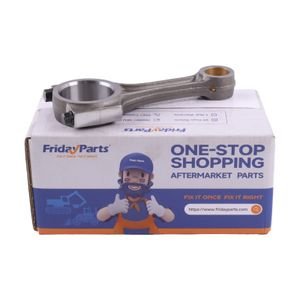
Connecting Rod 119E10-23001 for Yanmar 3TNV88/3TNV80 – OEM-Replacement Grade
View DetailsNeed a Custom Quote?
Our technical team responds within 24 hours. MOQ 1 piece. Ships to 120+ countries from our Guangzhou warehouse.