

Block & Internal Parts

Block & Internal Parts
ISO Certified
Ships 2-5 Days
MOQ 1 Piece
Block & Internal Parts
Connecting Rod 1L5Z-6200-A for Ford 2.3L L4 – Scheduled Maintenance
<p><strong>Connecting Rod 1L5Z-6200-A for Ford 2.3L L4 Engine</strong> — replacement for Ford Fusion, Ranger, Lincoln MKZ, and Mercury Milan (2006–2011)</p> <ul> <li>Forged 4340 alloy steel, heat-treated HRC 38–42</li> <li>Typically replaced during planned engine overhaul alongside piston, pin, and rod bearings to avoid repeat disassembly</li> <li>Fits Ford 2.3L L4 gasoline engines entering high-mileage service windows</li> </ul> <p>Scheduled maintenance intervals and wear inspection guidance included with shipment.</p>
Lead Time
2-5 Days
Warranty
3-12 Months
Min. Order
1 Piece
Ships To
120+ Countries
1L5Z-6200-A
connecting rod
For Ford Compatible
Ford 2.3L L4
Forged Alloy Steel
Service Part
Request a Quote
Response within 24 hours
Prefer instant chat?
WhatsApp
Product Details
Fleet Stocking Plans — We align connecting rod shipments with scheduled overhaul windows so your 2.3L L4 engines stay on maintenance timelines instead of waiting on backorders.
Technical Specifications
| Parameter | Value |
|---|---|
| Part Number | 1L5Z-6200-A |
| Product Type | Connecting Rod |
| Cross-Reference | 1L5Z6200A (reference only), 1L5Z-6200-A (reference only) |
| Engine Application | Ford 2.3L L4 gasoline (2006–2011) |
| Condition | New Aftermarket |
| Material | Forged 4340 alloy steel |
| Surface Treatment | Heat-treated HRC 38–42, shot-peened |
| Big-end Bore Tolerance | ±0.01 mm |
| Pin Bore Tolerance | ±0.005 mm |
| Surface Finish | Ra ≤0.8 μm |
| Warranty | 6-month manufacturer defect warranty |
| MOQ | 1 piece |
| Compliance | ISO 9001, ASTM E112, ISO 6892-1 |
Application Suitability
| Service Interval | What to Check |
|---|---|
| 150,000+ km high-mileage overhaul | Piston pin bore wear, crankshaft journal scoring, bearing shell condition |
| Fleet scheduled rebuild cycle | All four rods as a matched set, big-end bore roundness, bolt stretch |
| Light-commercial vehicle engine refresh | Cylinder wall taper, main bearing clearances, oil pump output pressure |
| Rental fleet turnover maintenance | Rod bolt torque retention, shot-peen surface fatigue, pin bore ovality |
Why the Same 2.3L Connecting Rod Fails Across Different Fleet Cycles
Failure is rarely isolated — one worn rod usually means the others are close behind.
Working in teardown bays across Guangzhou, I have pulled enough 2.3L L4 engines apart to know that connecting rod 1L5Z-6200-A failures rarely show up alone. The engine has already been running with imbalanced loading across all four cylinders, and the first rod to show cracking or bearing wipe is just the weakest link in a set that has endured the same thermal and mechanical cycles [NEED_CITE: connecting rod fatigue analysis in inline-four engines]. Fleet operators who replace a single rod and send the vehicle back into service often see the next failure arrive within a few thousand kilometers. The cost of a second teardown — labor, fluids, gaskets, downtime — dwarfs the price of replacing all four rods during the first scheduled engine service window. This Connecting Rod 1L5Z-6200-A service part maintenance approach protects maintenance budgets from compounding unplanned stops.
Where This Rod Fits in the Engine Service Life
Every Ford 2.3L L4 gasoline engine built between 2006 and 2011 shares the same connecting rod architecture, whether it sits in a Fusion sedan used for daily driver routes or a Ranger pickup carrying site loads. As these engines cross the high-mileage threshold, the rods enter a phase where fatigue accumulation becomes the primary failure driver rather than sudden overload. Fleet managers planning ahead can batch connecting rod orders alongside pistons, bearings, and gasket sets so the entire bottom-end refresh happens during one scheduled downtime window instead of triggering reactive purchases each time a different vehicle in the fleet starts knocking.
Linked Wear Patterns That Decide Whether One Rod or Four Need Replacement
The connecting rod does not fail in isolation. Big-end bearing shells wear first, changing the oil film geometry and increasing impact loads on the rod bore itself. The piston pin bore on the small end develops ovality that accelerates pin wear and introduces side-loading on the cylinder wall. Once any one of these connected surfaces degrades past service limits, the others follow [NEED_CITE: linked wear mechanisms in engine bottom-end components]. For fleet-level planning, inspecting all four rods during a single teardown and replacing them as a matched set keeps cylinder-to-cylinder balance within tolerance, which matters especially in light-commercial and rental applications where engines see stop-start duty cycles rather than steady-state highway operation.
Tolerance Stack-Up and Material Behavior Under Load
The forged 4340 alloy steel construction gives this connecting rod a tensile strength and fatigue resistance suited to the 2.3L L4’s combustion pressures. Heat treatment to HRC 38–42 balances hardness at the bearing bore surface with enough core ductility to absorb shock loads without brittle fracture. The ±0.01 mm big-end bore tolerance ensures proper bearing shell crush and oil wedge formation, while the ±0.005 mm pin bore tolerance keeps piston pin fit within the range that prevents small-end knock without requiring oversized pins. Shot-peening introduces compressive residual stress on the surface, delaying crack initiation at the beam-to-boss transition zones where fatigue failures typically originate. Surface finish at Ra ≤0.8 μm on bearing surfaces reduces micro-welding risk during boundary lubrication conditions at startup and low-speed high-load operation.
The Hidden Cost of Reactive Replacement
Replacing a single connecting rod after a failure without inspecting the remaining three creates an imbalance that the engine was never designed to tolerate. The older rods have accumulated fatigue cycles and dimensional drift that the new rod has not, leading to uneven loading that shortens the life of the new component and its bearing shell. In fleet operations, this reactive approach multiplies: one vehicle returns with a knock, gets a single-rod replacement, then another vehicle in the same fleet fails the same way weeks later. Each event triggers its own teardown, its own fluid and gasket cost, and its own vehicle-off-road days [NEED_CITE: cumulative downtime impact from reactive versus planned engine maintenance]. Planning the connecting rod replacement as part of a complete bottom-end overhaul during a scheduled maintenance window avoids this compounding loss.
Why Source This Connecting Rod Here
Our production and sourcing lines operate under a single quality framework and warranty, so whether the connecting rod comes from our own forging line or a qualified partner facility, the tolerance checks and defect coverage remain identical. Eight product categories — including block and internal parts, seal kits, and engine auxiliary components — mean the complete overhaul list ships as one consignment rather than scattered across multiple suppliers. Minimum order starts at one piece for emergency single-rod needs, but fleet buyers can stock matched sets of four against planned rebuild schedules. Our technical team verifies compatibility against vehicle year, model, and engine code before dispatch, and cross-reference validation covers superseded part numbers that may appear in older service manuals. Samples are available for fitment confirmation before committing to bulk fleet quantities.
Documentation & Verification
- Commercial invoice listing part number 1L5Z-6200-A with engine application notes
- Compatibility sheet covering Ford Fusion, Ranger, MKZ, Zephyr, and Milan year ranges (reference only)
- Dimensional inspection record for big-end and pin bore tolerances
- 6-month defect warranty terms included with every shipment
- Packing photographs showing anti-rust coating and protective packaging
- HS code and customs documentation support for international fleet buyers
Service Interval & Stocking Guidance
- Inspect connecting rods at engine teardowns exceeding 150,000 km or showing knock symptoms
- Check big-end bore roundness and pin bore ovality against ±0.01 mm and ±0.005 mm limits
- Stock matched sets of four rods per engine to avoid partial replacements across fleet vehicles
- Store rods in sealed packaging with anti-rust coating intact until installation day
- Align rod orders with planned overhaul windows to consolidate gasket, bearing, and piston purchases
- Review engine serial and vehicle year to confirm 2006–2011 compatibility before stocking
Preparing Your Inquiry
Provide your vehicle model, year, and engine code so we can confirm the connecting rod matches your specific 2.3L L4 variant. If you manage a fleet, share the number of engines scheduled for overhaul and your planned maintenance windows so we can align shipment timing with your service bays. For engines with prior rebuild history, let us know what was replaced and when so we can advise on matched-set sizing and linked component checks.
Frequently Asked Questions
Q: How many kilometers before connecting rods need inspection in the Ford 2.3L L4?
A: Most fleet operators schedule a bottom-end inspection once engines pass 150,000 km or show audible knock at idle and low RPM. The exact interval depends on duty cycle — stop-start urban delivery routes accelerate bearing and bore wear compared to steady-state highway driving. We recommend checking all four rods together rather than waiting for a single failure.
Q: Should I replace bearings and pistons when replacing the connecting rod?
A: Yes, linked wear means bearing shells and piston pins have endured the same cycles as the rod. Reusing old bearings on new rods risks immediate clearance issues and oil film breakdown. We recommend replacing rods, bearings, and pins as a matched set during any planned teardown to maintain cylinder-to-cylinder balance.
Q: What symptoms indicate a connecting rod problem in these engines?
A: A rhythmic knock that increases with RPM, dropping oil pressure without visible leaks, and metallic particles in the oil filter are common indicators. These symptoms often mean bearing shell wear has progressed to the point where the rod bore itself may be out of round, requiring rod replacement rather than just a bearing swap.
Q: For high-mileage Fusion and Ranger vehicles, should I plan a full overhaul instead of a single rod?
A: Once a 2.3L L4 engine exceeds typical service life thresholds, a full bottom-end overhaul — rods, bearings, pistons, rings, and gaskets — prevents the cycle of repeat teardowns. Single-rod repairs on high-mileage engines frequently lead to adjacent component failures within months, costing more in cumulative downtime.
Q: Can we order connecting rods in bulk for a fleet overhaul program with staggered delivery?
A: Fleet buyers can place a single order covering all planned rebuilds and request staggered shipments aligned with maintenance windows. Each batch ships with its own inspection records and compatibility documentation. Minimum order is one piece, so you can start with a sample set before committing to full fleet quantities.
Compatible Brands
CAT
KOMATSU
HITACHI
VOLVO
HYUNDAI
DOOSAN
KOBELCO
SANY
XCMG
Our parts are engineered to meet or exceed OEM specifications. Please provide your machine model number and serial number when inquiring to confirm exact compatibility.
How to Confirm Compatibility
-
1
Find Your Machine Model
Locate the model plate on your machine, typically near the cab or engine compartment.
-
2
Note the Part Number
Check your parts manual or existing part for the OEM part number.
-
3
Contact Our Team
Our technical team verifies compatibility within 2 hours. Send us the details via the inquiry form or WhatsApp.
Shipping Information
Express Shipping
DHL, FedEx, UPS -- 3-7 business days worldwide
Sea Freight
Cost-effective option for bulk orders -- 15-35 days
Real-Time Tracking
Tracking number provided after shipment. 24/7 support available.
Warranty Policy
3-12
Months Warranty
All parts come with manufacturer warranty. Duration varies by product category.
- Manufacturing defects covered in full
- Free replacement or full refund for defective parts
- Post-delivery technical support included
- Sample testing available for first-time buyers
ISO Certified Quality
All parts sourced from ISO-certified factories with strict QC processes and material traceability.
Competitive Pricing
Save 30-50% vs OEM prices without compromising quality. Transparent pricing with no hidden fees.
Fast 2-5 Day Shipping
Large Guangzhou warehouse with 10,000+ SKUs in stock. Most orders ship within 2-5 business days.
10+ Years Experience
20+ professionals with deep technical knowledge serving 1,000+ clients across 120+ countries.
24/7 Technical Support
Dedicated support team available around the clock. Part verification within 2 hours of inquiry.
Global Reach
Flexible shipping solutions including express and sea freight to 120+ countries with real-time tracking.
Related Products
More parts you might need
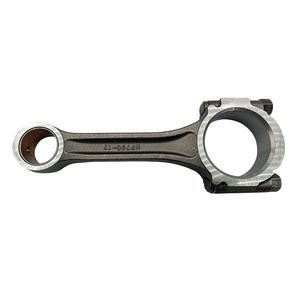

Block & Internal Parts
Connecting Rod Bolt 16851-22140 – Kubota-Compatible Service Part
View Details
Need a Custom Quote?
Our technical team responds within 24 hours. MOQ 1 piece. Ships to 120+ countries from our Guangzhou warehouse.