
Block & Internal Parts
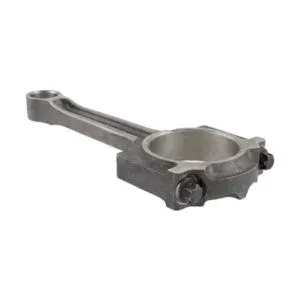
Connecting Rod 1L5Z-6200-A Replacement for Ford 2.3L Engine Overhaul Grade
<p><strong>1L5Z-6200-A Connecting Rod for Ford 2.3L L4, New Aftermarket</strong> — compatible with 2006-2009 Fusion, 2009-2011 Ranger, Lincoln MKZ, and Mercury Milan engines.</p> <ul> <li>Replacement for cross-reference 1L5Z-6200-A / 1L5Z6200A</li> <li>Plan bottom-end overhaul around wear symptoms: knock at idle, oil pressure drop, or scored crankshaft journals</li> <li>Assess whether a single rod exchange suffices or full piston-and-rod assembly replacement is warranted for high-mileage fleet units</li> <li>Stocking ahead for predictable consumption reduces unplanned downtime across mixed 2.3L L4 vehicles</li> <li>Recommended replacement intervals provided with shipment to support long-term fleet planning</li> </ul>
Lead Time
2-5 Days
Warranty
3-12 Months
Min. Order
1 Piece
Ships To
120+ Countries
Request a Quote
Response within 24 hours
Product Details
Fleet Stocking Strategy — Connecting Rod 1L5Z-6200-A planned for Ford 2.3L L4 lifecycle maintenance across mixed commercial fleets.
Technical Specifications
| Parameter | Value |
|---|---|
| Part Number | 1L5Z-6200-A |
| Product Type | Connecting Rod |
| Cross-Reference | 1L5Z6200A (reference only) |
| Machine Fitment | 2006-2009 Fusion 4 Cyl 2.3L, 2009-2011 Ranger 4 Cyl 2.3L NA Petrol, 2007-2009 MKZ 4 Cyl 2.3L, 2006 Zephyr 4 Cyl 2.3L, 2006-2009 Milan 4 Cyl 2.3L |
| Brand Fitment | Compatible with Ford, Lincoln, Mercury |
| Engine Fitment | 2.3L L4 |
| Condition | New Aftermarket |
| Warranty | 3-12 months against manufacturing defects |
| Standard | ISO certified production facility |
Application Suitability
| Service Interval | What to Check |
|---|---|
| 150,000+ miles or major overhaul | Cylinder wall scoring, bearing journal wear, rod bolt stretch |
| Fleet standardization review | Engine platform commonality across Ford, Lincoln, Mercury models |
| End-of-lease vehicle inspection | Bottom-end noise, oil consumption spikes, compression loss |
| Predictive maintenance scheduling | Crankshaft journal condition, piston-to-wall clearance |
| Commercial high-mileage cycle | Duty hours, load profile, thermal cycling frequency |
Planning the Overhaul Before the Engine Seizes
Waiting for a knock to schedule teardown costs the fleet more than the part itself.
Maintenance plans routinely cover filters, belts, and fluids while internal rotating components remain untouched until failure forces an emergency teardown. Across a fleet of Ford 2.3L L4 vehicles, this reactive approach turns a scheduled weekend overhaul into a multi-day crisis [NEED_CITE: fleet maintenance scheduling impact on vehicle availability]. When connecting rod service parts are not already on the shelf, the machine or vehicle sits idle while procurement locates supply. I have watched commercial fleets in Southeast Asia lose consecutive working days because a single internal component was not stocked ahead of a known rebuild cycle.
Where the Connecting Rod Sits in the Engine Service Life
The connecting rod operates between the piston and crankshaft, translating combustion pressure into rotational force. In the lifecycle of a 2.3L L4 engine, the rod itself typically outlasts the bearings, rings, and cylinder hone. When a fleet plans an overhaul, the Connecting Rod service part maintenance decision depends on whether the rod journal shows scoring, bending, or bolt-hole elongation. Replacing rods at the correct interval prevents cascading damage to the crankshaft and block.
Wear Progression and the Decision to Replace
Rod bearing wear appears first as increased oil consumption and subtle bottom-end noise at idle. If left unaddressed, the bearing wears through to the crankshaft journal, and the rod itself begins to experience impact loading that fatigues the big-end bore [NEED_CITE: connecting rod fatigue failure mechanisms in four-cylinder engines]. At this stage, replacing the bearing alone is insufficient — the rod must be measured for roundness and replaced if out of specification. For fleet operators running Ford Ranger and Fusion platforms, stocking rods alongside overhaul gasket sets ensures the teardown stays on schedule rather than waiting for parts.
Reading the Specifications That Matter for Longevity
The 2.3L L4 connecting rod must maintain precise big-end bore roundness and small-end bushing clearance to function across thousands of thermal cycles. The rod material and forging process determine its resistance to the cyclic tensile and compressive loads generated at highway and load-bearing RPM ranges. Bolt-hole condition is critical — reused rod bolts that have stretched beyond yield will fail to maintain clamp load, leading to cap walk and eventual journal destruction. The ISO-certified production behind this aftermarket replacement ensures dimensional consistency across every unit shipped.
The Cost of Reacting Instead of Planning
A fleet that buys connecting rods only after an engine knock has already suffered bearing debris contamination throughout the oil system. The repair then expands from a bottom-end refresh to a full block flush, oil cooler replacement, and potentially a new crankshaft. Reaction-style procurement also means paying premium freight and accepting whatever variant is available rather than verifying the correct application for the specific model year [NEED_CITE: total cost of unplanned fleet vehicle downtime]. Over multiple vehicles and multiple years, the cumulative cost of emergency sourcing and extended downtime exceeds the investment in planned stocking.
Why Source This Rod Through Our Supply Chain
We produce selected part lines in our own facility and source the remainder from qualified ISO-certified partners, meaning both carry identical quality control and warranty terms. Our eight product categories allow a complete overhaul job list — rods, bearings, piston sets, gaskets, and seals — to ship as one consignment under one account. Minimum order starts from one piece, so a single emergency rod is never blocked by volume requirements. Guangzhou warehouse stock supports fast dispatch on common items like this Ford 2.3L connecting rod. Our technical team verifies fitment from engine serial, machine model, photograph, or nameplate image, and cross-reference verification covers superseded and alternate numbers.
Documentation & Verification
- Commercial invoice and packing list matching each rod to its declared application
- Part compatibility and cross-reference sheet marking OEM numbers as reference only
- Quality inspection record confirming big-end bore and small-end dimensions before dispatch
- Warranty terms covering manufacturing defects for 3-12 months from receipt
- Packing photographs showing protective wrapping on journal surfaces
- HS code and customs documentation support for cross-border shipment
Service Interval & Stocking Guidance
- Inspect rod big-end bore roundness at every major overhaul exceeding 150,000 miles
- Listen for deep idle knock indicating bearing-to-journal contact as an early warning signal
- Stock one complete rod-and-piston assembly per ten vehicles on standardized 2.3L L4 platforms
- Store rods vertically or in original packaging to prevent bending under their own weight over time
- Rotate stock periodically to ensure older inventory ships before newer receipts
Request a Stocking Proposal
Provide your fleet composition including model years and accumulated mileage for each Ford, Lincoln, or Mercury vehicle running the 2.3L L4 platform. Include your current overhaul frequency and any existing parts supply gaps. Our team will map replacement intervals against your operational schedule and propose a stocking quantity that prevents unplanned downtime.
Frequently Asked Questions
Q: At what mileage should connecting rods be inspected in a commercial fleet?
A: Inspection should occur during any bottom-end teardown, typically triggered by bearing noise or scheduled overhaul beyond 150,000 miles. For high-duty-cycle vehicles such as Ranger pickups used on construction sites, earlier inspection based on operational hours is advisable. Rods themselves do not have a fixed replacement mileage — condition determines the decision.
Q: What symptoms indicate a connecting rod is approaching failure?
A: Deep rhythmic knocking at idle that increases with RPM, sudden oil consumption spikes, and metallic particles in the oil filter all point toward bearing and rod distress. By the time knocking is audible, bearing material has already migrated through the lubrication system. Early detection through oil analysis can signal the need for teardown before the rod itself sustains damage.
Q: Should the fleet replace individual rods or full piston-rod assemblies?
A: If cylinder walls are within specification and pistons show no skirt scuffing, individual rod replacement is sufficient and reduces cost. When cylinder wear is present or the engine has undergone a previous rebuild with unknown history, exchanging complete piston-rod assemblies ensures matched clearances and reduces the risk of imbalance across cylinders.
Q: How many spare rods should a fleet standardize on for the 2.3L L4 platform?
A: A practical baseline is one spare rod per ten vehicles sharing the Ford, Lincoln, or Mercury 2.3L engine platform. Fleets operating in remote areas or running high-duty cycles should increase this ratio. Stocking associated bearings and bolts alongside rods prevents partial kits from blocking a complete reassembly.
Q: Is this connecting rod still available for older model year vehicles?
A: Yes, this aftermarket replacement covers model years from 2006 through 2011 across Fusion, Ranger, MKZ, Zephyr, and Milan applications. As original manufacturer support for these platforms thins over time, verified aftermarket supply ensures continued availability. Cross-reference verification confirms the correct application before shipment.
Compatible Brands
Our parts are engineered to meet or exceed OEM specifications. Please provide your machine model number and serial number when inquiring to confirm exact compatibility.
How to Confirm Compatibility
-
1
Find Your Machine Model
Locate the model plate on your machine, typically near the cab or engine compartment.
-
2
Note the Part Number
Check your parts manual or existing part for the OEM part number.
-
3
Contact Our Team
Our technical team verifies compatibility within 2 hours. Send us the details via the inquiry form or WhatsApp.
Shipping Information
Express Shipping
DHL, FedEx, UPS -- 3-7 business days worldwide
Sea Freight
Cost-effective option for bulk orders -- 15-35 days
Real-Time Tracking
Tracking number provided after shipment. 24/7 support available.
Warranty Policy
All parts come with manufacturer warranty. Duration varies by product category.
- Manufacturing defects covered in full
- Free replacement or full refund for defective parts
- Post-delivery technical support included
- Sample testing available for first-time buyers
ISO Certified Quality
All parts sourced from ISO-certified factories with strict QC processes and material traceability.
Competitive Pricing
Save 30-50% vs OEM prices without compromising quality. Transparent pricing with no hidden fees.
Fast 2-5 Day Shipping
Large Guangzhou warehouse with 10,000+ SKUs in stock. Most orders ship within 2-5 business days.
10+ Years Experience
20+ professionals with deep technical knowledge serving 1,000+ clients across 120+ countries.
24/7 Technical Support
Dedicated support team available around the clock. Part verification within 2 hours of inquiry.
Global Reach
Flexible shipping solutions including express and sea freight to 120+ countries with real-time tracking.
Related Products
More parts you might need

Block & Internal Parts
Camshaft Bearing Set for Isuzu 4HK1/6HK1 & Hitachi ZX240-3–350L-3
View Details
Block & Internal Parts
Crankshaft Seal 04102866 04175433 for Deutz Engine – Service Part
View Details
Block & Internal Parts
Connecting Rod Replacement for Kubota V3307 V3307T Scheduled Maintenance
View DetailsNeed a Custom Quote?
Our technical team responds within 24 hours. MOQ 1 piece. Ships to 120+ countries from our Guangzhou warehouse.