

Block & Internal Parts
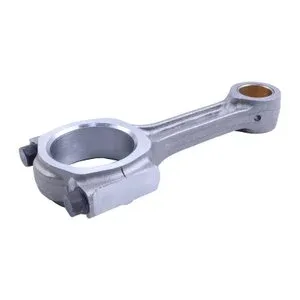
Connecting Rod 4956017 for Cummins B3.3/QSB3.3 – Service Part
<p><strong>4956017 Connecting Rod for Cummins B3.3/QSB3.3, SAE 4340 alloy steel, fracture-split design</strong> — compatible with Cummins B3.3 and QSB3.3 engines used in excavator auxiliary power units, marine gensets, and backup generators.</p> <ul> <li>Plan rod replacement at scheduled overhaul intervals rather than after reactive failure to avoid unplanned second teardowns.</li> <li>Inspect con rod bearings, wrist pin bushings, and crankshaft journals for associated wear during each service cycle.</li> <li>Single-rod or full-set replacement decisions should weigh labor cost against fleet downtime risk.</li> </ul> <p>Fleet maintenance schedules and replacement interval recommendations provided with each shipment.</p>
Lead Time
2-5 Days
Warranty
3-12 Months
Min. Order
1 Piece
Ships To
120+ Countries
Request a Quote
Response within 24 hours
Product Details
Service Interval Planning — Scheduling connecting rod replacement during Cummins B3.3 overhauls prevents reactive teardowns and secondary labor costs when the crankshaft is already exposed.
Technical Specifications
| Parameter | Value |
|---|---|
| Product Type | Connecting Rod |
| Cross-Reference | 4956017 (reference only for identification purposes) |
| Machine Fitment | Cummins B3.3, QSB3.3 |
| Material | SAE 4340 alloy steel |
| Design | Fracture-split big end |
| Surface Treatment | Phosphate-coated contact surfaces |
| Big-end Bore Tolerance | ±0.005 mm |
| Surface Hardness | HRC 38–42 |
| Condition | New Aftermarket |
| Warranty | 3–12 months against manufacturing defects |
| Standards | ISO 9001, ISO 8533, SAE J1397 |
| Minimum Order | 1 piece |
Application Suitability
| Service Interval | What to Check |
|---|---|
| Major Overhaul | Crankshaft journal wear, wrist pin bushing clearance |
| Mid-life Inspection | Bearing shell condition, bolt stretch, cap alignment |
| High-hour Genset Rebuild | Full rotating assembly balance, big-end bore geometry |
| Rental Fleet Turnaround | Visual crack inspection, fracture-split mating surface integrity |
When a Connecting Rod Service Part Maintenance Becomes a Fleet Planning Problem
Replacing one rod without planning for matched bearings and fasteners guarantees a second teardown.
In mining and heavy-duty applications, a single connecting rod failure rarely happens in isolation. The adjacent components—bearings, wrist pin bushings, and rod bolts—have endured the same thermal and mechanical cycles. Ignoring these during a scheduled rebuild extends downtime unnecessarily. Fleet managers who treat connecting rod service part maintenance as an isolated purchase rather than a system-level event consistently face cumulative unplanned downtime [NEED_CITE: engine overhaul planning standards for diesel power units].
Where the Rod Sits in the Ownership Lifecycle
A Connecting Rod service part maintenance decision should align with the engine’s major overhaul milestones rather than waiting for audible knock or oil pressure loss. For Cummins B3.3 and QSB3.3 engines operating under high-load conditions such as excavation auxiliary power or continuous genset duty, the rod and its bearings experience predictable fatigue progression. Inspecting big-end bore geometry during scheduled teardowns reveals whether the rod has elongated beyond tolerance, signaling replacement before catastrophic failure.
Progressive Wear Signals That Dictate Rod Replacement
When bearings show uneven wear patterns or crankshaft journals exhibit scoring, the connecting rod itself may have distorted under sustained load. Fracture-split designs require precise cap-to-rod alignment, and any deviation compromises the mating surface seal. Fleet operations running multiple B3.3-powered units benefit from tracking these wear indicators across the fleet, establishing predictable consumption rates for connecting rod service part maintenance inventories. Stocking based on actual overhaul intervals rather than reactive failure reduces emergency procurement pressure [NEED_CITE: diesel engine bearing wear progression indicators].
Decoding the Material and Tolerance Specifications
The SAE 4340 alloy steel construction provides the tensile strength necessary for the cyclic loading inherent in B3.3 reciprocating assemblies. The ±0.005 mm big-end bore tolerance ensures proper oil film maintenance between the rod bearing and crankshaft journal—any deviation accelerates bearing wear and risks rod bolt fatigue. Phosphate-coated contact surfaces aid initial break-in by reducing friction during the first operational hours, while the fracture-split manufacturing method guarantees cap-to-rod alignment that machined-split designs cannot consistently replicate.
The Hidden Cost of Reactive Procurement
Waiting for a rod to fail before ordering replacement parts creates cascading delays. The engine sits partially disassembled while procurement locates stock, bearings and bolts age in storage, and labor costs accumulate for the teardown that must be repeated once all components arrive. For rental fleets and contracting operations, this reactive approach to connecting rod service part maintenance compounds equipment downtime across multiple machines rather than consolidating overhaul events into planned service windows [NEED_CITE: fleet maintenance scheduling versus reactive repair cost impact].
Why Procurement Alignment Matters Here
This connecting rod ships under one account alongside matched bearing sets, overhaul gasket kits, and crankshaft seals, eliminating multi-supplier coordination. The fracture-split specification is verified against engine serial variants to prevent cap mismatch. Guangzhou warehouse stock enables rapid dispatch for common B3.3 configurations, while technical support confirms compatibility when nameplates are worn or engine builds include aftermarket block work. Sample supply allows fitment confirmation before committing to fleet-scale quantities. Documentation includes cross-reference verification covering superseded numbers, ensuring older installations receive correct variants.
Documentation & Verification
- Commercial invoice listing fracture-split specification and bore tolerance verification
- Compatibility sheet cross-referencing engine serial ranges (reference only)
- Dimensional inspection record for big-end bore and bolt hole alignment
- Warranty terms covering manufacturing defects for the stated period
- Packing photographs showing phosphate surface condition before crating
- HS code and customs paperwork for international genset parts import
Service Interval & Stocking Guidance
- Inspect big-end bore geometry at each major overhaul to determine rod replacement need
- Track bearing wear patterns across fleet B3.3 units to forecast rod consumption
- Store spare rods in original packaging to protect phosphate-coated surfaces
- Maintain minimum stock based on fleet size and projected overhaul cycles
- Verify engine serial number before committing bulk orders to ensure fracture-split compatibility
- Rotate stock to prevent long-term storage surface degradation
Inquiry Direction for Lifecycle Planning
Provide the Cummins engine serial number and current service hour readings to receive overhaul interval recommendations and connected component lists. Fleet operators should share machine models and deployment cycles to align connecting rod stocking quantities with actual consumption patterns rather than generic safety stock levels.
Frequently Asked Questions
Q: How often should connecting rods be inspected during routine Cummins B3.3 service?
A: Inspection should coincide with major overhaul intervals when the crankshaft is exposed. Checking big-end bore tolerance and fracture-split mating surface integrity at these teardowns reveals whether replacement is necessary before the next service cycle. Waiting for audible symptoms risks secondary damage to bearings and crankshaft journals.
Q: What wear signs indicate the rod should be replaced with its bearings?
A: Uneven bearing wear patterns, crankshaft journal scoring, or rod bolt stretch beyond specification all suggest the connecting rod has distorted. These components share load paths, and replacing bearings without addressing rod geometry invites premature repeat failure during the next operational period.
Q: Should I replace a single rod or the full set during an overhaul?
A: For high-hour genset and pump applications, replacing the full set ensures balanced reciprocating mass and uniform fatigue life across cylinders. Single-rod replacement is acceptable only when inspection confirms the remaining rods fall within bore tolerance and show no fatigue cracking.
Q: How many spare rods should a mining fleet keep in stock?
A: Base stocking on fleet size, duty cycle severity, and projected overhaul timing rather than arbitrary quantities. Operations running multiple QSB3.3 units under continuous load should maintain enough inventory to support simultaneous overhauls without emergency procurement delays.
Q: Can I still source replacement rods for older B3.3 installations?
A: Supply continuity depends on verifying the engine serial number against current fracture-split specifications. Older engines may require cross-reference verification to match superseded part numbers, ensuring the replacement rod fits the original block and crankshaft configuration.
Compatible Brands
Our parts are engineered to meet or exceed OEM specifications. Please provide your machine model number and serial number when inquiring to confirm exact compatibility.
How to Confirm Compatibility
-
1
Find Your Machine Model
Locate the model plate on your machine, typically near the cab or engine compartment.
-
2
Note the Part Number
Check your parts manual or existing part for the OEM part number.
-
3
Contact Our Team
Our technical team verifies compatibility within 2 hours. Send us the details via the inquiry form or WhatsApp.
Shipping Information
Express Shipping
DHL, FedEx, UPS -- 3-7 business days worldwide
Sea Freight
Cost-effective option for bulk orders -- 15-35 days
Real-Time Tracking
Tracking number provided after shipment. 24/7 support available.
Warranty Policy
All parts come with manufacturer warranty. Duration varies by product category.
- Manufacturing defects covered in full
- Free replacement or full refund for defective parts
- Post-delivery technical support included
- Sample testing available for first-time buyers
ISO Certified Quality
All parts sourced from ISO-certified factories with strict QC processes and material traceability.
Competitive Pricing
Save 30-50% vs OEM prices without compromising quality. Transparent pricing with no hidden fees.
Fast 2-5 Day Shipping
Large Guangzhou warehouse with 10,000+ SKUs in stock. Most orders ship within 2-5 business days.
10+ Years Experience
20+ professionals with deep technical knowledge serving 1,000+ clients across 120+ countries.
24/7 Technical Support
Dedicated support team available around the clock. Part verification within 2 hours of inquiry.
Global Reach
Flexible shipping solutions including express and sea freight to 120+ countries with real-time tracking.
Related Products
More parts you might need


Need a Custom Quote?
Our technical team responds within 24 hours. MOQ 1 piece. Ships to 120+ countries from our Guangzhou warehouse.