
Block & Internal Parts
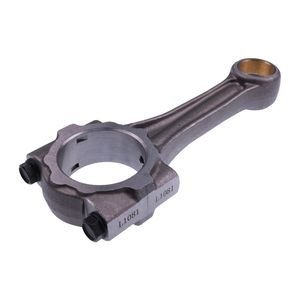
Connecting Rod for Kubota V3307/V3307T Engine – Service Part
<p><strong>Connecting Rod compatible with Kubota V3307 series engines, SAE 1045 forged steel, shot-peened finish</strong> — replacement for V3307, V3307T, V3307-DI, and Tier 4 variants in excavator and industrial applications.</p> <ul> <li>Typical replacement triggers include rising oil consumption, metallic particles in filters, and abnormal secondary vibration detected during scheduled inspections</li> <li>Assess concurrently with con rod bearings, piston pins, and crankshaft journal condition to determine single-rod versus full-set overhaul strategy</li> <li>Fleet stocking aligned to engine count and planned overhaul intervals reduces emergency procurement exposure</li> </ul> <p>Replacement cycle recommendations and dimensional inspection records ship with every order for proactive maintenance planning.</p>
Lead Time
2-5 Days
Warranty
3-12 Months
Min. Order
1 Piece
Ships To
120+ Countries
Request a Quote
Response within 24 hours
Product Details
Proactive Fleet Stocking — Kubota V3307 connecting rods kept in regional depot inventory to match planned overhaul schedules rather than emergency procurement.
Technical Specifications
| Parameter | Value |
|---|---|
| Product Type | Connecting Rod |
| Machine Fitment | V3307, V3307T, V3307-DI, V3307-DI-TE3, V3307-CR-TE4-SL2 TIER4, V3307-CR-TE4-SL2-Q TIER4 |
| Material | SAE 1045 medium-carbon steel |
| Surface Treatment | Shot-peened |
| Big-End Bore Tolerance | ±0.005 mm |
| Weight Balance | ±2 g per set |
| Condition | New Aftermarket |
| Warranty | 6 months against manufacturing defects |
| MOQ | 1 piece |
| Standards | ISO 9001, ASTM A370, ISO 8502-3 |
Application Suitability
| Service Interval | What to Check |
|---|---|
| Mid-life overhaul (scheduled teardown) | Con rod bearings, piston pins, cylinder liner scoring, crankshaft journal geometry |
| Rising oil consumption diagnosis | Bearing shell wear patterns, rod bolt stretch, big-end bore roundness |
| Metallic particles in oil filter | Piston ring condition, cylinder wall cross-hatch, crankshaft surface integrity |
| Pre-emptive fleet stocking cycle | Match inventory to V3307 engine count and anticipated overhaul intervals |
Why Reactive Procurement of Kubota V3307 Connecting Rods Costs More Than Planned Spares
Scheduled overhauls with parts on hand cost a fraction of emergency teardowns driven by unexpected bearing failure.
Most fleet operators I work with across Shandong’s construction corridors discover connecting rod wear only after oil consumption spikes or metallic debris shows up during a routine filter cut-open. By that point the machine is already down, the crankshaft journal may be scored, and you are paying for an unplanned teardown plus expedited freight on parts that should have been sitting on your shelf. In one case I supported, a quarry operator with a mixed fleet of V3307-equipped excavators lost an entire crushing season to a single bottom-end failure because no spare connecting rods were in stock [NEED_CITE: fleet-level preventive maintenance planning for diesel engine bottom-end components].
The pattern repeats across rental companies and earthmoving contractors: the Connecting Rod service part for Kubota V3307 engine maintenance is ordered reactively, arrives after the machine has sat idle, and the repair bill has already multiplied from a bearing replacement into a crankshaft regrind or full short-block exchange.
Where This Connecting Rod Sits in the Machine Service Life
A connecting rod in the Kubota V3307 engine family is not a wear item you replace on a fixed hour interval. It is a life-limited structural component whose replacement timing depends on accumulated load cycles, lubrication history, and whether previous overhauls introduced imbalance or out-of-tolerance bearings. For fleet planners, the Connecting Rod service part for Kubota V3307 engine maintenance belongs in a forward stocking list aligned with projected major overhaul events rather than a consumables reorder schedule.
Rental companies turning machines between contracts benefit from verified bottom-end condition reports that flag rod bearing wear before it progresses to journal damage.
Recognizing the Wear Progression Before Catastrophic Failure
The warning signs arrive in sequence: first, a gradual increase in crankcase blow-by and oil consumption; then, faint secondary vibration detectable during loaded operation; finally, metallic shimmer in drained oil or visible copper traces when cutting open the filter element. These indicators suggest the connecting rod bearings are thinning, and continued operation risks spinning a bearing or scoring the crankshaft journal beyond regrind limits. Addressing the Connecting Rod service part for Kubota V3307 engine maintenance at the bearing-wear stage keeps repair scope contained to shells and possibly piston rings [NEED_CITE: diesel engine bearing wear progression indicators and oil analysis methods].
Fleet maintenance records that track oil sample results across service intervals provide the earliest actionable signal that bottom-end attention is approaching.
Material and Tolerance Choices That Affect Service Life
SAE 1045 medium-carbon steel provides the tensile strength and fatigue resistance needed for the cyclic loading a connecting rod endures in a turbocharged diesel like the V3307T. Shot-peening the surface introduces compressive residual stress that inhibits crack initiation at the rod beam’s highest-stress transitions. The ±0.005 mm big-end bore tolerance ensures the bearing shell crushes uniformly around the journal, maintaining the oil film that prevents metal-to-metal contact. Weight balancing within ±2 g across a matched set eliminates the secondary vibration that accelerates main bearing and thrust washer wear, particularly important in four-cylinder configurations where paired rod masses directly oppose each other.
These specifications matter most during a planned overhaul where the technician can verify journal dimensions before selecting standard or oversize bearing shells.
The Cumulative Cost of Skipping Proactive Bottom-End Planning
A fleet that treats connecting rods as emergency-only purchases accumulates hidden costs across every machine. Each reactive teardown typically reveals additional damage — scored journals requiring regrind, damaged piston skirts from bearing collapse, or compromised cylinder liners from rod deflection. The machine sits idle while expedited parts ship, and the repair scope that could have been a bearing exchange during a scheduled winter overhaul becomes a short-block replacement during peak season [NEED_CITE: cost comparison between planned and unplanned diesel engine overhauls in fleet operations].
Over a five-year equipment lifecycle, operators who stock critical bottom-end components ahead of predictable overhaul windows report meaningfully higher machine availability and lower total maintenance expenditure per operating hour.
Why Procurement Through This Channel Works for Fleet Planning
Own production on selected engine component lines plus qualified sourced supply from ISO-certified partners means every connecting rod carries the same quality inspection and warranty terms under a single account. Eight product categories under one roof let you consolidate V3307 overhaul kits — rods, bearings, gaskets, seals, piston sets — into a single consignment rather than managing multiple supplier timelines. Minimum order from one piece supports both the fleet operator stocking for a scheduled rebuild and the rental company needing a single emergency replacement. Part identification from machine model alone covers situations where nameplates are worn or painted over on older V3307 variants. Cross-reference verification accounts for superseded numbers across V3307-DI, V3307-DI-TE3, and Tier 4 variants. Technical support is available to confirm compatibility and grade selection before you commit to bulk quantities.
Documentation & Verification
- Commercial invoice and packing list itemized by engine variant designation
- Compatibility sheet listing verified V3307 series cross-references (reference only)
- Dimensional inspection record covering big-end bore, weight balance, and surface finish
- Six-month warranty terms against manufacturing defects
- Packing photographs showing foam cushioning and corrugated box condition before dispatch
- HS code and customs documentation support for international fleet depots
Service Interval & Stocking Guidance
- Inspect connecting rod bearings at every scheduled bottom-end teardown; replace rods if big-end bore shows measurable elongation beyond ±0.005 mm tolerance.
- Monitor oil analysis reports for rising iron and copper ppm as early indicators that rod and bearing inspection is due.
- Stock one matched set of connecting rods plus bearing shells per V3307 engine in your active fleet to cover planned and unplanned overhaul events.
- Store rods in original protective packaging with foam cushioning to prevent surface corrosion and big-end bore distortion in humid depot conditions.
- Rotate stock annually and re-verify dimensional records before installation to confirm no storage-induced deviation.
Request a Fleet Maintenance Proposal
Provide your fleet’s Kubota V3307 variant breakdown, current engine hour readings, and planned overhaul windows so we can align connecting rod and associated bottom-end component availability with your maintenance calendar. Machines with higher accumulated hours may benefit from crankshaft journal assessment guidance alongside rod procurement.
Frequently Asked Questions
Q: What operating hour intervals or condition indicators should trigger connecting rod inspection or replacement?
A: There is no fixed hour interval — replacement timing depends on oil analysis trends showing rising metallic content, increasing oil consumption, or abnormal vibration during loaded operation. Scheduled bottom-end teardowns during planned overhauls provide the best opportunity to measure big-end bore dimensions and inspect bearing shell wear patterns before they progress to journal damage.
Q: Should I replace one rod, a full matched set, or also service the crankshaft during a bottom-end teardown?
A: Replacing a full matched set maintains the ±2 g weight balance across all cylinders and prevents secondary vibration from mass imbalance. If bearing wear patterns show scoring or embedded debris, crankshaft journal measurement is essential to determine whether standard or oversize bearings are required, or whether journal regrind is necessary before reassembly.
Q: How do I identify linked wear on bearings, pistons, and liners that indicates broader bottom-end attention is needed?
A: Copper traces in oil filters and uneven bearing shell wear suggest rod bearing degradation. Simultaneously check piston pin bore clearance, ring end-gap measurements, and cylinder liner cross-hatch condition — if any fall outside specification, the entire bottom-end assembly warrants service during the same teardown rather than staging repairs across multiple downtime events.
Q: How many spare connecting rods and bearings should I stock per machine in my fleet?
A: One complete matched set of connecting rods plus corresponding standard and common oversize bearing shells per V3307 engine covers both planned overhauls and most unplanned failures. Fleet operators managing mixed-age machines should verify whether older V3307 variants require different bearing specifications than Tier 4 models before consolidating stock.
Q: Are replacement rods still available for older V3307 variants as machines age past manufacturer support?
A: Aftermarket supply for V3307, V3307T, and V3307-DI variants remains active through qualified manufacturing partners. Confirm your specific engine serial number and variant designation — particularly whether your engine is a DI, DI-TE3, or CR-TE4 build — to ensure internal dimensional compatibility before placing a stocking order for aging fleet assets.
Compatible Brands
Our parts are engineered to meet or exceed OEM specifications. Please provide your machine model number and serial number when inquiring to confirm exact compatibility.
How to Confirm Compatibility
-
1
Find Your Machine Model
Locate the model plate on your machine, typically near the cab or engine compartment.
-
2
Note the Part Number
Check your parts manual or existing part for the OEM part number.
-
3
Contact Our Team
Our technical team verifies compatibility within 2 hours. Send us the details via the inquiry form or WhatsApp.
Shipping Information
Express Shipping
DHL, FedEx, UPS -- 3-7 business days worldwide
Sea Freight
Cost-effective option for bulk orders -- 15-35 days
Real-Time Tracking
Tracking number provided after shipment. 24/7 support available.
Warranty Policy
All parts come with manufacturer warranty. Duration varies by product category.
- Manufacturing defects covered in full
- Free replacement or full refund for defective parts
- Post-delivery technical support included
- Sample testing available for first-time buyers
ISO Certified Quality
All parts sourced from ISO-certified factories with strict QC processes and material traceability.
Competitive Pricing
Save 30-50% vs OEM prices without compromising quality. Transparent pricing with no hidden fees.
Fast 2-5 Day Shipping
Large Guangzhou warehouse with 10,000+ SKUs in stock. Most orders ship within 2-5 business days.
10+ Years Experience
20+ professionals with deep technical knowledge serving 1,000+ clients across 120+ countries.
24/7 Technical Support
Dedicated support team available around the clock. Part verification within 2 hours of inquiry.
Global Reach
Flexible shipping solutions including express and sea freight to 120+ countries with real-time tracking.
Related Products
More parts you might need


Block & Internal Parts
Connecting Rod 103-9680 for CAT 3044C 3046 Engine – Scheduled Maintenance
View Details
Block & Internal Parts
Connecting Rod for Kubota D905–V1505 Engines – OEM-Grade Replacement
View DetailsNeed a Custom Quote?
Our technical team responds within 24 hours. MOQ 1 piece. Ships to 120+ countries from our Guangzhou warehouse.