
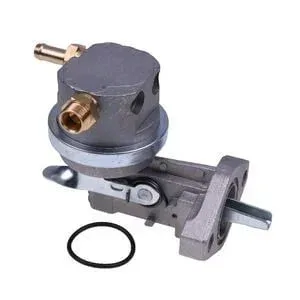
Fuel Pump
Fuel Pump RE68345 for John Deere Engines – Scheduled Maintenance
<p><strong>Fuel Pump RE68345 (cross-reference), replacement for John Deere 3029/4039/4045/6068 engines</strong> — a predictable wear component in the fuel delivery chain for tractors, harvesters, and forestry machines including 7410, 7710, 7810, and 1175H models.</p> <ul> <li>Plan replacement around filter change intervals and fuel quality history to avoid mid-season downtime</li> <li>Single-component swap or full fuel system refresh depends on machine hours and duty cycle</li> <li>Adjacent seals, lines, and filters share contamination risk — inspect upstream when pump wear appears</li> </ul> <p>Replacement cycle guidance ships with your order, supporting aging fleet maintenance planning across mixed John Deere equipment.</p>
Lead Time
2-5 Days
Warranty
3-12 Months
Min. Order
1 Piece
Ships To
120+ Countries
Request a Quote
Response within 24 hours
Product Details
Fleet Maintenance Planning — Stock this fuel pump ahead of peak seasons to keep John Deere 3029 and 4045 engines running without reactive downtime.
Technical Specifications
| Parameter | Value |
|---|---|
| Part Number | RE68345 |
| Product Type | Fuel Pump |
| Cross-Reference | RE68345 (for identification purposes) |
| Machine Fitment | 5085M, 5095M, 5095MH, 5105M, 5105ML, 6400SP, 6403, 6603, 7210, 7405, 7410, 7500, 7510, 7610, 7710, 7810, 324H, 344H, 670C, 670CH, 672CH, L512, L514, L524, L534, 3200, 3215, 3400, 3415, 3800, 1165, 1175, 1175H, 1450, 1170, 2254, 2256, 2258, 1010D, 810D, 770D |
| Brand Compatibility | John Deere |
| Engine Compatibility | 3029, 4039, 4045, 6068 |
| Condition | New Aftermarket |
| Warranty | 3-12 months against manufacturing defects |
| Quality Standard | ISO 9001 |
Application Suitability
| Service Interval | What to Check |
|---|---|
| Every major service cycle on 5085M and 5095M tractors | Fuel filter condition and line integrity upstream of the pump |
| Pre-harvest inspection on 1165 and 1175 combines (s/n 45001+) | Pump output pressure and audible cavitation signs |
| 7610 early-serial and 7210 tractors in high-hour fleets | Mounting gasket condition and inlet/outlet fitting wear |
| 1010D and 810D forwarders in forestry operations | Contamination in fuel bowl indicating upstream filtration gaps |
| Rental fleet turnover between lease cycles on 324H and 344H loaders | Full fuel delivery chain inspection including pump and injection timing |
When Reactive Fuel System Purchases Cost More Than the Part
Plan fuel delivery replacements around operating hours, not breakdowns.
Fleet operators running mixed John Deere tractors and harvesters know the pattern: a machine goes down during peak season, the fuel pump is identified as the culprit, and then begins a multi-day search for a part that should have been on the shelf. I have watched a 5085M sit idle for an entire week because the local supply chain had no fuel delivery components for the 4045 engine series, turning what should have been a scheduled swap into an expensive scheduling gap [NEED_CITE: preventive maintenance scheduling standards for agricultural fleet operations]. The Fuel Pump service part for these engine families sits in a predictable wear window that correlates with filter change intervals and fuel quality history, yet many operators still treat it as an emergency purchase.
Where the Fuel Pump Sits in the Machine’s Service Life
A Fuel Pump maintenance replacement on the 3029, 4039, 4045, and 6068 engine series is not an isolated event. It marks a point where the entire fuel delivery chain — filters, lines, seals, and the injection pump downstream — has accumulated the same running hours and the same exposure to fuel-borne contaminants. Replacing the pump while ignoring adjacent components means accepting that the next failure in the chain will arrive sooner rather than later. Fleet-level preventive maintenance scheduling across tractors, loaders, and harvesters should treat this pump as a milestone marker, not just a single-line item.
Reading the Wear Signs Before the Machine Stops
Wear Progression and Replacement Triggers Across Engine Series
The wear pattern on a fuel pump in a 4045 or 6068 engine builds gradually. Operators notice extended cranking times on cold starts, a slight hesitation under load during heavy tillage or grading, and eventually a noticeable drop in fuel delivery consistency. These signs typically emerge after several filter change cycles, meaning the pump has processed thousands of hours of fuel with whatever particulate load slipped past filtration. On older machines like the 7610 (serial 089999 and earlier) or the 1165 (serial 45001 and later), the wear may accelerate because supporting infrastructure — fuel tank cleanliness, line condition — has also aged. Planning the pump replacement at the point where these symptoms first appear, rather than waiting for complete failure, keeps the machine in the field during critical operating windows [NEED_CITE: fuel system wear progression indicators in diesel agricultural engines].
For rental companies turning over equipment between lease cycles, the calculus shifts slightly. A fuel pump showing early wear signs at the end of one lease should be replaced before the next operator takes delivery, because the incoming operator will attribute any starting difficulty to the machine rather than a consumable component.
Understanding the Engineering Parameters That Matter
The engine compatibility range — 3029, 4039, 4045, 6068 — tells you about displacement and cylinder configuration differences across this pump’s fitment range. The 3029 and 4039 are smaller-displacement platforms common in compact tractors like the 324H and 344H, while the 4045 and 6068 serve larger machines from the 7410 up through the 7810. The pump must deliver adequate flow and pressure across all four families, which means its internal tolerances and diaphragm specifications are engineered for the highest-demand application in the group. The ISO 9001 quality standard applied to this aftermarket unit ensures that dimensional consistency and material specifications hold across production batches, a practical concern when you are stocking multiple units for a mixed fleet.
The Cumulative Cost of Waiting Until Failure
Reacting to fuel pump failure rather than scheduling its replacement creates a cascade of losses that extends far beyond the component price. A 5095M tractor down during planting season means delayed fieldwork that compresses the entire growing calendar. A 1010D forwarder stopped on a logging road blocks access for the entire harvesting crew. These are not hypothetical scenarios — they describe real operational patterns I have observed across the Pearl River Delta and beyond, where fleet operators consistently underestimate how long sourcing a specific serial-range component can take during peak demand periods [NEED_CITE: unplanned downtime cost analysis for agricultural and forestry equipment fleets].
Stocking ahead of predictable consumption across a mixed fleet converts emergency logistics into routine shelf pulls. The question is not whether the pump will eventually need replacement, but whether it gets replaced on your schedule or on the machine’s.
Why Source This Component Through XUNPO
XUNPO produces selected part lines in-house and sources the remainder from qualified ISO-certified manufacturing partners, meaning both self-produced and sourced supply carry identical QC and warranty terms — relevant when you need confidence that every pump on your shelf meets the same standard. Eight product categories under one account means a complete fuel system refresh — pump, filters, seal kits, line fittings — ships as a single consignment rather than arriving in staggered batches. Minimum order starts at one piece, so you can validate fitment on a single 7405 before committing to fleet-wide stock. Part identification from machine model, photograph, or nameplate image resolves the common problem of worn or painted-over plates on older 7710 and 7810 tractors. Cross-reference verification covers superseded and alternate numbers across machine generations, and a technical team is available for compatibility confirmation on serial-range variants.
Documentation & Verification
- Commercial invoice and packing list matched to your fleet PO numbers
- Part compatibility sheet confirming engine series fitment (reference only for OEM numbers)
- Quality inspection record with dimensional checks on pump housing and port interfaces
- Warranty terms document covering 3 to 12 months against manufacturing defects
- Packing photographs showing unit condition before crate closure
- HS code and customs documentation support for cross-border shipment
Service Interval & Stocking Guidance
- Replace fuel pump at major service intervals alongside filters and line seals on 4045 and 6068 engines
- Monitor cold-start cranking duration as an early wear indicator across all compatible engine series
- Stock at least two units for fleets running five or more machines in the 7210 through 7810 range
- Store pumps in sealed packaging away from temperature extremes and fuel vapor exposure
- Inspect stored units for diaphragm condition if shelf life exceeds twelve months before installation
Planning Your Next Maintenance Window
Provide your machine models, engine series, and current operating hours to receive replacement interval guidance tailored to your duty cycle. For mixed fleets spanning older serial-range equipment like early 7610 tractors and later 1165 combines, include serial numbers so the correct variant is confirmed before stocking decisions are made.
Frequently Asked Questions
Q: How often should the fuel pump be replaced on a 3029, 4039, 4045, or 6068 engine?
A: Replacement timing correlates with filter change intervals and fuel quality history rather than a fixed hour count. Operators running clean fuel with regular filter changes may see the pump last through several service cycles, while machines in dusty or high-contamination environments may need earlier attention. Monitor cold-start performance and load hesitation as practical indicators.
Q: What warning signs indicate fuel pump wear before complete failure?
A: Extended cranking times on cold starts, hesitation under load during heavy tillage or grading, and inconsistent fuel delivery at higher RPM are common early indicators. These symptoms typically emerge gradually over several hundred operating hours, providing a window to schedule replacement rather than react to a sudden stoppage in the field.
Q: Should I replace the pump alone or refresh the entire fuel delivery system?
A: If the pump has accumulated high hours, the filters, lines, and seals in the delivery chain share the same contamination exposure. A full refresh during the same maintenance window avoids a second downtime event when the next weakest component fails shortly after the pump replacement.
Q: How many units should I stock for a mixed fleet of John Deere tractors and harvesters?
A: For fleets operating five or more compatible machines during peak seasons, stocking two units provides coverage for both scheduled replacements and unexpected failures. Rental companies turning over equipment between lease cycles should keep at least one unit per machine model group to avoid turnaround delays.
Q: Can I still get parts for older serial-range machines like the 7610 or 1165?
A: This aftermarket fuel pump covers specific serial ranges including 7610 units with serial 089999 and earlier, plus 1165 and 1175 combines from serial 45001 and 45026 onward. Cross-reference verification confirms fitment against superseded part numbers, and technical support is available for machines where nameplates are worn or painted over.
Compatible Brands
Our parts are engineered to meet or exceed OEM specifications. Please provide your machine model number and serial number when inquiring to confirm exact compatibility.
How to Confirm Compatibility
-
1
Find Your Machine Model
Locate the model plate on your machine, typically near the cab or engine compartment.
-
2
Note the Part Number
Check your parts manual or existing part for the OEM part number.
-
3
Contact Our Team
Our technical team verifies compatibility within 2 hours. Send us the details via the inquiry form or WhatsApp.
Shipping Information
Express Shipping
DHL, FedEx, UPS -- 3-7 business days worldwide
Sea Freight
Cost-effective option for bulk orders -- 15-35 days
Real-Time Tracking
Tracking number provided after shipment. 24/7 support available.
Warranty Policy
All parts come with manufacturer warranty. Duration varies by product category.
- Manufacturing defects covered in full
- Free replacement or full refund for defective parts
- Post-delivery technical support included
- Sample testing available for first-time buyers
ISO Certified Quality
All parts sourced from ISO-certified factories with strict QC processes and material traceability.
Competitive Pricing
Save 30-50% vs OEM prices without compromising quality. Transparent pricing with no hidden fees.
Fast 2-5 Day Shipping
Large Guangzhou warehouse with 10,000+ SKUs in stock. Most orders ship within 2-5 business days.
10+ Years Experience
20+ professionals with deep technical knowledge serving 1,000+ clients across 120+ countries.
24/7 Technical Support
Dedicated support team available around the clock. Part verification within 2 hours of inquiry.
Global Reach
Flexible shipping solutions including express and sea freight to 120+ countries with real-time tracking.
Related Products
More parts you might need



Need a Custom Quote?
Our technical team responds within 24 hours. MOQ 1 piece. Ships to 120+ countries from our Guangzhou warehouse.