

Engine Auxiliary Components
Engine Auxiliary Components
ISO Certified
Ships 2-5 Days
MOQ 1 Piece
Engine Auxiliary Components
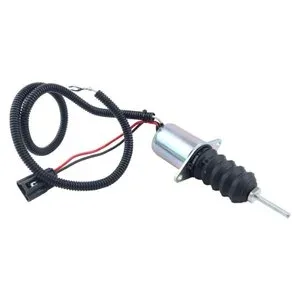
Fuel Shut Off Solenoid AM124377 AM102863 for John Deere – Service Part
<p><strong>AM124377 AM102863 Stop Solenoid, 180°C Class H insulation, stainless steel plunger</strong> — replacement for John Deere skid-steer loaders (375, 3375, 675B, 7775) and compact utility tractors (655, 755, 855, 955).</p> <ul> <li>Watch for intermittent stalling or delayed starts as signs of coil thermal fatigue; plan replacement during scheduled service intervals rather than waiting for complete shutdown</li> <li>Pair inspection with fuel filter and line checks to rule out upstream causes before condemning the solenoid</li> <li>Compatible with F935 front mower and multiple machine generations under the same cross-reference numbers</li> </ul> <p>Older machine models remain supported with ongoing aftermarket supply — replacement interval guidance included with shipment.</p>
Lead Time
2-5 Days
Warranty
3-12 Months
Min. Order
1 Piece
Ships To
120+ Countries
AM124377
Fleet Supply
Fuel System
John Deere Compatible
Service Part
stop solenoid
Request a Quote
Response within 24 hours
Prefer instant chat?
WhatsApp
Product Details
Fleet Stocking Plans — Skid-steer loaders and compact tractors need scheduled solenoid replacements before coil insulation degrades past safe limits.
Technical Specifications
| Parameter | Value |
|---|---|
| Part Number | AM124377 AM102863 |
| Product Type | Stop Solenoid |
| Cross-Reference (reference only) | AM124377, AM102863 |
| Machine Fitment | Skid-Steer Loader: 375, 3375, 675, 675B, 4475, 5575, 6675, 7775; Compact Utility Tractor: 655, 755, 756, 855, 856, 955; Front Mower: F935 |
| Condition | New Aftermarket |
| Material | Stainless steel plunger, brass housing |
| Insulation Class | Class H |
| Operating Temperature | Up to 180°C |
| Dimensional Tolerance | ±0.05 mm |
| Actuation Force Tolerance | ±3% |
| Quality Standard | ISO 9001 |
| Warranty | 3–12 months against manufacturing defects |
| Minimum Order | 1 piece |
Application Suitability
| Service Interval | What to Check |
|---|---|
| Every 1,500–2,000 operating hours | Coil resistance drift and intermittent engine shut-off during load |
| Annual pre-season inspection for agricultural units | Plunger travel smoothness and response delay on key-off |
| Post-overhaul fuel system verification | Solenoid seating seal and electrical connector corrosion |
| Fleet rotation cycle for rental equipment | Accumulated heat cycles on insulation and brass housing thread condition |
When the Fuel Shut Off Solenoid Fails Outside Planned Maintenance
Most unplanned shutdowns trace back to a solenoid that was never scheduled for replacement.
Fleet managers operating John Deere skid-steer loaders and compact utility tractors often discover the fuel shut off solenoid service part only after the machine refuses to start on a job site or shuts down mid-cycle. In mining support operations and agricultural peak seasons, a single loader sitting idle while a replacement is sourced can cascade into missed deadlines across an entire work crew. The units compatible with this solenoid — the 675B, 7775, 955, and their siblings — tend to accumulate heat cycles faster than their service manuals anticipate, particularly when working repetitive grading or mowing tasks under high ambient temperatures [NEED_CITE: thermal degradation patterns in solenoid coil insulation for mobile diesel equipment]. I have seen entire fleets grounded because maintenance schedules treated this component as non-wearing, when in reality the Class H insulation envelope degrades measurably after sustained operation near its upper thermal boundary.
Where This Solenoid Sits in the Machine’s Service Life
A fuel shut off solenoid service part occupies a deceptively critical position in the fuel control chain. It is the final electrical gate between the operator’s key position and the engine’s ability to stop or start. On skid-steer loaders like the 375 and 4475, the solenoid endures vibration loads from the loader arm cycle transmitted through the engine block, accelerating fatigue on the internal plunger return spring. On compact utility tractors such as the 755 and 856 used in sustained agricultural duty, continuous runtime pushes the coil temperature closer to its rated ceiling. Replacing this component on a planned interval — rather than at failure — keeps the machine within predictable maintenance windows and avoids the compounding delays that reactive purchasing always introduces.
Reading the Early Warning Signs Before Total Failure
Intermittent shutdowns under load, delayed engine stop after key-off, and occasional failure to crank are all signatures of a solenoid approaching end of life. These symptoms often appear weeks before complete failure, yet they are routinely misdiagnosed as fuel filter blockage or injection pump wear. On older machines like the 675 and 655, where OEM support has thinned and lead times for branded parts have stretched into multi-week waits, missing these early signs means the next failure will happen at the worst possible moment [NEED_CITE: aftermarket supply continuity for discontinued agricultural equipment service parts]. A fleet-level stocking strategy that treats the fuel shut off solenoid as a predictable wear item — ordered alongside filters and seals during scheduled overhaul windows — eliminates the gap between diagnosis and replacement entirely.
How Insulation Class and Housing Material Shape Service Life
The Class H insulation rating defines the maximum sustained temperature the coil winding can tolerate before dielectric breakdown begins. At up to 180°C, this solenoid can handle the heat soak from adjacent exhaust components on compact loaders, but continuous duty in tropical mining environments can push localized temperatures higher than the rating suggests. The brass housing conducts heat away from the coil more effectively than steel alternatives, while the stainless steel plunger resists the corrosion that fuel vapor exposure causes in carbon steel components. The ±0.05 mm dimensional tolerance on the plunger bore ensures consistent seating force, which directly affects whether the engine stops cleanly or requires multiple key cycles [NEED_CITE: solenoid plunger seating tolerance effects on diesel engine shutdown reliability]. The ±3% actuation force tolerance maintains reliable fuel rack movement even as the internal spring accumulates fatigue over thousands of cycles.
The Compounding Cost of Reactive Solenoid Replacement
When a solenoid is replaced only after failure, the actual cost extends far beyond the part itself. A skid-steer loader down on a construction site requires a technician to diagnose the fault, confirm it is not the fuel pump or wiring harness, source the correct replacement, and then travel back to install it — often across multiple days. For rental fleets rotating equipment between job sites, one unscheduled breakdown disrupts the entire rotation schedule and forces penalty clauses with contractors. On machines where the solenoid has failed in the energized position, the engine cannot be restarted at all, meaning the machine must be towed rather than simply repaired on site [NEED_CITE: equipment downtime cost multipliers in reactive versus planned maintenance models]. Procuring these units in planned batches, verified against fleet machine hours and serial ranges, removes every one of these hidden costs from the operating budget.
What Consolidated Supply Means for Fleet Maintenance
XUNPO maintains production and sourcing across selected fuel system component lines under a single warranty framework, meaning the fuel shut off solenoid service part ships under the same quality terms whether ordered individually or as part of a full overhaul kit. Fleet operators specifying replacements across multiple machine models — from the 3375 skid-steer to the F935 front mower — consolidate all eight parts categories into one account and one shipment. Compatibility verification covers superseded reference numbers, so older machines with discontinued OEM listings receive confirmed aftermarket matches rather than trial-fit guesswork. Sample units are available for fitment confirmation before fleet-wide commitment, and the technical team validates insulation grade and dimensional tolerance against each machine’s serial range before dispatch.
Documentation & Verification
- Commercial invoice listing each solenoid reference number and machine compatibility
- Cross-reference sheet mapping AM124377 and AM102863 to equipment serial ranges (reference only)
- Dimensional inspection record confirming plunger bore and housing thread tolerance
- Warranty terms covering insulation and actuation performance for the stated period
- Packing photographs showing individual solenoid protection before carton closure
- HS code declaration supporting customs clearance for international fleet shipments
Service Interval & Stocking Guidance
- Schedule solenoid inspection at each major service interval, checking coil resistance and plunger freedom of movement
- Stock one solenoid per three machines in active fleet rotation to cover failures between planned orders
- Store units in dry conditions below 40°C, away from fuel vapor and direct UV exposure
- Verify machine serial range before deployment, as mounting thread specifications may vary across production years
- Pair solenoid replacement with fuel filter and line inspection to eliminate adjacent-cause failures
- For rental fleets, standardize replacement at annual overhaul regardless of measured condition to prevent field failures
Requesting a Fleet Maintenance Quote
Provide your machine model list, accumulated operating hours, and any superseded reference numbers you have on record. XUNPO will return a compatibility-verified solenoid supply plan with recommended stock levels for your fleet size and duty cycle, along with lead time and documentation details for each unit.
Frequently Asked Questions
Q: What symptoms indicate the fuel shut off solenoid needs replacement?
A: Intermittent engine shutdown under load, delayed stopping after key-off, and occasional failure to crank are typical early signs. These symptoms often overlap with fuel filter or pump issues, so confirming solenoid coil resistance and plunger travel helps isolate the fault before committing to a full fuel system teardown.
Q: How often should the fuel shut off solenoid be replaced?
A: Replacement intervals depend on duty cycle and ambient conditions, but most fleet maintenance plans schedule inspection at each major service and replacement every two to three overhaul cycles. Units operating in high-temperature environments or continuous agricultural duty may need earlier replacement based on coil resistance drift readings.
Q: Should only the solenoid be replaced, or the entire fuel control circuit?
A: Replacing the solenoid alone is sufficient when diagnostics confirm coil or plunger failure. However, if wiring harness connectors show corrosion or the fuel shut-off relay has logged high cycle counts, replacing those adjacent components simultaneously prevents a second shutdown from a related failure within the same service window.
Q: Can replacement solenoids still be sourced for older discontinued models?
A: Aftermarket supply continues for machines where OEM support has ended, provided the reference number is verified against the machine serial range. XUNPO cross-references superseded numbers and confirms dimensional compatibility before dispatch, so older loaders and tractors remain serviceable without trial-fit risk.
Q: How many spare solenoids should a fleet keep in stock?
A: A common starting point is one unit per three machines in active rotation, adjusted upward for fleets in remote locations or operating under continuous seasonal duty. Sharing machine model lists and annual operating hour projections allows XUNPO to recommend a stocking quantity matched to your specific failure probability and supply lead time.
Compatible Brands
CAT
KOMATSU
HITACHI
VOLVO
HYUNDAI
DOOSAN
KOBELCO
SANY
XCMG
Our parts are engineered to meet or exceed OEM specifications. Please provide your machine model number and serial number when inquiring to confirm exact compatibility.
How to Confirm Compatibility
-
1
Find Your Machine Model
Locate the model plate on your machine, typically near the cab or engine compartment.
-
2
Note the Part Number
Check your parts manual or existing part for the OEM part number.
-
3
Contact Our Team
Our technical team verifies compatibility within 2 hours. Send us the details via the inquiry form or WhatsApp.
Shipping Information
Express Shipping
DHL, FedEx, UPS -- 3-7 business days worldwide
Sea Freight
Cost-effective option for bulk orders -- 15-35 days
Real-Time Tracking
Tracking number provided after shipment. 24/7 support available.
Warranty Policy
3-12
Months Warranty
All parts come with manufacturer warranty. Duration varies by product category.
- Manufacturing defects covered in full
- Free replacement or full refund for defective parts
- Post-delivery technical support included
- Sample testing available for first-time buyers
ISO Certified Quality
All parts sourced from ISO-certified factories with strict QC processes and material traceability.
Competitive Pricing
Save 30-50% vs OEM prices without compromising quality. Transparent pricing with no hidden fees.
Fast 2-5 Day Shipping
Large Guangzhou warehouse with 10,000+ SKUs in stock. Most orders ship within 2-5 business days.
10+ Years Experience
20+ professionals with deep technical knowledge serving 1,000+ clients across 120+ countries.
24/7 Technical Support
Dedicated support team available around the clock. Part verification within 2 hours of inquiry.
Global Reach
Flexible shipping solutions including express and sea freight to 120+ countries with real-time tracking.
Related Products
More parts you might need

Engine Auxiliary Components
Spark Plug and Wire Kit for Yanmar 3TNV70 – Scheduled Maintenance
View Details
Engine Auxiliary Components
Glow Plug 15261-65513 for Kubota D600–D1005 Engines – Fast-Heating Replacement
View Details
Need a Custom Quote?
Our technical team responds within 24 hours. MOQ 1 piece. Ships to 120+ countries from our Guangzhou warehouse.