
Belt Drive Systems
Narrow V-Belt 0117-9565 for Deutz 1011 2011 – Fleet Supply
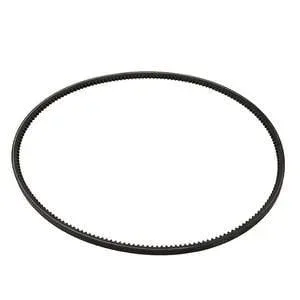
<p><strong>Narrow V-Belt 0117-9565, 10x1125 mm</strong> — replacement for Deutz 1011 and 2011 series engines including BF4M2011, F4L2011, and F3L2011 models.</p> <ul> <li>Replace at scheduled service intervals or when cracking, glazing, or fraying appears during inspection</li> <li>Evaluate tensioner and pulley condition at each belt change to avoid premature re-failure</li> <li>High-tensile polyester cords with heat-resistant rubber, operating from -30°C to 80°C</li> </ul> <p>Long-term supply commitment for aging Deutz platforms keeps fleet maintenance predictable.</p>
Lead Time
2-5 Days
Warranty
3-12 Months
Min. Order
1 Piece
Ships To
120+ Countries
Request a Quote
Response within 24 hours
Product Details
Scheduled Replacement — stocking this belt ahead of predictable wear keeps Deutz 1011 and 2011 engine fleets running on a maintenance calendar rather than a breakdown schedule.
Technical Specifications
| Parameter | Value |
|---|---|
| Part Number | 0117-9565 |
| Product Type | Belt |
| Cross-Reference | 0117-9565 (reference only), 01179565 (reference only), 02235179 (reference only), 2324000890 (reference only) |
| Machine Fitment | BF4M2011, D2011L03, F2L1011F, F3L1011F, F3L2011, F3M2011, F4L2011 |
| Dimensions | 10×1125 mm |
| Cord Construction | High-tensile polyester cords |
| Compound | Heat-resistant rubber compounds |
| Operating Temperature | -30°C to 80°C |
| Condition | New Aftermarket |
| Warranty | 3-12 months |
| Quality Standard | ISO 9001 |
Application Suitability
| Service Interval | What to Check |
|---|---|
| Every 500 operating hours | Inspect belt surface for cracking, glazing, and edge fraying; measure deflection under thumb pressure |
| Annual fleet service | Verify tensioner spring force and pulley alignment on BF4M2011 and F4L2011 units before peak season |
| Pre-deployment turnaround (rental) | Check belt condition on F2L1011F and F3L1011F engines; replace if any cord exposure is visible |
| 1,000-hour major service | Evaluate full auxiliary drive path including water pump and alternator bearings alongside belt replacement |
Why Fleet Operators Lose More Than Just a Belt When They Wait
Replacing a narrow V-belt on schedule costs a few minutes of planned downtime; waiting for it to snap costs the entire jobsite.
In mining and heavy civil operations running Deutz 1011 and 2011 series engines, auxiliary drive belts are among the most overlooked wear items. A narrow V-belt service part for Deutz 1011 2011 engine maintenance rarely fails with warning — it snaps under load, often when the engine is working hardest. When that happens on a remote site with no spare on the shelf, the machine sits idle while procurement scrambles to source a replacement. Over a fleet of twenty or thirty Deutz-powered units, reactive belt purchasing creates a pattern of short, expensive stoppages that never show up as a single line item in the maintenance budget [NEED_CITE: planned versus reactive maintenance cost multipliers in mobile equipment fleets].
The real cost is not the belt itself. It is the loader that stops tramming, the generator that drops offline mid-shift, or the excavator that cannot swing because its hydraulic pilot pump lost drive. Each incident pulls a technician away from scheduled work and forces a priority reshuffle across the maintenance board.
Where This Belt Sits in the Engine Service Life
Every Deutz 1011 and 2011 engine — from the two-cylinder F2L1011F up through the four-cylinder F4L2011 — relies on a front-end auxiliary drive to power critical accessories. This narrow V-belt service part for Deutz 1011 2011 engine maintenance transmits crankshaft rotation to components like the water pump, alternator, and sometimes a hydraulic pump or fan drive. Because it runs continuously whenever the engine is operating, its wear clock starts at first start-up and does not stop.
Unlike filters that get changed at every service or coolant that gets sampled quarterly, belts tend to get inspected visually and left in place until something looks obviously wrong. The problem is that polyester-cord belts often retain their shape even as internal tensile members fatigue. A belt can appear intact on the outside while carrying significantly reduced load capacity, making scheduled replacement the only reliable strategy for avoiding in-service failure across a mixed fleet of BF4M2011, D2011L03, and F3L2011 machines.
Reading the Wear Signs Before They Become Failures
Experienced fleet maintenance teams learn to read belt condition the way they read oil analysis reports — as a leading indicator rather than a lagging one. Surface cracking that runs perpendicular to belt travel suggests the rubber compound is heat-cycling past its elastic limit. Glazing on the sidewalls points to prolonged slippage, which usually traces back to a weak tensioner or misaligned pulley rather than the belt alone [NEED_CITE: diagnostic indicators for V-belt wear progression in industrial diesel engines]. Frayed edges typically mean the belt is riding too high or too low in the pulley groove, which accelerates cord exposure.
When any of these signs appear during a scheduled inspection on a Deutz-powered unit, the correct response is not to adjust tension and walk away. It is to plan the belt into the next service window alongside a check of the tensioner assembly and driven pulleys. Replacing a belt without checking the tensioner is the maintenance equivalent of fitting new brake pads on a warped rotor — the new part inherits the problem and fails ahead of schedule. For fleet managers running older F3M2011 and F4L2011 units past peak OEM parts support, building this discipline into standard service procedures ensures that narrow V-belt service part for Deutz 1011 2011 engine maintenance stays predictable.
What the 10×1125 mm Specification Means in Practice
The 10 mm top width and 1125 mm effective length of this belt are not arbitrary — they define where the belt seats in the pulley groove and how much wrap contact it maintains under load. Narrow V-belts rely on wedge action: the angled sidewalls press into the pulley groove under tension, and a higher wedge angle transmits more torque without requiring excessive tension force on the crankshaft bearing. A belt that is even a few millimeters off in length will either ride too high (reducing contact area and causing slip) or overload the tensioner (accelerating bearing wear on the driven accessory).
The high-tensile polyester cord construction is selected for its resistance to stretch under continuous load. Unlike older rayon or cotton cord belts, polyester maintains its length across thousands of heat cycles, which is what keeps the tension stable between inspection intervals. The heat-resistant rubber compound is formulated to stay flexible across the -30°C to 80°C operating range, meaning the belt remains pliable during cold starts at altitude and does not soften into slip during sustained high-load operation in tropical conditions [NEED_CITE: elastomer compound selection criteria for engine drive belts in variable climate service].
The Cumulative Cost of Reactive Belt Procurement
When a fleet replaces belts only after failure, the pattern compounds. Each unplanned stop requires a technician to diagnose, source, and fit under time pressure — often pulling that technician off preventive work on another machine. Over a year, a fleet of twenty Deutz 1011 or 2011 units can accumulate a significant number of these micro-interruptions, each one invisible in isolation but visible in the aggregate as lost availability.
Worse, reactive purchasing means buying whatever is available rather than what is correct. An incorrect length variant or a belt with inadequate cord construction may fit the pulleys but will fail prematurely, creating a cycle of repeat replacements that maintenance teams sometimes misdiagnose as a pulley or alignment problem. Stocking the correct narrow V-belt service part for Deutz 1011 2011 engine maintenance ahead of need breaks that cycle entirely [NEED_CITE: total cost of ownership comparison between planned and reactive consumable replacement].
Why Source This Wear Part Here
Production and sourcing for this belt line are managed under a single quality system and a single warranty, whether the unit comes from our own facility or a qualified manufacturing partner. Fleet buyers ordering for multiple Deutz engine variants — say, F2L1011F generators and F4L2011 loaders on the same site — consolidate everything under one account rather than managing separate suppliers for each machine type.
Minimum order starts at one piece, so a single emergency replacement does not force a bulk commitment. Guangzhou warehouse stock on common items supports fast dispatch for routine replenishment, while the technical team can confirm length and width variants from an engine model or serial number when the original belt is too worn to read. Cross-reference verification covers superseded and alternate part numbers, which matters as Deutz 1011 and 2011 engines age and OEM part numbers shift. Sample supply is available for fitment confirmation before a fleet-standard stocking commitment.
Documentation & Verification
- Commercial invoice listing each belt variant by engine model and length for customs clearance
- Cross-reference sheet mapping OEM numbers (reference only) to supplied part numbers per engine variant
- Dimensional inspection record confirming 10×1125 mm length and width before dispatch
- Warranty terms document covering material and workmanship for 3 to 12 months
- Packing photographs showing belt packaging condition and labeling prior to container loading
- HS code and customs classification support for cross-border fleet replenishment shipments
Service Interval & Stocking Guidance
- Replace at manufacturer-recommended intervals or at first sign of surface cracking, whichever comes first
- Inspect sidewalls for glazing and edges for fraying at every 500-hour service on all Deutz 1011/2011 units
- Stock one belt per engine in active service plus a reserve proportional to fleet age and operating severity
- Store belts flat in original packaging, away from direct sunlight, ozone sources, and temperatures above 40°C
- Rotate stock on a first-in-first-out basis to prevent rubber compound aging before installation
Planning Your Next Belt Order
Provide your Deutz engine models, serial numbers, and current operating hours so we can confirm the correct belt variant for each unit and suggest a stocking quantity matched to your service intervals. For fleets running mixed 1011 and 2011 platforms, include any previous rebuild history that may have changed pulley configurations or accessory drive layouts.
Frequently Asked Questions
Q: How often should this V-belt be replaced under normal operating conditions?
A: Replacement intervals depend on engine model, duty cycle, and ambient conditions. Most Deutz 1011 and 2011 service manuals specify inspection at every scheduled service with replacement at defined hour intervals. In high-temperature or high-dust environments such as mining and quarry operations, shortening the replacement interval by one service window is common practice to avoid in-service failure.
Q: What wear signs indicate the belt should be replaced at the next service?
A: Look for transverse cracking on the belt back, glazed or polished sidewalls indicating slippage, frayed edges from pulley misalignment, and any visible cord exposure. Loss of tension that cannot be corrected by the tensioner spring also warrants replacement. If multiple signs appear simultaneously on a Deutz 1011 or 2011 engine, inspect the entire auxiliary drive path.
Q: Should the tensioner and pulleys be replaced along with the belt?
A: Not automatically, but they must be evaluated at every belt change. A weak tensioner spring or a pulley with bearing play will cause the new belt to wear prematurely. On older F3L2011 and F4L2011 engines with high hours, replacing the tensioner assembly alongside the belt is often the more economical choice over the long term.
Q: How many belts should I keep in stock for my fleet size?
A: A practical baseline is one belt per engine in active service plus additional units scaled to fleet age and site remoteness. Remote mining and construction sites with limited resupply options typically carry a higher reserve. We can suggest a quantity once we know your engine models, operating hours, and distance from the nearest supply point.
Q: Will this belt remain available for older Deutz 1011 and 2011 engines?
A: Yes. As brand-supported supply for aging Deutz 1011 and 2011 platforms thins over time, aftermarket availability becomes critical for fleet continuity. We maintain this belt in our catalog as a standard stocking item and support cross-reference verification for superseded part numbers, ensuring long-term supply regardless of OEM catalog changes.
Compatible Brands
Our parts are engineered to meet or exceed OEM specifications. Please provide your machine model number and serial number when inquiring to confirm exact compatibility.
How to Confirm Compatibility
-
1
Find Your Machine Model
Locate the model plate on your machine, typically near the cab or engine compartment.
-
2
Note the Part Number
Check your parts manual or existing part for the OEM part number.
-
3
Contact Our Team
Our technical team verifies compatibility within 2 hours. Send us the details via the inquiry form or WhatsApp.
Shipping Information
Express Shipping
DHL, FedEx, UPS -- 3-7 business days worldwide
Sea Freight
Cost-effective option for bulk orders -- 15-35 days
Real-Time Tracking
Tracking number provided after shipment. 24/7 support available.
Warranty Policy
All parts come with manufacturer warranty. Duration varies by product category.
- Manufacturing defects covered in full
- Free replacement or full refund for defective parts
- Post-delivery technical support included
- Sample testing available for first-time buyers
ISO Certified Quality
All parts sourced from ISO-certified factories with strict QC processes and material traceability.
Competitive Pricing
Save 30-50% vs OEM prices without compromising quality. Transparent pricing with no hidden fees.
Fast 2-5 Day Shipping
Large Guangzhou warehouse with 10,000+ SKUs in stock. Most orders ship within 2-5 business days.
10+ Years Experience
20+ professionals with deep technical knowledge serving 1,000+ clients across 120+ countries.
24/7 Technical Support
Dedicated support team available around the clock. Part verification within 2 hours of inquiry.
Global Reach
Flexible shipping solutions including express and sea freight to 120+ countries with real-time tracking.
Related Products
More parts you might need


Need a Custom Quote?
Our technical team responds within 24 hours. MOQ 1 piece. Ships to 120+ countries from our Guangzhou warehouse.