

Lubrication & Cooling Systems
Sea Water Pump 21214599 3812693 3862482 for Volvo Penta – Fleet Supply
<p><strong>Sea Water Pump 21214599 3812693 3862482</strong>, marine-grade aluminum housing with reinforced NBR impeller, 3.5 bar static pressure rating — compatible with Volvo Penta 3.0, 4.3, 5.0, 5.7 series engines.</p> <ul> <li> <p>Replace proactively at scheduled service intervals before impeller erosion or seal degradation triggers manifold overheating and cascading powertrain damage. Pair with thermostat, anode, and hose inspections during seasonal pre-commissioning to protect the full cooling circuit.</p> </li> <li> <p>Sustained supply for legacy Volvo Penta variants ensures older fleet engines remain serviceable with verified cross-reference 3857202 and documented quality inspection records included.</p> </li> </ul>
Lead Time
2-5 Days
Warranty
3-12 Months
Min. Order
1 Piece
Ships To
120+ Countries
Request a Quote
Response within 24 hours
Product Details
Fleet Stocking Strategy — planned replacement cycles for Volvo Penta raw-water circuits keep vessels running past seasonal demand peaks.
Technical Specifications
| Parameter | Value |
|---|---|
| Part Number | 21214599 3812693 3862482 |
| Product Type | Water Pump |
| Cross-Reference | 21214599, 3812693, 3862482, 3857202 (reference only) |
| Machine Fitment | Volvo Penta 3.0, 4.3, 5.0, 5.7 and variants |
| Condition | New Aftermarket |
| Impeller Material | Reinforced nitrile rubber (NBR) |
| Housing Material | Marine-grade aluminum alloy (AlSi10Mg), anodized |
| Shaft Seal | Double-lipped Viton with stainless steel springs |
| Static Pressure Rating | 3.5 bar |
| Continuous Operating Speed | 5,000 rpm |
| Dimensional Tolerance | ±0.05 mm (mounting faces and bore) |
| Flow Test Parameter | 30 L/min @ 2.8 bar |
| Standards | ISO 9001, ISO 8502-3, SAE J1927 |
| Warranty | 3–12 months against manufacturing defects |
| MOQ | 1 piece |
Application Suitability
| Service Interval | What to Check |
|---|---|
| Every 300–500 hours | Impeller vane erosion, housing bore scoring |
| Seasonal pre-commissioning | Shaft seal weep, housing corrosion, anode depletion |
| 1,000-hour major service | Thermostat function, hose condition, full cooling circuit flush |
| Legacy engine life extension | Cross-reference superseded numbers for older 3.0/4.3 variants |
Why Reactive Seawater Pump Purchasing Doubles Vessel Downtime
Most overheating damage is already done before the pump order is placed.
Operators tend to replace a seawater pump only after the engine has thrown a high-temperature alarm, by which point exhaust manifold cracking or cylinder head warping has often started. The repair then shifts from a scheduled pump swap to a multi-system cooling overhaul, and the vessel sits idle while parts for adjacent components are sourced separately. [NEED_CITE: marine engine cooling system cascading failure patterns] In my years working around the Pearl River Delta, I watched a workboat fleet lose an entire tidal window because one operator deferred a sea water pump service part order until the impeller had disintegrated and fragments blocked the heat exchanger.
A planned sea water pump maintenance cycle, aligned with engine hours and water salinity, keeps the repair within a single-component scope and the vessel on its scheduled route.
Where This Pump Sits in the Engine Service Life
The raw-water pump is the first rotating component in the seawater cooling loop, drawing unfiltered saltwater directly through the hull intake. On Volvo Penta 3.0 through 5.7 marine engines, it runs continuously whenever the engine is turning, making it one of the highest-wear items in the entire powertrain. Unlike internal engine components shielded by filtration and closed-circuit coolant, the sea water pump service part faces abrasive sediment, biofouling, and galvanic attack from the moment it enters service.
Its position upstream of the heat exchanger means any flow degradation here immediately reduces cooling capacity across the entire engine. Fleet operators who track impeller wear against service hours consistently find that scheduled pump replacement avoids the cascade of downstream overheating damage.
Wear Progression and the Case for Assembly-Level Replacement
Impeller vane erosion typically appears first on the leading edges, reducing volumetric flow before any visible external leak develops. The NBR compound resists saltwater swelling but gradually loses flexibility after sustained thermal cycling, and stiffened vanes no longer conform to the cam plate profile. [NEED_CITE: elastomer degradation in marine raw-water cooling service]
Housing bore wear follows a predictable pattern: scoring concentrates at the impeller tip clearance zone, and once the anodized layer is breached on the AlSi10Mg aluminum, galvanic corrosion accelerates in brackish or tropical waters. The double-lipped Viton shaft seal degrades from the inside out, and a weep hole drip is usually the first external symptom — but by then, seal face wear may have already allowed saltwater ingress into the bearing cavity.
Replacing only the impeller on a pump with visible housing bore scoring or shaft play means the new impeller operates against a worn cam surface, cutting its effective life substantially. For fleet-level planning, stocking complete pump assemblies alongside impeller kits allows the maintenance team to match the replacement scope to actual wear condition at teardown.
Reading the Specifications Against Service Reality
The 3.5 bar static pressure rating defines the maximum head the pump can sustain at zero flow — relevant when a blocked sea strainer or collapsed hose creates a dead-head condition momentarily during operation. Continuous operating speed of 5,000 rpm covers the upper range of Volvo Penta 5.7GXi variants at wide-open throttle, ensuring the pump maintains structural integrity at peak drive speeds.
The ±0.05 mm dimensional tolerance on mounting faces and bore directly affects impeller tip clearance. Tighter clearance means higher volumetric efficiency at low RPM, where raw-water flow margin is thinnest. A flow test result of 30 L/min at 2.8 bar confirms the pump delivers adequate volume through a partially fouled heat exchanger, which is the realistic operating condition for most in-service vessels rather than a clean-bench scenario. [NEED_CITE: marine heat exchanger fouling effect on cooling flow requirements]
The AlSi10Mg housing with anodized surface treatment provides a sacrificial oxide layer that delays galvanic onset in mixed-metal cooling circuits — a practical advantage over bare cast aluminum in high-salinity operating environments.
The Hidden Cost of Deferring a Scheduled Pump Swap
When a sea water pump fails in service rather than on a planned maintenance bench, the downstream repair scope expands unpredictably. Saltwater entering the bearing cavity corrodes the shaft journal, which then requires machining or shaft replacement rather than a simple seal swap. Impeller fragment migration into the heat exchanger matrix forces a chemical descale or tube-by-tube rod-out that adds days to the turnaround.
For charter operators, an unplanned cooling failure during peak season means lost bookings while the vessel waits for emergency parts. The cumulative cost of repeated reactive repairs — each involving a broader teardown than the last — typically exceeds the cost of scheduled assembly-level replacement over a two-season cycle. [NEED_CITE: unplanned marine vessel maintenance cost multiplier]
Sourcing From a Single Accountability Point
We produce selected part lines in our own Guangzhou facility and source the remainder from ISO-certified manufacturing partners, with identical QC and warranty terms applied across both streams. This means a sea water pump service part ordered alongside thermostats, hose sets, and sacrificial anodes ships under one account, one warranty, and one set of quality records.
Our cross-reference verification covers superseded and alternate numbers — critical for older Volvo Penta 3.0GSMEFS or 4.3OSi-B variants where the original part number may have been revised multiple times. Minimum order is one piece, so a single emergency replacement ships without MOQ friction, while fleet-level batch orders benefit from consolidated packing and dispatch from Guangzhou warehouse stock. A technical team is available to confirm variant compatibility and grade selection before commitment.
Documentation & Verification
- Commercial invoice and packing list referencing each pump by Volvo Penta variant code
- Cross-reference sheet mapping 21214599, 3812693, 3862482, and 3857202 (reference only)
- Dimensional inspection record confirming ±0.05 mm bore and face tolerances
- Warranty terms document specifying coverage period and claim procedure
- Packing photographs taken before carton seal for condition verification
- HS code and customs classification support for marine engine cooling components
Service Interval & Stocking Guidance
- Inspect impeller vane condition every 300 hours; replace at first visible edge rounding
- Check shaft seal for weep at every oil change interval; plan pump swap if drip is present
- Stock one complete assembly per two engines in fleet, plus impeller kits for interim service
- Store spare pumps in sealed packaging with desiccant to prevent bore corrosion before installation
- Align bulk order timing with pre-season commissioning to avoid peak-supplier lead times
Planning Your Next Cooling System Overhaul
Provide your engine model designation, serial prefix, and current service hours to receive a replacement interval recommendation and stocking quantity matched to your fleet size. For mixed-age fleets running both current and legacy Volvo Penta variants, include the nameplate image or engine build code so we can verify variant-specific fitment before dispatch.
Frequently Asked Questions
Q: How often should a seawater pump be replaced in saltwater service?
A: Replacement intervals depend on water salinity, operating hours, and sediment load. In typical coastal saltwater, impeller inspection every 300 hours reveals vane condition, and complete pump replacement is commonly planned between 500 and 1,000 hours. Continuous-duty workboats in tropical waters may reach housing bore wear limits sooner. Cross-reference your engine service manual against actual teardown findings for the most accurate schedule.
Q: What other cooling system components should be inspected or replaced at the same time?
A: When replacing the sea water pump service part, inspect the downstream heat exchanger for tube blockage, test thermostat opening temperature, check all hose clamps and connections, and verify sacrificial anode remaining life. These adjacent items share the same seawater exposure and are most accessible during pump removal, making simultaneous renewal efficient and reducing repeat disassembly.
Q: Should I stock complete pump assemblies or just impeller kits?
A: Both serve different purposes in a fleet stocking plan. Impeller kits address routine wear at scheduled intervals and are cost-effective for interim service. Complete assemblies are necessary when housing bore scoring or shaft wear is found at teardown. Stocking one complete assembly per two engines, supplemented by impeller kits, covers most scenarios without over-committing inventory.
Q: How do I plan spare inventory for a mixed-age fleet?
A: Start by mapping each vessel’s engine variant against the cross-reference list to confirm which pump variants are required. Older Volvo Penta 3.0 and 4.3 engines may use superseded numbers that differ from current 5.7 variants. Consolidate stocking around the most common variant in your fleet and maintain at least one complete assembly for each unique configuration to prevent extended downtime.
Q: Are older Volvo Penta 3.0–5.7 variants still supported with replacement parts?
A: Yes, aftermarket supply for legacy variants including 3.0GSMEFS, 4.3OSi-B, and early 5.7Gi-A engines remains available through cross-reference identification. As OEM support thins for older production runs, aftermarket sourcing with verified fitment data becomes the practical supply path. Confirm your exact engine serial prefix to ensure the correct variant is matched before ordering.
Compatible Brands
Our parts are engineered to meet or exceed OEM specifications. Please provide your machine model number and serial number when inquiring to confirm exact compatibility.
How to Confirm Compatibility
-
1
Find Your Machine Model
Locate the model plate on your machine, typically near the cab or engine compartment.
-
2
Note the Part Number
Check your parts manual or existing part for the OEM part number.
-
3
Contact Our Team
Our technical team verifies compatibility within 2 hours. Send us the details via the inquiry form or WhatsApp.
Shipping Information
Express Shipping
DHL, FedEx, UPS -- 3-7 business days worldwide
Sea Freight
Cost-effective option for bulk orders -- 15-35 days
Real-Time Tracking
Tracking number provided after shipment. 24/7 support available.
Warranty Policy
All parts come with manufacturer warranty. Duration varies by product category.
- Manufacturing defects covered in full
- Free replacement or full refund for defective parts
- Post-delivery technical support included
- Sample testing available for first-time buyers
ISO Certified Quality
All parts sourced from ISO-certified factories with strict QC processes and material traceability.
Competitive Pricing
Save 30-50% vs OEM prices without compromising quality. Transparent pricing with no hidden fees.
Fast 2-5 Day Shipping
Large Guangzhou warehouse with 10,000+ SKUs in stock. Most orders ship within 2-5 business days.
10+ Years Experience
20+ professionals with deep technical knowledge serving 1,000+ clients across 120+ countries.
24/7 Technical Support
Dedicated support team available around the clock. Part verification within 2 hours of inquiry.
Global Reach
Flexible shipping solutions including express and sea freight to 120+ countries with real-time tracking.
Related Products
More parts you might need
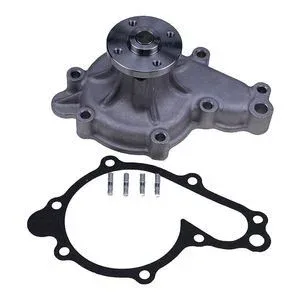

Lubrication & Cooling Systems
Water Pump for Kubota V2203 Engine – Scheduled Maintenance
View Details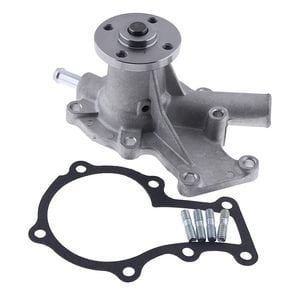
Lubrication & Cooling Systems
Water Pump 1E051-73036 with Gasket for Kubota D722/D902 – Direct Replacement
View Details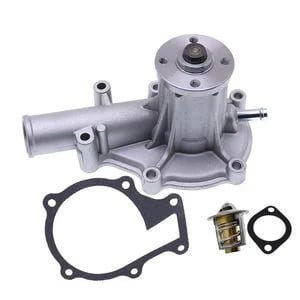
Lubrication & Cooling Systems
Water Pump & Thermostat Kit for Kubota D1005/D1105 – Direct Replacement with Gasket
View DetailsNeed a Custom Quote?
Our technical team responds within 24 hours. MOQ 1 piece. Ships to 120+ countries from our Guangzhou warehouse.